 Wondershare EdrawMind
MindMap Gallery Elementary Mathematics
- 8
Elementary Mathematics
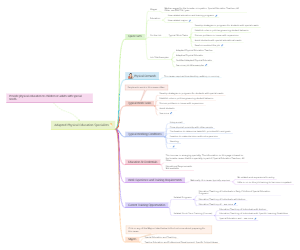
This is a mind map about Elementary Mathematics, Main content: Week 1, Week 2, Week 3, Week 4, Week 5.
Edited at 2026-04-04 06:24:47
Elementary Mathematics
- Recommended to you
- Outline




Elementary Mathematics
Week 1
Syllabus and required materials
There are three instructors for this class, the lead instrucor being Brittany Jimenez. There is no required textbook for this class, but required materials include basic math manipulatives such as tiles or base 10 blocks.
Ploya's problem
Different ways to learn and teach math
Traditional algorithm vs Expanded notation: traditional algorithm is where numbers are aligned by place value while expanded notation is where place values are broken down before addition
CPA = concrete (build) -> pictoral (show) -> abstract (solve)
when asked to show:
"Addition strategy 1 - Draw a picture" Gabrielle Saleh_staff-DouglasES https://www.youtube.com/watch?v=kqGWkqD2ngQ
when asked to build:
when asked to solve, solve the equation with no diagrams
Building vs. showing addition
Building is using manipulatives (blocks, tiles ,etc.) to represent equations. For example if a student is asked to build the number 47, they would use two long tiles and 7 tile units.
'Single-Digit Addition with Manipulatvies" Courtney Berry https://www.youtube.com/watch?v=6inUZwR3b8k
Showing is drawing out the presented equation, ofen using squares to represent 100s, lines to represent 10s, and dots to represent ones. For example, if a student is asked to draw the number 125, they would draw one square, two lines, and five dots.
Different bases
Base 10 is the most commonly used base: a unit = 1, a long = 10, a square = 100
Any number can be a base, but when the base number changes so does the value of the symbols
Week 2
Alternate algorithms
The traditional method includes vertically stacking an equation and arranging the numbers by place value Expandable ✓ Efficient ✓ Demonstrates mathematical functions X
Addition example: 62 +8 70
Subtraction example: 23 -5 18
The scratch method is most commonly used for adding long collumns of numbers. Students go down the order of numbers and use "scratches" to demonstrate values of 10 Expandable ✓ Efficient ✓ Demonstrates mathematical foundations ?
Example of the scratch method:
Expanded form is demonstrated by separating numbers and equations by their place value. For example, 368 in expanded form would be 300+60+8 Expandable ✓ Efficient X Demonstrates mathematical functions ✓
Addition example:
Subtraction example: 24 1. 20 + 4 -5 2. -(0 + 5) 19 19
When subtracting using equal addends, take away or add a value to each number so that the equation uses friendly numbers while still being the same distance apart on the number line. For example, 86-54 may look intimidating, but if we subtract 4 from each of these numbers the equation turns into 82-50 Expandable ✓ Efficient ✓ Demonstrates mathematical functions ?
Equal addends example:
When solving equations left to right, students will start with the numbers of highest place value (on the left) and end with the ones (right) Expandable? ✓ Efficient? ✓ Demonstrates mathematical functions? ✓
Addition example: 23 1. 20 + 40 = 60 +42 2. 3 + 2 = +5 65
Subtraction example: 97 1. 90 - 20 = 70 -22 2. 7 - 2 = +5 75
The friendly numbers method is demonstrated by trading values from the numbers in an equation so that one or all of the numbers is a "friendly number" or ending in 0 Expandable ✓ Efficient ✓ Demonstrates mathematical functions ✓
Friendly numbers example:
The lattice method is set up by creating a grid using diagnol lines under the sum line where sums are separated by place value. Expandable ✓ Efficient ✓ Demonstrates mathematical functions X
"The lattice method for addition" Allison Karpinski https://www.youtube.com/watch?v=xPTGKcbCbPI
Building vs. showing subtraction
Building is showing your work with manipulatives (example):
Showing is displaying your work with a diagram. To show something being "taken away", circle the amount and draw an arrow
Week 3
Building vs. showing multiplication
Some numbers should be taught before others because they are easier for students to grasp. The ideal order of teaching multiplication: 1. (automacity) 1s, 2s, 5s, 10s 2. 3s, 4s, 9s, and doubles 3. 6s, 7s, 8s
When building multiplication problems, line the starting numbers up like an axis, then fill in with the appropriate base 10 figures to complete the "rectangle":
Show multiplication by using the axis/rectangle method as well:
Alternate algorithms: Multiplication
The traditional multiplication method involves vertically stacking the equation and multiplying the digits of the top number with each digit of the bottom number Expandable ✓ Efficient ✓ Demonstrates mathematical functions X
"Traditional Method of Multiplication" BSI Math, grades 3-5: https://www.youtube.com/watch?v=RTCqraxnwXU
Multiplying using expanded form starts with separating numbers based on place value, then multiplying one digit at a time Expandable ✓ Efficient X Demonstrates mathematical functions ✓
Expanded form example:
The left -> right method is set up similar to the traditional method, except instead of starting with the ones place value (right), you begin with the largest place value (left) Expandable? ✓ Efficient? ✓ Demonstrates mathematical functions? ✓
Left to right example:
Multiplying using an area model is is great for visual learners. The problem is set up so each digit shares a square with a digit from the other number. Each product is written in one of the squares, then they are all added together for the final answer. Expandable? ✓ Efficient? ✓ Demonstrates mathematical functions? ✓
Area model example:
The lattice method is set up similar to the area model, except there are diagnol lines going through each square. It is important that the digits of one number are written on top, while the other number is written vertically down the right side as to not intercept the lattice lines. The products are added via their sections which determines their place values as well. Expandable? ✓ Efficient? ✓ Demonstrates mathematical functions? X
Lattice method example:
Building vs. Showing division
Building division is showing your work with manipulatives by separating the first number into the right amount of equal groups (second number)
Example: 18 ÷ 3 = 6
Showing division is drawing a diagram to represent the problem:
When there is an amount leftover that would make the "groups" uneven, write it as a fraction alongisde the answer. For example, 45 ÷ 6 = 7 3/6