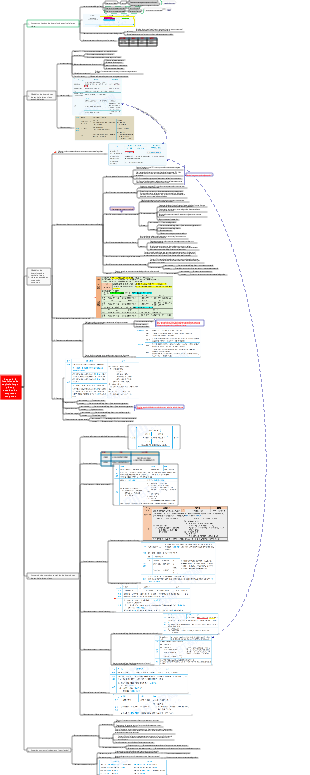
Galería de mapas mentales Inversión de capital a largo plazo 1 mapa mental
Este es un mapa mental sobre la inversión de capital a largo plazo 1, incluida la medición inicial, los principios de medición inicial, la diferencia en la contraprestación pagada, la enajenación y el deterioro de la inversión de capital a largo plazo, etc.
Editado a las 2023-11-08 14:40:53,This is a mind map about bacteria, and its main contents include: overview, morphology, types, structure, reproduction, distribution, application, and expansion. The summary is comprehensive and meticulous, suitable as review materials.

This is a mind map about plant asexual reproduction, and its main contents include: concept, spore reproduction, vegetative reproduction, tissue culture, and buds. The summary is comprehensive and meticulous, suitable as review materials.
This is a mind map about the reproductive development of animals, and its main contents include: insects, frogs, birds, sexual reproduction, and asexual reproduction. The summary is comprehensive and meticulous, suitable as review materials.
This is a mind map about bacteria, and its main contents include: overview, morphology, types, structure, reproduction, distribution, application, and expansion. The summary is comprehensive and meticulous, suitable as review materials.
This is a mind map about plant asexual reproduction, and its main contents include: concept, spore reproduction, vegetative reproduction, tissue culture, and buds. The summary is comprehensive and meticulous, suitable as review materials.
This is a mind map about the reproductive development of animals, and its main contents include: insects, frogs, birds, sexual reproduction, and asexual reproduction. The summary is comprehensive and meticulous, suitable as review materials.
The shape and structure of bacteria
Bacterial size and shape
size of bacteria
The unit of measurement for bacteria: micrometer (μm)
Bacterial morphology
cocci
diplococci
Streptococcus
Tetragenococcus
staphylococcus
Sarcina
bacilli
Streptobacterium
Corynebacterium
coccobacilli
Mycobacteria
Spiral bacteria
Vibrio
spirillum
Helicobacter
Campylobacter
Bacterial morphological and structural examination method
microscope magnification
Ordinary optical microscope
electron microscope
staining method
Gram stain staining
Crystal violet → iodine solution → 95% ethanol → diluted carbolic acid red red
structure of bacteria
basic structure
cell wall
Gram-positive (G⁺) bacteria (three-dimensional structure)
peptidoglycan
glycan backbone
Tetrapeptide side chain
Wutai Cross-Link Bridge
teichoic acid
membrane teichoic acid
teichoic acid
Gram-negative (G⁻) bacteria (two-dimensional structure)
peptidoglycan
glycan backbone
Tetrapeptide side chain
adventitia
lipoprotein
lipid bilayer
Lipopolysaccharide (endotoxin)
Lipid A
core polysaccharide
specific polysaccharide
function of cell wall
Maintain the appearance of bacteria and resist hypotonic environment
Participate in intracellular material exchange
related to pathogenicity
Related to drug resistance and charge
Immunogenicity
Bacterial cell wall defective type (bacterial L type)
cell membrane
composition
Phospholipids
various proteins
function of cell membrane
material transport
respiration and secretion
Biosynthesis
PBP penicillin-binding protein contained in cell membrane Participate in cell wall synthesis
Participates in bacterial division (mediator)
Mediator: Also known as pseudo-mitochondria, it is the bacterial part Formed by invagination, folding, and curling of cell membranes Cysts, mostly seen in G⁺ bacteria.
cytoplasm
Ribosome
site of protein synthesis
The action site of some antimicrobials (sedimentation coefficient is 70S)
Sterilization mechanism
Streptomycin binds to the 30S subunit of bacterial ribosomes, and erythromycin Combined with the 50S subunit, both can interfere with bacterial protein synthesis and inhibit Bacterial growth or protein toxin synthesis has no effect on human ribosomes.
Plasmid
It is the genetic material outside the bacterial chromosome and exists in the cytoplasm
Features
Able to replicate independently
Plasmids are not essential for bacterial growth; Bacteria that have lost their plasmids can survive normally
Plasmids transfer relevant traits to another bacterium through conjugation or conduction.
cytoplasmic granules
A place where bacteria store nutrients
Metachromatic granules (Corynebacterium diphtheriae)
Nucleoplasm (pseudo-nucleus)
The main genetic material of bacteria (bacterial chromosomes)
Mostly closed circular double-stranded DNA molecules
special structure
capsule
chemical composition
polysaccharide polypeptide
stainability
Not easy to color, negative dyeing method
forming conditions
Formed in animals or on nutrient-rich media Capsules are formed, but no capsules are formed on ordinary culture medium.
Function
Anti-phagocytosis
The hydrophilic and negatively charged capsular polysaccharides have electrostatic repulsion with the phagocyte membrane.
adhesion
Participate in the formation of biofilm
Resistance to damage caused by harmful substances (barrier effect)
flagellum
chemical composition
Mainly protein, a little glycolipid
Classification
Monochaeta
Dichomycosis
From Trichoderma
Peritrichosporon
Function
bacterial motility organ
related to pathogenicity
Bacterial identification and classification
pili
Pili cannot be seen under an ordinary light microscope; Must be observed with an electron microscope.
chemical composition
protein
Classification
Ordinary pili
The adhesion structure of bacteria determines the susceptible site for infection
sex pili
Only found in a few G⁻ bacteria, usually only 1-4 roots, smaller than Ordinary pili are long and thick and can transmit certain genetic materials quality. Bacteria with sexual pili are F⁺ bacteria, otherwise they are F⁻ bacteria.
spores
Features
Formed under nutritional deficiencies and unfavorable environmental conditions
Dormant state, basically no metabolism
A bacterium only forms one spore, and a spore germinates into only one bacterial cell.
significance
Strong resistance to heat, drying, radiation, chemical disinfectants, etc.
Killing bacterial spores is used as an indicator to judge the effectiveness of sterilization: high-pressure steam sterilization
Is an important source of certain exogenous infections
Spores are the dormant form of bacteria rather than the reproductive form
Identify bacteria
Spore-producing bacteria are all G⁺ bacteria
Spores can only be observed under an electron microscope