MindMap Gallery Explore immunity
Knowledge points about immune organs, immune molecules and other parts. Immunity is a complex and magical physiological process. It is both the body's first line of defense against foreign pathogens and a key mechanism for maintaining internal balance. Through this mind map, everyone can have a clearer understanding of immunity.
Edited at 2024-03-07 22:48:13This is a mind map about bacteria, and its main contents include: overview, morphology, types, structure, reproduction, distribution, application, and expansion. The summary is comprehensive and meticulous, suitable as review materials.

This is a mind map about plant asexual reproduction, and its main contents include: concept, spore reproduction, vegetative reproduction, tissue culture, and buds. The summary is comprehensive and meticulous, suitable as review materials.
This is a mind map about the reproductive development of animals, and its main contents include: insects, frogs, birds, sexual reproduction, and asexual reproduction. The summary is comprehensive and meticulous, suitable as review materials.
This is a mind map about bacteria, and its main contents include: overview, morphology, types, structure, reproduction, distribution, application, and expansion. The summary is comprehensive and meticulous, suitable as review materials.
This is a mind map about plant asexual reproduction, and its main contents include: concept, spore reproduction, vegetative reproduction, tissue culture, and buds. The summary is comprehensive and meticulous, suitable as review materials.
This is a mind map about the reproductive development of animals, and its main contents include: insects, frogs, birds, sexual reproduction, and asexual reproduction. The summary is comprehensive and meticulous, suitable as review materials.
Explore immunity
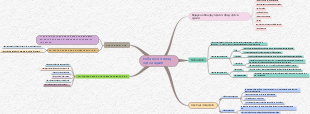
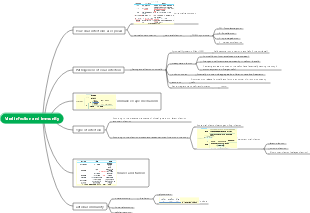
Immune organs: Immune organs are organs and tissues that perform immune functions
Central immune organ: The central immune organ is the place where immune cells are produced, proliferated, differentiated, and matured. It also regulates the development of peripheral immune organs and systemic immune function.
marrow
Concept: It is the place where various immune cells and blood cells occur and develop, and is an important central immune organ of the body.
It is a hematopoietic organ; The birthplace of immune cells; It is also the only place where B cells differentiate, develop and mature.
Thymus
It is the earliest organ to develop; Structure and size change with age
Function: 1. It is the place where T cells differentiate, develop and mature. 2. Immunomodulatory effect 3. Establish autoimmune tolerance and maintain immune homeostasis
Peripheral immune organs: Peripheral immune organs are composed of lymph nodes, spleen and mucosa-associated lymphoid tissue. They are the places where T and B lymphocytes settle and immune responses occur.
spleen
Function: 1. It is the place where pluripotent hematopoietic stem cells proliferate and differentiate during the embryonic stage and has hematopoietic function. 2. It is the place where T cells and B cells settle. 3. Has the function of filtering blood 4. Participate in lymphocyte recycling
The largest peripheral immune organ in the body; Has blood storage function
Lymph nodes
Concept: Often located in superficial concave and hidden places of the human body, such as the neck, armpits, groin, etc. or near internal organs, arranged along blood vessels
Function: 1. It is a place where mature T lymphocytes and B lymphocytes settle 2. It is the place where the immune response occurs 3. Participate in lymphocyte recycling 4. The function of filtering lymph fluid
Lymph nodes are the most complete peripheral immune organs
cortical area
Superficial cortical area
B cell settlement site
deep cortical area
Where T cells colonize
bone marrow area
medullary cord
More B cells and plasma cells
medullary process
More macrophages
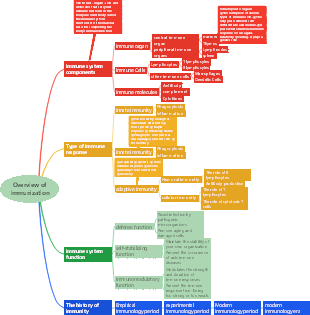
Immune cells: Immune cells refer to all cells that participate in or are related to immune responses Features: 1. Can differentiate antigens 2. Has multiple receptors 3. Can produce multiple cytokines after activation
T lymphocytes: T lymphocytes, referred to as T cells, are derived from bone marrow lymphoid stem cells and mature in the thymus. 65% to 80% of lymphocytes in peripheral blood are T cells.
T cell surface markers
Antigen receptor (TCR) is a unique marker of T cells; CD4 or CD8 molecules are only expressed on the surface of mature T cells, and their main function is to assist TCR in recognizing antigens; Costimulatory molecules are auxiliary molecules that provide secondary signals for T cell activation.
T cell function: 1. Mediate adaptive cellular immune response 2. Play an important auxiliary role in the humoral immune response induced by thymus-dependent antigens 3. Occupy a central position in the adaptive immune response
B lymphocytes: B lymphocytes, referred to as B cells, develop, differentiate, and mature in the bone marrow, accounting for 10% to 15% in the peripheral blood.
B cell-specific surface markers
Antigen receptor (BCR) Costimulatory molecules are auxiliary molecules that provide second signals for parietal cell activation.
Main functions: 1. Participate in humoral immunity 2. Present antigen (full-time APC) 3. Participate in immune regulation
Natural killer cells: Natural killer cells (Nk cells) are a type of cell that can directly kill tumor cells, cells infected by viruses or bacteria, and allogeneic transplanted tissue cells. Mainly distributed in peripheral blood (accounting for 5% to 10% of total lymphocytes) and spleen
NK cell effects: 1. Anti-infection effect 2. Anti-tumor effect 3. Immunomodulatory effect
Antigen-presenting cells: Antigen-presenting cells (APCs) are cells that can take in antigens, process them, and present them to specific lymphocytes.
mononuclear phagocyte
Including monocytes in blood and macrophages in tissues
Function: 1. Macrophage killing effect 2. Ingest, process, and present antigens 3. Immunomodulatory effect, through the secretion of a variety of cytokines for immune regulation 4. Anti-tumor effect
dendritic cells (DC)
It is the APC with the strongest antigen-presenting ability.
Function: 1. Recognize, ingest and process antigens and participate in innate immunity 2. Antigen presentation and immune activation 3. Immunomodulatory effect 4. Induction and maintenance of immune tolerance
Immune molecules: Immune molecules refer to a class of molecules involved in immune response and immune regulation
membrane immune molecules
TCR, BCR, CD molecules, adhesion molecules on the cell surface
secreted molecules
Cytokines, immunoglobulins,
Cytokines: refer to a class of small molecule polypeptides with a variety of biological effects synthesized and secreted by activated lymphocytes or other non-immune cells (such as vascular endothelial cells, fibroblasts, stromal cells, etc.)
include
1. Interleukin (IL) 2. Interferon (IFN) 3. Tumor necrosis (TNF) 4. Colony stimulating factor (CSF) 5. Chemotactic cytokines 6. Growth factors (GF)
Functional characteristics
1. Acts in a non-specific manner and is not restricted by mh C 2. Efficiency of action 3. Network nature of function 4. Diversity of modes of action. CK can act locally through autocrine, that is, acting on its own production cells, and paracrine, that is, acting on nearby target cells.
Interferon is the first cytokine to be discovered. IFN has a wide range of anti-viral, anti-tumor and immunomodulatory effects. Interferon plays an important role in immune response and immune regulation and is also one of the major pro-inflammatory cytokines
Replenish
lymphocyte recirculation
Concept: Lymphocyte recirculation refers to the repeated circulation of lower B and other lymphocytes that reside in peripheral immune organs. They enter the blood circulation through lymphatic vessels, thoracic duct or right lymphatic duct. After reaching the peripheral immune organs, they redistribute lymphoid organs and tissues throughout the body. process
Significance: 1. Make the distribution of lymphocytes in the body's peripheral immune organs and tissues more reasonable and enhance the body's immune function 2. Increases the contact opportunities between lymphocytes and antigens, which is conducive to the occurrence of the body's adaptive immune response.
Mucosa-associated lymphoid tissue function
1. Participate in local immune response 2. Produce secretory lgA (slgA) 3. Participate in oral antigen-mediated immune tolerance