MindMap Gallery Cell mind map
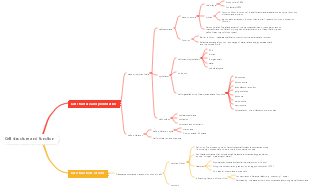
Cell mind map, including the basis, composition, structure, life process, etc. of life.
Edited at 2023-11-02 19:57:33This is a mind map about bacteria, and its main contents include: overview, morphology, types, structure, reproduction, distribution, application, and expansion. The summary is comprehensive and meticulous, suitable as review materials.

This is a mind map about plant asexual reproduction, and its main contents include: concept, spore reproduction, vegetative reproduction, tissue culture, and buds. The summary is comprehensive and meticulous, suitable as review materials.
This is a mind map about the reproductive development of animals, and its main contents include: insects, frogs, birds, sexual reproduction, and asexual reproduction. The summary is comprehensive and meticulous, suitable as review materials.
This is a mind map about bacteria, and its main contents include: overview, morphology, types, structure, reproduction, distribution, application, and expansion. The summary is comprehensive and meticulous, suitable as review materials.
This is a mind map about plant asexual reproduction, and its main contents include: concept, spore reproduction, vegetative reproduction, tissue culture, and buds. The summary is comprehensive and meticulous, suitable as review materials.
This is a mind map about the reproductive development of animals, and its main contents include: insects, frogs, birds, sexual reproduction, and asexual reproduction. The summary is comprehensive and meticulous, suitable as review materials.
cell
Observation classification
microscope
type
Light microscope cell wall, cell membrane, nucleus, chloroplast, vacuole, chromosomes
Electron Microscopy→Submicroscopic Structure
structure
Eyepieces and Objectives
Low magnification lens and high magnification lens
Plane mirror and concave mirror
Coarse quasi-focus spiral and fine quasi-focus spiral
principle
gain
Eyepiece magnification x objective lens magnification
What is enlarged is length, width not area, volume
The number of cells in a row of cells in the field of view is inversely proportional to the magnification
The field of view is filled with cells. The number of cells is inversely proportional to the square of the magnification.
Imaging principle
magnified inverted virtual image
p→d
The object under observation is at the lower left of the field of view, but is actually at the upper right
Where should the moving film be moved?
Instructions
Low magnification
High magnification lens: find → move → transfer → adjust
stain judgment
Mobile loading
stain move
on loading film
The stain does not move
rotating eyepiece
The stain moves → on the eyepiece
The stain does not move → on the objective lens
Classification
Prokaryotic→represents organisms
cyanobacteria
taxon
Chromococcus cyanobacteria
Oscillator cyanobacteria
Candida cyanobacteria
Nostoc
Lifestyle and reasons → There are no chloroplasts in the cells, they contain phycocyanin and chlorophyll, they can carry out photosynthesis, and their metabolic type is an autotroph.
algae bloom
Mycoplasma (no cell wall)
bacteria
eukaryotic
Eukaryotic and Prokaryotic
the difference
Nature
Is there a nucleus bounded by the nuclear membrane?
on cell wall
Most prokaryotes have cell walls whose main component is peptidoglycan
eukaryotic
Plant cell wall → cellulose, pectin
Fungal cell wall → chitin
Animals have no cell walls
on organelles
Pronucleus has only ribosomes
Eukaryotes have ribosomes, mitochondria, etc.
on cell nucleus
The pronucleus has no nuclear membrane and becomes a nucleoid
Eukaryotes have a nuclear membrane and a formed nucleus
Same point
All have cell membranes
Both have cytoplasm (ribosomes)
All use DNA as genetic material
structure
cell wall
composition
Function
Features
cell membrane
Element
Lipid 50%
Phospholipids (mainly)
cholesterol
Protein 40%
Sugar 2%-10%
Structure→Extract cell membrane
course
Method: absorb water and burst
Material: Mammalian mature red blood cells
Features: Selective permeability
cytoplasm
composition
cytoplasmic matrix
organelles
Separation method: Differential centrifugation
Structure and function
Mitochondria: the main place for aerobic respiration, the power workshop of the cell
Chloroplast: The place where green plants carry out photosynthesis, plant nutrient manufacturing workshop, and energy converter
Endoplasmic reticulum: Protein processing site and transport channel, where lipids are synthesized
Golgi Apparatus: The workshop where proteins from the endoplasmic reticulum are processed, sorted, and packaged
Lysosomes: the digestive workshops of the cell
Vacuole: regulates the environment within plant cells
Centrosome: related to cell mitosis
Ribosomes: the protein-producing machine
skeleton
composition
Function
Connection: Synthetic Transport of Secreted Proteins
Method: Isotope labeling method
Process: Free ribosome ①Synthesizes a segment of peptide chain ②Moves → Endoplasmic reticulum ③Synthesizes complete peptide chain ④Preliminary processing ⑤Forms vesicle →Golgi apparatus ⑥Reprocessing (Add modified groups) ⑦ Form vesicles → cell membrane ⑧ Secretion → Extracellular
cell nucleus
Structure and function
Nuclear membrane (double membrane) ① Separates the cytoplasm from nuclear materials ②Control the entry and exit of ions and smaller molecules into substances
Nuclear pores ① enable frequent material exchange and information exchange between the nucleus and the cytoplasm ②A channel for selective entry and exit of macromolecular substances (DNA cannot enter) ③The stronger the metabolism, the greater the number of nuclear pores
Nucleolus ① is related to the formation of certain RNA and ribosomes ②The degree of development of the nucleolus is related to the vigorous degree of protein synthesis.
Chromatin①The main components are DNA and protein, and it is the main carrier of eukaryotic genetic material. ②Chromatin and chromosomes are the same material, two states of existence at different stages of the cell
Model: physical model
life course
Function
composition
element
Types, more than 20
unity, difference
Living and non-living kingdoms
Unity: The chemical elements that make up cells are found in inorganic nature
Difference: The content of various elements in cells is very different from that in inorganic nature
biological world and biological world
Classification
A lot of:C,H,O,N,P,S,K,Ga
Trace amount: Zn, Fe, B, Cu, Mo, Mn
Basic elements:C,H,O,N The most basic element: C
Fresh weight: O>C>H>N Dry weight:C>O>N>H
Classification
water
form and function
bound water
Function: It is a component of cells Content: 4.5%
free water
Function: good solvent in cells; participate in biochemical reactions; provide liquid living environment; transport Content: more than 95%
Properties (grade): Produce hydrogen bonds → Have fluidity and high specific heat capacity
The role of inorganic salts: important components of certain compounds; maintaining the life activities of cells and organisms; Maintain normal osmotic pressure in organisms; maintain acid-base balance in organisms
organic matter
carbohydrate
Classification and function
Monosaccharide
Five-carbon sugar: component of nucleic acids
Six-carbon sugar: the main energy substance in cells
disaccharide
maltose
sucrose
lactose
polysaccharide
Cellulose is the main component of plant cell walls
Starch energy storage substance in plant cells
Glycogen energy storage substance in animal cells
Chitin wastewater treatment for artificial skin
Elements: C, H, O, some contain N
identification
reducing sugar
Fehling's reagent
non-reducing sugar
Lipids
Classification and function
Fat
Composition: one molecule of glycerol, three molecules of strong acid
Function: Good energy storage substance in cells; buffering, pressure reduction, and heat preservation
Phospholipids
Role: an important component of the cell membrane
Structure: Hydrophilic head, hydrophobic tail
Classification and functions of sterols
Cholesterol constitutes an important component of animal cell membranes and participates in lipid transport in human blood.
Sex hormones promote the development of human and animal reproductive organs and the formation of germ cells. stimulate and maintain secondary sex characteristics
Vitamin D promotes intestinal absorption of calcium and phosphorus in humans and animals
Element: CHO, some contain NP
protein
amino acids
Classification
essential amino acids
non-essential amino acids
Types: 21 types
Structural simplified formula: H ¦ H2N–C–COOH ¦ R
Peptide bond calculations
The number of dehydrations is equal to the number of peptide bonds
The number of free amino groups and carboxyl groups is equal to the number of peptide chains plus the amino groups and carboxyl groups in the R group
The relative molecular mass decrease is equal to the number of dehydrations × 18 and the number of disulfide bonds × 2
The relative molecular mass is equal to n×a-dehydration number×18-disulfide number×2
The number of N atoms is equal to N in n R basis
The number of O atoms is equal to the number of peptide bonds + the number of peptide chains × 2 O in the R group
protein
Reasons for structural diversity
From the aa level: the order of the number of aa types is different
From the perspective of the titanium chain: the peptide chain twists and folds in different ways
Easy to absorb, salt out, denature, and hydrolyze
nucleic acid
Basic unit: nucleotide
Composition: phosphate + five-carbon sugar + nitrogenous base
Classification
Ribonucleotide→RNA basic unit
Deoxyribonucleic acid→DNA basic unit
peptide chain
nucleic acid
Structural difference: single chain and double chain
Function: It is a substance that carries genetic information in cells. It plays a role in the inheritance of organisms. plays an extremely important role in mutation and protein biosynthesis
Distribution: DNA is mainly distributed in the nucleus RNA is mainly distributed in the cytoplasm
Biological macromolecules use peptide chains as backbones
foundation of life
theory
Founder: Schleiden, Schwann
course
Vesalius reveals organ-level structure
Bichat pointed out that organs are composed of tissues
Robert Hooke was the first person to discover and name cells (dead cells)
Leeuwenhoek was the first person to observe living cells
Malpighi observed the minute structures of plants and animals
Negri observes that new cells are produced as a result of cell division
Virchow concluded that cells divide to create new cells.
significance
The cell theory reveals the unity of animals and plants, thus clarifying the unity of the biological world
The cell theory made people realize that animals and plants have a common structural basis, and promoted anatomy, Physiology, embryology and other disciplines gained a common foundation, giving birth to the advent of biology
The view in the cell theory that cells are the basic units of life activities enables people to understand the growth, reproduction, development and various physiological phenomena of organisms. The secrets of biology need to be found in cells. Biological research enters the cellular level and lays the foundation for later entering the molecular level.
The conclusion that cell division produces new cells in the cell theory not only explains ontogeny, but also lays the foundation for the later theory of biological evolution.
content
1. A cell is an organism
2. A cell is a relatively independent unit
3. New cells can be generated from old cells
method
Induction
complete induction
incomplete induction
Life activities are inseparable from cellular causes
single cell organism
multicellular organisms
Virus
Ingredients: protein + nucleic acid
Lifestyle: Parasitizing living cells
genetic material
Classification
nucleic acid
DNA viruses: bacteriophages, hepatitis B
RNA viruses: COVID-19, HIV, influenza, SARS
Host
animal viruses
plant viruses
Bacterial viruses
Culture: live cell culture
living system
different biological levels
Animals: cells→tissues→organs→individuals→populations→communities→ecosystems→biosphere
Plant: cell → tissue → organ → individual → population → community → ecosystem → biosphere
Single cell: cell → individual → population → community → ecosystem → biosphere
Population: all individuals of the same species in a certain area
Community: a collection of all biological populations that gather in a certain area at the same time