MindMap Gallery Structural research methods-UV, IR, MS
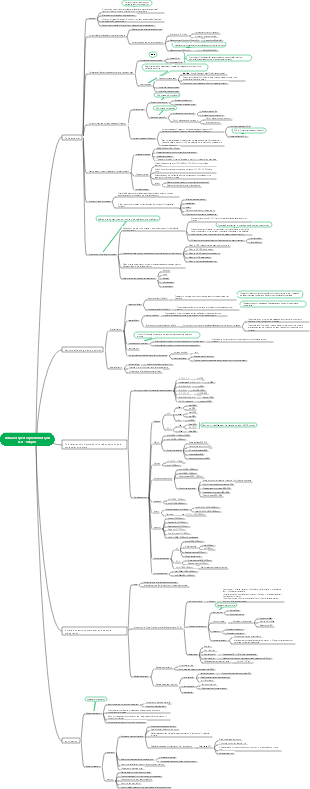
This is a mind map about structural research methods - UV, IR, MS. The UV, IR, and MS commonly used in structural research methods refer to ultraviolet-visible spectroscopy, infrared spectroscopy, and mass spectrometry. These methods are widely used in the fields of chemistry and biology to determine the structure, composition, and properties of chemical compounds.
Edited at 2024-01-16 20:23:36This is a mind map about bacteria, and its main contents include: overview, morphology, types, structure, reproduction, distribution, application, and expansion. The summary is comprehensive and meticulous, suitable as review materials.

This is a mind map about plant asexual reproduction, and its main contents include: concept, spore reproduction, vegetative reproduction, tissue culture, and buds. The summary is comprehensive and meticulous, suitable as review materials.
This is a mind map about the reproductive development of animals, and its main contents include: insects, frogs, birds, sexual reproduction, and asexual reproduction. The summary is comprehensive and meticulous, suitable as review materials.
This is a mind map about bacteria, and its main contents include: overview, morphology, types, structure, reproduction, distribution, application, and expansion. The summary is comprehensive and meticulous, suitable as review materials.
This is a mind map about plant asexual reproduction, and its main contents include: concept, spore reproduction, vegetative reproduction, tissue culture, and buds. The summary is comprehensive and meticulous, suitable as review materials.
This is a mind map about the reproductive development of animals, and its main contents include: insects, frogs, birds, sexual reproduction, and asexual reproduction. The summary is comprehensive and meticulous, suitable as review materials.
structural research method
Determination of compound purity
Crystal form: homogeneous
Physical and chemical constants: melting point, boiling point, refractive index, specific rotation
Chromatography: TLC, PC, GC, HPLC
Main procedures for structural research
Preliminary inference of structure type
Process behavior in extraction and separation; color reaction, chemical qualitative experiment
Determine molecular formula and calculate degree of unsaturation
Calculation of unsaturation: elemental analysis; isotope abundance ratio method, HR-MS (high resolution mass spectrometry): FT-MS (Fourier transform ion cyclotron resonance mass spectrometer), TOF-MS (time of flight mass spectrometry), Obitrap-MS
Determination of the molecular formula: CxHyOm(NH)n: Ω=x-y/2 1. For example, C8H13O2N3: C8H10O2(NH)3, Ω=8-10/2 1=4
Functional groups, structural fragments, basic skeleton
Qualitative identification of functional groups
UV (determine the conjugated system), IR (determine the functional group), NMR (determine the molecular structure and relative configuration), MS (determine the molecular weight and molecular formula, and analyze partial structures based on fragment characteristics)
Planar structure, relative configuration, dominant conformation
1D, 2D-NMR Chemical degradation, derivative preparation
Determination of absolute configuration
CD, ORD X-ray diffraction artificial chiral synthesis
The structure determination process of sugar chains: Purity - MW - Composition of monosaccharides - Determination of absolute configuration of monosaccharides - Determination of monosaccharide connection positions - Determination of the connection sequence of sugar chains - Glycoside bond configuration, oxygen ring structure
UV spectrumUV
principle
The absorption spectrum caused by the electron transition from the ground state to the excited state (π → π *, n → π *) in the ultraviolet and visible light region (200~700nm)
effect
Structural identification of compounds containing conjugated double bonds, α,β-unsaturated carbonyl groups, and aromatic compounds
Specific absorption spectrum characteristics → Judgment of skeleton type, such as: flavonoids, coumarins, and anthraquinones
Regular changes in spectra before and after adding diagnostic reagents → Inference of substituents, such as flavonoids and coumarins
Infrared spectrum IR
principle
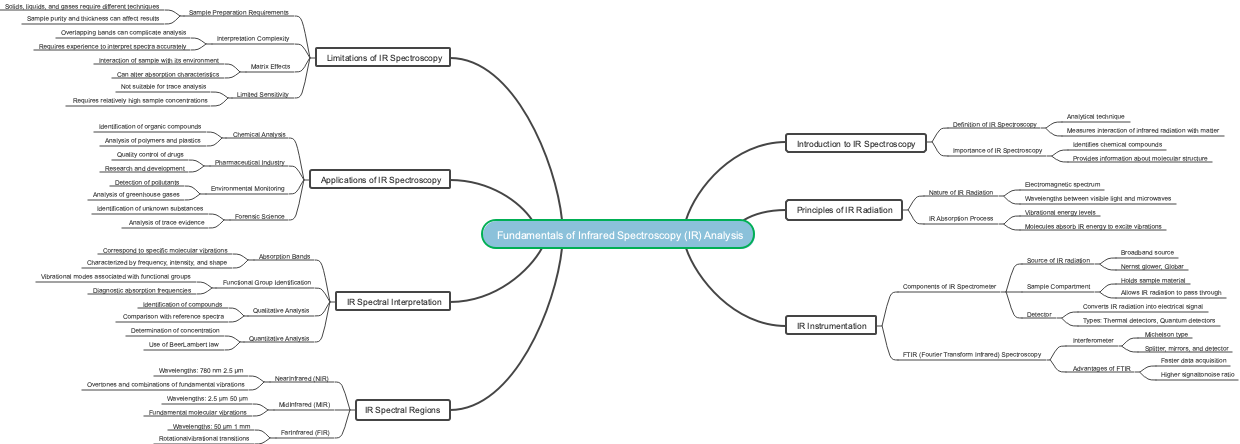
Absorption spectrum in the infrared region (4000~625 cm-1) caused by chemical bond vibration
effect
Characteristic frequency area: 4000~1500 cm-1: Determine the type of functional group Fingerprint area: 1500~600 cm-1: conformation, configuration, substitution pattern, etc.
Mass spectrometryMS
Basic Features
Accurate MS analysis enables molecular formula analysis Mass spectral fragments of fingerprint characteristics can be characterized by database technology Controlled ionization technology (MS/MS) for structural analysis of unknowns Isotope peak information can provide information on the elemental composition of molecules Hyphenated technology can be used for mixture analysis to improve work efficiency Provide information on molecular functional groups Excellent detection limits
Classification
source of ion
Gases: • EI (compounds with stronger structural positivity), CI (compounds that are easily cleavable) • FAB, ESI, APCI (fat soluble compounds) • FI, FD • MDLI
Quality detector
• Quadrupole • TOF • FT-MS
resolution
• 3 decimal places • >4 decimal places: high resolution (HR-MS)
MS ion source: classified according to the state of the sample during ionization
Electron impact mass spectrometryEI
The most widely used ion source: -70eV, "rigid" ionization effect
Advantages: • Simple structure, temperature control and easy operation • Electron flow intensity can be precisely controlled • Small energy dispersion: ensures high resolution and mass spectrum reproducibility • High ionization efficiency: ensuring high sensitivity • Can provide the "fingerprint" characteristics of the compound: Most of the standard spectra are EI-MS • Quality correction available
Disadvantages: The molecular ion peak is not strong, and the EI source sample must be vaporized: not suitable for high molecular weight and thermally unstable substances
chemical dissociation CI
process
Reaction gas (CH4, isobutane, NH3) samples are mixed in a certain proportion
electron bombardment
The reagent gas molecules are first ionized → primary ions → secondary ions
Ion sample reaction → (M 1) quasi-molecular ion peak
Quasi-molecular ion peak: possible loss of H2→ (M-1)
Classification: PCI (cationic), NCI (anionic, high sensitivity)
Electrospray ionization ESI
Post-column introduction
Capillary diameter 200 μM Metal Pass voltage: Positive or negative determines the ion mode
Atomized charging
Atomizing gas: N2 Under the action of electric field, charged mist droplets are formed
Vacuum evaporation
surface area becomes smaller Surface charge density↑
Coulomb explosion
Reaching the Rayleigh limit Coulomb explosion Sample and droplet separation
Atmospheric Pressure Chemical Ionization APCI
Liquid atomizing gas → atomizing Heating tube → evaporation Discharge → Solvent molecules, ionization of reactant gas molecules Gaseous sample molecules Reactant gas ion reaction → molecular ion
Comparison of ESI-MS and APCI-MS
APCI-MS
Analyze non-polar and weakly polar compounds Only singly charged ions are produced Able to adapt to high flow gradient elution and high/low water content solution changes
ESI-MS
Suitable for analyzing polar compounds Can generate multiply charged ions Able to analyze some biological macromolecules
Classification of MS: Mass Detector
Quadrupole mass analyzer
The ions are focused towards the central axis of the analyzer by strong focusing in the quadrupole field.
Only ions with m/z in a certain range can still reach
The remaining ions: the amplitude is too large, collide with the electrode → discharge → be pumped away
Change voltage and frequency
Detect different m/z
Time of Flight (TOF) detector
FT-MS
Features
Extremely high resolution High analytical sensitivity High price and maintenance costs
Ion trap composition
Potential well (z-axis, represented by T) Excitation plate (x-axis, represented by E) Receptor plate (y-axis, represented by D)
quality analysis process
Ion movement before excitation
Affected by the dual effects of magnetic field and electric field (T), regular dual-frequency circular motion in the xy plane
excitation
Under the excitation of a wide-band radio frequency signal external to the E-plate, all ions resonate simultaneously and move along a spiral trajectory with a gradually increasing radius, and have the same phase. This radius is only proportional to the duration of the excitation signal, and It has nothing to do with the mass-to-charge ratio of the ions, only the resonance frequency is different.
Detection
Return to the original state from the excited state and release energy: FID signal