MindMap Gallery Aristotle's Philosophical Thoughts

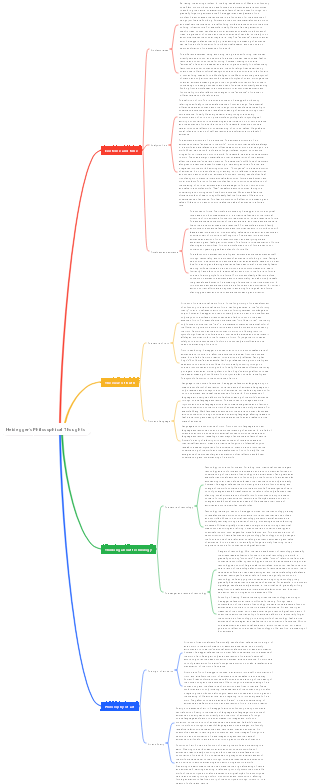
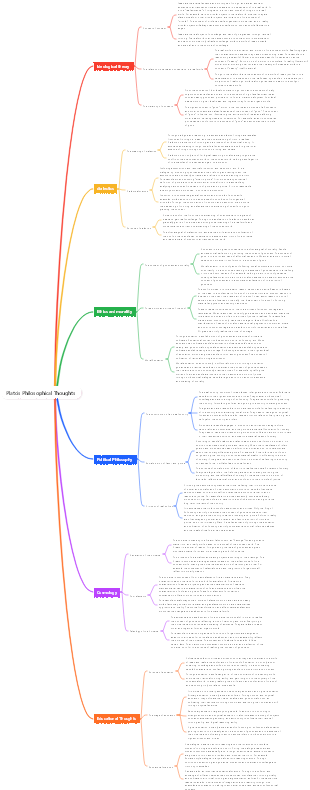
This is a mind map about Aristotle's philosophical thoughts, and its main contents include: natural philosophy, political science, ethics, metaphysics, and logic.
Edited at 2025-02-11 17:08:29In order to help everyone use DeepSeek more efficiently, a collection of DeepSeek guide mind map was specially compiled! This mind map summarizes the main contents: Yitu related links, DS profile analysis, comparison of DeepSeek and ChatGPT technology routes, DeepSeek and Qwen model deployment guide, how to make more money with DeepSeek, how to play DeepSeek, DeepSeek scientific research Application, how to import text from DeepSeek into MindMaster, the official recommendation of DeepSeek Wait, allowing you to quickly grasp the essence of AI interaction. Whether it is content creation, plan planning, code generation, or learning improvement, DeepSeek can help you achieve twice the result with half the effort!
This is a mind map about DeepSeek's 30 feeding-level instructions. The main contents include: professional field enhancement instructions, interaction enhancement instructions, content production instructions, decision support instructions, information processing instructions, and basic instructions.
This is a mind map about a commercial solution for task speech recognition. The main content includes: text file content format:, providing text files according to the same file name as the voice file.
In order to help everyone use DeepSeek more efficiently, a collection of DeepSeek guide mind map was specially compiled! This mind map summarizes the main contents: Yitu related links, DS profile analysis, comparison of DeepSeek and ChatGPT technology routes, DeepSeek and Qwen model deployment guide, how to make more money with DeepSeek, how to play DeepSeek, DeepSeek scientific research Application, how to import text from DeepSeek into MindMaster, the official recommendation of DeepSeek Wait, allowing you to quickly grasp the essence of AI interaction. Whether it is content creation, plan planning, code generation, or learning improvement, DeepSeek can help you achieve twice the result with half the effort!
This is a mind map about DeepSeek's 30 feeding-level instructions. The main contents include: professional field enhancement instructions, interaction enhancement instructions, content production instructions, decision support instructions, information processing instructions, and basic instructions.
This is a mind map about a commercial solution for task speech recognition. The main content includes: text file content format:, providing text files according to the same file name as the voice file.
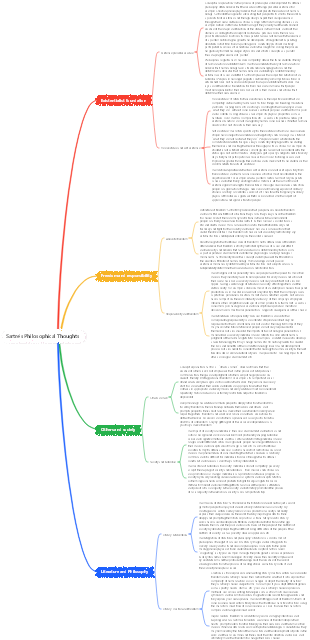
Aristotle's Philosophical Thoughts
Logic
Category Theory
Conceptual connotation: Aristotle proposed ten categories, covering entities, quantity, nature, relationship, place, time, posture, situation, activities, and suffering. As the core, entities are independent things, such as "Socrates" and "the horse". Quantity categories such as "five meters long" and "three apples" are used to indicate the number and measure of things. The category of properties describes the characteristics of things, such as "white" and "brave". The relationship category reflects the relationship between things, such as "two times" and "greater than". The location category indicates where things are located, such as "in the classroom" and "in the square". The time range determines the time when things happen or exist, such as "Yesterday" and "Last year". The posture category describes the posture state of things, such as "sitting" and "lying down". The scope of the situation shows the situation of things, such as "wearing armor" and "holding tools". The scope of activities represents the actions that things actively make, such as "running" and "writing". The scope of suffering is the passive behavior of things, such as "being beaten" and "criticized".
Specific examples: Taking the sentence "a student studies seriously in the classroom" as an example, "student" is the entity, "a" is the quantity, "serious" is the nature, "in the classroom" is the place, and "learning" is the activity , These categories provide a comprehensive description of the event from different dimensions.
Influence on later generations: Category theory provides a basic analytical framework for the fields of philosophy, linguistics, etc. In philosophical research, it helps people accurately analyze the essence and attributes of things; in linguistics, it lays the foundation for grammatical structure and semantic analysis, so that language expression is more accurate and standardized.
Three syllogism
Conceptual connotation: Syllogism consists of large premises, small premises and conclusions, and is the core form of deductive reasoning. The major premise contains general principles, the minor premise involves specific examples, and the conclusion is derived from the small premise. Its basic structure is: all M is P (large premise), all S is M (small premise), so all S is P (conclusion).
Specific examples: Big premise "All mammals breathe with the lungs", small premise "Whales are mammals", from this conclusion "Whales breathe with the lungs". This reasoning process reflects the derivation logic of syllogism from general to special.
Influence on later generations: Syllogism is an important tool for logical reasoning and is widely used in fields such as scientific argumentation, legal reasoning, and mathematical proof. In scientific research, scientists deduce specific research hypotheses based on existing general theories through syllogisms; in legal trials, judges use syllogisms to make judgments based on legal provisions and specific case facts.
Induction and deduction
Conceptual connotation: Induction method summarizes general principles from many specific individual cases, which can be divided into complete induction and incomplete induction. Complete induction is to draw conclusions after examining all individuals of a certain type of thing; incomplete induction is to draw general conclusions based on some individuals. The deduction method starts from general principles and deduces individual conclusions, and its reasoning process is inevitable.
Specific example: Induction method: by observing a large number of white swans, people came to the conclusion that "swans are white" (incompletely summarized). The deduction method is based on the principle of "all metals will expand when heated", and it is inferred that "iron will expand when heated".
Influence on later generations: Induction and deductive methods jointly construct a basic method system for scientific research. Induction helps scientists summarize laws from experimental observations and propose scientific hypotheses; deduction is used to verify and deduce hypotheses, promote the development and improvement of scientific theories, and the two complement each other and promote the continuous accumulation and progress of knowledge.
metaphysics
Substantialism
Conceptual connotation: Entities are the core that independently exist and bear attributes. The first entity is a specific individual thing, with uniqueness and independence, such as "Aristotle himself". The second entity is a genus and species, which is a summary and classification of the first entity, such as the genus "human" and the species "animal". The first entity is the basis for the existence of the second entity, and the second entity provides classification and essential definitions for the first entity.
Specific examples: For the first entity of "Socrates", "man" is the genus to which it belongs, and "animal" is the species to which it belongs. Through the second entity, we can understand "Socrates" more clearly Essential properties and categories of belonging.
Influence on later generations: Entity lays the foundation for metaphysical research and guides philosophers to deeply explore the essence and existence of things. In medieval philosophy, entityism was combined with theology to explain the essence and existence of God; in modern philosophy, entityism triggered debates about material and spiritual entities, and promoted the development of philosophical thought.
Four Reasons
Concept: Material causes are the material basis of things, such as bricks and tiles and wood for building houses, which are the material causes of houses. Formal factors determine the essence and shape of things. The design blueprint and architectural structure of a house are its formal factors, which give the material specific structure and function. The power drives changes and movements in things. The labor of construction workers and craftsmen is the driving force for house construction, which prompts the material to change according to the requirements of the formal factors. The purpose is the purpose of the existence and development of things. The purpose of a house is to live in and provide shelter. This is the purpose of building a house.
Specific examples: Taking a sculpture as an example, marble is the material cause, the shape and design in the sculptor's mind are the formal cause, the sculptor's carving movements and skills are the dynamic cause, and the sculpture is ultimately used to decorate and express artistic emotions is the purpose cause .
Influence on later generations: The Four Causes provide a comprehensive framework for explaining the causes and changes of things. In scientific research, it helps scientists analyze the development of natural phenomena and things from different angles; in philosophical thinking, it prompts philosophers to explore the essence and purpose of the world, and has a profound impact on the fields of philosophy, science, art, etc. in later generations.
Potential and reality
Concept: Potential refers to the potential abilities and possibilities that things have, and is a state that things have not yet been realized. Reality is the realization of potential and the state that things have achieved. The transformation of things from potential to reality is a dynamic process that requires certain conditions and motivation.
Specific example: An oak seed has the potential to grow into an oak tree. Under suitable soil, moisture, sunlight and other conditions, it gradually grows into a realistic oak tree through its own growth and development. This process reflects the potential toward reality. Conversion.
Impact on later generations: The theory of potential and reality provides an important perspective for understanding the development and changes of things. In biology, it is used to explain the growth and evolution process of organisms; in philosophy, it triggers thinking about issues such as free will, possibility and necessity, and promotes the in-depth development of philosophical thought.
Ethics
Theory of happiness
Concept: Happiness is the highest good that humans pursue, not simply happiness and material enjoyment, but a soul's activity in accordance with virtue. True happiness lies in realizing one's own value through rational thinking and moral practice and leveraging one's outstanding qualities. Happiness is not a short-term emotional experience, but a long-term and stable life state.
Specific examples: Through continuous learning and practice, a person cultivates virtues such as courage, justice, and wisdom. When facing difficulties and challenges, he can use these virtues to make the right choices and achieve his life goals. This state It is the embodiment of happiness. For example, a doctor has rescued many patients with his professional knowledge and medical ethics. In this process, he realized his own value and gained inner satisfaction and happiness.
Influence on future generations: The theory of happiness provides an important value orientation for future ethics research. In modern society, people's pursuit of happiness is still an important goal of life. Aristotle's theory of happiness reminds people to pay attention to spiritual pursuits, focus on moral cultivation and value realization, and is of guiding significance for building healthy values and lifestyles .
Theory of virtue
Concept: Moral virtues are developed through habits, such as courage, moderation, justice and other qualities, which need to be constantly practiced and trained in daily life. Cultivate good behavioral habits from an early age and gradually form stable moral character. Reason and virtue are obtained through learning and teaching, including wisdom, understanding, prudence, etc., to help people make correct judgments and decisions. Emphasize the principle of moderation, and every virtue is in the middle way between excessive and insufficient, courage is the middle way of recklessness and cowardice, and moderation is the middle way of indulgence and abstinence.
Specific examples: On the battlefield, brave soldiers will neither charge blindly (recklessly) nor retreat at the forefront (cowardly), but will act decisively based on actual conditions; in terms of diet, temperate people will neither drink overdone Glut eating (indulgence), and do not over-diet (abstinence), but maintain moderate eating habits.
Influence on future generations: The theory of virtue provides a theoretical basis for moral education and personal moral cultivation. In the field of education, it is emphasized that students' moral qualities are cultivated through practical activities; in personal growth, guiding people to reflect on their own behavior and pursue the improvement of virtue, which has a positive effect on shaping good social morality.
Practical wisdom
Conceptual connotation: Practical wisdom is a ability to make correct moral judgments and behavioral choices in specific situations. It not only concerns moral knowledge, but also focuses on the application in real life, combines specific situations, weighs the pros and cons, and makes decisions that conform to morality. Practical wisdom needs to comprehensively consider various factors, including the purpose, consequences, situational characteristics and related moral principles of the behavior.
Specific examples: When a business manager faces a decision on whether to lay off employees, he must not only consider the economic benefits of the company, but also the living conditions and social impact of his employees. He uses practical wisdom to communicate with employees and find other solutions, while ensuring the development of the company, he minimizes the adverse impact on employees and makes decisions that are in line with justice and humane.
Influence on future generations: The proposal of practical wisdom emphasizes the importance and complexity of moral practice. In modern society, in the face of complex and changeable moral situations, people need to use practical wisdom to solve practical problems. It provides practical guidance for ethics research and moral practice, and encourages people to continuously improve their moral judgment and decision-making abilities in practice.
Political Science
The origin and purpose of the country
Concept: The country originated from human natural social needs and gradually developed from families and villages. Family is the most basic social unit of mankind. With the increase of population and the complexity of social relations, families have joined forces to form villages, and multiple villages have further developed into countries. The purpose of the state is to realize the public interest, safeguard the happy life of citizens, and promote the development of morality and rationality. The state creates a good living environment for citizens by formulating laws, maintaining order, and providing public services.
Specific examples: In ancient Greek city-states, people gradually formed city-states in order to jointly resist foreign enemies, conduct trade activities, resolve disputes, etc. City-states promote the spiritual development of citizens by establishing military forces to ensure security, formulating laws and regulating social order, and holding cultural activities. These are measures taken by the state to realize public interests and citizens' happiness.
Influence on later generations: The theory of the origin and purpose of the country laid the foundation for later generations' political philosophy research. In the construction of a modern country, it is still emphasized that the state should take the protection of the people's interests as the starting point and promote social fairness and justice and the welfare of the people. This theory has important guiding significance for the country's institutional design and policy formulation.
Political system classification
Conceptual connotation: Authentic political systems include monarchy, aristocratic system and republican system, which are ruled by one person, a minority, and a majority, and are based on public interests. In the monarchy, a wise monarch governs the country with wisdom and morality; in the aristocratic system, a few talented and moral people hold power; in the republic, the majority of citizens participate in politics and jointly govern the country. The perverted political system includes tyrants, oligarchies and democracy, and the rulers pursue the selfish interests of individuals or a few people. In tyrants, tyrants seize power through illegal means and implement dictatorship; in oligarchy, a few rich people hold power and serve their own interests; in democratic systems, most people may abuse their power due to lack of rationality and moral constraints.
Specific examples: In ancient Sparta, the aristocratic system was implemented, and the elders' council composed of a few nobles held important power. They made decisions based on the interests of the city-state; and in some city-states in ancient Greece, tyrants had appeared, such as Athens. Pissitratu, who seized power by force, promoted some construction during his rule, was essentially to maintain his dominance; in the later period of Athenian democracy, the citizen assembly was manipulated by a few people and made short-sighted decisions and other issues reflect the possible disadvantages of democracy.
Influence on later generations: The theory of political system classification provides an important reference framework for the study of political systems in later generations. In the development of modern politics, countries choose political systems that suit their national conditions based on their own historical, cultural, social and other factors, and constantly learn from and improve them to achieve political stability and social development.
Citizenship and Education
Concept: Citizens are people who have the right to participate in the political life of the city-state. Citizens should have the corresponding morals and abilities to actively participate in public affairs. Citizens need to have the qualities of courage, justice, wisdom, as well as the ability to participate in politics and think rationally. Emphasize the importance of education to citizen cultivation. The educational content covers sports, moral education, and intellectual education, and cultivates comprehensively developed citizens to adapt to city-state life and political participation. Physical education exercises citizens' physical fitness, moral education cultivates citizens' morality, and intellectual education improves citizens' knowledge and thinking ability.
Specific examples: In ancient Greece, citizens should receive military training to cultivate courage and tenacity to defend the city-state; at the same time, they should exercise their political participation ability by participating in political activities such as citizen assembly and court trials; school education focuses on music, poetry, and philosophy Learning in other aspects can cultivate citizens' aesthetic, moral and rational thinking.
Impact on future generations: The concept of citizenship and education has an important impact on the development of modern civic education and democratic politics. In modern society, it is emphasized to cultivate citizens' sense of social responsibility, democratic awareness and participation ability, improve citizens' comprehensive quality through education, and promote the healthy development of democratic politics.
Natural Philosophy
Motion Theory
Concept: Movement is the transformation process of things from potential to reality, including position movement, property changes, quantity increase and decrease, etc. The movement of an object is the result of the combined action of its inner nature and external motivation. The concept of "unmoving promoter" is proposed, as the ultimate source of the movement of all things in the universe, and is an eternal and pure real existence. It is still moving by itself, but it promotes the movement of other things.
Specific examples: When an object falls from a high place, it is the movement of position movement; when water heats up to water vapor, it is the movement of changes in properties; when plant growth reflects the movement of increasing and decreasing quantity. The movement of celestial bodies, such as the revolution and rotation of planets, Aristotle believes that it is driven by the "mobile promoter".
Influence on later generations: Movement theory had an important influence on later generations' physics and philosophy research. In physics, it laid the foundation for the development of classical mechanics such as Newtonian mechanics, and inspired scientists to conduct in-depth research on the laws of motion of objects; in philosophy, it triggered the discussion of issues such as causal relationship and the essence of motion, and promoted the development of philosophical thoughts. .
physics
Conceptual connotation: study the laws of movement and change of natural things, explore the basic properties and elemental composition of matter, etc. Analyze the concepts of the movement, space, time, etc. of the object, and believes that the natural movement of the object is determined by its inner nature. Heavy objects fall naturally and light objects rise naturally. The movement of the object requires external force. Without external force, the object will remain stationary or Constant linear motion (this view is different from modern physics). Space is the place where objects exist, and time is a measure of motion.
Specific examples: In daily life, we see stones falling naturally and flames rising naturally, which is determined by their inner nature. And when we push an object, it will move, stop pushing, and the object may gradually stop, which reflects the impact of external forces on the movement of the object.
Impact on later generations: Although there are some views that are inconsistent with modern science in Aristotle's physics, it has opened up a systematic study of natural science by humans. Its thinking on concepts such as motion, space, and time provided a starting point for later scientists and promoted the continuous development and improvement of physics.
biology
Conceptual connotation: conduct classified research on organisms and observe the shape, structure and living habits of organisms. The concept of "soul" is proposed, believing that different organisms have different levels of souls, plants have nutritious souls, responsible for growth, reproduction and nutritional intake; animals have sensory souls, in addition to the function of nourishing the soul, also have sensation, desire and motor abilities; humans also have sensation, desire and motor abilities; There is also a rational soul, able to think, judge and reason.
Specific examples: Plants absorb nutrients through root systems, perform photosynthesis, grow and reproduce, reflecting the role of nourishing the soul; animals can perceive the external environment, and have behaviors such as foraging and escaping natural enemies, reflecting the function of sensory souls; humans can create culture, Conducting scientific research and thinking about philosophical issues is the embodiment of the rational soul.
Impact on later generations: Biological research laid the foundation for the development of biological science in later generations. Its classification methods and observation of biological characteristics inspired later biologists to further study biology. Although the concept of "soul" has a certain philosophical color, it also triggers thinking about the essence of life and the origin of consciousness, and has had an impact on the intersection of philosophy and biology.