MindMap Gallery Pharmacotherapy of Angina Pectoris
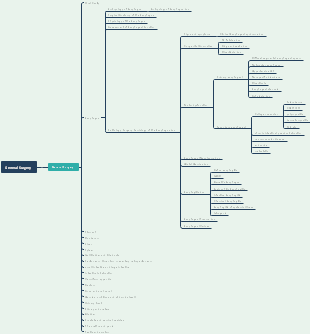
This mind map, created using EdrawMind, outlines the pharmacotherapy options for angina pectoris. It covers various classes of drugs used in treatment, including their mechanisms of action, therapeutic uses, and important considerations. The map is divided into sections such as "Angina," "Drugs," "Organic Nitrates," and "Management," providing a structured overview of how different medications alleviate symptoms and improve patient outcomes in angina pectoris.
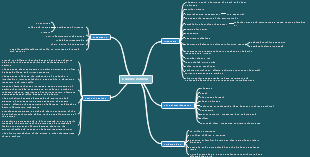
Edited at 2025-11-16 03:27:51This mind map provides a detailed overview of the pharmacotherapy for heart failure, focusing on drug categories, their mechanisms of action, and specific treatment strategies. It includes information on drugs used to manage heart failure symptoms and improve patient outcomes, such as ACE inhibitors, beta-blockers, diuretics, and newer pharmacological agents. The map also outlines treatment goals, non-pharmacological interventions, and considerations for different stages of heart failure, offering a comprehensive guide for healthcare professionals.
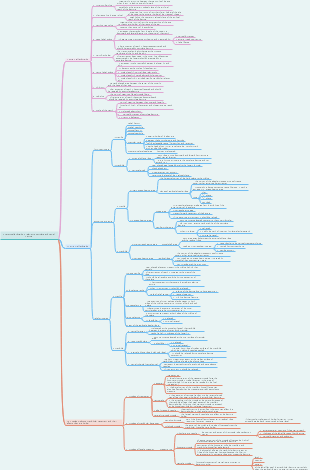
This mind map, created using EdrawMind, provides a detailed overview of anti-arrhythmic drugs. It categorizes the drugs into different classes based on their mechanisms of action, such as sodium channel blockers, beta-blockers, potassium channel blockers, and calcium channel blockers. Each category includes specific drugs, their mechanisms, clinical uses, and potential side effects. The mind map also features an overview section with an ECG waveform illustration, highlighting the effects of these drugs on heart rhythms, and an information section discussing general principles of arrhythmia treatment.
This mind map, created using EdrawMind, outlines the pharmacotherapy options for angina pectoris. It covers various classes of drugs used in treatment, including their mechanisms of action, therapeutic uses, and important considerations. The map is divided into sections such as "Angina," "Drugs," "Organic Nitrates," and "Management," providing a structured overview of how different medications alleviate symptoms and improve patient outcomes in angina pectoris.
This mind map provides a detailed overview of the pharmacotherapy for heart failure, focusing on drug categories, their mechanisms of action, and specific treatment strategies. It includes information on drugs used to manage heart failure symptoms and improve patient outcomes, such as ACE inhibitors, beta-blockers, diuretics, and newer pharmacological agents. The map also outlines treatment goals, non-pharmacological interventions, and considerations for different stages of heart failure, offering a comprehensive guide for healthcare professionals.
This mind map, created using EdrawMind, provides a detailed overview of anti-arrhythmic drugs. It categorizes the drugs into different classes based on their mechanisms of action, such as sodium channel blockers, beta-blockers, potassium channel blockers, and calcium channel blockers. Each category includes specific drugs, their mechanisms, clinical uses, and potential side effects. The mind map also features an overview section with an ECG waveform illustration, highlighting the effects of these drugs on heart rhythms, and an information section discussing general principles of arrhythmia treatment.
This mind map, created using EdrawMind, outlines the pharmacotherapy options for angina pectoris. It covers various classes of drugs used in treatment, including their mechanisms of action, therapeutic uses, and important considerations. The map is divided into sections such as "Angina," "Drugs," "Organic Nitrates," and "Management," providing a structured overview of how different medications alleviate symptoms and improve patient outcomes in angina pectoris.
Pharmacotherapy of Angina Pectoris
Disease
Coronary artery disease
Occurs when the inside of the lumen of one or more coronary arteries narrows, limiting the flow of O2 - rich blood to surrounding heart muscle tissue
Atherosclerosis
A chronic, progressive disease of the arterial wall characterized by accumulation of lipids, cholesterol, calcium, inflammatory cells, and fibrous tissue
Plaque build-up cause arterial wall thicken and lose elasticity leading to stenosis/complete blockage of blood flow
If plaque ruptures, it can trigger thrombosis, resulting in acute ischemia: such as myocardial infarction (MI) or stroke
In physically active/emotionally extreme person with atherosclerosis where the heart work harder, there is insufficient blood flow to keep up with the increase workload
When heart muscle does/t receive enough O2 and nutrients, ischemia occurs, and chest pain and other symptoms may appear
Risk factors of development
Non modifiable - Gender - Increasing age - Family history
Modifiable - Hypertension - Smoking, stress - Sedentary lifestyle - Diabetes mellitus
Pathophysiology of angina pectoris
Begins when LDL deposits cholesterol in the artery wall
The immune response WBCs called macrophages to engulf the invading cholesterol in the artery wall
When the macrophages are full of cholesterol, they are called foam cells because of their appearance
As the foam cells pile up, a fatty streak develops between the tunica intima and the media (early sign of artery disease)
If the process continues, the fatty streak becomes a plaque which pushes the intima into the lumen and narrows the blood flow
The plaque develops a fibrous cap on its outer edges
But, if cholesterol keeps building up, the fibrous cap can weaken and eventually rupture, exposing its contents which are highly pro-thrombotic
Plaque rupture cause platelet activation & aggregation leading to thrombus formation over the rupture plaque, 3 possible events:
Partial occlusion of the artery causing the lower of blood flow leading to myocardial ischemia and unstable angina
Complete occlusion of the artery (no blood flow) causing myocardial necrosis and lastly myocardial infarction
Parts of the thrombus. plaque dislodge will travel through the bloodstream as emboli and will lodge in smaller coronary arteries causing embolism (sudden blockage)
Plaque rupture ↦ Embolism
Embolism: A sudden blockage of a blood vessel by a foreign material (called an embolus) that has ben travelled through the bloodstream from the another part of the body
Cardioembolic events: occur when a blood clot or other embolic material forms in the heart lodge in systemic circulation causing tissue ischemia/infarction
3 major embolic events
Cerebral embolism ↦ most common, ischemic stroke (brain arteries)
Coronary embolism ↦ less common, worsens/causes embolism induced MI
Systemic arterial embolism ↦ affects lower limbs, kidneys, spleen
Angina pectoris
Information
New/recurring ↦ early recognition + treatment may prevent MI
Often described as chest pressure/tightness, sometimes, radiating to the jaw, neck, or left arm
The result of myocardial ischemia ↦ reduction in O2 supply-demand ratio
Medical term for temporary chest pain/discomfort due to coronary heart disease
3 types
Reversible (stable) angina ↦ when the heart works harder and need more O2; pain goes away when heart demand decreased
Progressive (unstable) angina ↦ when the plaque one/more coronary arteries ruptures
Printzmetal angina ↦ due to transient coronary artery spasm
Risk factors
Non modifiable - Gender - Increasing age - Family history
Modifiable - Hypertension - Smoking, stress - Sedentary lifestyle - Severe anemia
Symptoms
People can have symptoms at different times
Include a dull pain, squeezing, uncomfortable pressure, fullness/heaviness feeling, or tightness in the centre of the chest pain
Chest pain/discomfort that might spread to the arms, throat/neck, jaw, shoulders
Generally unwell: Feeling sick, unusual tiredness, light-headed, restlessness, nausea, fatigue, shortness of breath, sweating, & dizziness
Pain/discomfort that feels like indigestion
Treatment
Goals
Terminating acute episodes in progress
Reduce the frequency, intensity and duration of future anginal episodes
Strategies
To reduce O2 demand (lower HR & contractility, preload and afterload) > B-blockers, non-dihydropyridine CCBs (verapamil, diltiazem), nitrates
To increase myocardial O2 supply ( increase coronary blood flow, relieve coronary spasm, prevent thrombosis & atherosclerotic progression) > Dihydropyridine CCB (amlodipine, nifedipine), nitrates, others (antiplatelets, statins, revascularisation procedure)
Management
Management
Pharmacological
Antianginal drugs (control symptoms)
1st line therapy
Short acting nitrates: Acute symptom relief + short-term prophylaxis
B-blockers: 1st line for stable angina (unless contraindicated)
CCBs (nonDHPs, DHPs): Alternative when BB not tolerated/Add-on therapy for symptom relief
2nd/Add-on therapy in refractory angina despite stand BB/CCBs:
Long-acting nitrates
Ivabradine
Nicorandil
Trimetazidine
Other drugs of angina management (prevent disease progression
Antiplatelets, Statins (lower LDL)
If drug therapy fails/coronary arteries are significantly occluded
Coronary arterial bypass graft (CABG)
Percutaneous transluminal coronary angioplasty (PTCA)
Non-pharmacological
Reduce stress levels as much as possible
Weight management, implement a medically supervised exercise plan
Healthy lifestyle and healthy eating, reduce dietary saturated fats to keep weight at an optimum level
Stop smoking, limit alcohol consumption, limit sodium intake
Eat food rich in potassium and magnesium
Angina
Reversible (stable) angina
Not immediately life-threatening, but leads to more serious conditions: Unstable angina, MI, cardiac death
Definition: Chest pain or discomfort that occurs predictably with excretion or emotional stress. & relieved by rest
Cause: Fixed, stable artherosclerotic narrowing of the coronary arteries that reduces O2 supply during increase myocardial O2 demand
Management
Lifestyle modification (smoking cessation, weight control, diet, exercise)
Medications ↦ symptom relief: Nitrates/BB/nonDHP CCBs
Secondary prevention: Antiplatelets, statins
Revascularisation
Progressive (unstable) angina
Definition: An ACS that can be new in onset, or worsening chest pain that increases in frequency or severity, occurring at rest or minimal excretion
Cause: Partial occlusion of a coronary artery, usually resulting from artherosclerotic plaque and thrombosis without myocardial cell death
Characteristics
A medical emergency ↦ increase risk of MI/sudden cardiac death
Blood supply to the heart is severely restricted ↦ pain occurs at rest/asleep/minimal activity
Cardiac biomarkers normal
ECG findings
ST depression or T-wave inversion, no ST elevation
Treatment
Hospitalisation and monitoring: Continuous ECG monitoring, assess risk, O2, if hypoxic
Anti-ischaemic therapy: B-blockers, CCBs, nitrates, statins
Actithrombotic therapy: DAPT (aspirin + P2Y12 inhibitor)
Anticoagulation
Management
Hospitalisation and monitoring
For close observation, continuous monitoring and emergency readiness if their condition worsens
Continuous ECG and pulse oximetry, vital signs, serial cardiac biomarkers testing
Antithrombotic therapy
DAPT = Dual antiplatelet theraoy ↦ inhibits platelet activation and aggregation
Parenteral coagulation, depending on the reperfusion strategy ↦ inhibits thrombin/Xa, thus preventing fibrin formation
Anti-ischaenic therapy
B-blocker = lower HR, contractility, BP
Nitrates = Vasodilate veins & arteries ↦ lower preload/afterload, lower O2 demand, relieve ischemic pain
Statins = Lower LDL, reduce inflammation, stabilise plaques ↦ prevent plaque rupture, future ischemic events
Definitive revascularisation
Final procedure performed to restore blood flow to the heart muscle, thus relieving ischemia and preventing MI
Procedure
Angiography - identifies the location and severity of coronary artery blockages
PCI - A minimally invasive procedure using a balloon catheter and stent placement ↦ to open up blocked arteries
CABG - A surgical operation in which a healthy blood vessel from another part of the body is used to bypass the blocked coronary artery ↦ considered if multiple or complex lesions are present
Prinzmetal Angina (spasm)
Rare type, also known as variant angina
Definition: Chest pain that occurs at rest due to transient coronary artery spasm that happens even in the absence of atherosclerotic narrowing
Cause: Cold exposure, emotional stress, smoking, cocaine or amphetamine use
Characteristics
Pain occurs at night to early morning, not related to exertion
Severe pain described as tightness or pressure ↦ may radiate like class angina
Relieved by nitrates or CCB
Spasms range from very minor to severe; sometimes completely block the blood supply to the heart
May be associated with other vasospastic disorders
ECG findings
Transient ST-segment elevation during an episode
St returns to baseline after spams resolves
Treatment
Severe pain may subside spontaneously on its own, or with medications
Unlike stable angina, exercise does not usually provoke pain, and may rarely relieve it in some patients
First line: CCBs (e.g. amlodipine, diltiazem, verapamil
Directly prevent spasm by inhibiting calcium influx into vascular smooth muscle, leading to vasodilation
Effective for acute relief and long-term prevention of vasospastic episodes
Nitrates are used for acute symptomatic relief
B-blockers generally avoided/used with caution in variant angina ass may worsen vasospasm
Anti-anginal Drugs & Their Primary Therapeutic Action
Organic Nitrates
Nitric oxide
A gaseous signaling molecule naturally produced by cells in the body
Synthesized from amino acid L-arginine (by nitric oxide synthase)
Key physiological Roles
Cardiovascular regulation ↦ vasodilation, inhibits platelet aggregation and adhesion, lower LDL oxidation
Respiratory system ↦ relax airway smooth muscles, improving airflow and oxygen exchange
Nervous system ↦ transmit signals between nerve cells, influencing: memory and learning, sleep and mood regulation, pain perception
Immune system regulation ↦ damaging pathogens' DNA
Digestive system: Regulates smooth muscle tone in the GIT, aiding in: peristalsis, relaxation of the lower esophageal sphincter & digestive motility coordination
Nitrates and nitrites
Causes rapid reduction in myocardial O2 deman ↦ rapid relief of angina
MOA
Organic nitrates are converted to nitric oxide in the vascular endothelium
NO activates guanylate cyclase, thus lower Ca levels in vascular smooth muscle cells
Lower Ca levels ↦ relaxation of vascular smooth muscle + dilates blood vessels ↦ venodilation > vasodilation
Thus, lower preload (venodilation), afterload (arteriolar), O2 demand, cardiac workload
Therapeutic indications
Mainstay for acute treatment of angina
Exertional angina > Venodilation with resulting lower venous return ↦ lower preload and cardiac output = lower myocardial O2 demand
Unstable angina > MOA are less well established: By dilating epicardial coronary arteries & simultaneously lower myocardial O2 demand > ability to lower platelet aggregation
Prinzmetal's angina > relaxes the smooth muscle of the epicardial coronary arteries > less spasm
CHF associated with AMI
Control of BP in hypertension associated with surgical procedures to reduce the incidence of cardiac complications
Production of controlled hypotension during surgical procedures ↦ deliberate hypotension that reduces the mean arterial pressure between 50 and 65 mmHg
2 major effects of CVS
It causes vasodilation on the large vein (venodilation), resulting in pooling of blood in the veins = lower workload of the heart = lower myocardial O2 demand
It dilates coronary vasculatures ↦ increase blood supply to the heart muscles
Adverse effects
Flushing, dizziness, dilates arterioles, reflex tachycardia, tolerance, postural hypotension
Contraindication
Hypersensitivity reactions, severe anemia, hypotention
Use cautiously in head injury/cerebral hemorrhage because they may increase intracranial pressure
Other nitrates SHOULD AVOID