MindMap Gallery BAIC Group Market Segmentation, Targeting and Positioning Analysis
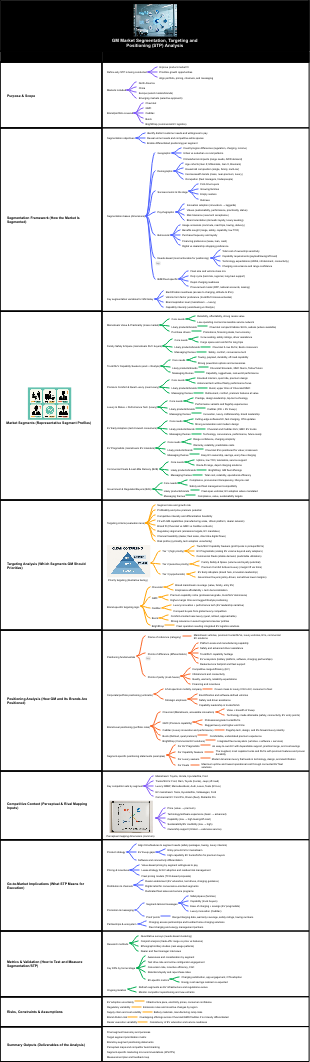
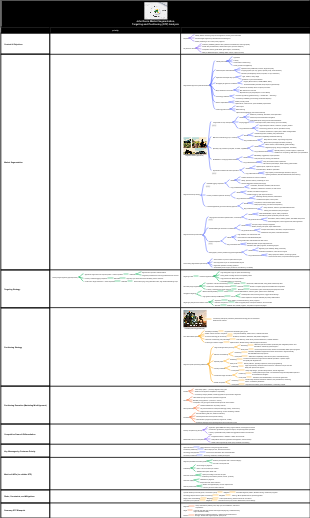
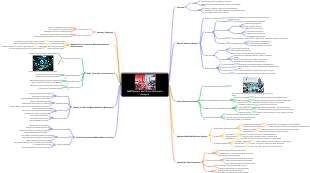
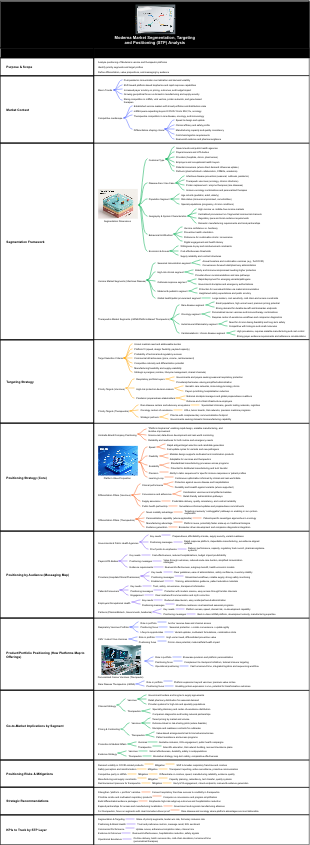
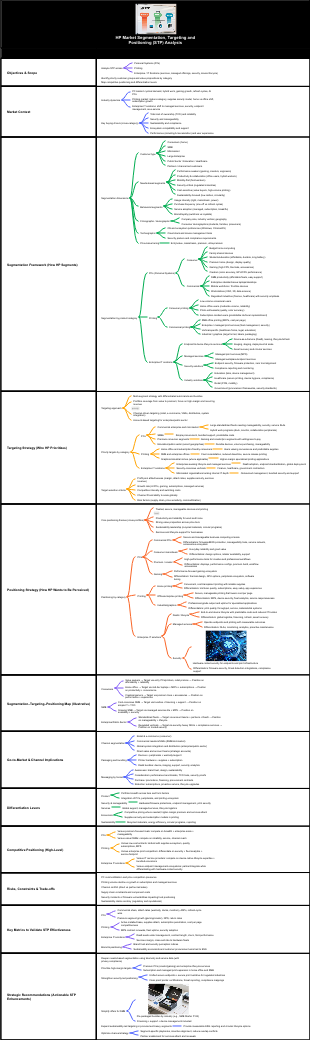
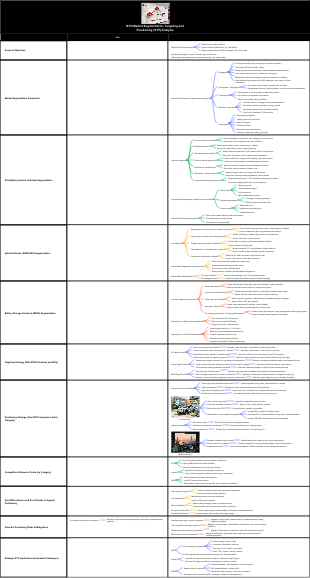
This analysis explores BAIC Group’s market strategy through an in-depth examination of segmentation, targeting, and positioning, focusing on vehicle categories including sedans, SUVs, and New Energy Vehicles (NEVs). Market context is shaped by macroeconomic trends, evolving consumer preferences, and intensifying competitive dynamics. Key drivers include government policies promoting NEV adoption, urbanization, and the shift toward intelligent connectivity. The segmentation framework spans multiple dimensions. Vehicle type distinguishes sedans, SUVs, and NEVs. Price tier ranges from entry-level mass market to near-premium and premium segments. Customer demographics consider age, income, and household composition. Geography differentiates tier-one cities from emerging urban and rural markets. Psychographics capture lifestyle preferences and environmental consciousness. Needs-based segmentation identifies priorities such as affordability, safety, space, technology, and sustainability. A deep dive into the sedan segment reveals primary customer profiles: entry-value commuters seeking affordability and reliability; mainstream urban professionals prioritizing design and efficiency; family-oriented buyers emphasizing safety and space; and premium aspirers desiring luxury features. Decision factors include price, brand reputation, fuel economy, and technology. Competitive references include domestic and international brands across price tiers. Implications for BAIC emphasize differentiation through value and smart features. Strengthening NEV offerings, enhancing connectivity and autonomous driving capabilities, and refining brand positioning across segments can help BAIC capture growth opportunities. This framework supports BAIC’s efforts to navigate and thrive in a competitive automotive market.
Edited at 2026-03-25 15:20:18This strategic SWOT analysis explores how Aeon can navigate the competitive online landscape, highlighting strengths, weaknesses, opportunities, and threats. Strengths include strong brand recognition (trusted Japanese heritage, quality), omnichannel capabilities (stores + online + mall integration), customer loyalty programs (Aeon Card, points, member pricing), and physical footprint (extensive store network for pickup/returns). Weaknesses encompass digital maturity gaps (e-commerce penetration, app functionality, personalization vs. Amazon, Alibaba), cost structure challenges (store-heavy, real estate, labor), and supply chain complexity (fresh food, frozen logistics for online). Opportunities include enhancing e-commerce competitiveness (faster delivery, wider assortment, lower minimum order), leveraging data-driven strategies (purchase history, personalized offers, inventory optimization), expanding omnichannel integration (buy online pick up in store, ship from store), and private label growth (Topvalu, localized brands). Threats involve online-first players (Amazon, Alibaba, Sea Limited) with lower costs, wider selection, faster delivery, market dynamics (changing consumer behavior post-COVID, discount competitors), and regulatory risks (data privacy, cross-border e-commerce rules). Aeon can strengthen market position by investing in digital capabilities, leveraging store assets for omnichannel, and using customer data for personalization, while addressing cost structure and online competition.

This analysis explores how Aeon effectively tailors offerings to meet the diverse needs of family-oriented consumers through a comprehensive Segmentation, Targeting, and Positioning (STP) framework. Demographic segmentation examines family life stages (young families with babies, school-aged children, teenagers, empty nesters), household sizes (small vs. large), income levels (mass, premium), and parent age bands (millennials, Gen X). This identifies distinct consumer groups with different spending patterns. Geographic segmentation highlights store catchment types (urban, suburban, rural), community characteristics (density, income, competition), and local preferences (fresh food, halal, Japanese products). Psychographic segmentation delves into family values (health, safety, education, convenience), lifestyle orientations (busy professionals, home-centered, eco-conscious). Behavioral segmentation focuses on shopping missions (daily grocery, weekly stock-up, seasonal shopping), price sensitivity (value seekers, premium), channel preferences (in-store, online, pickup). Needs-based segmentation reveals core family needs related to value (good-better-best pricing), budget considerations (affordability, promotions, member pricing), safety (food quality, product recall), convenience (one-stop shopping, parking, store hours). Targeting prioritizes young families with school-aged children, budget-conscious households, and convenience-seeking shoppers. Positioning emphasizes Aeon as a family-friendly, value-for-money, one-stop destination with Japanese quality and local relevance. These insights enhance family shopping experiences through tailored assortments (kids’ products, school supplies), promotions (family bundles, weekend events), and services (nursing rooms, kids’ play areas).
This Kream Sneaker Consumption Scene Analysis Template aims to visualize purchasing and consumption journeys of sneakers, identifying key demand drivers and obstacles. User behavior within Kream includes searching, bidding, buying, selling, authentication, and community engagement. External influences include brand drops (Nike, Adidas), social media (Instagram, TikTok), influencer hype, and cultural trends. Target categories: limited editions, collaborations, retro releases, performance sneakers, and general releases. Timeframes: launch day, first week, first month, long-term (seasonal, yearly). Regions: North America, Europe, Asia (Korea, China, Japan). User segments: Collectors: value rarity, condition, completeness (box, accessories). KPIs: collection size, spend, authentication rate. Resellers: value profit margin, volume, turnover. KPIs: sell-through rate, average profit, listing frequency. Sneakerheads: value hype, trends, community validation. KPIs: purchase frequency, social engagement, wishlist adds. Casual trend followers: value style, convenience, price. KPIs: conversion rate, average order value, repeat purchases. Gift purchasers: value ease, presentation, brand trust. KPIs: gift message usage, return rate. Consumption journey: Awareness: social media, email, push notifications. Search: browse, filter, search by brand, model, size. Purchase: bid, buy now, payment, shipping. Authentication: inspection, verification, certification. Resale: list, price, sell, transfer. Sharing: review, unboxing, social post, community discussion. Key performance indicators: conversion rate, sell-through rate, average order value, customer lifetime value, authentication pass rate, return rate, Net Promoter Score. This framework helps understand sneaker trading dynamics, user motivations, and touchpoints for engagement and satisfaction.
This strategic SWOT analysis explores how Aeon can navigate the competitive online landscape, highlighting strengths, weaknesses, opportunities, and threats. Strengths include strong brand recognition (trusted Japanese heritage, quality), omnichannel capabilities (stores + online + mall integration), customer loyalty programs (Aeon Card, points, member pricing), and physical footprint (extensive store network for pickup/returns). Weaknesses encompass digital maturity gaps (e-commerce penetration, app functionality, personalization vs. Amazon, Alibaba), cost structure challenges (store-heavy, real estate, labor), and supply chain complexity (fresh food, frozen logistics for online). Opportunities include enhancing e-commerce competitiveness (faster delivery, wider assortment, lower minimum order), leveraging data-driven strategies (purchase history, personalized offers, inventory optimization), expanding omnichannel integration (buy online pick up in store, ship from store), and private label growth (Topvalu, localized brands). Threats involve online-first players (Amazon, Alibaba, Sea Limited) with lower costs, wider selection, faster delivery, market dynamics (changing consumer behavior post-COVID, discount competitors), and regulatory risks (data privacy, cross-border e-commerce rules). Aeon can strengthen market position by investing in digital capabilities, leveraging store assets for omnichannel, and using customer data for personalization, while addressing cost structure and online competition.
This analysis explores how Aeon effectively tailors offerings to meet the diverse needs of family-oriented consumers through a comprehensive Segmentation, Targeting, and Positioning (STP) framework. Demographic segmentation examines family life stages (young families with babies, school-aged children, teenagers, empty nesters), household sizes (small vs. large), income levels (mass, premium), and parent age bands (millennials, Gen X). This identifies distinct consumer groups with different spending patterns. Geographic segmentation highlights store catchment types (urban, suburban, rural), community characteristics (density, income, competition), and local preferences (fresh food, halal, Japanese products). Psychographic segmentation delves into family values (health, safety, education, convenience), lifestyle orientations (busy professionals, home-centered, eco-conscious). Behavioral segmentation focuses on shopping missions (daily grocery, weekly stock-up, seasonal shopping), price sensitivity (value seekers, premium), channel preferences (in-store, online, pickup). Needs-based segmentation reveals core family needs related to value (good-better-best pricing), budget considerations (affordability, promotions, member pricing), safety (food quality, product recall), convenience (one-stop shopping, parking, store hours). Targeting prioritizes young families with school-aged children, budget-conscious households, and convenience-seeking shoppers. Positioning emphasizes Aeon as a family-friendly, value-for-money, one-stop destination with Japanese quality and local relevance. These insights enhance family shopping experiences through tailored assortments (kids’ products, school supplies), promotions (family bundles, weekend events), and services (nursing rooms, kids’ play areas).
This Kream Sneaker Consumption Scene Analysis Template aims to visualize purchasing and consumption journeys of sneakers, identifying key demand drivers and obstacles. User behavior within Kream includes searching, bidding, buying, selling, authentication, and community engagement. External influences include brand drops (Nike, Adidas), social media (Instagram, TikTok), influencer hype, and cultural trends. Target categories: limited editions, collaborations, retro releases, performance sneakers, and general releases. Timeframes: launch day, first week, first month, long-term (seasonal, yearly). Regions: North America, Europe, Asia (Korea, China, Japan). User segments: Collectors: value rarity, condition, completeness (box, accessories). KPIs: collection size, spend, authentication rate. Resellers: value profit margin, volume, turnover. KPIs: sell-through rate, average profit, listing frequency. Sneakerheads: value hype, trends, community validation. KPIs: purchase frequency, social engagement, wishlist adds. Casual trend followers: value style, convenience, price. KPIs: conversion rate, average order value, repeat purchases. Gift purchasers: value ease, presentation, brand trust. KPIs: gift message usage, return rate. Consumption journey: Awareness: social media, email, push notifications. Search: browse, filter, search by brand, model, size. Purchase: bid, buy now, payment, shipping. Authentication: inspection, verification, certification. Resale: list, price, sell, transfer. Sharing: review, unboxing, social post, community discussion. Key performance indicators: conversion rate, sell-through rate, average order value, customer lifetime value, authentication pass rate, return rate, Net Promoter Score. This framework helps understand sneaker trading dynamics, user motivations, and touchpoints for engagement and satisfaction.
BAIC Group Market Segmentation, Targeting and Positioning (STP) Analysis
Objective & Scope
Analyze market segmentation across: Sedans, SUVs, NEVs (BEV/PHEV/REEV as applicable)
Define targeting priorities by customer, use-case, and price band
Clarify positioning by brand, value proposition, and competitive set
Market Context & Key Drivers
Macro drivers
Urbanization and commuting patterns
Income polarization and consumption upgrading
Digital retail and O2O customer journeys
Industry drivers
NEV policy, incentives, and charging infrastructure
Technology adoption (ADAS, connectivity, intelligent cockpit)
Cost trends (battery costs, supply chain localization)
Competitive landscape
Domestic OEMs: value-to-tech disruption, rapid refresh cycles
Joint ventures: legacy strengths in ICE sedans/SUVs, brand trust
New entrants: software-defined vehicles, direct sales, community ops
Demand is shaped by commuting/digitalization, NEV policy+tech acceleration, and intensified competition from domestic disruptors, JVs, and software-first entrants.
Segmentation Framework (How BAIC Can Slice the Market)
By vehicle type
Sedans
SUVs
NEVs
By price tier
Entry value
Mainstream
Upper-mainstream / near-premium
Premium / luxury
By customer demographics
Age cohorts: Gen Z, Millennials, Gen X
Family structure: single, couple, young family, multi-generation
Occupation: white-collar, gig economy, SME owners, professionals
By geography
Tier-1 cities: license restrictions, high NEV penetration
Tier-2/3 cities: volume growth, balanced ICE/NEV mix
Tier-4+ / county markets: value sensitivity, durability, service reach
Climate & terrain: cold regions (battery performance), mountainous areas
By psychographics (attitudes & lifestyle)
Value pragmatists (TCO-focused)
Tech seekers (smart cockpit/ADAS)
Status & design driven (brand and styling)
Green adopters (sustainability identity)
By needs & jobs-to-be-done
Daily commuting efficiency
Family space and safety
Long-distance travel comfort
Cargo/utility and versatility
Driving enjoyment/performance
Low operating cost and reliability
By usage intensity
Low mileage urban users
High mileage intercity commuters
Ride-hailing / fleet usage
Corporate procurement
By channel preference
Traditional dealer-led purchase
Digital-first research with offline delivery
Direct-to-consumer expectations (transparent pricing, fast delivery)
Segment Deep Dive: Sedans
Primary customer segments
Urban commuters
Needs: efficiency, easy parking, comfort, connectivity
Triggers: fuel/energy cost, commute time, congestion
First-time buyers / young professionals
Needs: affordability, financing, modern design, infotainment
Practical family sedan buyers
Needs: rear-seat comfort, safety, trunk space, reliability
Business users (regional / SME)
Needs: durability, service network, predictable operating cost
Key decision factors
Total cost of ownership (energy + maintenance)
Perceived quality and NVH
Safety ratings and driver assistance
In-car experience (screens, voice, navigation)
Resale value and warranty
Competitive reference set
Mainstream ICE/HEV sedans
NEV sedans in the same price band
Joint-venture mainstream sedans with strong brand equity
Implications for BAIC
Differentiate via value + smart features at mainstream price
Strengthen perceived quality and after-sales confidence
Use sedan line as conquest tool in high-volume city clusters
Segment Deep Dive: SUVs
Primary customer segments
Young families upgrading from compact cars/sedans
Needs: space, safety, child-friendly features, comfort
Lifestyle and outdoor users
Needs: versatility, storage, roof racks, long-range confidence
Status-seeking mainstream buyers
Needs: commanding view, design presence, brand image
Multi-generation family users
Needs: easy ingress/egress, rear comfort, cabin quietness
Sub-segmentation by SUV class
Compact SUV (volume core)
Mid-size SUV (family upgrade)
Large SUV / 3-row (multi-generation, premium-seeking)
Key decision factors
Cabin space and seating flexibility
Safety and ADAS for family use
Powertrain smoothness and energy efficiency
Ride comfort and NVH
Design differentiation and interior premium feel
Competitive reference set
Domestic high-feature SUVs (fast refresh cycles)
Joint-venture SUVs (brand + perceived reliability)
NEV SUVs competing on tech and operating cost
Implications for BAIC
Make SUV portfolio the “family + tech value” anchor
Build recognizable design language and consistent interior UX
Offer clear trim walk (value → tech → comfort)
Segment Deep Dive: New Energy Vehicles (NEVs)
Primary customer segments
Policy/infrastructure advantaged urban buyers
Needs: charging convenience, city driving efficiency, license benefits
Tech-forward early majority
Needs: intelligent cockpit, OTA, ADAS, app ecosystem
Cost-minimizers (high mileage)
Needs: low energy cost, strong warranty, battery health assurance
Family NEV adopters
Needs: safety, range confidence, cabin comfort, thermal management
Fleet / mobility operators (where applicable)
Needs: uptime, fast service, predictable depreciation, telematics
Sub-segmentation by use-case
City EV (short range, high convenience)
Mainstream EV (balanced range + price)
Long-range / intercity EV (range + fast charging)
Hybrid/extended-range solution seekers (range anxiety mitigation)
Key decision factors
Real-world range and winter performance
Charging speed and network compatibility
Battery safety and warranty terms
Software experience (stability, OTA cadence)
Intelligent driving capability and usability
Residual value and buyback programs
Competitive reference set
Pure-play EV brands (software + ecosystem)
Domestic OEM NEV sub-brands (price-performance)
Joint-venture NEVs (brand trust + quality)
Implications for BAIC
Clarify NEV value proposition (technology, safety, and TCO)
Build trust via battery safety messaging and transparent warranty
Align product roadmap to fast-evolving smart features
Targeting Strategy (Where BAIC Should Focus)
Targeting principles
Prioritize segments with
High growth and favorable policy tailwinds (NEV, family SUVs)
Strong fit with BAIC capabilities (manufacturing scale, service network)
Clear differentiation potential (value + tech + reliability)
Balance portfolio risk
Maintain ICE cash-flow segments while accelerating NEV mix
Priority targets by category
Sedans
Primary: urban commuters seeking high value and smart features
Secondary: young first-time buyers needing affordability + design
Selective: business users in lower-tier cities valuing durability
SUVs
Primary: compact/mid-size family upgraders (space + safety + comfort)
Secondary: lifestyle users wanting versatility and design
Selective: 3-row buyers where BAIC can deliver premium comfort at value
NEVs
Primary: Tier-1/2 urban NEV adopters with home/work charging
Secondary: tech-forward mainstream buyers valuing intelligent cockpit/ADAS
Selective: high-mileage users if battery warranty + charging proposition is strong
Channel & go-to-market targeting
Tiered city strategy
Tier-1: NEV-first, digital-first lead gen, experience stores
Tier-2/3: balanced ICE+NEV, dealer strength, localized promotions
Lower tiers: value propositions, service accessibility, financing
Customer lifecycle targeting
Conquest campaigns for competitors’ owners
Upgrade campaigns for existing BAIC owners
Referral and community programs for NEV users
Positioning Strategy (How BAIC Should Be Perceived)
Corporate-level positioning themes
Smart value mobility (technology and safety at accessible prices)
Reliable quality with nationwide service support
NEV confidence: safety, range realism, and transparent ownership cost
Category-specific positioning
Sedans
Positioning: efficient, comfortable, smart commuter companion
Proof points: best-in-class TCO, quiet cabin/refined ride, practical smart features that work reliably
SUVs
Positioning: family-first space and safety with tech-forward experience
Proof points: spacious packaging/flexible seating, strong safety suite and ADAS usability, premium-feel interior at mainstream price
NEVs
Positioning: trustworthy intelligent EVs built for real-world China driving
Proof points: battery safety engineering + long warranty, fast charging + robust thermal management, stable software + consistent OTA roadmap
Differentiation levers
Product
Safety engineering and testing transparency
Consistent smart cockpit UX across models
Comfort tuning and NVH as quiet value premium
Price & ownership
Transparent pricing, fewer confusing trims
Competitive financing/leasing
Battery/vehicle warranty and service packages
Brand & experience
Design language consistency
Delivery experience and digital touchpoints
Community building for NEV owners
Positioning by Brand/Line (If Applicable Within BAIC Ecosystem)
Mainstream value brand(s)
Role: volume driver in sedans/SUVs
Position: value + reliable quality + practical tech
NEV-focused brand(s)
Role: growth engine, tech image
Position: intelligent, safe, software-forward, low TCO
Premium/co-developed lines (if present)
Role: elevate brand halo and margins
Position: near-premium design, comfort, advanced ADAS, higher craftsmanship
Messaging Architecture (What to Say to Each Segment)
Sedans
Comfortable daily commute with lower running costs
Smart features you use every day—stable and simple
SUVs
Space and safety for the whole family
Premium cabin feel without premium price
NEVs
Battery safety and warranty you can trust
Real-world range + fast charging for everyday and weekend trips
Messaging should map directly to daily usefulness—cost, family safety/space, and NEV trust (safety+warranty+real range).
Product & Portfolio Implications
Sedan portfolio
Maintain clear entry and mainstream offerings
Consider NEV sedan variants where urban demand is strongest
SUV portfolio
Focus on compact/mid-size as core volume
Add differentiated 3-row where brand can credibly compete
Offer family-focused trims (child-seat anchors, air quality, storage)
NEV portfolio
Cover city EV to mainstream EV range bands
Standardize charging capability and thermal performance
Harmonize software stack to reduce fragmentation
Trim and feature strategy
Simplify trims; create value/comfort/tech ladders
Make safety and key smart features standard where possible
Pricing, Promotion, and Place (4Ps Alignment to STP)
Pricing
Value leadership in mainstream segments
Ownership-cost messaging: energy, maintenance, warranty, insurance
Promotion
Content marketing: safety, winter range, real user stories
Test-drive events for family SUVs and NEVs
Comparative campaigns emphasizing feature-for-price
Place (distribution)
Strengthen dealer service capability for NEVs (battery/diagnostics)
Urban experience stores + online booking
Mobile service and fast service lanes for high-mileage users
Partnerships
Charging network collaborations
Insurance/finance bundles
Corporate/fleet procurement partnerships
KPI & Measurement (How to Track Success)
Segmentation health
Mix by city tier, price band, and powertrain
Conquest rate vs key competitors
Marketing funnel
Lead-to-test-drive conversion
Test-drive-to-order conversion
CAC by segment and channel
Product/brand
Consideration and preference in target segments
NPS and service satisfaction
OTA engagement and app MAU (for NEVs)
Ownership economics
Warranty claim rates
Battery health and retention metrics
Residual value trends
Risks & Mitigations
Rapid competitor product cycles
Mitigation: shorter refresh cadence, software upgrades, modular platforms
NEV trust issues (range/safety/software stability)
Mitigation: transparent testing, strong warranty, conservative range claims
Channel conflict and pricing transparency
Mitigation: unified pricing policy, dealer incentives tied to experience/NPS
Supply chain volatility (batteries/chips)
Mitigation: dual sourcing, localized suppliers, platform standardization
Recommendations Summary (Actionable STP Moves)
Double down on family compact/mid-size SUVs with space + safety + tech value
Make NEVs a trust-led proposition: battery safety, real-world range, warranty clarity
Use sedans as value-smart commuter anchors in high-volume city clusters
Simplify trims and standardize core smart/safety features to strengthen positioning
Deploy tiered city go-to-market: NEV-first in Tier-1, balanced mix in Tier-2/3, value + service reach in lower tiers