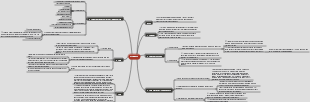
MindMap Gallery Cognitive analysis of personality disorders
From Chapter 3 of the book "Cognitive Therapy Advances and Challenges", including histrionic, obsessive-compulsive, passive-aggressive, borderline, dependent, avoidant, paranoid, antisocial, schizophrenic, and schizoid and narcissistic personality disorder beliefs (beliefs about self and others), assumptions, overdeveloped and underdeveloped strategies, cognitions and behaviors that impede treatment, and specific cases.
Edited at 2024-01-22 17:57:48This article discusses the Easter eggs and homages in Zootopia 2 that you may have discovered. The main content includes: character and archetype Easter eggs, cinematic universe crossover Easter eggs, animal ecology and behavior references, symbol and metaphor Easter eggs, social satire and brand allusions, and emotional storylines and sequel foreshadowing.

[Zootopia Character Relationship Chart] The idealistic rabbit police officer Judy and the cynical fox conman Nick form a charmingly contrasting duo, rising from street hustlers to become Zootopia police officers!
This is a mind map about Deep Analysis of Character Relationships in Zootopia 2, Main content: 1、 Multi-layer network of relationships: interweaving of main lines, branch lines, and hidden interactions, 2、 Motivation for Character Behavior: Active Promoter and Hidden Intendant, 3、 Key points of interaction: logic of conflict, collaboration, and covert support, 4、 Fun Easter eggs: metaphorical details hidden in interactions.
This article discusses the Easter eggs and homages in Zootopia 2 that you may have discovered. The main content includes: character and archetype Easter eggs, cinematic universe crossover Easter eggs, animal ecology and behavior references, symbol and metaphor Easter eggs, social satire and brand allusions, and emotional storylines and sequel foreshadowing.
[Zootopia Character Relationship Chart] The idealistic rabbit police officer Judy and the cynical fox conman Nick form a charmingly contrasting duo, rising from street hustlers to become Zootopia police officers!
This is a mind map about Deep Analysis of Character Relationships in Zootopia 2, Main content: 1、 Multi-layer network of relationships: interweaving of main lines, branch lines, and hidden interactions, 2、 Motivation for Character Behavior: Active Promoter and Hidden Intendant, 3、 Key points of interaction: logic of conflict, collaboration, and covert support, 4、 Fun Easter eggs: metaphorical details hidden in interactions.
Cognitive analysis of personality disorders
histrionic personality disorder
beliefs about self
"I'm nothing" (this thought comes up when no one is paying attention or being accused)
(Also, “I’m so awesome and special” comes up when others give positive feedback.)
beliefs about others
"I need to impress others so they care."
Conditional assumptions
"If I make other people happy, they will like me" (if I don't, they will ignore me)"
“If I stand out, I’ll get what I want” (but if I don’t stand out, I won’t get what I want from them)”
Coping Strategies for Overdevelopment
too conspicuous
Dress, manner, and conversation are extremely charming.
please others
seeking compliments
Undeveloped coping strategies
calm, obedient
Live in harmony with others
Hold reasonable standards for evaluating the behavior of others
Use normal standards to evaluate behavior
Beliefs that hinder treatment
"If I please my therapist, she will like me."
"If I exaggerate my problems, the therapist will help me"
"If I act 'normal' in therapy, I will be 'mediocre' and boring"
Behavior that interferes with treatment
exaggerated appearance
witty words
Act seductively
eager to be complimented
Don’t do homework because I think doing homework will make me mediocre
Case
When Tiffany was young, she was the center of her parents' and grandparents' lives. She is stunningly beautiful and loves to please. Before the age of 8, she received strong positive attention and comments from her family every day, and was always regarded as the most precious one, until her younger brother was born, and his younger brother was born with serious health problems. Her parents, tired of caring for a fragile infant, began to accuse her of attention-seeking behavior. Tiffany no longer believed that she was the most special and cherished little girl in the world, she began to believe that she was "nothing." Tiffany suffered from feelings of emotional deprivation and neglect, and she developed strategies to gain that feeling of being special. She began to use exaggerated language and emotional responses, and began to display artistic talents, such as singing and performing in stage plays at school, to attract others' attention whenever possible. Years later, she dressed and talked seductively and competed in beauty pageants. She believes that she can only be happy when others notice her and think she is special. Tiffany's emotional experience is also stronger than others. Compared to other people, she gets more excited than "thrilled" when she gets praise or pampering, and gets more than "down" when she doesn't get attention. When Tiffany first came to therapy, she tried to use her usual tactics of pleasing the therapist, telling many stories about herself but little about her actual problems, and bringing gifts to the therapist.
obsessive-compulsive personality disorder
beliefs about self
"I can't bear for something bad to happen"
"I have a responsibility to prevent harm from happening"
beliefs about others
"Others are cowardly, irresponsible and careless"
Conditional assumptions
"If I take responsibility for everything, I'll be fine" (but if I rely on others, they'll let me down)
“If I make rules and maintain order for myself and others, and do everything perfectly, my world will be great” (But if I don’t, things will be chaotic.)”
Coping Strategies for Overdevelopment
Strict control over yourself and others
create unreasonable expectations
Assume too much responsibility
pursuing perfection
Undeveloped coping strategies
hand over power
Develop flexible expectations
Only take control when appropriate
Tolerate the presence of uncertainty
Act naturally and do what you say
Find fun and enjoyable activities
Beliefs that hinder treatment
"If I don't do it right and tell the therapist exactly what she wants to know, she won't help me anymore."
"If I don't do my homework perfectly, therapy won't be effective."
"If I lower my expectations of myself and others, bad things will happen."
Behavior that interferes with treatment
trying to control the meeting
Attempt to provide particularly precise information
Be hypervigilant when the therapist cannot understand him
Spending too much time and energy on homework
Unable to perform tasks naturally and unable to accept the idea of delegating responsibilities to others
Case
Dennis was the eldest of five children, and his parents were both alcoholics. From a young age, Dennis felt vulnerable. He thinks other people are unreasonable and irresponsible. His world is in chaos. Dennis soon realized that the world would be a safer place if he took on an adult role. Dennis began to control his emotions, developed rules and regulations to ensure that his room was neat and tidy, and became overly responsible for himself and his younger siblings. These would allow Dennis to adapt well as a child. These strategies also served Dennis well in his job as a self-employed computer programmer as an adult. Unfortunately, he is unable to develop good relationships with women. These strategies that had applied to him in his childhood and work became so ingrained that he never learned the opposite: how to hand over responsibilities, how to be flexible about his expectations, how to have fun. Girls always feel that he is too serious, too responsible, too rigid, and too perfectionistic. His therapist also soon discovered that Dennis's obsessive-compulsive traits also interfered with therapy. Dennis tried to take control of the session, ignoring the therapist's gentle interruptions. He described his difficulties in excruciating detail so that the therapist could understand him with utmost accuracy. He also tries to be extremely perfect when doing his homework.
Passive-aggressive personality disorder
beliefs about self
"I am easily controlled by others"
“I wasn’t understood, I wasn’t appreciated.”
beliefs about others
"Others are powerful, aggressive and demanding."
"They have unreasonable expectations of me."
"They should have left me alone."
Conditional assumptions
“If someone else controls me, it means I suck.”
"If I exert indirect control (i.e., outwardly agreeing but inwardly disobeying), others cannot control me. (But if I exert direct control, control will not work.)"
Coping Strategies for Overdevelopment
Pretend to cooperate
Avoid speaking out, confrontation, and outright denial
Passive resistance to control by others
failure to perform duties
Not meeting other people's expectations
Undeveloped coping strategies
cooperate
Believe that you have reasonable responsibilities towards yourself and others
Handle interpersonal problems simply and directly
Beliefs that hinder treatment
"If I answered the therapist's questions, she was controlling me, and in that case, I was terrible."
"If I'm blunt with my therapist, she can control me."
“If I get better in treatment, other people will have inflated expectations of me.”
Behavior that interferes with treatment
Discussing homework assignments with therapist but not completing them
Adopt a negative attitude when solving problems
Agree with the therapist on the surface, but disagree on the inside
Case
Claire was overly sensitive to control when she was in elementary school. She becomes very irritated by authority figures (e.g., parents, teachers, other adults) asking her to do things, especially when authority figures give her difficult or unpleasant tasks. Ironically, she later married an overly controlling man (because she became pregnant before the marriage). When the man gives her a to-do list (asking her to balance her checkbook, use coupons at the grocery store, organize the closets at home), she agrees to do it but rarely actually does it. As her husband lectures her son, she will find ways to undermine her husband's authority image in front of the children. Claire thought it would be relatively easy to work part-time, but she would leave after only a few weeks or months because she couldn't live up to her boss's expectations. Claire's beliefs—that she was bad and could be easily controlled—came to the fore in therapy, and she exhibited typical passive-aggressive behaviors, such as agreeing to do homework but then not doing it after a while. . She always wants to confirm the therapist's assumptions, regardless of whether she actually agrees with them.
borderline personality disorder
beliefs about self
"I am bad and worthless."
“I’m not lovable, I’m flawed.”
"I was helpless and always out of control."
"I am incompetent"
"I am weak and fragile."
"I'm a victim."
beliefs about others
"Others are powerful."
"Others could hurt me."
"Others are always a level above me."
"Others will reject me and abandon me."
Conditional assumptions
"If I don't take the challenge, I'll be good. (But if I take the challenge, I'll fail.)"
"If I depend on others, I will be fine. (But if I don't depend on others, I won't survive.)"
"If I do what people want me to do, they will stick with me for a while. (But if I make them unhappy, they will abandon me quickly.)"
"If I am hypervigilant about harm to others, I can protect myself. (But if I don't, I will be harmed.)"
"When I'm upset, if I can punish others, I feel more powerful and can control their future behavior. (But if I don't, I feel weak and they might hurt me.) .)"
"If I isolate the negative emotions, I feel good. (But if I don't, I break down.)"
Coping Strategies for Overdevelopment
distrust others
blame others
avoid challenges
dependent on others
Over-restraining oneself or over-controlling others
avoid negative emotions
Self-injurious behavior when overly excited
Undeveloped coping strategies
Balance your own needs with the needs of others
Give kind explanations for other people's behavior
Trust others.
calm yourself
Solve interpersonal problems.
Persevere when encountering difficulties.
Beliefs that hinder treatment
"Only by relying completely on my therapist can I get better and survive."
"If I trust my therapist, she will eventually reject me and abandon me, so I'm rejecting her before that happens."
"Focusing on problem-solving isn't effective and I end up feeling worse."
Behavior that interferes with treatment
belittle the therapist
Relying too much on the therapist to make yourself feel better
Making too many emergency calls after every meeting
Asking the therapist for dominance
Case
Joan's mother died when she was 6 years old. She thought it was a disaster and felt she had no one to rely on after her mother's death. She never got over it. Her father was always neglectful and emotionally abusive. Her father told her again and again that she was bad and worthless. Slowly, she began to believe her father's words, and she became frightened by the thought that her father would continue to hurt her or possibly abandon her; she believed that others would do the same. Whether at home or at school, Joan avoided social contact and remained isolated. If teachers and neighbors offered her a helping hand, she would refuse to accept their help. In adolescence, Joan had her first friendships, but her friends were all troubled teenagers who took drugs and claimed to be "counterculture". She was angry at her father and, with the support of her friends, often ran away from home. Joan came to treatment for substance abuse and depression, and she was convinced that the therapist was going to harm her. In fact, she had been harmed by therapy before, and the therapist took advantage of her vulnerability and seduced her. She fears that her current therapist will also lie to her and manipulate her. Joan, on the other hand, easily becomes dependent on her therapist, whom she believes is the only one who can save her. When the therapist reasonably limited contact outside of sessions and demanded that sessions end on time, she would get angry, accuse the therapist of not caring about her, and start showing up late.
dependent personality disorder
beliefs about self
"I am incompetent."
"I'm terrible."
"I need to rely on others to survive."
beliefs about others
"Others are strong and capable."
Conditional assumptions
"If I rely on others, I'll do fine. (But if I rely on myself to make decisions or solve problems one by one - I'll fail.)"
"If I obey others, they will take care of me. (But if I annoy them, they won't take care of me.)"
Coping Strategies for Overdevelopment
dependent on others
Don't make your own decisions
Unwilling to solve problems independently
always trying to please others
obey others
docile, submissive
Undeveloped coping strategies
Solve problems independently
Make decisions independently
express one's opinions to others
Beliefs that hinder treatment
“If I tried to use my skills to do things independently, I would fail.”
“If I act decisively, I alienate others.”
"If I terminate treatment, I will lose control of my life."
Behavior that interferes with treatment
Count on the therapist to solve your problems and make decisions for you
Trying to please the therapist
Not doing homework that requires self-expression
Case
Sheila is a clingy, timid child. Even when tasked with tasks that she was capable of completing, she often felt confused and incompetent, and then sought far more help than she actually needed. Slowly, she began to think of herself as completely incompetent. Sensing her daughter's developmental delays, Sheila's mother allowed her to be extremely dependent on herself and discouraged her from becoming independent. Sheila is very experienced in asking for help, wanting others to help her make decisions, and avoiding conflict. She believes that if she obeys others regardless of her own feelings, then others will make her cling to them. Sheila was able to use these strategies effectively while living with her widowed mother. But after Sheila's mother remarried, her stepfather insisted that 21-year-old Sheila move out of the house where she had grown up. Sheila didn't know how to take care of herself, how to make decisions, how to be decisive. She had to start looking for work to pay her bills. She became anxious and developed generalized anxiety disorder. Initially, her dependent nature made her a good collaborator in therapy (e.g., her eagerness to please the therapist), but Sheila had great difficulty solving problems and, even after her anxiety disorder abated, she feared termination of therapy.
avoidant personality disorder
beliefs about self
"I'm unlovable, unaccepted, flawed, and bad."
"I'm prone to negativity."
beliefs about others
"Others are better than me, and they will criticize me and refuse to accept me."
Conditional assumptions
"If I pretend to be good, others will accept me. (But if I show my true self, they will reject me.)"
"If I always please others, I'll be fine. (But if I make others unhappy, they'll hurt me.)"
"If I adopt avoidance strategies (cognitively and behaviorally), I'll be fine. (But if I allow myself to have negative emotions. I'll crash.)"
Coping Strategies for Overdevelopment
avoid social situations
Try not to draw attention to others
Don’t express yourself in front of others
distrust others
Avoid negative emotions
Undeveloped coping strategies
approach others
Trust the good intentions of others
Act naturally when around others
seek intimacy
Consider disturbing situations and issues
Beliefs that hinder treatment
“I would be hurt if I believed the care and compassion expressed by the therapist.”
“I would be overwhelmed if I focused on the treatment issues.”
"If I talk about some of my bad experiences from the past and present, my therapist will give me a bad rap."
“If I try to accomplish interpersonal goals, I get rejected.”
“If I stand up for my rights reasonably, people won’t like me anymore.”
Behavior that interferes with treatment
Not showing your true self to the therapist
Reluctant to show his true self
If you feel distressed during the interview, change the subject
Not doing homework to avoid pain
Case
Erin grew up in a difficult environment. Her father abandoned the family when she was a toddler. Eileen's entire childhood was spent with her mother nagging about her father's death. Her mother was cold and mean. Erin feels that she is unlovable and worthless. She believes that if people really knew her, they would blame her and refuse to accept her because she is not worthy of love. She believes that if she reveals her true self, she will not receive the love and intimacy she so desires. Erin developed avoidance strategies. She avoids any possible social situation: talking to people at school, speaking up in class, drawing attention to herself, and talking too much about herself. She is overly alert to negative comments from others and often misinterprets neutral expressions of others as negative connotations. Erin is very sensitive to negativity. She was afraid that her restless mood would break her. Therefore, she not only avoids situations that may make her uncomfortable, but also avoids any painful memories to avoid her negative emotions. She found alcohol helped ease the pain of loneliness and depression. Finally, she came to treatment for alcohol dependence, and her cognitive, emotional, and interpersonal strategies were all obstacles to treatment.
paranoid personality disorder
beliefs about self
"I am bad and vulnerable. (I have to defend others or preemptively attack them.)"
beliefs about others
"Others will hurt me."
Conditional assumptions
“If I stay alert, I can recognize red flags in my interactions. But without alertness, I wouldn’t be able to recognize these signals. )"
"Assuming others are untrustworthy, I must protect myself. (But if I trust others, they will hurt me.)"
Coping Strategies for Overdevelopment
Hypervigilance to harm
don't trust anyone
Assume others always have ulterior motives
Believe that you will be manipulated, used, or belittled
Undeveloped coping strategies
trust others
Relax physically and mentally
cooperate
Assume others are well-intentioned
Beliefs that hinder treatment
"If I trusted my therapist, she would hurt me."
“If I don’t stay defensive in therapy, I’m going to get hurt.”
Behavior that interferes with treatment
Refuse the therapist's attention
Refuse to accept other explanations for other people’s behavior
Refusing to complete assignments that require getting closer to others
Case
Growing up, Jon developed strategies for being alert to harm. Starting at the age of 3, he spent time in several foster homes, some of which were physically and emotionally abusive to Jon. He sees himself as very vulnerable in front of others. Of course, there are situations where Jon would be justified in being suspicious of other people's motives and not trusting what they are saying. But unfortunately Jon thinks everyone will do him harm. He is completely unable to distinguish between who might harm him and who might not. Jon developed bipolar disorder in his early 20s. But he didn't come to cognitive therapy until he was in his early 40s, and he deeply distrusted his therapist. He refused to take his medication, refused to talk about himself, was unwilling to answer questions, and was unwilling to monitor his thoughts, emotions, and behaviors. His assumption was that if he trusted the therapist, the therapist would hurt him.
subtopic
antisocial personality disorder
beliefs about self
"I am a potential victim. (So I can only survive if I become a perpetrator.)"
“‘Normal’ doesn’t apply to me.”
beliefs about others
"Others will control me, manipulate me, take advantage of me."
"People just want to exploit me."
Conditional assumptions
“I’m the best if I manipulate or attack others first. (If I don’t, they’ll bully me.)”
"If I act strong and hostile, I can get what I want. (If I don't, others will try to control me.)"
Coping Strategies for Overdevelopment
lie
Manipulate or take advantage of others
intimidate or assault others
resist the control of others
impulsive behavior
Undeveloped coping strategies
cooperate with others
obey social rules
consider the consequences
Beliefs that hinder treatment
"If I control my therapist, she can't control me."
"Submitting to my therapist means she is strong and I am weak."
"If I told the truth, she would force something bad on me."
"With serious treatment, I couldn't get what I wanted."
Behavior that interferes with treatment
Trying to threaten the therapist
lying to therapist
Manipulating the therapist
Superficially invested in treatment, but actually not invested at all
Case
Mickey grew up in a dysfunctional home. His mother was drug dependent and either neglected or physically abused him. As a child, Mickey was riddled with anxiety. He felt small and fragile. When he was 8 years old, he discovered that beating his younger brother made him feel powerful and superior. So he started bullying the weak kids in his neighborhood. At 12, he got into drugs. He and a group of friends began to commit petty thefts or purse snatchings. At 14, he began working for a drug dealer and later became a drug dealer himself. Mickey was clearly reluctant to come to therapy. The reason he came to treatment was to get parole (he was charged with drug trafficking) or he would go to jail. At first, he would deceive his therapist (especially regarding matters related to drug use and theft), be late, and only pretend to be cooperative on the surface.
schizotypal personality disorder
beliefs about self
"I'm different."
"I have special powers."
"I'm vulnerable.
beliefs about others
"Others don't understand me."
"Others will reject me."
"Others will hurt me."
Conditional assumptions
"If I pursue an 'unusual' interest, such as metaphysics, I can be special in a special way. (But if I don’t, my difference will be flawed.)”
"If I am hypervigilant to harm, I can protect myself. (But if I am not, I will be harmed.)"
"If I keep my distance from others, I'll be fine. (But if I get close to others, they'll hurt me.)"
Coping Strategies for Overdevelopment
pursue eccentric interests
always distrust others
keep distance from others
Undeveloped coping strategies
trust others
seek human contact
Find rational explanations for unusual experiences
Beliefs that hinder treatment
"If I trusted my therapist, she would hurt me."
“If my ‘sixth sense’ tells me it’s right, then it must be right. "
Behavior that interferes with treatment
Refuse to accept other explanations of things
Not showing your true self in front of the therapist
Always looking for signs of hurt in your therapist
Case
Hank always seemed strange to others. As a child, he looked strange. In school and in the community, other kids would always tease him, which led him to develop a belief that he was different. This belief caused him to avoid other people. As an adult, Hank became interested in the occult. He believes he has a "sixth sense" and he enjoys wearing a cape. He believed that he could divine the future and interpret special meanings from the happenings around him. He has no real friends and most of his social interactions come from the Internet. On the Internet, he came into contact with other people who were also interested in metaphysics, chatting in chat rooms and exchanging emails. Of course, others will still avoid Hank because of his weirdness. This avoidance, coupled with Hank's self-isolation, meant that Hank never had normal interpersonal interactions and had no opportunity to develop appropriate social skills. Hank posed a challenge to the therapist. He was chronically anxious and irritable, but he was afraid to set goals that would improve his life, especially activities that might involve him interacting with others. He felt very vulnerable and was constantly defensive about the therapist at the beginning of therapy, thinking that she would harm him.
schizoid personality disorder
beliefs about self
"I was different, defective; I couldn't fit in."
beliefs about others
"No one else likes me"
"Everyone else is aggressive."
Conditional assumptions
"If I stay alone, people won't bother me. (But if I'm with them, they will see my shortcomings.)"
“If I avoid social relationships, I get along just fine. (But if I develop social relationships with others, other people’s aggression hurts me).
Coping Strategies for Overdevelopment
no contact with people
avoidance of intimacy
Develop a hobby that can be accomplished by one person
Undeveloped coping strategies
Master normal social skills
trust others
Beliefs that hinder treatment
“I would be uncomfortable if my therapist expressed concern and empathy.”
"If I set goals, I have to change my 'alone' lifestyle, and that feels bad."
Behavior that interferes with treatment
Don’t speak, don’t reveal your true self
Improve your life without setting goals
Not doing homework that requires human contact
Case
Lee has always been a loner. He rarely went out to socialize and was considered "maladjusted" by his family, teachers and peers. He will not experience the psychological need for social interaction that most children and adults do. The behavioral strategy of avoidance allowed him to avoid the anxious feelings evoked by interacting with others. He will feel much more comfortable in hobbies that only require one person, such as modeling, playing computer games, and watching television. His childhood was not extremely unhappy, but he always felt that he was different and flawed. As an adult, Lee moved out of home and started working. He chose to work as a night security guard because he didn't have to interact with people as much. He was even more certain that his need for human interaction and social connections was much less than most people's—in fact, he had almost zero human interaction. His sense of emptiness grew and he was unable to experience a sense of accomplishment or happiness. His life revolves around work and those "alone" activities. Lee was treated for depression. He has trouble setting goals. Restless and restless, the only goal he set was to get his mother to "stop bothering him" while she kept nagging him to get a good job and make some friends. He becomes anxious when the therapist shows concern or empathy, or when he thinks the therapist is being aggressive and asking too many questions about his thoughts or emotions.
narcissistic personality disorder
beliefs about self
"I'm not as good as others, I'm nothing, I'm trash." (This idea comes to life when being put down by others or criticized by parents.)
(At the same time, when receiving special treatment or receiving praise from others, the thought "I am superior to others" becomes active.)
beliefs about others
“People are better than me and they hurt me and put me down.”
(At the same time, when you find that others are not as successful as yourself, the idea that "others are inferior to me" becomes active.)
Conditional assumptions
“If I act in a superior way, I feel better about myself. (If I act in a superior way, I feel better about myself. (If I act in a superior way, I feel miserable that I am inferior.)”
"If people treat me in a special way, it proves that I am superior. (But if others don't, I punish them.)"
"If I control others and push them down, I feel superior to them. (But if I don't, others push me down, making me feel inferior.)"
Coping Strategies for Overdevelopment
Requesting special treatment from others
Being overly alert to unfair (or normal) treatment of others
Punishing others when they feel slighted, belittled, or upset
Accusing or putting others down, always trying to outdo and control others
Trying to impress others with wealth, achievements, and relationships with high-status people
Undeveloped coping strategies
Work with others to accomplish a common goal
Work hard and diligently to achieve your goals
Tolerate inconvenience, frustration, and disapproval from others
Meeting the expectations of others without any obvious benefit to oneself
Beliefs that hinder treatment
“If I’m not alert, my therapist will get the better of me.”
"If I don't make her think I'm superior, she's going to think I'm inferior."
"If I don't punish my therapist when she despises me, she will despise me again and again."
"If I don't press the therapist, I don't get special treatment."
Behavior that interferes with treatment
Trying to impress the therapist
ask for privileges
Treat therapists as inferior
Punishing the therapist (through accusations, sarcastic remarks) when feeling slighted
Refusal to accept homework assigned by therapist
Case
When Brad was growing up, his father had a very bad influence on him. His father was extremely narcissistic, always flaunting his achievements, asking others to do their best to take care of him, and accusing Brad of not being "cut out of the same mold" as he was. After Brad became wise, he no longer followed his father's standards, which he considered to be worthless beliefs. He soon began to imitate his father's behavior towards those around him, and he felt better when he was convinced that he was indeed better than others. He constantly brags about himself, demands his rights, and pays special attention to the shortcomings of others. On the other hand, when others do not see him in a special light, he is overly sensitive and reacts very violently. As an adult, Brad applied his narcissistic tactics to work. Employees at his small plumbing company either put up with his narcissistic behavior or found other jobs (as many did). His wife and children were tired of his endless bragging, unreasonable demands, and constant suppression. At the age of 65, Brad sold his company, retired and spent a lot of time at home. His wife couldn't stand his disgusting behavior and separated from him. His son has gradually become independent and no longer needs to rely on him. He soon discovered that he had lost meaningful work and close relationships. In the past, he and his wife often interacted with "friends" and their wives, but that was because they liked his wife. But since his wife separated from him, friends are no longer willing to put up with his abrasive, self-centered, and critical behavior. Brad became somewhat depressed, but he was unwilling to seek treatment for his irritability. He came to therapy because his wife said she would divorce him if he didn't come to therapy. Brad is a troubled patient. His beliefs and emotions fluctuate greatly. He feels superior to his therapist when it comes to financial success. But as a patient, he considered himself inferior to the therapist, and this feeling of inferiority was unbearable. He initially belittled the therapist at every opportunity and became furious when the therapist disagreed with his requests and made him do homework.