 Wondershare EdrawMind
Galleria mappe mentale Meteorology: Atmosphere, Energy, Clouds and Precipitations
- 12
Meteorology: Atmosphere, Energy, Clouds and Precipitations
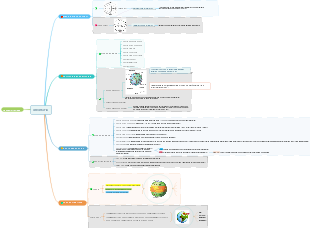
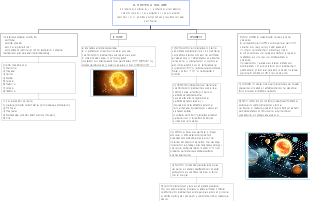
This comprehensive mind map, created using EdrawMind, provides a structured overview of key concepts in meteorology. It is divided into two main branches: one exploring the VERTICAL STRUCTURE OF ATMOSPHERE, which details the layers of the atmosphere (troposphere, stratosphere, mesosphere, thermosphere, ionosphere) and phenomena like the aurora, and another focusing on ENERGY, HEAT, which explains the mechanisms of heat transfer (conduction, convection, radiation) and temperature. The map further extends into CLOUDS AND PRECIPITATIONS, covering cloud formation, classification by height and vertical development, and different types of precipitation. This visual tool is designed for educational use, offering a clear and interconnected summary of atmospheric science principles, and can be reused for study, teaching, or presentation purposes.
Modificato alle 2024-03-23 08:58:23
Meteorology: Atmosphere, Energy, Clouds and Precipitations
- Consigliato per te
- Profilo










METEREOLOGY
1 OVERALL CONCEPTS
INTRODUCTION
METEREOLOGY
is the scientific study of the atmosphere and the phenomena that we usually refer to as weather.
WEATHER
is constantly changing, sometimes from hour to hour and at other times from day to day.
CLIMATE
is the long-term weather pattern in a region, typically averaged over 30 years.
EARTH'S SPHERES
GEOSPHERE
is the long-term weather pattern in a region, typically averaged over 30 years. making it by far the largest of Earth’s four spheres. Based on compositional differences, the geosphere is divided into three principal regions: the dense inner sphere, called the core; the less dense mantle; and the crust, which is the light and very thin outer skin of Earth.
ATMOSPHERE
is a layer of gas or layers of gases that envelop a planet, and is held in place by the gravity of the planetary body. (about 6400 km) More than 99 percent of the atmosphere is within 30 km
HYDROSPHERE
is a dynamic mass that is continually on the move, evaporating from the oceans to the atmosphere, precipitating to the land, and running back to the ocean again, blanketing nearly 71 percent of Earth’s surface to an average depth of about 3800 meters.
BIOSPHERE
The biosphere includes all life on Earth. Ocean life is concentrated in the sunlit surface waters of the sea. Most life on land is also concentrated near the surface, with tree roots and burrowing animals reaching a few me- ters underground and flying insects and birds
COMPOSITION OF ATMOSPHERE
Nitrogen 78 %
Oxygen 20,9 %
Argon 0,9 %
Co2 0,039 %
Neon 18,2 ppm
Helium 5,2 ppm
Methane 1,5 ppm
Hydrogen 0,5 ppm
Variable components
Water vapor
Like carbon dioxide, it has the ability to absorb heat given off by Earth, as well as some solar energy.
AEROSOL
iny solid and liquid particles,originate from many sources, both natural and human made, and include sea salts from breaking waves, fine soil blown into the air, smoke and soot from fires, pollen and mi-croorganisms lifted by the wind, ash and dust from volcanic eruptions, and more
OZONE
It is a form of oxygen that combines three oxygen atoms into each molecule (O3). Ozone is not the same as the oxygen we breathe, which has two atoms per molecule (O2). It is concentrated well above the surface in a layer called the stratosphere, between 10 and 50 kilometers.
In this altitude range, oxygen molecules (O2) are split into single atoms of oxygen (O) when they absorb ultraviolet radiation emitted by the Sun. Ozone is then created when a single atom of oxygen (O) and a molecule of oxygen (O2) collide. This must happen in the presence of a third, neutral molecule that acts as a catalyst by allowing the reaction to take place without itself being consumed in the process.The ultraviolet radiation from the Sun is sufficient to produce single atoms of oxygen, and there are enough gas molecules to bring about the required collisions.
VERTICAL STRUCTURE OF ATMOSPHERE
TROPOSPHERE
The bottom layer in which we live, where temperature decreases with an increase in altitude. From 0 to 10 km
The bottom layer in which we live, where temperature decreases with an increase in altitude. From 0 to 10 km
STRATOSPHERE
Is between 10 - 50 km. The temperature at first remains nearly constant to a height of about 20 km,
before it begins a sharp increase that continues until the stratopause is encountered at a height of about 50 kilometers above Earth’s surface. Higher temperatures occur in the stratosphere because it is in this layer that the atmosphere’s ozone is concentrated.
MESOSPHERE
temperatures again decrease with height until at the mesopause, some 80 kilometers above the surface, the average temperature approaches -90°C
At the mesopause, the atmospheric pressure drops to just one-millionth that at sea level.
THERMOSPHERE
The fourth and last layer extends outward from the mesopause and has no well-defined upper limit.
Temperatures rise to extremely high values of more than 1000°C in the thermosphere. But such temperatures are not comparable to those experienced near Earth’s surface. Temperature is defined in terms of the average speed at which molecules move. Because the gases of the hermo- sphere are moving at very high speeds, the temperature is very high. But the gases are so sparse that collectively they possess only an insignificant quantity of heat. For this reason, the temperature of a satellite orbiting Earth in the thermosphere is determined chiefly by the amount of solar, radiation it absorbs and not by the high temperature of the almost nonexistent surrounding air. If an astronaut inside were to expose his or her hand, the air in this layer would not feel hot.
IONOSPHERE
Located in the altitude range between 80 to 400 km, and thus coinciding with the lower portions of the thermosphere and heterosphere, is an electrically charged layer known as the ionosphere. Here molecules of nitrogen and atoms of oxygen are readily ionized as they absorb high-energy shortwave solar energy. In this process, each affected molecule or atom loses one or more electrons and becomes a positively charged ion, and the electrons are set free to travel as electric currents. Although ionization occurs at heights as great as 1000 km and extends as low as perhaps 50 km, positively charged ions and negative electrons are most dense in the range of 80 to 400 km. The concentration of ions is not great below this zone because much of the short-wavelength radiation needed for ionization has already been depleted.
AURORA
Solar flares are massive magnetic storms on the Sun that emit enormous amounts of energy and great quantities of fast-moving atomic particles. As the clouds of protons and electrons from the solar storm approach Earth, they are captured by its magnetic field, which in turn guides them toward the magnetic poles. Then, as the ions impinge on the ionosphere, they energize the atoms of oxygen and molecules of nitrogen and cause them to emit light—the glow of the auroras.
2 ENERGY, HEAT
FORMS OF ENERGY
Energy can be defined simply as the capacity to do work.
Kinetic energy
Energy associated with an object by virtue of its motion
Potential energy
has the capability to do work. For example, large hailstones suspended by an updraft in a towering cloud have potential energy.
Temperature
Temperature is a measure of the average kinetic energy of the atoms or molecules in a substance.
Temperature is a measure
of the average kinetic energy of the atoms or molecules in a sub-
stance.
Heat
Mechanisms of Heat Transfer
Conduction
is the transfer of heat through electron and molecular collisions from one molecule to another. The ability of substances to conduct heat varies considerably. Metals are good conductors, as those of us who have touched a hot spoon have quickly learned. Air, in contrast, is a very poor conductor of heat. Consequently, conduction is important only between Earth’s surface and the air immediately in contact with the surface.
Argomento
Convection (Upward or downward heat transfer)
is heat transfer that involves the actual movement or circulation of a substance. It takes place in fluids (liquids such as water and gases such as air) where the material is able to flow.As long as the water is heated from the bottom and cools near the top, it will continue to “turn over,” producing a convective circulation. In a similar manner, some of the air in the lowest layer of the atmosphere that was heated by radiation and conduction is transported by convection to higher layers of the atmosphere. For example, on a hot, sunny day the air above a plowed field will be heated more than the air above the surrounding woodlands. As warm, less dense air above the plowed field buoys upward, it is replaced by the cooler air above the woodlands. In this way a convective flow is established. The warm parcels of rising air are called thermals and are what hang-glider pilots use to keep their crafts soaring. Convection of this type not only transfers heat but also transports moisture aloft. The result is an increase in cloudiness that frequently can be observed on warm summer afternoons.
Advection (primarily horizontal component of convective flow.)
Radiation
is the only mechanism of heat transfer that can travel through the vacuum of space and thus is responsible for solar energy reaching Earth.
All types of radiation, whether X-rays, radio waves, or heat waves, travel through the vacuum of space at 300,000 kilometers per second, a value known as the speed of light.
Radio waves have the longest wavelengths, up to tens of kilometers in length. Gamma waves are the shortest, at less than one-billionth of a centimeter long. Visible light is roughly in the middle of this range. Radiation is often identified by the effect that it produces when it interacts with an object. The retinas of our eyes, for instance, are sensitive to a range of wavelengths called visible light. We often refer to visible light as white light because it appears “white” in color. It is easy to show, however, that white light is really an array of colors, each color corresponding to a specific range of wavelengths. By using a prism, white light can be divided into the colors
Sub-Argomento
Laws of radiation
One important difference among the various wavelengths of radiant energy is that shorter wavelengths are more energetic.
Hotter objects radiate more energy in the form of short-wavelength radiation than do cooler objects.
Objects that are good absorbers of radiation are also good emitters. Earth’s surface and the Sun are nearly perfect radiators because they absorb and radiate with nearly 100 percent efficiency. By contrast, the gases that compose our atmosphere are selective absorbers andemitters of radiation.
Reflection
is the process whereby light bounces back from an object at the same angle and intensity
Albedo
The fraction of radiation that is reflected by an object is called its albedo. The albedo for Earth as a whole (planetary albedo) is 30 percent. The amount of light reflected from Earth’s land–sea surface represents only about 5 percent of the total planetary albedo
Scattering
The Role of Gases in the Atmosphere
Annual energy balance
Sub-Argomento
3 TEMPERATURE
Land and Water
An important reason that the surface temperature of water rises and falls much more slowly than the surface temperature of land is that water is highly mobile.
Because land surfaces are opaque, heat is absorbed only at the surface.
The specific heat (the amount of heat needed to raise the temperature of 1 gram of a substance 1°C) is more than three times greater for water than for land.
Evaporation (a cooling process) from water bodies is greater than from land surfaces. Energy is required to evaporate water. When energy is used for evaporation, it is not available for heating.*
Ocean currents
4 MOISTURE AND ATMOSPHERIC STABILITY
ICE, LIQUID WATER AND WATER VAPOR
Latent heat
One calorie is the amount of heat required to raise the temperature of 1 gram of water 1°C. Thus, when 10 calories of heat are absorbed by 1 gram of water, the molecules vibrate faster, and a 10°C temperature in crease occurs.
Sublimation and deposition
Sublimation
Deposition This change occurs, for example, when water vapor is deposited as ice on solid objects such as grass or windows
Umidity:Water vapor in the air
Absolute humidity
is the mass of water vapor in a given volume of air (usually as grams per cubic meter):
Absolute humidity = Mass of water vapor (grams)/ Volume of air (cubic meters)
mixing ratio
mass of water vapor in a unit of air compared to the remaining mass of dry air:nto
Mixing ratio = Mass of water vapor (grams)/ Mass of dry air (kilograms)
Vapor pressure
the part of the total atmospheric pressure attributable to its water-vapor content.
Initially, many more molecules will leave the water surface (evaporate) than will return (condense). However, as more and more molecules evapo- rate from the water surface, the steadily increasing vapor pressure in the air above forces more and more water molecules to return to the liquid. Eventually a balance is reached in which the number of water molecules returning to the surface equals the number leaving. At that point the air is saidto have reached an equilibrium called saturation
When air is saturated, the pressure exerted by the motion of the water vapor molecules is called the saturation vapor pressure.
Now suppose we were to disrupt the equilibrium by heating the water in our closed container. The added energy would increase the rate at which the water molecules would evaporate from the surface. This in turn would cause the vapor pressure in the air above to increase until a new equilibrium was reached between evaporation and condensation. Thus, we conclude that the saturation vapor pressure is temperature dependent, The amount of water vapor required for the saturation of 1 kilogram of dry air at various temperatures is shown in. Note that for every 10°C increase in temperature, the amount of water vapor needed for saturation almost doubles. Thus, roughly four times more water vapor is needed to saturate 30°C air than 10°C air.
Relative umidity
a ratio of the air’s actual water-vapor content compared with the amount of water vapor required for saturation at that temperature (and pressure). Thus, relative humidity indicates how near the air is to saturation rather than the actual quantity of water vapor in the air
You may have experienced such a situation while taking a hot shower. The water leaving the shower is composed of very energetic (hot) molecules, which means that the rate of evaporation is high. As long as you run the shower, the process of evaporation continually adds water vapor to the unsaturated air in the bathroom. If you stay in a hot shower long enough, the air eventually becomes saturated, and the excess water vapor begins to condense on the mirror, window, tile, and other surfaces in the room.
Dew Point
is the temperature to which air needs to be cooled to reach saturation.
Adiabatic temperature changes In summary, when air is compressed, it warms and when air is allowed to expand, it cools.
Process that lift air
Orographic lifting
occurs when elevated terrains, such as mountains, act as barriers to the flow of air. As air ascends a mountain slope, adiabatic cooling often generates clouds and copious precipitation. In fact, many of the rainiest places in the world are located on windward mountain slopes. By the time air reaches the leeward side of a mountain, much of its moisture has been lost. If the air descends, it warms adiabatically, making condensation and precipitation even less likely, the result can be a rain shadow desert.
Frontal wedging
Along a front the cooler, denser air acts as a barrier over which the warmer, less dense airrises. This process, called frontal wedging,
Convergence
The Florida peninsula provides an excellent example of the role that convergence can play in initiating cloud development and precipitation. On warm days, the airflow is from the ocean to the land along both coasts of Florida. This leads to a pileup of air along the coasts and general convergence over the peninsula. This pattern of air move- ment and the uplift that results are aided by intense solar heating of the land. As a result, Florida’s peninsula expe- riences the greatest frequency of midafternoon thunder- storms in the United States.
Localized convective lifting
On warm summer days, unequal heating of Earth’s surface may cause pockets of air to be warmed more than the surrounding air. For instance, air above a plowed field will be warmed more than the air above adjacent fields of crops. Consequently, the parcel of air above the field, which is warmer (less dense) than the surrounding air, will be buoyed upward. These rising parcels of warmer air are called thermals.
Atmospheric Stability
Type of stability
Absolute stability prevails when the environmental lapse rate is less than the wet adiabatic rate.
depicts this situation by using an environmental lapse rate of 5°C per 1000 meters and a wet adiabatic rate of 6°C per 1000 meters. Note that at 1000 meters the temperature of the rising parcel is 5°C cooler than its environment, which makes it denser. Even if this stable air were forced above the lifting condensation level, it would remain cooler and denser than its environment and would have a tendency to return to the surface. The most stable conditions occur when the temperature in a layer of air increases with altitude, rather than decreases. When this type of environmental lapse rate occurs, it is called a temperature inversion.
Absolute instability
when the environmental lapse rate is greater than the dry adiabatic rate, the ascending parcel of air is always warmer than its environment and will continue to rise because of its own buoyancy. Absolute instability occurs most often during the warmest months and on clear days, when solar heating is intense. Under these conditions the lowermost layer of the atmosphere is heated to a much higher temperature than the air aloft. This results in a steep environmental lapse rate and a very unstable atmosphere.
Absolute insyability that develops when solar wheating causes the lowermost layer of the atmosphere to be warmed to a higher temperature than the air aloft
Conditional instability
This situation prevails when moist air has an environmental lapse rate between the dry and wet adiabatic rates (between about 5° and 10°C per 1000 meters). Simply stated, the atmosphere is said to be conditionally unstable when it is stable with respect to an unsaturated parcel of air but unstable with respect to a saturated parcel of air.
5 CLOUDS AND PRECIPITATIONS
Cloud formation
Clouds form when water vapor condenses in the atmosphere due to adiabatic cooling. Recall that when a parcel of air ascends, it passes through regions of successively lower pressure. As a result, rising air expands and cools adiabatically. At a height called the lifting condensation level, the ascending parcel has cooled to its dew-point temperature and triggers condensation. In order for condensation to occur, two conditions must be met: The air must be saturated and there must be a surface on which the water vapor can condense.
Cloud classification
Three basic cloud forms
Cirrus clouds are high, white, and thin. They form del- icate veil-like patches or wisplike strands and often have a feathery appearance. (Cirrus is Latin for “curl” or “filament.”)
Cumulus clouds consist of globular cloud masses that are often described as cottonlike in appearance. Normally cumulus clouds exhibit a flat base and appear as rising domes or towers. (Cumulus means “heap” or “pile” in Latin.)
Stratus clouds are best described as sheets or layers (strata) that cover much or all of the sky. Although theremay be minor breaks, there are no distinct individual cloud units.
Height cloud
High clouds normally have bases above 6000 meters
Cirrus are composed of delicate, icy filaments. Winds aloft often cause these fibrous ice trails to bend or curl. Cirrus clouds with hooked filaments are called “mares’ tails”
Cirrocumulus that they are barely discernible. Cirrocumulus clouds appear as white patches composed of small cells or ripples (Figure 5-3c). These small globules, which may be merged or separate, are often arranged in a pattern that resembles fish scales. When this occurs, it is commonly called “mackerel sky.” Although high clouds are generally not precipitation makers, when cirrus clouds give way to cirrocumulus clouds, they may warn of impending stormy weather. The following mariner’s phrase is based on this observation: Mackerel scales and mares’ tails make lofty ships carry low sails.
Cirrostratus are transparent, whitish cloud veils with fibrous or sometimes smooth appearance that may cover much or all of the sky. These clouds are easily recog- nized when they produce a halo around the Sun or Moon
Middle Clouds that form in the middle altitude range (2000– 6000 meters [6500–20,000 feet]) are described with the prefix alto and include two types: altocumulus and altostratus.
Altocumulus tend to form in large patches composed of rounded masses or rolls that may or may not merge Because they are generally composed of water droplets rather than ice crystals, the individual cells usually have a more distinct outline. Altocumulus are sometimes confused with cirrocumulus (which are smaller and less dense) and stratocumulus (which are thicker).
Altostratus is the name given to a formless layer of grayish clouds that cover all or large portions of the sky. Generally, the Sun is visible through altostratus clouds as a bright spot but with the edge of its disc not discernible. However, unlike cirrostratus clouds, altostratus do not produce halos. Infrequent precipitation in the form of light snow or drizzle may accompany these clouds. Altostratus clouds, commonly associated with approaching warm fronts, thicken into a dark gray layer of nimbostratus clouds capable of producing copious rainfall.
Low Clouds (below 2000 meters)
Stratus is a uniform layer that frequently covers much of the sky and, on occasion, may produce light precipitation. Stratus clouds that develop a scalloped bottom that appears as long parallel rolls or broken globular patches are called stratocumulus clouds.
Nimbostratus clouds derive their name from the Latin nimbus, “rain cloud,” and stratus, “to cover with a layer”. As the name implies, nimbostratus clouds are one of the chief precipitation producers. Nimbostratus clouds form under stable conditions when air is forced to rise, as along a front. Such forced ascent of stable air leads to the formation of a stratified cloud layer that is large horizontally compared to its thickness. Precipitation associated with nimbostratus clouds is generally light to moderate but of long duration and widespread.
Clouds of Vertical Development
Cumulus clouds most often form on clear days when unequal surface heating causes parcels of air to rise convectively above the lifting condensation level. When cumulus clouds are present early in the day, we can expect an increase in cloudiness in the afternoon as solar heating intensifies. Furthermore, because small cumulus clouds (cumulus humilis) form on “sunny” days and rarely produce appreciable precipitation, they are often called “fair-weather clouds.” However, when the air is unstable, cumulus clouds grow dramatically in height. As such a cloud grows, its top enters the middle height range, and it is called a cumulus congestus.
Cumulosnembus are large, dense, billowy clouds of considerable vertical extent in the form of huge towers. In late stages of development, the upper part of a cumulonimbus turns to ice, appears fibrous, and frequently spreads out in the shape of an anvil. Cumulonimbus towers extend from a few hundred meters above the surface upward to 12 kilometers or, on rare occasions, 20 kilometers. These huge towers produce heavy precipitation with accompanying lightning, thunder, and occasionally hail. We consider the development of these important weather producers
Fog is defined as a cloud with its base at or very near the ground.Physically, there are no differences between fog and a cloud; their appearances and structures are the same. The essential difference is the method and place of formation. While clouds result when air rises and cools adiabatically, fog results from cooling or when air becomes saturated through the addition of water vapor (evaporation fog).
Fog formed by cooling
Radiation Fog
results from radiation cooling of the ground and adjacent air. It is a nighttime phenomenon requiring clear skies and a high relative humidity. Under clear skies, the ground and the air immediately above cools rapidly. Because of the high relative humidity, a small amount of cooling will lower the temperature to the dew point. If the air is calm, the fog is usually patchy and less than 1 meter deep. Normally, radiation fog dissipates within one to three hours after sunrise and is often said to “lift.” However, the fog does not actually “lift.” Instead, as the Sun warms the ground, the lowest layer of air is heated first, and the fog evaporates from the bottom up.
Upslope fog
When relatively humid air moves up a gradually sloping landform or, in some cases, up the steep slopes of a mountain. Because of the upward movement, air expands and cools adiabatically. If the dew point is reached, an extensive layer of fog will form.
Advection fog
When warm, moist air blows over a cold surface, it becomes chilled by contact with the cold surface below. If cooling is sufficient, the result will be a blanket of fog
Sub-Argomento
Sub-Argomento
Evaporation fog
Steam Fog
When cool air moves over warm water, enough moisture may evaporate from the water surface to saturate the air immediately above. As the rising water vapor meets the cold air, it condenses and rises with the air that is being warmed from below. Because the rising foggy air looks like the “steam” that forms above a hot cup of coffee, the phenomenon is called steam fogeam fog
Frontal (Precipitation) Fog
When raindrops falling from relatively warm air above a frontal surface evaporate into the cooler air below and cause it to become saturated. Frontal fog is most common on cool days during extended periods of light rainfall. As might be expected, fog incidence is highest in coastal areas, especially where cold currents prevail, as along the Pacific and New England coasts. Relatively high frequencies are also found in the Great Lakes region and in the humid Appalachian Mountains of the East.
Precipitations
Rain In meteorology the term rain is restricted to drops of water that fall from a cloud and have a diameter of at least 0.5 millimeter. (Drizzle and mist have smaller droplets, and are therefore not considered rain.) Most rain originates in either nimbostratus clouds or in towering cumulonimbus clouds that are capable of producing unusually heavy rainfalls known as cloudbursts. Fine, uniform droplets of water having a diameter less than 0.5 millimeter are called drizzle. Drizzle and small raindrops generally are produced in stratus or nimbostratus clouds, where precipitation may be continuous for several hours or for days on rare occasions. As rain enters the unsaturated air below the cloud, it begins to evaporate. Depending on the humidity of the air and the size of the drops, the rain may completely evaporate before reaching the ground. This phenomenon produces virga, which appear as streaks of precipitation falling from a cloud that extend toward Earth’s surface without reaching it. Similar to virga, ice crystals may sublimate when they enter the dry air below. These wisps of ice particles are called fallstreaks. Precipitation containing the very smallest droplets able to reach the ground is called mist. Mist can be so fine that the tiny droplets appear to float, and their impact is almost imperceptible.
two mechanisms are known to generate precipitation: the Bergeron process and the collision–coalescence process. The Bergeron process is dominant in the middle latitudes, where cold clouds (or cold cloud tops) are the rule. In the tropics, abundant water vapor and comparatively few condensation nuclei are more typical. This leads to the formation of fewer, larger drops with fast fall velocities that grow by collision and coalescence.
HAIL
Hail is precipitation in the form of hard, rounded pellets or irregular lumps of ice. Hail is produced only in large cumulonimbus clouds where updrafts can sometimes reach speeds approaching 160 kilometers per hour and where there is an abundant supply of supercooled water.Hailstones begin as small embryonic ice pellets (graupel) that grow by collecting supercooled droplets as they fall through the cloud. If they encounter a strong updraft, they may be carried upward again and begin the return downward journey.
Each trip through the supercooled portion of the cloud results in an additional layer of ice. Hailstones can also form from a single descent through an updraft. Either way, the process continues until the hailstone grows too heavy to remain suspended by the thunderstorm’s updraft or encounters a downdraft. Hailstones may contain several layers that alternate between clear and milky ice. High in the clouds, rapid freezing of small supercooled water droplets traps air bubbles, which cause the milky appearance. By contrast, clear ice is produced in the lower and warmer regions of the clouds, where colliding droplets wet the surface of the hailstones. As these droplets slowly freeze, they produce relatively bubble-free clear ice.
Snow
At very low temperatures, the moisture content of air is low. The result is the generation of very light and fluffy snow made up of individual six-sided ice crystals. This is the “powder” that downhill skiers covet. By contrast, at temperatures warmer than about −5°C, the ice crystals join together into larger clumps consisting of tangled aggregates of crystals. Snowfalls consisting of these composite snowflakes are generally heavy and have a high moisture content, which makes them ideal for making snowballs.
6 AIR PRESSURE, WIND
wind is the result of horizontal differences in atmospheric pressure. Air flows from areas of higher pressure to areas of lower pressure. You may have experienced this condition when opening a can of something vacuum packed. The noise you hear is caused by air rushing from the area of higher pressure outside the can to the lower pressure inside. Wind is nature’s attempt to balance inequalities in air pressure.
Average air pressure at sea level is about 1 kilogram per square centimeter,Near Earth’s surface, air pressure decreases by about 10 millibars for every 100-meter increase in elevation,
Sub-Argomento
Air pressure drops more rapidly with altitude in a column of cold (dense) air than in a column of warm (less dense) air. Looking at the line drawing halfway up the two columns, notice that there are more air molecules above this altitude in the warm column than in the cold column. As a result, warm air aloft tends to exhibit a higher pressure than cold air at the same altitude. Contrary to popular perception, water vapor reduces the density of air. The air may feel “heavy” on hot, humid days, but it is not. You can easily verify this fact for yourself by examining a periodic table of the elements and noting that the molecular weights of nitrogen (N2) and oxygen (O2) are greater than that of water vapor(H2O). In a mass of air the molecules of these gases are intermixed, and each takes up roughly the same amount of space. As the water content of an air mass increases, lighter water vapor molecules displace heavier nitrogen and oxygen molecules. Therefore, humid air is lighter (less dense) than dry air. Nevertheless, even very humid air is only about 2 percent less dense than dry air at the same temperature. In summary, cold, dry air produces higher surface pressures than warm, humid air. Further, a warm, dry air mass exhibits higher pressure than an equally warm, but humid, air mass. Consequently, differences in temperature and to a lesser extent moisture content are largely responsible for the pressure variations observed at Earth’s surface.
Factors affecting wind: 1. Pressure gradient force 2. Coriolis force 3. Friction
Pressure gradient force If an object experiences an unbalanced force in one direction, it will accelerate (experience a change in velocity). The force that generates winds results from horizontal pressure differences. When air is subjected to greater pressure on one side than on another, the imbalance produces a force that is directed from the region of higher pressure toward the area of lower pressure. Thus, pressure differences cause the wind to blow, and the greater these differences, the greater the wind speed. Variations in air pressure over Earth’s surface are determined from barometric readings taken at hundreds of weather stations. These pressure measurements are shown on surface weather maps using isobars (iso = “equal,” bar =“pressure”) lines connecting places of equal air pressure The spacing of the isobars indicates the amount of pressure change occurring over a given distance and is called the pressure gradient force.
The pressure gradient force is always directed at right angles to the isobars.In order to draw isobars on a weather map to show air pressure patterns, meteorologists must compensate for the elevation of each station. Otherwise, all high-elevation locations, such as Denver, Colorado, would always be mapped as having low pressure. This compensation is accomplished by converting all pressure measurements to sea-level equivalents. Doing so requires meteorologists to determine the pressure that would be exerted by an imaginary column of air equal in height to the elevation of the recording station and adding it to the station’s pressure reading. Because temperature greatly affects the density, and hence the weight of this imaginary column, temperature is also considered in the calculations. Thus, the corrected reading would give the pressure, as if it were taken at sea level under the same conditions.
Coriolis force
It is important to note that the Coriolis force cannot generate wind; rather, it modifies airflow. The Coriolis force causes all free moving objects, including wind, to be deflected to the right of their path of motion in the Northern Hemisphere and to the left in the Southern Hemisphere. We can also see that the amount of deflection is greater at 60° latitude than at 40° latitude, and likewise greater at 40° than at 20°. Furthermore, there is no deflection observed for the airflow along the equator. We conclude, therefore, that the magnitude of the Coriolis force is dependent on latitude it is strongest at the poles and weakens equatorward, where it eventually becomes nonexistent. We can also see that the amount of Coriolis deflection increases with wind speed because faster winds travel farther than slower winds in the same time period.
In summary, the Coriolis force acts to change the direction of a moving body to the right in the Northern Hemisphere and to the left in the Southern Hemisphere. This deflecting force (1) is always directed at right angles to the direction of airflow; (2) affects only wind direction, not wind speed; (3) is affected by wind speed (the stronger the wind, the greater the deflecting force); and (4) is strongest at the poles and weakens equatorward, becoming nonexistent at the equator.
Friction
Wind
Wind Aloft
Geostrophic wind
Because our parcel of air has no motion, the Coriolis force exerts no influence. Under the influence of the pressure gradient force, the parcel begins to accelerate directly toward the area of low pressure. As soon as the flow begins, the Coriolis force commences and causes a deflection to the right for winds in the Northern Hemisphere. As the parcel accelerates, the Coriolis force intensifies. Eventually the wind turns so that it is flowing parallel to the isobars. When this occurs, the pressure gradient force is balanced by the opposing Coriolis force, As long as these forces remain balanced, the resulting wind will continue to flow parallel to the isobars at a constant speed. Stated another way, the wind can be considered to be coasting (not accelerating or decelerating) along a pathway defined by the isobars.Under these idealized conditions, when the Coriolis force is exactly equal in strength but acting in the opposite direction of the pressure gradient force, the airflow is said to be in geostrophic balance. The winds generated by this balance are called geostrophic (“turned by Earth”) winds. Geostrophic winds flow in relatively straight paths, parallel to the isobars, with velocities proportional to the pressure gradient force.
Buys Ballot’s law states that in the Northern Hemisphere, if you stand with your back to the wind, low pressure will be foundto your left and high pressure to your right. In the Southern Hemisphere, the situation is reversed. Although Buys Ballot’s law holds for airflow aloft, it must be used with caution when applied to surface winds. At the surface, friction and topography interfere with the idealized circulation. At the surface, if you stand with your back to the wind and then turn clockwise about 30°, low pressure will be to your left and high pressure to your right. In summary, winds above a few kilometers can be considered geostrophic that is, they flow in a straight path parallel to the isobars at speeds that can be calculated from the pressure gradient. The major discrepancy from true geostrophic winds involves the flow along highly curved paths, a topic considered next.
Gradient wind
Occasionally the isobars connect to form roughly circular cells of either high or low pressure. Thus, unlike geostrophic winds that flow along relatively straight paths, winds around cells of high or low pressure follow curved paths in order to parallel the isobars. Winds of this nature, which blow at a constant speed parallel to curved isobars, are called gradient winds. As soon as the flow begins, the Coriolis force causes the air to be deflected. In the Northern Hemisphere, where the Coriolis force deflects the flow to the right, the resulting windblows counterclockwise about a low.
7 CIRCULATION OF THE ATMOSPHERE
MIDLATITUDE CYCLONES
Warm front
When the surface position of a front moves so that warmer air invades territory formerly occupied by cooler air, it is called a warm front
The first sign of the approaching warm front is cirrus clouds that form 1000 kilometers or more ahead of the surface front. Another clue that a warm front is approaching is provided by aircraft contrails. On a clear day, when condensation trails persist for several hours, you can be fairly certain that comparatively warm, moist air is ascending overhead. As the front nears, cirrus clouds grade into cirrostratus that gradually blend into denser sheets of altostratus. About 300 kilometers ahead of the front, thicker stratus and nimbostratus clouds appear and precipitation often commences.
Because warm fronts have relatively gentle slopes, the cloud deck that results from frontal lifting covers a large area and produces light-to-moderate precipitation for an extended duration. However, if the overriding air mass is relatively dry (low dew-point temperatures), there is minimal cloud development and no precipitation. During the hot summer months when moist conditionally unstable air is often forced aloft, towering cumulonimbus clouds and thunderstorms may occur. During extended periods of light rainfall, enough of these raindrops may evaporate for saturationto occur, resulting in the development of a stratus cloud deck.
Sub-Argomento
Cold Front
When cold air actively advances into a region occupied by warmer air, the zone of discontinuity is called a cold front. On a weather map, a cold front is shown by a blue line with blue triangles protruding into the area of warmer air. Air near the surface of a cold front advances more slowly than the air aloft because of friction. As a result, cold fronts steepen as they move.
On the average, cold frontsare about twice as steep as warm fronts, having slopes of perhaps 1:100. In addition, cold fronts advance at speeds up to 80 kilometers per hour, about 50 percent faster than warm fronts. These two differences—steepness of slope and rate of movement—largely account for the more violent nature of coldfront weather compared to the weather generally accompanying a warm front.
As a cold front approaches, generally from the west or northwest, towering clouds can often be seen in the distance. Near the front, a dark band of ominous clouds foretells the ensuing weather. The forceful lifting of warm, moist air along a cold front is often rapid enough that the released latent heat increases the air’s buoyancy sufficiently to render the air unstable. Heavy downpours and vigorous wind gusts associated with mature cumulonimbus clouds frequently result. Because a cold front produces roughly the same amount of lifting as a warm front, but over a shorter distance, the precipitation is generally more intense but of shorter duration. A marked temperature drop and wind shift from the southwest to the northwest usually accompany frontal passage.
Stationary Fronts
Occasionally, airflow on both sides of a front is neither toward the cold air mass nor toward the warm air mass. Rather, it is almost parallel to the line of the front. Consequently, the surface position of the front does not move, or it moves sluggishly. This condition is called a stationary front. On a weather map, a stationary front is shown with blue triangles pointing into the warm air and red semicircles pointing intot he cold air. Because some overrunning usually occurs along stationary fronts, gentle to moderate precipitation is likely. Stationary fronts may remain over an area for several days, in which case flooding is possible. When stationary fronts begin to move, they become cold or warm fronts, depending on which air mass advances.
Occluded Fronts
The fourth major type of front is the occluded front, in which a rapidly moving cold front overtakes a warm front.
As the cold air wedges the warm front upward, a new front forms between the advancing cold air and the air over which the warm front is gliding, a process known as occlusion
The weather of an occluded front is highly variable. Most precipitation is associated with the warm air that is being forced aloft. When conditions are suitable, however, the newly formed front is capable of initiating precipitation of its own.
the air that had been behind the cold front is colder than the cool air it is overtaking. This is the most common type of occluded front east of the Rockies and is called a cold-type occluded front. Cold-type occluded fronts frequently produce thunderstorms and thus resemble cold fronts in the type of weather generated.
These warm-type occluded fronts frequently occur along the Pacific Coast, where milder maritime polar air invades more frigid polar air that had its origin over the continent.
Drylines
Classifying fronts based solely on the temperature differences across the frontal boundary can be misleading. Humidity also influences the density of air. All other factors being equal, humid air is less dense than dry air. In the summer it is not unusual for a southeastward moving air mass that originated over the northern Great Plains to displace warm, humid air over the lower Mississippi Valley. The front that develops is usually labeled a cold front, although the advancing air may not be any colder than the air it displaces. Simply, the drier air is denser and forcefully lifts the moist air in its path, much like a cold front. The passage of this type of frontal boundary is noticeable as a sharp drop in humidity, without an appreciable decrease in temperature.
Argomento Galleggiante