Galleria mappe mentale New Oriental IELTS Grammar
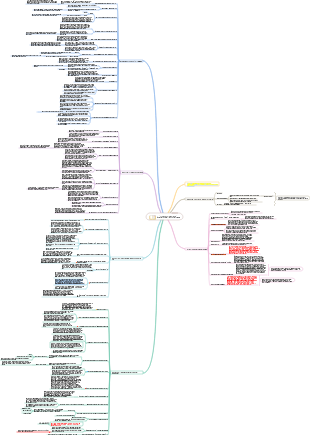
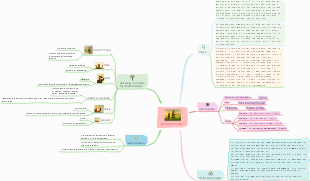
New Oriental IELTS Grammar Mind Map: Prepositional phrase: preposition (prep.) noun/pronoun/doing = prepositional phrase; adjective adverb: three comparative forms of adjective/adverb.
Modificato alle 2022-09-15 17:53:33IELTS Grammar
first part how to express something
Lecture 1 The core components of simple sentences
subject predicate verb
Subject and predicate
Subject, predicate and object
subject predicate double object
subject predicate object complement
Main line list
Lecture 2 Core changes in simple sentences
Changes of predicate verbs-three states
"Tense" 8 key exams
simple tense
Past Tense
did
present tense
do
does
Future Tense
will do
am/is/are going to do
(common) past future tense
would do
was/were going to do
progressive tense
Past progressive
was/were doing
on going
am/is/are doing
perfect tense
Not all is necessarily done
perfect past tense
had done
present perfect tense
have/has done
perfect continuous tense (Generally very few are tested)
"Mood"
"Voice"
passive voice composition
be done
passive voice and tense conjunction
simple past passive
was/were done
general present passive
am/is/are done
future tense passive
will be done
past future tense passive
would be done
past continuous passive
was/were being done
present continuous passive
am/is/are being done
past perfect passive
had been done
present perfect passive
have/has been done
passive voice and modal combination
Lecture 3 extension of simple sentences
adjective adverb
Adjective/adverb usage
Adjective (adj.) modifies noun
Adverb (adv.) modifies verbs/sentences, adjectives, and other adverbs
Three comparative forms of adjectives/adverbs
superlative
Comparative
Comparison with peers
prepositional phrase
Preposition (prep.) noun/pronoun/doing = prepositional phrase
preposition of place
preposition of time
Prepositions in other uses
Lecture 4 Improvement of simple sentences
non-predicate verb
Classification of non-predicate verbs
doing
done
to do
Uses of non-predicate verbs
make the core of a sentence
Equivalent to a noun, as subject/object/predicate
You can only use doing/to do
sentence expansion
Modify nouns/sentences and serve as attributives/adverbials
Doing/to do/done can be used
the second part How to express multiple things
Lecture 6 Parallel Sentences
The formation of parallel sentences
multiple simple sentences coordinating conjunction
common coordinating conjunction
...and.../ both...and... not only...but also...
... but... / ... yet...
... or... / either... or... niether... nor...
... for... / ... so...
Omission of parallel sentences
Lecture 7 Compound Sentence-Noun Clause
Four types of noun clauses The writing method is basically the same
Commonly used conjunctions
Add whatever is missing
that/ how /wh-
if can also be used, but it is not recommended
Four types of noun clauses different locations
object clause
after transitive verb
after preposition
predicative clause
after the linking verb (The most commonly used is be)
subject clause
Beginning of sentence
End of the sentence (Use the formal subject it at the beginning of the sentence)
appositive clause
after abstract noun
Lecture 9 Compound Sentence-Attributive Clause
An overview of attributive clauses
Relative word / antecedent word
attributive clause How to write
Choice of relative words Depends on the antecedent
antecedent=thing/thing
Relative word = which/that
antecedent = person
Relative words=who/whom/that
Antecedent = person/thing (meaning "of someone/something")
Relative word = whose
antecedent = time
Relative word=when
antecedent = place
Relative word=where
antecedent = reason
Relative word=why
Classification of attributive clauses
restrictive attributive clause
separated by commas
non-finite attributive clause
No commas separated
Supplement to attributive clauses
Lecture 8 Compound Sentence--Adverbial Clause
The meaning of adverbial clause
position of adverbial clause
before the main clause
After the main clause
in the main sentence (as a parenthesis)
How to write adverbial clauses
position of adverbial clause determined by subordinating conjunction
adverbial clause of time
when/ while/ as before/after/since/until
adverbial clause of place
where
adverbial clause of reason
because since/as
adverbial clause of result
so.. that.. such...that/ so that...
adverbial clause of purpose
so that... in order that...
adverbial clause of manner
as
comparative adverbial clause
than/as
adverbial clause of concession
although / though even though/even if
conditional adverbial clause
if/unless once /as long as
the third part How to solve special sentence patterns and long and difficult sentences
Lecture 10 special structure
split structure
cause division structural components
Remove ingredients that create a split structure
appositive
parenthesis
split structure specialty
parallel structure
parallel structure specialty
Lecture 11 special sentence pattern
virtual
if conditional sentence virtual
clause forward Main clause 4 1 future and present
hypothesis past
if clause: had done
Main clause: would/could/should/ might have done
hypothesis Now
if clause: did(were)
Main clause: would/could/should/ might do
hypothesis future
if clause: did(were)/were to do/ should do
Main clause: would/could/should/ might do
object clause virtual
The verb expresses the object clause of the suggested command requiring the use of the subjunctive
Flip
All flipped
Must-have sentence patterns for IELTS There be sentence pattern
Partially flipped
Negative words or phrases at the beginning of sentences
only is at the beginning of the sentence
Virtual conditional sentence omits if
emphasize
emphasis statement composition
It is... that...
emphasis statement The change
It is/was..that/who
Lecture 12 Comprehensive use of long and difficult sentences
Break long difficult sentences
Simplify long and difficult sentences