MindMap Gallery mental disorder
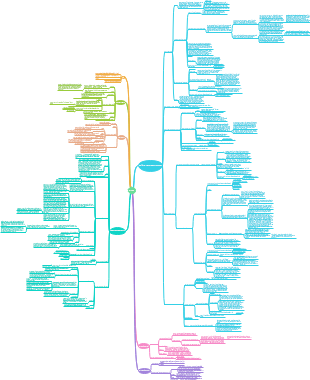
·Mental disorder refers to a general term for disorders in brain functional activities that lead to varying degrees of impairment in mental activities such as cognition, emotion, behavior, and will. Common ones include affective mental disorders, brain organic mental disorders, etc. ·Many patients with mental disorders have delusions, hallucinations, delusions, emotional disorders, erratic crying and laughing, talking to themselves, strange behavior, and loss of will. The vast majority of patients lack insight, do not admit that they are sick, and do not actively seek medical advice. help. ·Drawing is not easy, I hope you enjoy it. Thank you❤️.
Edited at 2023-11-24 09:13:12This is a mind map about bacteria, and its main contents include: overview, morphology, types, structure, reproduction, distribution, application, and expansion. The summary is comprehensive and meticulous, suitable as review materials.
This is a mind map about plant asexual reproduction, and its main contents include: concept, spore reproduction, vegetative reproduction, tissue culture, and buds. The summary is comprehensive and meticulous, suitable as review materials.
This is a mind map about the reproductive development of animals, and its main contents include: insects, frogs, birds, sexual reproduction, and asexual reproduction. The summary is comprehensive and meticulous, suitable as review materials.
This is a mind map about bacteria, and its main contents include: overview, morphology, types, structure, reproduction, distribution, application, and expansion. The summary is comprehensive and meticulous, suitable as review materials.
This is a mind map about plant asexual reproduction, and its main contents include: concept, spore reproduction, vegetative reproduction, tissue culture, and buds. The summary is comprehensive and meticulous, suitable as review materials.
This is a mind map about the reproductive development of animals, and its main contents include: insects, frogs, birds, sexual reproduction, and asexual reproduction. The summary is comprehensive and meticulous, suitable as review materials.
mental disorder
Overview
●Mental disorders that affect people’s emotions, thinking and volitional behavior ●The result of biological-psychological-social interaction ● Most mental disorders will not improve on their own and you should seek medical attention promptly. ● Mainly psychotherapy and drug treatment
What are mental disorders?
Mental disorder is an individual’s cognitive, emotional or volitional behavior A syndrome characterized by a disorder, a disorder that affects mood, thinking, and behavior. Including anxiety disorder, obsessive-compulsive disorder, depression, bipolar disorder, schizophrenia, Eating disorders and alcohol and drug use disorders, among others.
What is the prevalence of mental disorders in the population?
Mental disorders are common, with about one in five people diagnosed each year Adults suffer from various mental disorders, which can occur at any age.
The China Mental Health Survey completed in 2015 showed: The prevalence of mental disorders among Chinese adults is approximately 17% (this survey did not include sleep disorders).
Among people over 18 years old, the three most common mental disorders are:
·Anxiety disorders have the highest prevalence, The lifetime prevalence is approximately 7.6%, and the 12-month prevalence is approximately 5%.
·Mood disorders are second, followed by depression, The lifetime prevalence rate is about 7.4%, and the 12-month prevalence rate is about 4%. The average age of onset is between 20 and 30 years old, with an increasing trend year by year.
·Alcohol and drug use disorders are third most common, with a lifetime prevalence of 4.7%. The 12-month prevalence rate is 2%, and the risk decreases with age.
What types of mental disorders are there?
There are many different types of mental disorders, the common ones are: organic mental disorders, schizophrenia, mood disorders, Anxiety disorders, obsessive-compulsive disorder, anorexia nervosa, bulimia nervosa, acute stress disorder, post-traumatic stress disorder, etc.
According to the presence or absence of organic factors, they are mainly divided into:
organic mental disorder
Organic mental disorders are caused by central nervous system diseases, metabolic disorders, Organic mental disorders caused by alcohol substance abuse, poisoning, brain damage, encephalitis and other factors,
Patients often present with disorders of consciousness, sensory disturbances, emotional disorders, Symptoms such as memory impairment, personality and behavior changes, such as delirium, amnestic syndrome and dementia.
functional mental disorder
Functional mental disorders are caused by the long-term interaction of biological, psychological and social environmental factors. Resulting in symptoms such as hallucinations, delusions, and mood disorders, such as anxiety disorders and schizophrenia.
Cause
Mental disorders are complex brain diseases whose occurrence and development may be related to genetics, Neural circuits are related to biological factors such as neurodevelopmental abnormalities, and are also affected by The influence of environmental factors is the result of biological-psychological-social interaction.
What are the causes of mental disorders?
biological factors
genetic factors
Mental disorders have a high genetic predisposition.
·The heritability of autism is as high as 90%;
·The heritability of schizophrenia and bipolar disorder is as high as 80%;
·The heritability of alcohol abuse/dependence is 60%;
·The heritability of depressive episodes and panic disorder is 40%.
neurobiochemical factors
·Monoamine neurotransmitters
Subcortical mesolimbic system dopamine (DA) hyperfunction, May be related to positive symptoms of schizophrenia;
Decreased DA function in the prefrontal cortex, May be related to negative symptoms of schizophrenia.
Reduced serotonin function may lead to depressive disorders, The development of obsessive-compulsive disorder, generalized anxiety disorder, or eating disorders, Increased serotonin functional activity is associated with manic episodes.
·Amino acid neurotransmitters
The glutamate hypothesis suggests that schizophrenia is due to Caused by dysfunction of the brain's glutamate system.
·Neurotrophic factors
Alzheimer's disease, schizophrenia, depression, etc. There may be abnormalities in BDNF gene polymorphisms.
neurodevelopmental abnormalities
The patient's brain fails to develop normally from the start, due to genetics and certain Interaction of risk factors, certain factors occur during embryonic brain development Pathological changes, symptoms were not obvious at that time, entering adolescence or early adulthood, Under the adverse stimulation of external environmental factors, the disease will eventually occur.
Schizophrenia, childhood attention deficit disorder, and autism may be a Disease spectrum, they may have common neurodevelopmental abnormalities before onset.
Infect
Infectious factors affect the central nervous system and produce mental disorders. If Treponema pallidum enters the brain, it can cause neurosyphilis, manifesting as dementia, psychotic symptoms and paralysis.
Psychological and social factors
Including stressful life events, emotional state, personality characteristics, gender, parenting style, Social class, socioeconomic status, race, cultural and religious background, interpersonal relationships, etc.
stress
Prolonged stress can lead to neurosis, psychosomatic diseases, etc.
Stressors mainly come from love, marriage and family problems, study and workplace interpersonal relationships, etc., as well as encounters in social life such as wars, floods, earthquakes, Traffic accidents, racial discrimination, special personal experiences such as congenital/acquired defects, etc.
personality traits
A person who is introverted, cowardly, and avoids stimulation is easily pessimistic and discouraged when encountering difficulties. People with poor stress tolerance are prone to neurosis, psychosomatic diseases, alcohol and drug abuse, etc.
For example, people with a histrionic personality are prone to hysteria, and people with an obsessive personality are prone to People with obsessive-compulsive disorder and schizoid personality disorder are prone to schizophrenia.
What are the predisposing factors for mental disorders?
immigrants, ethnic minorities
Research results from many countries show that the greater the proportion of ethnic minority populations in the place of residence, the The risk of developing mental disorders is lower. Ethnic minority status increases the risk of mental disorders. May be related to long-term social adversity and social discrimination.
urban environment
Although urban residents have better nutrition, sanitation and medical conditions, they also face Facing greater social stress, the psychological burden caused by wealth inequality and the risk of chronic diseases High risk etc. Data show that urbanization nearly doubles the incidence of mental disorders.
childhood trauma
Childhood trauma refers to a series of serious negative events, including sexual abuse, Physical abuse, emotional abuse, and neglect may increase depressive disorders in adulthood, Risks of personality disorders, suicide, post-traumatic stress disorder, and substance dependence.
cannabis use
A study shows that delta-9-tetrahydrocannabinol can Causes transient mental symptoms and cognitive impairment, with genetic risk Individuals exhibit more pronounced psychotic reactions. In addition, teenagers Early cannabis exposure has a higher risk of developing mental disorders.
other
Predisposing factors for mental disorders also include:
·Serious injuries, such as brain damage caused by a violent blow to the head;
·Drinking alcohol or being exposed to drugs;
·The mother is exposed to viruses or toxic chemicals during pregnancy;
·Suffering from serious diseases such as cancer;
·Have few friends, feel lonely, etc.
symptom
The manifestations of patients with mental disorders involve all aspects of people's mental activities and are expressed through people's explicit behaviors (Such as appearance, actions, speech, facial expressions, and written content).
What are the typical symptoms of mental disorders?
Common mental disorders include sensory disorders, thinking disorders, Attention disorders, memory disorders, intellectual disabilities, emotional disorders, Disorders of will and behavior, disorders of consciousness, disorders of insight, etc.
Different types of diseases have different symptoms. Common symptoms include:
·Feeling sad or depressed, and extreme changes in mood;
·Confused thinking or high concentration;
·Excessive fear or worry, or even suicidal tendencies;
·Withdrawing from regular friends and activities without reason;
·Tiredness, decreased energy, or difficulty falling asleep;
· Losing touch with reality and experiencing delusions or hallucinations;
·Inability to cope with daily problems or stress, and a tendency to be excessively angry, hostile or violent;
·Changes in sexual desire, significant changes in eating habits, and possible drinking or drug abuse problems.
What symptoms may accompany mental disorders?
Sometimes symptoms of mental disorders manifest as physical problems, Such as stomach aches, back pain, headaches, or other unexplained pain.
Seek medical advice
Most mental disorders do not improve on their own and if left untreated, Mental disorders can worsen over time and cause serious problems.
The doctor will based on the patient's medical history, symptoms and related examination results, Make a clinical diagnosis. Your doctor may ask these questions to learn about your condition:
·Reason for medical treatment (main abnormal manifestations and disease course);
·The conditions and related factors of the disease, the urgency of onset and early symptoms, The development and evolution of the disease, work, study and life conditions during the disease, and related diagnosis and treatment processes;
·Whether you have had fever, convulsions, brain trauma, coma, major surgery and medications in the past History of allergies, history of alcoholism, drug abuse, sexually transmitted diseases, suicide and mental disorders;
·The entire life experience from the mother's pregnancy to before the onset of the disease. These include growth and development, school performance, occupational history, marital history, Performance in life and work, pre-illness personality performance, whether you have received major mental stimulation, Religious beliefs and special hobbies, etc., female menstrual history, reproductive history;
·Understand whether there are patients with neurological diseases or mental disorders in the two or three generations of their parents, Are there any personality deviations, accidental deaths, or consanguineous marriages?
Which department should I go to for treatment for mental disorders?
Department of psychiatry or psychology in a psychiatric hospital or a general hospital.
What are the relevant tests for mental disorders?
Routine inspection
·Routine biochemical tests: such as blood, urine, stool routine, chest X-ray, blood biochemistry, etc.;
·Etiological examination: viruses, bacteria, rickettsiae, Screening for spirochetes or parasites to rule out related diseases such as infectious diseases;
·Imaging examination: CT and MRI examination can understand the structural changes of the brain.
special inspection
electroencephalogram
EEG helps screen for intracranial lesions and understand brain and other diseases The changes in brain function caused by it are one of the important methods for clinical diagnosis.
brain evoked potential
Commonly used clinically include visual evoked potential, auditory evoked potential, Somatosensory evoked potentials, cognitive event-related potentials can be The information captured explores higher-order brain cognitive functions in people with mental disorders.
psychological test
·Symptom Self-rating Scale (SCL-90): Comprehensive assessment of the patient's mental state.
·Mini Mental State Examination (MMSE): used for screening and assessment of patients with moderate to severe dementia.
·Hamilton Depression Rating Scale: used to assess the severity of depression.
·Hamilton Anxiety Rating Scale: used to assess the severity of anxiety.
·Brief Psychiatric Rating Scale: used to assess patients with mental disorders Especially the clinical symptoms and changes before and after treatment in patients with schizophrenia.
What diseases need to be distinguished from mental disorders?
Mental disorders generally have clear clinical diagnoses, If there are complex situations, it must be judged by the clinician based on the patient's individual situation.
treat
Treatment depends on the type of mental disorder, its severity, and Methods suitable for patients, mainly including drug treatment, psychotherapy, and physical therapy and rehabilitation treatment. In most cases, treatment works best when used in combination.
What are the general treatments for mental disorders?
· Try to escape from the causative environment, eliminate factors related to the disease, and strengthen mental treatment.
·Maintain psychological balance and enhance confidence in overcoming various difficulties and courage, which is helpful in preventing various reactive mental disorders.
psychotherapy
During psychotherapy, patients can understand their own conditions, including emotions, feelings, cognitions, thoughts and behaviors, and learn coping and stress management skills with guidance from professional psychologists.
Psychotherapy can usually be completed successfully within a few months, but in some cases, long-term treatment may be required.
What medications are available for mental disorders?
Due to large individual differences, there is no absolute best, fastest or most effective medication. In addition to commonly used over-the-counter drugs, the most appropriate drug should be selected based on the individual situation under the guidance of a doctor.
Although psychotropic medications do not cure mental disorders, they can often significantly improve symptoms. The combination of drug therapy, psychotherapy, physical therapy and rehabilitation therapy has the best effect.
Commonly prescribed psychiatric medications include:
antipsychotics
Antipsychotics are mainly used to treat various psychotic symptoms. Such as hallucinations, delusions, psychomotor excitement, etc. These symptoms are more common in schizophrenia, bipolar disorder, depression, Organic mental disorders, Alzheimer's disease, childhood mental disorders. When using this medicine, you need to pay attention to adverse reactions.
Extrapyramidal aspects
Parkinson's-like symptoms, acute muscle tone increase, Tremor, akathisia, tardive dyskinesia.
Cardiovascular
Tachycardia or bradycardia, orthostatic hypotension, electrocardiogram changes.
endocrine changes
Amenorrhea, lactation, abnormal sexual function, weight gain, and abnormal glucose and lipid metabolism.
cholinergic system
Dry mouth, constipation, blurred vision, urinary retention, liver damage, epilepsy.
malignant syndrome
High fever, muscle tension, disturbance of consciousness and autonomic nervous system dysfunction.
Antidepressants
Antidepressants are used to treat depression, anxiety, and sometimes other illnesses. They can help improve symptoms such as sadness, hopelessness, Lack of energy, lack of concentration, and lack of interest in life.
Antidepressants are not addictive and do not cause dependence, but they may cause dizziness, Headache, insomnia, sedation, agitation, tremor, sexual dysfunction and other adverse reactions.
mood stabilizer
Mood stabilizers are most commonly used to treat bipolar disorder, Including manic episodes, alternating episodes of mania and depression.
If it has therapeutic and preventive effects on acute manic episodes and depressive episodes of bipolar disorder, It has a synergistic effect on the agitation and excitement of schizoaffective disorder and schizophrenia. It also has a synergistic effect on patients with acute episodes of unipolar depression who have poor response to antidepressant treatment.
When using this medicine, watch out for delirium, tremor, memory loss, polyuria, polydipsia, For adverse reactions such as diarrhea, nausea, and weight gain, common drugs include lithium salts, valproate, etc.
anti-anxiety medication
Anti-anxiety drugs are mainly used for anxiety disorders, acute agitation, and alcohol withdrawal. Acute delirium tremens and hallucinatory states, skeletal myoclonus caused by local lesions, Symptoms such as spasticity, athetosis, and insomnia caused by upper neuron lesions.
When using this drug, be careful of drowsiness, fatigue, dizziness, slow speech, Adverse reactions such as memory loss, common drugs include diazepam, etc.
Physiotherapy
The main physical therapy for mental disorders is brain stimulation therapy.
When medications and psychotherapy are ineffective, brain stimulation may be an option Therapy to Treat Depression and Other Mental Disorders, Treatment Methods Including electroconvulsive therapy, transcranial magnetic stimulation and deep brain stimulation.
Electroconvulsive therapy (ETC)
Electroconvulsive therapy, also known as electroconvulsive therapy, uses a certain amount of electric current to pass through the brain. A method of causing loss of consciousness and seizures for therapeutic purposes.
At present, improved electroconvulsive therapy can be promoted in places where conditions permit.
Transcranial Magnetic Stimulation (TMS)
Transcranial magnetic stimulation is a non-invasive brain stimulation that uses a magnetic field to induce electrical current. Causes depolarization of target neurons in the cerebral cortex to achieve the purpose of treatment.
The United States, Canada and other countries have approved transcranial magnetic stimulation to treat depression. There are also studies in schizophrenia and anxiety disorders.
How is mental disorder treated with traditional Chinese medicine?
TCM treatment of mental disorders currently lacks sufficient evidence-based basis. Its basic principles are the overall concept and dialectical treatment.
The treatment of mental disorders by acupuncture is recorded in the "Nei Jing". It also follows the principle of syndrome differentiation and treatment by selecting acupoints along the meridians. Generally, acupoints are selected on the head, face, Du meridian acupoint. After acupuncture, electro-acupuncture, ear acupuncture and other therapies were developed.
Some other TCM treatments or medications can relieve symptoms, It is recommended to go to a regular medical institution and receive treatment under the guidance of a physician.
prognosis
The prognosis for different mental illnesses varies.
mental illness prognosis
Alzheimer's disease
Alzheimer's disease patients become progressively more severe and rare Spontaneous remission or self-healing, and eventually the development of severe dementia.
Mental disorders caused by viral encephalitis
Mental disorders caused by viral encephalitis generally have a good prognosis, and severe cases The mortality rate is 22.4% to 60%. Some survivors left behind varying degrees of Signs of nervous system damage or high-level neurological activity disorders, the recurrence rate is about 10%.
Schizophrenia
After the initial onset of schizophrenia is relieved, there may be different course changes, about 15% The prognosis is good, and the condition of most patients gradually worsens and may appear after repeated attacks. Personality changes, social function decline, and varying degrees of mental disability are present.
mood disorder
Most patients with mood disorders have a good prognosis, and their clinical symptoms can basically or completely disappear after treatment. Restoration of social functions. However, affective disorders have a clear tendency to relapse or become chronic.
15% to 20% of patients may become chronic, with residual irritability and bad mood. and physical discomfort and other symptoms, and social functions cannot be restored to pre-illness levels.
anxiety disorder
·About 33% of panic disorder can be cured, and about 50% are accompanied by mild functional impairment. About 20% or less of patients have severe functional impairment;
·Phobias can become severe or resolve on their own if left untreated Even in complete remission, chronic patients may experience short-term episodes of depression;
·Social anxiety disorder usually resolves 25 years after onset;
·Generalized anxiety disorder can linger and seriously affect life and social functions.
anorexia nervosa
Among patients with anorexia nervosa, about 50% have good treatment effects, and about 20% Good times and bad, about 25% linger and remain unhealed, and about 5% to 10% die from extreme nutrition. Suicide caused by adverse events, other complications, or emotional disorders.
bulimia nervosa
About 25% to 35% of untreated bulimia nervosa patients will develop symptoms 1 to 2 years after onset. Relieve on its own. About 50% to 90% of patients who receive regular treatment can be relieved. However, the recurrence rate is high, ranging from 30% to 50% within 6 months to 6 years after successful treatment.
acute stress disorder
The prognosis for acute stress disorder is good, with complete remission.
post traumatic stress disorder
Post-traumatic stress disorder usually returns to normal within 1 year. A few can last for years or even remain unhealed for life.
attention deficit and hyperactivity disorder
Symptoms disappear spontaneously in 30% of patients after puberty, and symptoms in most patients will remain Continuing into adolescence and adulthood, adult patients not only have clinical symptoms, And combined with anti-social behavior, substance dependence, alcohol dependence and other problems.
What are the possible complications of mental disorders?
Mental disorders are the leading cause of disability. untreated mental illness The disorder can lead to serious emotional, behavioral, and physical health problems.
Complications may include:
·Family conflicts often occur, leading to family disharmony;
·Becoming increasingly distant from friends and isolated from society;
· Problems such as smoking, drinking, and drug abuse occur;
·Self-harm and harm to others, including suicide or homicide;
·The patient's immune system function is reduced, so it may cause infection, heart disease and other diseases.
daily
It is difficult for some patients with mental disorders to achieve clinical recovery even after systematic treatment. Although many patients' symptoms have been relieved, they still need long-term treatment and care under the care of their families.
How to provide home care for mental disorders?
·Families should provide patients with a home that meets their needs living environment and a suitable family emotional atmosphere;
·Assist patients to formulate and implement daily rehabilitation plans, Patients and their families should have relevant knowledge about the disease, Identify signs of disease recurrence and effectively prevent disease recurrence;
·Family members arrange activities that are beneficial to physical and mental health according to the patient’s condition, Housework, etc., to allow patients to regain their ability to live independently;
·The patient actively cooperates in completing the treatment plan until returning to normal family roles.
What should we pay attention to in the daily management of patients with mental disorders?
Personal hygiene and self-care
·Urge patients to do good personal hygiene and avoid excessive care, So as not to accelerate the decline of the patient's social functions.
·Adopt some rewards and punishment methods to cultivate patients' healthy behavior Living habits and enhance patients’ ability to manage their own lives.
Diet care
·Continuously modify recipes and food intake according to the patient's weight;
·Pay attention to food hygiene and develop good eating habits, Do not give patients foods that can cause excitement such as coffee, Smoking, alcohol, etc., avoid partial and picky eaters, and pay attention to nutrition;
·Pay attention to safety when eating. Patients should eat slowly to prevent choking and suffocation.
sleep care
·Family members should create a good sleeping environment for the patient and avoid stimulation by bright light and noise;
·Allow patients to reasonably arrange rest time, urge them to get up on time, and reduce the time in bed during the day;
·Avoid strong tea, coffee and various stimulating foods before going to bed;
·Do not participate in various activities that can cause drastic changes in mood, Such as watching TV, movies, novels, etc. with intense plots;
·For patients who have difficulty sleeping, they can listen to it before going to bed Some light music, and go to a specialist hospital for treatment if necessary.
psychological care
Family members should provide sympathy, care and help to patients, Restore or recognize the family status of the patient's condition, Help patients fulfill their family roles.
Strengthen psychological counseling and psychological support for patients, Change patients' misconceptions and reduce stigma.
Daily condition monitoring
Some patients have a better prognosis, but may relapse; Some patients are getting more and more serious and may self-mutilate There is even a risk of suicide and injury, so family members are always Monitor patient's condition and presentation of related symptoms.
What are the special considerations for mental disorders?
·No easily damaged furniture or decorations should be placed in the patient's room, and the layout should be safe, simple, and tidy;
· Reduce patients’ living alone and try to live with family members; for patients who may cause Dangerous items that can injure oneself or others, such as various types of knives, should be properly kept.
How to prevent mental disorders?
general preventive intervention
General preventive interventions are targeted at the general public or general population, Such as disseminating and popularizing mental health knowledge to them and enhancing public awareness of mental health.
selective preventive intervention
Selective preventive interventions target groups at high risk of developing mental disorders. For example, psychological crisis intervention for disaster survivors can avoid and reduce the occurrence of related mental disorders.
Indicated preventive intervention
Indicative preventive intervention is targeted at patients with premonitory or prodromal symptoms of mental disorders. Or if there are obvious factors leading to mental disorders but do not yet meet the diagnostic criteria, early intervention is required.