마인드 맵 갤러리 Matrix 2 mind map
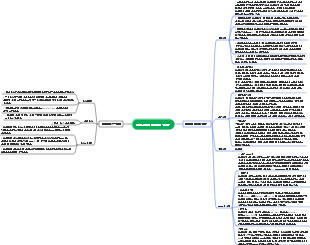
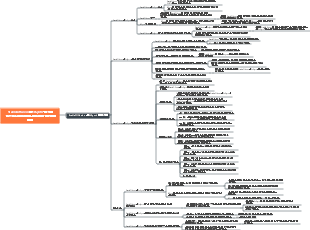
This is a mind map about matrix 2, including elementary transformations of matrices, elementary matrices, matrix partitioning methods, etc. I hope it will be helpful to your study!
2023-11-06 17:35:37에 편집됨This is a mind map about bacteria, and its main contents include: overview, morphology, types, structure, reproduction, distribution, application, and expansion. The summary is comprehensive and meticulous, suitable as review materials.
This is a mind map about plant asexual reproduction, and its main contents include: concept, spore reproduction, vegetative reproduction, tissue culture, and buds. The summary is comprehensive and meticulous, suitable as review materials.
This is a mind map about the reproductive development of animals, and its main contents include: insects, frogs, birds, sexual reproduction, and asexual reproduction. The summary is comprehensive and meticulous, suitable as review materials.
This is a mind map about bacteria, and its main contents include: overview, morphology, types, structure, reproduction, distribution, application, and expansion. The summary is comprehensive and meticulous, suitable as review materials.
This is a mind map about plant asexual reproduction, and its main contents include: concept, spore reproduction, vegetative reproduction, tissue culture, and buds. The summary is comprehensive and meticulous, suitable as review materials.
This is a mind map about the reproductive development of animals, and its main contents include: insects, frogs, birds, sexual reproduction, and asexual reproduction. The summary is comprehensive and meticulous, suitable as review materials.
matrix
Elementary transformation of matrices
Three forms of transformation
swap transformation
multiplication transformation
doubling transformation
Equivalence matrix
If matrix A becomes B after finite-order elementary transformation, A and B are said to be equivalent (the symbols are very similar to congruent symbols)
nature
Reflexivity
symmetry
Transitivity
Full rank matrix and reduced rank matrix
Full rank matrix
A is equivalent to E
r(A)=n
Decreasing rank matrix
A is not equivalent to E
theorem
Elementary transformation does not change the rank of the matrix
application
Find the rank of a matrix using elementary transformation
row echelon matrix
Pivot: the first non-zero element from the left
Find the rank: transform A into a ladder matrix T, r(A)=the number of non-zero rows in T
The row simplest form matrix of A/the simplified echelon form matrix of A
Pivot is all 1
Equivalent standard type
The upper left corner is the identity matrix
Use the rank of a matrix to determine whether a system of homogeneous linear equations has a non-zero solution
Necessary and sufficient conditions for Ax=0 to have a non-zero solution: the rank of the coefficient matrix A <n (n is the number of unknown quantities)
Corollary: Another necessary and sufficient condition for having a non-zero solution is that |A|=0
There is only zero solution: r(A)=n
Find the inverse of a matrix using elementary transformations
Write A and E together, change A into E, and E becomes the inverse of A.
elementary matrix
Definition: A matrix obtained by an elementary transformation of E
three types
Pij
Swap two rows (columns)
its reverse itself
Dj(k)
Multiply a certain row by k
Its inverse turns k into the reciprocal of k
Tij(k)
Add k times of the i-th row (column) to the j-th row (column)
Its converse turns k into -k
theorem
left row right column
Performing an elementary row transformation on the matrix A (m*n) is equivalent to multiplying the corresponding m-order elementary matrix on the left side of A; performing an elementary row transformation is equivalent to multiplying the corresponding n-order elementary matrix on the right side of A.
P and Q exist such that PAQ = the matrix whose upper left corner is the identity matrix
The invertible matrix A can be expressed as the product of a finite number of elementary matrices
Corollary: The necessary and sufficient condition for A and B to be equivalent is that P and Q exist so that PAQ=B
Matrix block method
sub-block
Partitioned Matrix
block row block column
Blocked diagonal matrix/quasi-diagonal matrix
Block by row/column
That is, row vector representation and column vector representation
Vector representation of systems of linear equations
Operation
addition
Premise: sub-blocks are peer matrices
Multiply numbers
Transpose
Turn inside and outside together
multiplication
Premise: The column division method of matrix A on the left is the same as the row block division method of matrix B on the right
Note: What is the relative position of the matrix? What is the relative position when the block matrices are multiplied?
Inverse
The inverse of the upper left-lower right diagonal matrix: the inverse of each block matrix, the position corresponds to the original block matrix
Lower left--the inverse of the upper-right diagonal matrix: the inverse of each block matrix, but the position must be changed (that is, from A11--Arr to the inverse of Arr--the inverse of A11)
Determinant
The product of determinants of each block matrix
A full-rank matrix is invertible, but a reduced-rank matrix is irreversible.
are all reversible transformations, and their inverses are elementary transformations of the same type.