マインドマップギャラリー Zoology (Part 1) General Outline
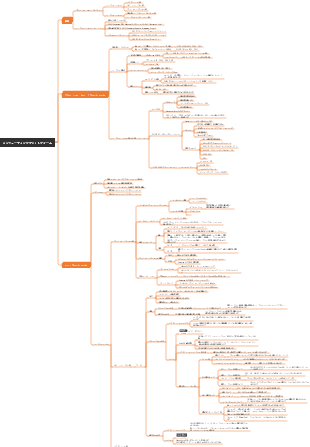
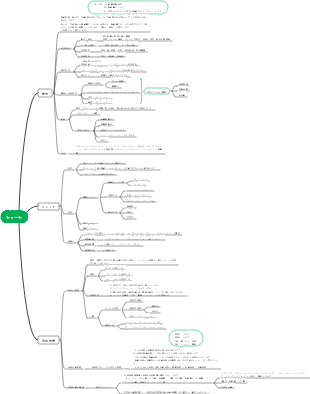
Zoology (Fourth Edition) Liu Lingyun, the content of the first half of the book: explanations of invertebrate terms, fill-in-the-blank questions, and question and answer questions. Can be used to review for the final exam in the university's animal semester.
2023-10-21 19:07:43 に編集されましたEpic review outline
introduction
Basic levels of biological classification
Classes, families, and genus
objectivity
subjectivity
Species
Often classified before and after
binomial method
Composed of two Latin characters and Latinized characters
The first character is the genus name of the animal
Nominative singular noun
Capitalize the first letter
The last word is the species name of the animal.
adjective or noun
lowercase first letter
(Add the subspecies name after the species name)
Attach the last name of the original celebrity
Protozoa
photosynthetic nutrition
Chlorophyll (chromosomes) uses light energy to perform photosynthesis under light conditions, converting carbon dioxide and water into sugars
Parastarch granules (cannot react with iodine to produce blue color)
Osmotic nutrition (saprophytic nutrition)
Under no light conditions, the body surface absorbs organic matter dissolved in water
Phagocytic nutrition (animal nutrition)
Swallowing solid food particles or smiling creatures
Pseudopodium
Sarcopodia
Temporary cytoplasmic protrusions can form anywhere
effect
sports
feeding
Pseudopodia protrude to surround and form a food bubble
Food bubbles combine with lysosomes and are digested intracellularly by hydrolases contained in lysosomes
Phagocytosis
intracellular digestion
Food bubbles combine with lysosomes and are digested intracellularly by hydrolases contained in lysosomes
schizophrenia
Asexual reproduction, producing a large number of individuals in a short period of time
The nucleus first divides several times to form multiple nuclei and then splits to form multiple new individuals.
Main characteristics of the phylum Protozoa
The body is made up of single cells
Cells differentiate into different organelles to complete various life functions
protozoan life
sports
motor organelle
flagellum
cilia
Pseudopodium
Nutrition
photosynthesis
Flagellates
penetration
Flagellates
Spore class
Devour
Ciliates
Sarcopodia
Flagellates
breathe
In light conditions, oxygen produced by photosynthesis is used for respiration.
Under no light conditions, absorb oxygen from water through the body surface
excretion
Excretion, amoeba
Indigestible food residues are excreted through the plasma membrane
Paramecium: discharge from surface membrane pores
The shrink tube allows the water in the endoplasmic reticulum to flow into the collection tube, and then injects the telescopic bubble to shrink alternately
Euglena: discharge from the cell mouth
The telescopic vacuole collects excess water in the cytoplasm, drains it into the storage vacuole, and then discharges it through the cell mouth.
reproduction
asexual reproduction
budding
Noctiluca
Split
transverse fissure
longitudinal fissure
schizophrenia
Schizont
Split value
sexual reproduction
join
gamete
Flagellates
asexual
vertical dichotomy
sexual
Combination of gametes or individuals (can form cysts)
Sarcopodia
asexual reproduction
binary fission
Spore class
Sexual and asexual generations alternate. Sexual reproduction occurs in vertebrates (gametogenesis) and asexual reproduction occurs in invertebrates (asexual sporulation).
Why are protozoa said to be the most primitive and lowest creatures?
The body is made of single-celled animals
All multicellular animals developed from the single-cell stage
Classification (motor organelles)
Flagellates
Sarcopodia
Ciliates
Spore class
Compare the main characteristics and life activity characteristics of Euglena/Amoeba/Paramecium
Euglena
film
flagellum
Eyespot
telescopic bubble
cell mouth
motor organelle
nutritional approach
reproduction
Cysts form under adverse conditions
amoeba
Pseudopodium
Pseudopodia are motor organelles with functions of movement and feeding.
There is no tough membrane on the body surface, only a very thin cytoplasmic membrane
Binary fission reproduction, some species have sexual reproduction
Paramecium
Kougou
Telescopic bubble/collection tube
Stinging bubble
anal point
reproduction
Lives in fresh water or fresh water and is also parasitic
Relationships between important species and humans
directly harmful to health
Plasmodium
Leishmania
Entamoeba dysenteriae
Economic harm (fisheries)
Small melon insect
Trichodyne
polluting water sources
organic pollution indicator animals
Life science research experimental materials
Chapter 4 The Origin of Multicellular Organisms
Glossary
terminal cell method
coelomic sac method
Biological recurrence law (biological occurrence rate)
System development history
The evolutionary history of our ancestors
individual development history
development of frog
phylogeny-biogenesis
Central content: Ontogeny is a brief and rapid recapitulation of phylogeny.
Relevant facts presented
Several early stages of development of individual animal embryos are very similar, and they all follow a certain progression. proceeding in a sequential order, this similarity reflects the progressive sequential nature of phylogeny in the animal kingdom.
Animals with three germ layers can be found in nature at all stages of ontogeny and have similar structures.
In the embryonic development of higher species, the organs unique to a certain lower species gradually disappear during the development process. Until the adult body no longer exists
blastocyst
gastrula
ontogeny of multicellular animals
preembryonic development stage
Through proliferation, growth and maturity phases
embryonic development period
Fertilization and fertilized egg
fertilization method
Internal fertilization and in vitro fertilization
Homologous fertilization and heterologous fertilization
cleavage
Egg cells (how much yolk
Less yolk eggs
sea urchin, mammal
Medium yolk eggs
Polyyolk eggs
The end with more yolk is called the vegetal pole
The end with less yolk is called the animal pole
Cleavage pattern
Complete cleavage: less yolk eggs
During cleavage, the size of the embryo remains unchanged or slightly reduced.
Incomplete cleavage: polyyolk eggs
There is a lot of yolk, and division occurs only in parts that do not contain yolk.
division zone in blastoderm
disc rupture
Chicken eggs
Division area on the surface: surface cleavage
insect eggs
blastocyst formation
At the end of division, the blastomere forms a hollow spherical embryo.
The outer cell layer is called the blastoblast, and the inner cavity is called the blastocoel.
gastrula formation
The blastocyst further develops into the gastrula
The outer layer of cells is called ectoderm, and the inner layer of cells is called endoderm. The cavity surrounded by layers is called the archenteron cavity, and its opening is called the protostomum or blastopore.
Ectodermal skin epithelium, nervous tissue
endodermal viscera
Formation method: invagination → internal movement → outsourcing → layering → internal rotation
Formation of mesoderm and body cavity
further development, mesoderm forms between endoderm and endoderm
Formation method
End cell method (split body cavity method)
coelomic sac method (intestinal coelomic method)
Germ layer differentiation and organ building
ectoderm
Nervous system, sensory organs, both ends of digestive tract, skin epithelium and its derivatives, etc.
mesoderm
Muscles, connective tissue, dermis, circulatory system, most reproductive and excretory organs, etc.
endoderm
Digestive tract epithelium, digestive glands such as liver and pancreas, respiratory organs, reproductive and excretory organs, etc.
postembryonic development period
Depending on where the embryo develops, where nutrients come from and how the larvae are produced
oviparous
viviparous
ovoviviparous
According to the morphological characteristics and lifestyle of larvae and the differences from adults
Direct development or development without metamorphosis
indirect development or abnormal development
What does the law of biogenesis mean for understanding animal evolution and genetic relationships?
evolution of animals
During the ontogeny of an organism, the main developmental stages of its ancestors are reproduced in sequence, It is an important basis for biological evolution
It can be proven that multicellular animals originated from unicellular animals
Kinship
It is very important to understand the genetic relationships and development clues of various animal groups.
Chapter 5 Porifera (Sponges)
Ecological characteristics
All aquatic, most oceanic, a few freshwater
lifestyle
All adults live a solid life
attach
fixed
Oyster
feeding habits
filter feeding
Mainly feeds on organic matter particles
Bacteria in Paramecium stream
Classification
body shape and color
Double groove type
Single groove type
structure
cortex
Inlet hole
drainage
gastric layer
central cavity
collar cells
middle glue layer
Colloidal substance
skeleton
sponge silk
Bone spicules
effect
support protection
Element
calcareous silica
shape
complex groove type
physiological
intracellular digestion
subtopic
No neural structures
stellate cells
subtopic
ditch system, reversal phenomenon, collar cells
ditch system
reversal phenomenon
During the bicystic larvae, the very small plant cells with flagella are invaginated to form the inner layer; the large cells of the animal pole at the other end remain outside to form the outer layer. This process is called "reversal", which is similar to that of other multicellular animals. The formation of the intestinal lumen is exactly the opposite.
collar cells
Porous animal body structure and functional characteristics
body shape
Have a certain body shape and radial symmetry
Form various asymmetrical body shapes
basic structure
Made up of two layers of cells, with mesoglea between the two layers of cells
body surface
Flat cells (protection)
Myofilaments (regulatory function)
Flat cells become muscle cells (the outlet forms a small ring that controls water flow)
. Multicellular, without any germ layer, no clear tissues, and no differentiation of organs or systems. The body is composed of two layers of cells, the outer layer is called the cortex, the inner layer is called the gastric layer, and the mesoglea layer is between the two layers of cells.
a. The cortex is composed of a single layer of flat cells, some of which are specialized into tubular pore cells. The pore cells can shrink to control the size of the water flow.
b. The stomach layer is composed of collar cells, which have a flagellum on their cytoplasmic protrusion (called the "collar") that guides the inflow of water carrying food.
c. The mesoglea is a colloid layer, which contains sponge filaments and bone spicules for support, as well as astrocytes for nerve conduction.
2. The body shape is asymmetrical and the appearance is diverse, including block, ball, tube, etc.
3. It has a ditch system, which is of great significance to sessile life. There are many small holes on the body surface, and water supply flows in and out. The water flow can bring nutrients and take away metabolic waste. The ditch system of porous animals can be divided into three types:
single ditch system
Double ditch system
complex ditch system
The most primitive and lowest multicellular organism
The primitive structure and functions of sponges are similar to those of protozoa. Sponges have no organ system, only flat cells and collar cells. They have no digestive cavity and can only perform intracellular digestion. They have no nervous system and their response to stimuli is only local. , extremely slow. Therefore, sponges are the most primitive and low-grade multicellular animals.
Lateral organisms
Because the late differentiation of animal pole cells and plant pole cells during the embryonic development of porous animals is different from that of all other metazoans, the phenomenon of germ layer reversal occurs. The body has structures such as ditch systems, bone spicules and sponge filaments that other metazoans do not have. In addition to being similar to protozoan choanoflagellates, porous collar cells are not found in other metazoans. So it is a lateral animal.
However, the embryonic development of sponges is different from that of other multicellular animals, and there is a reversal phenomenon. There are also special structures such as ditch systems, developed collar cells, and bone spicules. This shows that sponges are a side branch of metazoan evolution. They are also called lateral animals. That is to say, in their evolutionary process, no other new groups of animals have differentiated. There is no evidence from other multicellular animals that they evolved from sponges. In short, porous (sponge) animals are Primitive, lower-level multicellular animals that stay at the cellular level are a side branch of metazoan evolution, also known as pleurozoa.
Classification
Bone characteristics
Calcium
six releases
common
Chapter 6 Coelenterata
Radial symmetry, two-radial symmetry, skin and muscle cells, neural network, stinging cells, alternation of generations
Main features
Coelenterates are a type of primitive multicellular animals and are true diploblastic animals. Other metazoans after coelenterates evolved through this stage; they are all aquatic; coelenterates are radially symmetrical or biradially symmetrical A two-blastoderm animal with a polyp-type body (adapted to a fixed life) and a jellyfish-type (adapted to a floating life); it has a digestive circulation cavity, capable of extracellular and intracellular digestion, and has no anus; primitive tissue differentiation and simple organs appear; There is a reticular nervous system; there are two types of reproduction, asexual reproduction and sexual reproduction; there is an alternation of generations in the life history; there is a floating larval stage in development; most corals have exoskeletons, and there are single individuals and groups, which can form coral reefs.
Shape: The body is radially symmetrical. The body is only divided into upper and lower parts, and there is no front, back, left or right. This is an adaptation to a fixed life and a floating life in the water in order to obtain more food around it. Structure: The body structure is simple, with two germ layers in the body wall, a primitive digestive cavity, a mouth but no anus: the body wall is composed of endoderm, ectoderm and mesoglea. Function: The skeleton of coelenterates is mainly an exoskeleton, which has support and protection functions. The epithelium also has a conductive function like nerves.
important location
coelenterates
body wall
tissue differentiation
Section 2 Main Characteristics of Coelenterata
Coelenterates are the beginning of the true metazoans and they occupy an important place in the evolutionary process through which all other metazoans develop. They have advanced characteristics compared to sponges, primitive and low-end characteristics compared with other metazoans, and characteristics of adapting to the external environment.
1. Progressive Characteristics
Compared with sponges, its advanced features are:
(1) From asymmetry to radiative symmetry;
(2) From unorganized differentiation to organized differentiation, cutaneous muscle cells, neural networks, etc. appeared;
(3) The body changes from two layers of cells to two germ layers, and a digestive and circulatory cavity appears. The digestive circulation cavity is different from the central cavity of sponges and has digestion and circulation functions.
2. Original characteristics
Compared with other metazoans, coelenterates show many primitive aspects in morphological structure and physiological functions, such as:
(1) The radially symmetrical body shape of coelenterates is only a primitive low-level symmetry form, because this symmetry can only be divided into upper and lower parts, without distinction between front and rear, dorsal and ventral, and is only suitable for a fixed or floating life in the water.
(2) The digestive system has a mouth but no anus. The mouth is the original mouth during embryonic development, which shows that coelenterates are equivalent to the gastrula stage.
(3) Epithelial muscle cells belong to both epithelium and muscle, indicating that epithelium and muscle are not separated, which is a primitive phenomenon.
(4) The nerve network of coelenterates is the most primitive reticular nervous system. Because there is no nerve center, nerve conduction has no direction and the conduction speed is very slow.
3. Particular Characteristics
(1) Coelenterates have stinging cells, which are special cells unique to coelenterates and are found all over the body surface.
(2) Coelenterates have two basic forms, namely the polyp type and the jellyfish type, which are adapted to different lives. The polyp type is adapted to a fixed life, and the jellyfish type is adapted to a floating life. But their basic structure is the same, they are composed of cells of two germ layers, radially symmetrical, with tentacles, stinging cells, mouth, digestive and circulation cavity, oral surface and anti-oral surface.
Comparison of hydra type and jellyfish type
Polyp type Jellyfish type
Appearance cylindrical disc shape
Lifestyle fixed life floating life
Reproductive methods asexual budding sexual reproduction
middle glue layer
Thin, mostly acellular distribution
Thick, with a few cells distributed
Mouth upward, with hanging lips downward
Nerve without tentacles with tentacles
Bones Some have calcareous bones No bones
water pipe no yes
Chapter 7 Platyhelminthes
planarian
fluke
Body wall: microvilli, epidermis
absorb nutrient
Tapeworms (highly adapted to parasitic life)
Representative animal: Taenia solium
first section
neck segment
immature proglottids
mature proglottids
Pregnancy tablets
nutrition and respiration
digestive cells
excretory duct
apical process
Managed
Cross tube
pronephric casts
reproduce
reproductive system
proglottids: hermaphroditic
Testis-vas deferens-vas deferens-penis
Ovary-vitelline gland-rod-shaped uterus-spermatous vesicle-vagina
life history
Parasitic in human small intestine
Pregnant egg segment
Pig, intermediate host, muscle, cysticerci (pork
Definitive host (small intestine, adult worm)
Main features
All parasitic
Ribbon has
Digestive system completely disappears
The reproductive system is highly developed
The relationship between parasite and host
morphological structure
suction cup
small hook
physiologically
cortex
Digestion
Change host
Related to the evolution of the host
Parasite adaptations to parasitic life
The harm of parasites to the host
Uptake of host tissue or nutrients
mechanical damage
chemical effects
Create conditions for infection by other pathogens
bilaterally symmetrical
skin muscle bursa
incomplete digestive system
Protonephric duct
ladder nervous system
parasitic
host
Intermediate host
terminal host
Characteristics of Platyhelminthes
Evolutionary Characteristics of Platyhelminthes Compared to Coelenterates
subtopic
Chapter 8 Pseudocoelomates
corneum, protonephric ducts, polyoecious
linear animals
represent animals
human roundworm
dimorphism
shape
body wall and body cavity
muscle
only longitudinal muscles
body cavity fluid
Deliver nutrients
Digestive system (complete
Nervous system and senses
trapezoid level
Underdeveloped senses
subtopic
reproductive system
dioecy
life history
False coelom, complete digestive system, parthenogenesis
Complete digestive system (complete digestive tract)
Simple straight tube divided into foregut, midgut and hindgut
tubular excretory system
There are microvilli in the intestinal lumen (to promote absorption)
Mouth, pharynx, intestine, anus
prosthetic body cavity
terminal cell method
On both sides of the blastopore, one cell divides to generate many cells, forming cords that extend between the endoderm and the endoderm to form mesoderm cells. The cavity formed between the mesoderm is the body cavity.
Why can Caenorhabditis elegans be used as a model organism?
Gene sequencing work completed in 1998
The corneal membrane is transparent, the morphological structure is observed, and the number of somatic cells is constant
959 hermaphrodites, 2000 germ cells
Male 1031 cells 1000 germ cells
programmed cell death
short life cycle
easy to cultivate
What is the significance of the creation of a false body cavity?
1. Provide space for the development of organ systems in the body
2. Body cavity fluid can more effectively transport nutrients and metabolites, regulate and maintain the balance of water in the body, and maintain a stable internal environment.
3. Maintain a certain shape of the insect body and assist in the movement of the animal body. Most of them rely on cilia as the main movement organ.
Master the morphological structural characteristics and life history (structural characteristics of cross sections) of human roundworms, and master the main characteristics of the phylum Nematodes through it.
life history
direct development
parasitic site
small intestine
The eggs are excreted in the feces
route of infection
mouth
Infectious insect state: larvae eggs that molt once
Morphology
Main features
shape
The body is worm-shaped and symmetrical on both sides
body wall
Corneal membrane protection and sloughing
Epidermal layer
false body cavity, body cavity fluid
digestive system
outside
Inside
outside
breathe
free living body
parasitic anaerobic
No respiratory organs, cannot be too large for oxygen penetration
nervous system
Underdeveloped senses
mastoid
tail sensor
reproduction
Most dioecious
A few hermaphrodites
outline
tailed sensilla
Parasitic life in most camps
tailless sensilla