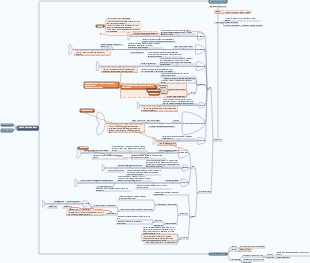
MindMap Gallery cartilage and bone
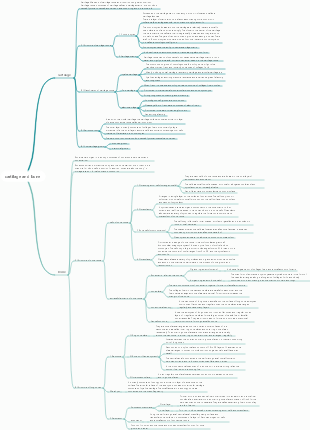
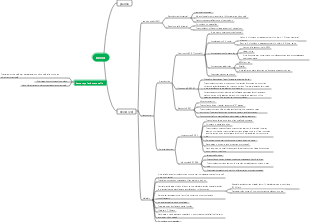
This is a mind map about cartilage and bone. Cartilage and bone are two important scaffolding structures of the human body. It is rich in content, summarized in key points, clear in structure, and complete in system! Very worth learning!
Edited at 2024-11-01 11:31:02This is a mind map about the annual work plan of the three pillars of human resources. The main contents include: strategic human resources planning, talent recruitment and allocation, employee performance management, employee training and development, employee relationships and communication, employee welfare and care, human resources information system construction, regulatory compliance and risk management, and organizational culture construction.
This is a mind map for the diagnosis and treatment of acute cerebral hemorrhage in patients with hemodialysis. The annual incidence of acute cerebral hemorrhage in patients with hemodialysis is (3.0~10.3)/1000, and the main cause is hypertension. Compared with non-dialysis patients, the most common bleeding site is the basal ganglia area, accounting for 50% to 80%; but the bleeding volume is large and the prognosis is poor, and the mortality rate is 27% to 83%. Especially for patients with hematoma >50ml, hematoma enlarged or ventricular hemorrhage on the second day after onset, the prognosis is very poor.
The logic is clear and the content is rich, covering many aspects of the information technology field. Provides a clear framework and guidance for learning and improving information technology capabilities.
This is a mind map about the annual work plan of the three pillars of human resources. The main contents include: strategic human resources planning, talent recruitment and allocation, employee performance management, employee training and development, employee relationships and communication, employee welfare and care, human resources information system construction, regulatory compliance and risk management, and organizational culture construction.
This is a mind map for the diagnosis and treatment of acute cerebral hemorrhage in patients with hemodialysis. The annual incidence of acute cerebral hemorrhage in patients with hemodialysis is (3.0~10.3)/1000, and the main cause is hypertension. Compared with non-dialysis patients, the most common bleeding site is the basal ganglia area, accounting for 50% to 80%; but the bleeding volume is large and the prognosis is poor, and the mortality rate is 27% to 83%. Especially for patients with hematoma >50ml, hematoma enlarged or ventricular hemorrhage on the second day after onset, the prognosis is very poor.
The logic is clear and the content is rich, covering many aspects of the information technology field. Provides a clear framework and guidance for learning and improving information technology capabilities.
cartilage and bone
cartilage
cartilage tissue
chondrocytes
Embedded in the cartilage matrix, the small cavity where the cell is located is called a cartilage lacunae
Multicell aggregations are formed from the division of one chondrocyte, which is called a homogeneous cell group. The cytoplasm is basophilic.
Ability to synthesize and secrete cartilage matrix and fibers
fiber
embedded in cartilage matrix
cartilage matrix
Gel-like, also forming a molecular sieve structure
Glycosaminoglycans have the highest content of chondroitin sulfate, HE is strongly basophilic, and is called cartilage capsule.
perichondrium
for dense connective tissue
Outer layer
High in fiber and protective
inner layer
There are many cells, rich in capillaries and nerves, and osteoprogenitor cells
Start with nutrition, protect, and play an important role in the growth and repair of cartilage
Types of cartilage
hyaline cartilage
Collagen fibrils, HE is difficult to distinguish, and the matrix contains a lot of water
Distribution: Costal cartilage, articular cartilage and respiratory tract cartilage
elastic cartilage
A large number of elastic fibers interwoven into a network
Very flexible
Distribution: Auricles, throat and epiglottis, etc.
Fibrocartilage
Contains a large amount of parallel or cross-arranged collagen and cellulose
Make cartilage highly resilient
Distribution: intervertebral disc, articular disc and pubic symphysis, etc.
growth of cartilage
additive growth
internal accumulation growth
bone
structure of bone tissue
bone matrix
organic ingredients
Lots of collagen fibers
small amount of matrix
Proteoglycans and their compounds, which bind fibers
Make bones tough
Inorganic components
Also called bone salt, makes bones hard
Collagen fibers are arranged in layers and combine closely with bone salts to form lamellar bone plates.
cells of bone tissue
osteoprogenitor cells
Located at the interface between bone tissue and periosteum
The cell body is small and spindle-shaped, the nucleus is oval, and the cytoplasm is weakly basophilic.
Can differentiate into osteoblasts
osteoblasts
Distributed on the surface of bone tissue, usually arranged in a single layer,
EM contains abundant rough endoplasmic reticulum and Golgi apparatus
Synthesis and secretion of organic components of bone matrix
Osteoid: uncalcified extracellular matrix
bone cells
Distributed within or between bone plates
The space where the protrusion is located is called a bone lacunae, and the space where the protrusion is located is called a bone canaliculus, which contains tissue fluid.
It has certain osteolytic and osteogenic effects, renewing and maintaining bone matrix
osteoclasts
Multinucleated giant cells, located in small depressions on the surface of bone tissue
Microvilli on the bony side called rugae
1. Dissolve and absorb bone, complementing osteoblasts 2. Jointly participate in the growth and reconstruction of bones 3. Maintain blood calcium balance
structure of long bones
Cancellous bone
Distribution: epiphysis of long bones and medial surface of diaphysis,
bone mineral density
Distribution: Lateral surfaces of long bone diaphyses and epiphyses
ring bone plate
outer ring bone plate, inner ring bone plate
There is a through-tube in the diaphysis that crosses the ring bone plate
bone unit
Located between the inner and outer ring bone plates, it is the basic structural unit of the long bone and is in the shape of a long tube.
Central canal: contains blood vessels, nerves and periosteum tissue, surrounded by 5 to 20 concentric layers of bone plates.
Adhesion line: a layer of bone matrix surrounding the bone unit that contains more bone salts and less collagen fibers
interosseous plate
Irregular parallel bone plates between bone units or bone units and ring bone plates
The remaining part of the original bone unit that has been absorbed during bone growth and remodeling
periosteum
Epiosseous membrane
The outer layer of dense connective tissue has penetrating fibers and fixes the periosteum.
The inner layer is rich in osteoprogenitor cells, blood vessels and nerves
endosteum
Composed of osteoprogenitor cells and connective tissue
Function: Nourishes bone tissue and participates in bone growth and repair
genesis of bone
intramembranous osteogenesis
Cancellous bone~compact bone Mesenchyme~periosteum
endochondral osteogenesis
The formation of cartilage rudiments
formation of bony collar
Primary ossification center and medullary cavity formation
Secondary ossification center and epiphyseal formation
Bone lengthening and thickening