MindMap Gallery HP Market Segmentation, Targeting and Positioning Analysis
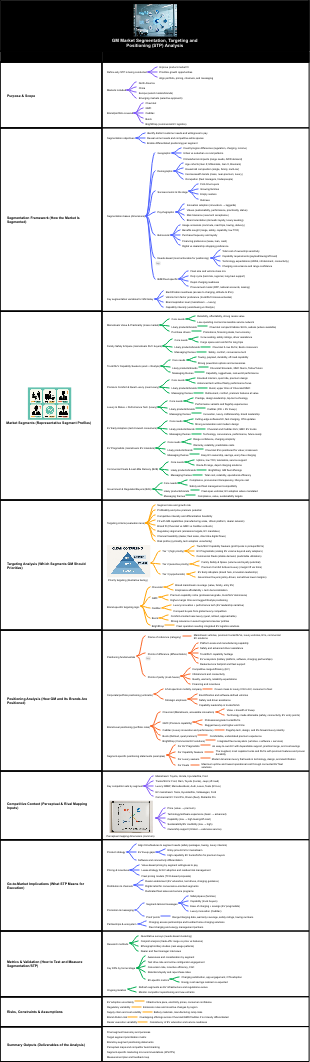
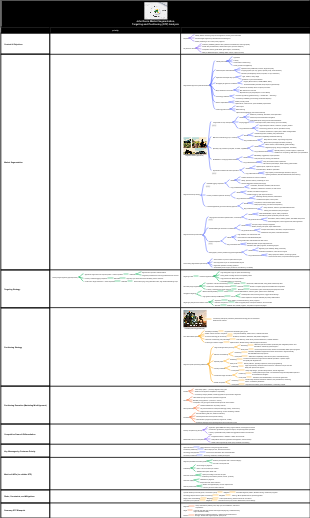
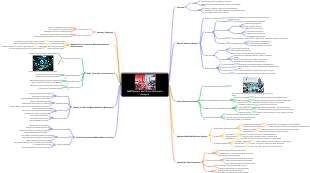
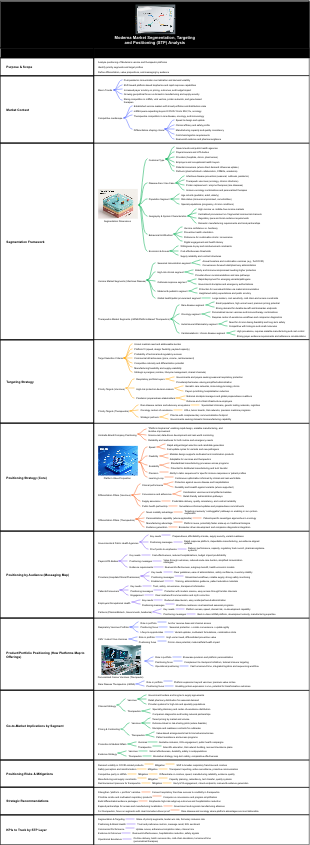
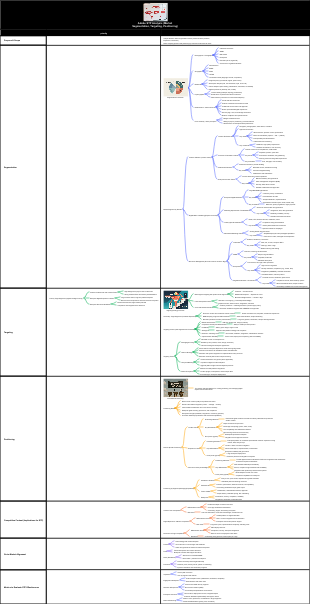
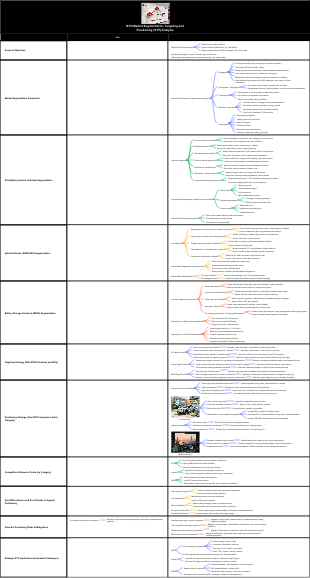
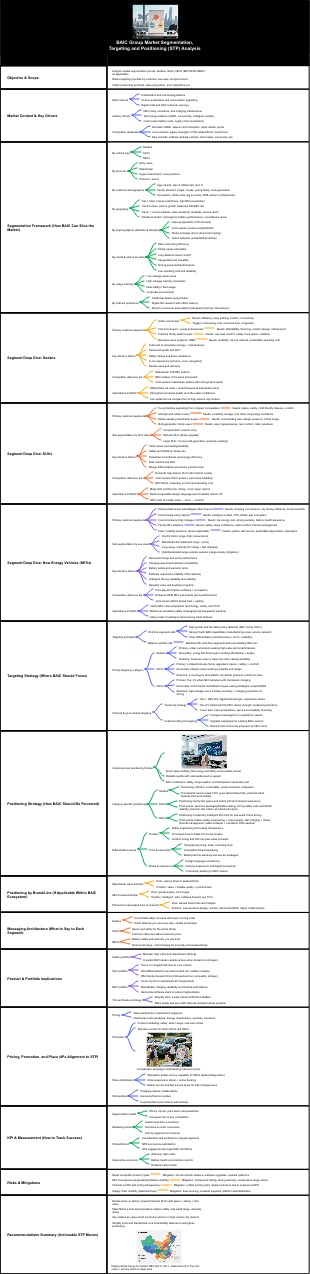
This analysis explores HP’s comprehensive Market Segmentation, Targeting, and Positioning (STP) framework across Personal Systems (PCs), Printing, and Enterprise IT Solutions. Segmentation framework includes customer types (consumers, SMBs, enterprises, public sector); needs-based segments (performance, mobility, security, sustainability, cost efficiency); and behavioral insights (purchase cycles, brand loyalty, adoption of subscriptions). Industry dynamics and key buying drivers vary by segment. Consumers prioritize design, portability, and price; businesses focus on security, manageability, and total cost of ownership; enterprises demand scalability, integration, and lifecycle support. Personal Systems segments include consumer PCs (gaming, premium, mainstream) targeting individuals, families, and creators; commercial PCs (mobility, desktop, workstation) targeting enterprises, SMBs, and remote workers. Printing segments include consumer printing (home, photo) emphasizing affordability and ease of use; commercial printing (office, managed print services) focusing on efficiency, security, and cost management; large-format and industrial printing serving specialized markets. Enterprise IT Solutions target IT decision-makers with offerings in hybrid work, security, device management, and sustainability. Positioning differentiates HP through design, performance, security, and sustainability. Value propositions align with segment priorities: consumer segments emphasize innovation and experience; business segments emphasize reliability and lifecycle value; enterprise segments emphasize integration and total cost of ownership. This STP framework enables HP to address evolving market demands, balancing consumer aspirations with business productivity needs across global markets.
Edited at 2026-03-25 15:17:11This strategic SWOT analysis explores how Aeon can navigate the competitive online landscape, highlighting strengths, weaknesses, opportunities, and threats. Strengths include strong brand recognition (trusted Japanese heritage, quality), omnichannel capabilities (stores + online + mall integration), customer loyalty programs (Aeon Card, points, member pricing), and physical footprint (extensive store network for pickup/returns). Weaknesses encompass digital maturity gaps (e-commerce penetration, app functionality, personalization vs. Amazon, Alibaba), cost structure challenges (store-heavy, real estate, labor), and supply chain complexity (fresh food, frozen logistics for online). Opportunities include enhancing e-commerce competitiveness (faster delivery, wider assortment, lower minimum order), leveraging data-driven strategies (purchase history, personalized offers, inventory optimization), expanding omnichannel integration (buy online pick up in store, ship from store), and private label growth (Topvalu, localized brands). Threats involve online-first players (Amazon, Alibaba, Sea Limited) with lower costs, wider selection, faster delivery, market dynamics (changing consumer behavior post-COVID, discount competitors), and regulatory risks (data privacy, cross-border e-commerce rules). Aeon can strengthen market position by investing in digital capabilities, leveraging store assets for omnichannel, and using customer data for personalization, while addressing cost structure and online competition.

This analysis explores how Aeon effectively tailors offerings to meet the diverse needs of family-oriented consumers through a comprehensive Segmentation, Targeting, and Positioning (STP) framework. Demographic segmentation examines family life stages (young families with babies, school-aged children, teenagers, empty nesters), household sizes (small vs. large), income levels (mass, premium), and parent age bands (millennials, Gen X). This identifies distinct consumer groups with different spending patterns. Geographic segmentation highlights store catchment types (urban, suburban, rural), community characteristics (density, income, competition), and local preferences (fresh food, halal, Japanese products). Psychographic segmentation delves into family values (health, safety, education, convenience), lifestyle orientations (busy professionals, home-centered, eco-conscious). Behavioral segmentation focuses on shopping missions (daily grocery, weekly stock-up, seasonal shopping), price sensitivity (value seekers, premium), channel preferences (in-store, online, pickup). Needs-based segmentation reveals core family needs related to value (good-better-best pricing), budget considerations (affordability, promotions, member pricing), safety (food quality, product recall), convenience (one-stop shopping, parking, store hours). Targeting prioritizes young families with school-aged children, budget-conscious households, and convenience-seeking shoppers. Positioning emphasizes Aeon as a family-friendly, value-for-money, one-stop destination with Japanese quality and local relevance. These insights enhance family shopping experiences through tailored assortments (kids’ products, school supplies), promotions (family bundles, weekend events), and services (nursing rooms, kids’ play areas).
This Kream Sneaker Consumption Scene Analysis Template aims to visualize purchasing and consumption journeys of sneakers, identifying key demand drivers and obstacles. User behavior within Kream includes searching, bidding, buying, selling, authentication, and community engagement. External influences include brand drops (Nike, Adidas), social media (Instagram, TikTok), influencer hype, and cultural trends. Target categories: limited editions, collaborations, retro releases, performance sneakers, and general releases. Timeframes: launch day, first week, first month, long-term (seasonal, yearly). Regions: North America, Europe, Asia (Korea, China, Japan). User segments: Collectors: value rarity, condition, completeness (box, accessories). KPIs: collection size, spend, authentication rate. Resellers: value profit margin, volume, turnover. KPIs: sell-through rate, average profit, listing frequency. Sneakerheads: value hype, trends, community validation. KPIs: purchase frequency, social engagement, wishlist adds. Casual trend followers: value style, convenience, price. KPIs: conversion rate, average order value, repeat purchases. Gift purchasers: value ease, presentation, brand trust. KPIs: gift message usage, return rate. Consumption journey: Awareness: social media, email, push notifications. Search: browse, filter, search by brand, model, size. Purchase: bid, buy now, payment, shipping. Authentication: inspection, verification, certification. Resale: list, price, sell, transfer. Sharing: review, unboxing, social post, community discussion. Key performance indicators: conversion rate, sell-through rate, average order value, customer lifetime value, authentication pass rate, return rate, Net Promoter Score. This framework helps understand sneaker trading dynamics, user motivations, and touchpoints for engagement and satisfaction.
This strategic SWOT analysis explores how Aeon can navigate the competitive online landscape, highlighting strengths, weaknesses, opportunities, and threats. Strengths include strong brand recognition (trusted Japanese heritage, quality), omnichannel capabilities (stores + online + mall integration), customer loyalty programs (Aeon Card, points, member pricing), and physical footprint (extensive store network for pickup/returns). Weaknesses encompass digital maturity gaps (e-commerce penetration, app functionality, personalization vs. Amazon, Alibaba), cost structure challenges (store-heavy, real estate, labor), and supply chain complexity (fresh food, frozen logistics for online). Opportunities include enhancing e-commerce competitiveness (faster delivery, wider assortment, lower minimum order), leveraging data-driven strategies (purchase history, personalized offers, inventory optimization), expanding omnichannel integration (buy online pick up in store, ship from store), and private label growth (Topvalu, localized brands). Threats involve online-first players (Amazon, Alibaba, Sea Limited) with lower costs, wider selection, faster delivery, market dynamics (changing consumer behavior post-COVID, discount competitors), and regulatory risks (data privacy, cross-border e-commerce rules). Aeon can strengthen market position by investing in digital capabilities, leveraging store assets for omnichannel, and using customer data for personalization, while addressing cost structure and online competition.
This analysis explores how Aeon effectively tailors offerings to meet the diverse needs of family-oriented consumers through a comprehensive Segmentation, Targeting, and Positioning (STP) framework. Demographic segmentation examines family life stages (young families with babies, school-aged children, teenagers, empty nesters), household sizes (small vs. large), income levels (mass, premium), and parent age bands (millennials, Gen X). This identifies distinct consumer groups with different spending patterns. Geographic segmentation highlights store catchment types (urban, suburban, rural), community characteristics (density, income, competition), and local preferences (fresh food, halal, Japanese products). Psychographic segmentation delves into family values (health, safety, education, convenience), lifestyle orientations (busy professionals, home-centered, eco-conscious). Behavioral segmentation focuses on shopping missions (daily grocery, weekly stock-up, seasonal shopping), price sensitivity (value seekers, premium), channel preferences (in-store, online, pickup). Needs-based segmentation reveals core family needs related to value (good-better-best pricing), budget considerations (affordability, promotions, member pricing), safety (food quality, product recall), convenience (one-stop shopping, parking, store hours). Targeting prioritizes young families with school-aged children, budget-conscious households, and convenience-seeking shoppers. Positioning emphasizes Aeon as a family-friendly, value-for-money, one-stop destination with Japanese quality and local relevance. These insights enhance family shopping experiences through tailored assortments (kids’ products, school supplies), promotions (family bundles, weekend events), and services (nursing rooms, kids’ play areas).
This Kream Sneaker Consumption Scene Analysis Template aims to visualize purchasing and consumption journeys of sneakers, identifying key demand drivers and obstacles. User behavior within Kream includes searching, bidding, buying, selling, authentication, and community engagement. External influences include brand drops (Nike, Adidas), social media (Instagram, TikTok), influencer hype, and cultural trends. Target categories: limited editions, collaborations, retro releases, performance sneakers, and general releases. Timeframes: launch day, first week, first month, long-term (seasonal, yearly). Regions: North America, Europe, Asia (Korea, China, Japan). User segments: Collectors: value rarity, condition, completeness (box, accessories). KPIs: collection size, spend, authentication rate. Resellers: value profit margin, volume, turnover. KPIs: sell-through rate, average profit, listing frequency. Sneakerheads: value hype, trends, community validation. KPIs: purchase frequency, social engagement, wishlist adds. Casual trend followers: value style, convenience, price. KPIs: conversion rate, average order value, repeat purchases. Gift purchasers: value ease, presentation, brand trust. KPIs: gift message usage, return rate. Consumption journey: Awareness: social media, email, push notifications. Search: browse, filter, search by brand, model, size. Purchase: bid, buy now, payment, shipping. Authentication: inspection, verification, certification. Resale: list, price, sell, transfer. Sharing: review, unboxing, social post, community discussion. Key performance indicators: conversion rate, sell-through rate, average order value, customer lifetime value, authentication pass rate, return rate, Net Promoter Score. This framework helps understand sneaker trading dynamics, user motivations, and touchpoints for engagement and satisfaction.
HP Market Segmentation, Targeting and Positioning (STP) Analysis
Objectives & Scope
Analyze STP across
Personal Systems (PCs)
Printing
Enterprise / IT Solutions (services, managed offerings, security, device lifecycle)
Identify priority customer groups and value propositions by category
Map competitive positioning and differentiation levers
Market Context
Industry dynamics
PC market: cyclical demand, hybrid work, gaming growth, refresh cycles, AI PCs
Printing market: mature category, supplies annuity model, home vs office shift, subscription growth
Enterprise IT solutions: shift to managed services, security, endpoint management, as-a-service
Key buying drivers (cross-category)
Total cost of ownership (TCO) and reliability
Security and manageability
Sustainability and compliance
Ecosystem compatibility and support
Performance (including AI acceleration) and user experience
Segmentation Framework (How HP Segments)
Segmentation dimensions
Customer type
Consumers (home)
SMB
Mid-market
Large Enterprise
Public Sector / Education / Healthcare
Partners / channel-led customers
Needs-based segments
Performance seekers (gaming, creators, engineers)
Productivity & collaboration (office users, hybrid workers)
Mobility-first (field workers)
Security-critical (regulated industries)
Cost-sensitive (value buyers, high-volume printing)
Sustainability-focused (low carbon, circularity)
Behavioral segments
Usage intensity (light, mainstream, power)
Purchase frequency (one-off vs refresh cycles)
Service adoption (managed, subscription, break/fix)
Brand/loyalty (switchers vs loyalists)
Firmographic / demographic
Company size, industry vertical, geography
Consumer demographics (students, families, prosumers)
Technographic
OS and ecosystem preferences (Windows, ChromeOS)
Cloud stack and device management tools
Security posture and compliance requirements
Price/value tiering
Entry/value, mainstream, premium, ultra-premium
Segmentation by product category
PCs (Personal Systems)
Consumer
Budget home computing
Family shared devices
Students/education (affordable, durable, long battery)
Premium home (design, display quality)
Gaming (high FPS, thermals, accessories)
Creators (color accuracy, GPU/CPU performance)
Commercial
SMB productivity (affordable fleets, easy support)
Enterprise standard-issue laptops/desktops
Mobile workforce / frontline devices
Workstations (CAD, 3D, data science)
Regulated industries (finance, healthcare) with security emphasis
Printing
Consumer printing
Low-volume occasional users
Home office users (moderate volume, reliability)
Photo enthusiasts (quality, color accuracy)
Subscription-minded users (predictable ink/toner replenishment)
Commercial printing
SMB office printing (MFPs, cost per page)
Enterprise / managed print services (fleet management, security)
Vertical-specific (healthcare forms, legal, education)
Industrial / graphics (large format, labels, packaging)
Enterprise IT solutions
Endpoint & device lifecycle services
Device-as-a-Service (DaaS), leasing, lifecycle/refresh
Imaging, staging, deployment at scale
Asset recovery and circular services
Managed services
Managed print services (MPS)
Managed workplace/endpoint services
Security solutions
Endpoint security, firmware protection, zero trust alignment
Compliance reporting and monitoring
Industry solutions
Education (labs, device management)
Healthcare (secure printing, device hygiene, compliance)
Retail (POS, mobility)
Government (procurement frameworks, security standards)
Targeting Strategy (Who HP Prioritizes)
Targeting approach
Multi-segment strategy with differentiated sub-brands and bundles
Portfolio coverage from value to premium; focus on high-margin and recurring revenue
Channel-driven targeting (retail, e-commerce, VARs, distributors, system integrators)
Account-based targeting for enterprise/public sector
Priority targets by category
PCs
Commercial enterprise and mid-market
Large standardized fleets needing manageability, security, service SLAs
Hybrid work programs (dock, monitor, collaboration peripherals)
SMBs
Simple procurement, bundled support, predictable costs
Premium consumer segments
Gaming and creator/pro segments with willingness to pay
Education/public sector (select geographies)
Durable devices, volume purchasing, manageability
Printing
Home office and subscription-friendly consumers
Users valuing convenience and predictable supplies
SMB and enterprise offices
Fleet consolidation, reduced downtime, secure release printing
Graphics/industrial niches (where applicable)
Higher-margin specialized printing applications
Enterprise IT solutions
Enterprises seeking lifecycle and managed services
DaaS adoption, endpoint standardization, global deployment
Security-conscious verticals
Finance, healthcare, government contractors
Mid-market organizations lacking internal IT depth
Outsourced management, bundled security and support
Target selection criteria
Profit pool attractiveness (margin, attach rates, supplies annuity, services revenue)
Growth rate (AI PCs, gaming, subscriptions, managed services)
Competitive intensity and switching costs
Channel fit and ability to scale globally
Risk factors (supply chain, price sensitivity, commoditization)
Positioning Strategy (How HP Wants to Be Perceived)
Core positioning themes (cross-portfolio)
Trusted, secure, manageable devices and printing
Productivity and reliability for work and home
Strong value proposition across price tiers
Sustainability leadership (recycled materials, circular programs)
Services and lifecycle support for businesses
Positioning by category
PCs
Commercial PCs
Secure and manageable business computing at scale
Differentiators: firmware/BIOS protection, manageability tools, service network, accessories ecosystem
Consumer mainstream
Everyday reliability and good value
Differentiators: design options, retailer availability, support
Premium / creator
High-performance tools for creative and professional workflows
Differentiators: displays, performance configs, premium build, workflow accessories
Gaming
Performance-focused gaming ecosystem
Differentiators: thermal design, GPU options, peripheral ecosystem, software tuning
Printing
Home printing
Convenient, cost-transparent printing with reliable supplies
Differentiators: ink/toner quality, subscriptions, easy setup, app experience
Office/enterprise printing
Secure, manageable printing that lowers cost per page
Differentiators: MPS, device security, fleet analytics, service responsiveness
Industrial/graphics
Professional-grade output and uptime for specialized applications
Differentiators: print quality, throughput, service, materials/ink systems
Enterprise IT solutions
DaaS / lifecycle
End-to-end device lifecycle with predictable costs and reduced IT burden
Differentiators: global logistics, financing, refresh, asset recovery
Managed services
Operate endpoints and printing with measurable outcomes
Differentiators: SLAs, monitoring, analytics, proactive maintenance
Security
Hardware-rooted security for endpoints and print infrastructure
Differentiators: firmware security, threat detection integrations, compliance support
Segmentation–Targeting–Positioning Map (Illustrative)
Consumers
Value seekers → Target via entry PCs/printers, retail promos → Position on affordability + reliability
Home office → Target via mid-tier laptops + MFPs + subscriptions → Position on productivity + convenience
Creators/gamers → Target via premium lines + accessories → Position on performance + experience
SMB
Cost-conscious SMB → Target via bundles + financing + support → Position on simple IT + TCO
Growing SMB → Target via managed services lite + MPS → Position on scalability + security
Enterprise/Public Sector
Standardized fleets → Target via account teams + partners + DaaS → Position on manageability + lifecycle
Regulated verticals → Target via security-heavy SKUs + compliance services → Position on trusted security
Go-to-Market & Channel Implications
Channel segmentation
Retail & e-commerce (consumer)
Commercial resellers/VARs (SMB/mid-market)
Global system integrators and distributors (enterprise/public sector)
Direct sales and account teams (strategic accounts)
Packaging and bundling
Devices + peripherals + warranty/support
Printer hardware + supplies + subscription
DaaS bundles: device, imaging, support, security, analytics
Messaging by funnel
Awareness: brand trust, design, sustainability
Consideration: performance benchmarks, TCO tools, security proofs
Purchase: promotions, financing, procurement contracts
Retention: subscriptions, proactive service, lifecycle upgrades
Differentiation Levers
Product
Portfolio breadth across tiers and form factors
Integration of PCs, peripherals, and printing ecosystem
Security & manageability
Hardware/firmware protections, endpoint management, print security
Services
Global support, managed services, lifecycle logistics
Economics
Competitive pricing where needed; higher-margin premium and services attach
Supplies annuity and subscription models in printing
Sustainability
Recycled materials, energy efficiency, circular programs, reporting
Competitive Positioning (High-Level)
PCs
Versus premium-focused rivals: compete on breadth + enterprise scale + manageability
Versus value OEMs: compete on reliability, service, channel reach
Printing
Versus low-cost entrants: defend with supplies ecosystem, quality, subscriptions, MPS
Versus enterprise print competitors: differentiate on security + fleet analytics + service footprint
Enterprise IT solutions
Versus IT service providers: compete on device-native lifecycle expertise + bundled economics
Versus endpoint management ecosystems: partner/integrate while differentiating with hardware-rooted security
Risks, Constraints & Trade-offs
PC commoditization and price competition pressures
Printing volume decline vs growth in subscription and managed services
Channel conflict (direct vs partner-led sales)
Supply chain constraints and component costs
Security incidents or firmware vulnerabilities impacting trust positioning
Sustainability claims scrutiny (regulatory and reputational)
Key Metrics to Validate STP Effectiveness
PCs
Commercial share, attach rates (warranty, docks, monitors), ASPs, refresh-cycle wins
Premium segment growth (gaming/creator), NPS, return rates
Printing
Active installed base, supplies attach, subscription penetration, cost per page competitiveness
MPS contract renewals, fleet uptime, security adoption
Enterprise IT solutions
DaaS seats under management, contract length, churn, SLA performance
Services margin, cross-sell rate to hardware fleets
Brand & positioning
Brand trust and security perception indices
Sustainability scorecards and customer procurement wins tied to ESG
Strategic Recommendations (Actionable STP Enhancements)
Deepen needs-based segmentation using telemetry and service data (with privacy compliance)
Prioritize high-margin targets
Premium PCs (creator/gaming) and enterprise lifecycle services
Subscription and managed print expansion in home office and SMB
Strengthen security-led positioning
Unified secure endpoints + secure print narrative for regulated industries
Clear proof points: certifications, threat reporting, compliance mappings
Simplify offers for SMB
Pre-packaged bundles by industry (e.g., SMB Starter IT Kit)
Financing + support + device management included
Expand sustainability-led targeting in procurement-heavy segments
Provide measurable ESG reporting and circular lifecycle options
Optimize channel strategy
Segment-specific playbooks, incentive alignment, reduce overlap conflicts
Partner enablement for services attach and renewals