MindMap Gallery Softswitch
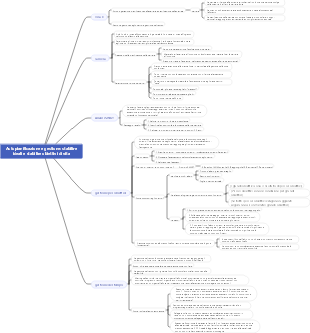
The mind map of softswitch separates the call control function from the media network (transport layer); it is the core equipment of the next generation packet network. Its functions are: call control and processing, protocol~, service provision~, service exchange~, and interworking ~, Resource Management~, Accounting~, Authentication/Authorization~, Address Resolution~, Voice Processing~
Edited at 2023-10-11 11:06:41This is a mind map about bacteria, and its main contents include: overview, morphology, types, structure, reproduction, distribution, application, and expansion. The summary is comprehensive and meticulous, suitable as review materials.
This is a mind map about plant asexual reproduction, and its main contents include: concept, spore reproduction, vegetative reproduction, tissue culture, and buds. The summary is comprehensive and meticulous, suitable as review materials.
This is a mind map about the reproductive development of animals, and its main contents include: insects, frogs, birds, sexual reproduction, and asexual reproduction. The summary is comprehensive and meticulous, suitable as review materials.
This is a mind map about bacteria, and its main contents include: overview, morphology, types, structure, reproduction, distribution, application, and expansion. The summary is comprehensive and meticulous, suitable as review materials.
This is a mind map about plant asexual reproduction, and its main contents include: concept, spore reproduction, vegetative reproduction, tissue culture, and buds. The summary is comprehensive and meticulous, suitable as review materials.
This is a mind map about the reproductive development of animals, and its main contents include: insects, frogs, birds, sexual reproduction, and asexual reproduction. The summary is comprehensive and meticulous, suitable as review materials.
Softswitch
Basic concepts of soft switching
Separates the call control function from the media network (transport layer); it is the core equipment of the next generation packet network
Functions: call control and processing, protocol~, service provision~, service exchange~, interoperability~, resource management~, billing~, authentication/authorization~, address resolution~, voice processing~
Technical features
Supports programmable call stations of various networks such as PSTN, ATM, and IP protocols; conveniently runs on various commercial computers and operating systems;
Efficient and flexible
Softswitch TG = long distance/tandem switch; softswitch AG = voice virtual private network; softswitch RAS (terminal) can provide managed MODEM services (signal conversion) using public bearer trunks; softswitch TG local performance server = local switch
Achieve the goal: With the cooperation of media equipment and media gateways, protocol conversion of various media streams is realized through computer software programming, and the interconnection of IP, ATM, PSTN network, etc. is realized based on the packet network architecture.
Softswitch technology network structure
Softswitch network layering: edge access layer (information format conversion), core switching layer (packet technology), network control layer (core layer; softswitching), business management layer
Equipment in Softswitching System
IP terminal: SIP terminal and H.323 terminal
The softswitch control equipment completes call processing control functions, access protocol adaptation~, service interface provision~, interconnection~, and application support system
Other support equipment
Business platform: generation and provision of new services
gateway
Media Gateway (MG)
Function: Main function--mutual conversion of media information formats
Category: Media Relay Gateway (TMG), Media Access Gateway (AMG, IAD), Resident User Media Gateway
Signaling Gateway (SG)
Function: Complete signaling/protocol conversion between each other
Category: No. 7 signaling gateway, user signaling gateway, IP signaling gateway
Media Gateway Controller (MGC is a soft switching device)
Softswitch system protocol
Media Gateway Control Protocol/Bearer Control Protocol=Asymmetric Protocol
MGCP
Proposed by IEFT, = Simple Gateway Control Protocol IP
Messaging relies on UDP carried over IP networks
H.248
Proposed by ITU
Signaling messages are based on multiple bearers such as UDP/TCP/SCTP
Signaling transmission protocol Sigtran (remember the protocol diagram)
M2UA
M3UA
M2UP
Adaptation layer
MTP
UDP TCP
SCTP
transport layer
IP
call control protocol = peer-to-peer protocol
ISUP INAP STP-T
SIP Session Initiation Protocol
IETF proposes an application layer control protocol for multimedia communication on IP networks
Function
In softswitching systems, it is mainly used between softswitching and SIP terminals.
Mainly used in voice and data services, as well as call establishment and release between multimedia services
The SIP protocol, with its simplicity and flexibility...
SIP terminal and SIP server
User agent UA
SIP entity used for delivery to users, providing voice, video and value-added services.
User Agent Client UAC
User Agent Server UAS
Network Server NS
Geocoding and user status
proxy server
redirect server
Register server
H.323
The communication control protocol developed by ITU is used to provide multimedia services in packet-switched networks. Call control is an important part of it and is used to establish point-to-point media sessions and multi-point media conferences.
In H.3UDP mode 23, control signaling adopts TCP mode and media streaming adopts
Entities defined by H.323: Gateway (G) Gatekeeper (GK) Multipoint Conference Controller (MC) Multipoint Processing (MP) Multipoint Conference Control Unit (MCU)
Other application layer protocols: FTP, RADIUS, PARLAY, SNMP
Core switching layer protocols: Ethernet, MPLS, ATM, TCP/IP, RIP (Dynamic Routing Protocol), OSPF (Open Shortest Path First, the most widely used dynamic routing protocol and a link state protocol) , BGP (Border Gateway Protocol), RSVP (Resource Reservation Protocol)
IMS technology
IMS: A network system framework that provides voice and multimedia services based on IP core network
3GPP R4: Introducing softswitching
R5: Define the core structure of IMS, network element functions, interfaces and processes, etc.
R6: Added some IMS service features, interoperability specifications between IMS and other networks, and wireless local area network (WLAN) access features
R7: Strengthen the standardization of fixation and integration
Comparison between IMS and Softswitch
Similarity: Both are based on IP packet networks and are divided into 4 layers: business layer, control layer, bearer layer, and access layer.
The biggest difference
From the control layer, the functions of IMS are further refined.
IMS originates from the application of mobile communication networks; NGN fixed network
IMS all uses SIP protocol as signaling for call control and service control. In NGN, SIP can be used as one of many protocols for call control.
Softswitch is based on master-slave control; IMS terminal and core side adopt SIP protocol based on IP bearer...
IMS supports mobility management and has certain QoS guarantees
IMS features: access independent, unified protocol, separation of business and control, separation of user data and exchange control, home service control, horizontal architecture, policy control and QoS guarantee, invisible registration
IMS layered architecture
Logical entities are divided into five categories
Session control and routing
P-CSCF
I-CSCF
S-CSCF
The core network element performs call session control
User data management, authentication and authentication: HSS (temporary/local register)
User public identity IMPU/PUI
User Private Identity IMPI/PVI
Public Service Identity PSI
User contract database, saves user contract attributes
media resources
business control
Interoperability function
Protocols in IMS
SIP, Diameter, COPS, H.248
Advantages of IMS: mobility management, service quality, service control and developer interface