Galerie de cartes mentales CL STRUCTURES
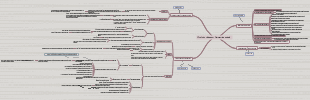
Dans la structure cl, l'enseignant stimule l'intérêt des élèves en posant des questions, en montrant des images, etc., par exemple en disant « allez ensemble». Les étudiants discutent activement, s'entraident et créent une bonne atmosphère d'apprentissage. Le format des activités à l'intérieur et à l'extérieur du cercle est unique, grâce auquel l'enseignant informe les élèves qu'ils passeront en revue les connaissances pertinentes, y compris les salutations, les questions et le vocabulaire du matériel scolaire, aidant les élèves à consolider ce qu'ils ont appris, à améliorer l'efficacité de l'apprentissage et à promouvoir la maîtrise des connaissances.
Modifié à 2022-04-19 17:47:08CL STRUCTURES

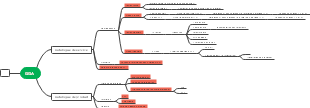
1. HEADS TOGETHER
1. The teacher asks question/picture. He says "heads together"
2. The students discuss/they help each other
3. The teacher stops the discussion saying "hands up"
4. Teacher elicits answers from a student (student number then team number)
2. INSIDE-OUTSIDE CIRCLE
1. Tell students that they will be reviewing greetings, questions, and school material vocabulary with the activity Inside-Outside Circle
2. Have students move their desks in pairs
3. Hand out cards to students
4. Demonstrate the activity with a student using the dialogue
Begin by greeting your partner
Ask 2 questions that begin with What or Where
Ask 2 questions with “Do you have …”
Ask “What do I need for school?” and show the card to the other student
Repeat with your partner
5. Have half the class stand up and form a circle and the other half stand up and face the students in an inner circle. Each student will have a partner
6. Have students begin the activity
7. Have the outside circle students move 3-4 partners to the right to change partners.
8. Repeat the activity (Steps 7). Continue changing partners two more times.
3. THREE-STEP INTERVIEW
Students interview their partner and then each shares with teammates in a group of 4 what they learned
1. Teacher provides the interview topic, states the duration of the interview, and provides think time
2. In pairs, Student A interviews Student B
3. Pairs switch roles; Student B interviews Student A
4. Roundrobin: Pairs pair up to form groups of four
Each student, in turn, shares with the team what he/she learned in the interview
4. MIX-PAIR-SHARE
Setup: teacher prepares questions to ask students
1. Students mix around the room
2. Teacher calls "Pair"
3. Students pair up with the person closest to them and give a high five. Students who haven't found a partner raise their hands to find each other
4. Teacher asks a question and gives think time
5. Students share with their partners using: Timed Pair Share / Rally Robin
Optional: Students may practice greetings or affirmations during Step 1
Hint: for orals lists use RallyRobin. For longer in depth responses, use Timed Pair Share
5. ROUNDROBIN
In teams, students take turns responding orally
1. Teacher poses a problem to which there are multiple possible responses or solutions, and provides think time
2. Students take turns stating responses or solution
6. RALLYEROBIN
1. teacher asks question to which there are multiple possible responses or solutions and provides think time.
2. students take turns stating responses or solutions
7. FIND SOMEONE WHO
Setup: the teacher prepares a worksheet or questions for students to answer
1. Students mix in the class, keeping a hand raised until they find a partner that is not a teammate
2. In pairs, Partner A asks a question from the worksheet; Partner B responds. Partner A records the answer on his or her own worksheet and expresses appreciation
3. Partner B checks and initials the answer
4. Partner B asks a question; Partner A responds. Partner B records the answer on his or her own worksheet and expresses appreciation
5. Partner A checks and initials the answer
6. Partners shake hands, part, and raise a hand as they search for a new partner
7. Students repeat Steps 1-6 until their worksheets are complete
8. When their worksheets are complete, students sit down; seated students may be approached by others as a resource
9. In teams, students compare answers; if there is a disagreement or uncertainty, they raise four hands to ask a team question
8. TALKING CHIPS
Setup: teams have talking chips (maximum: two chips each)
1. The teacher provides a discussion topic and provides think time
2. Any student begins the discussion, placing one of his or her chips in the center of the table
3. Any student with a chip continues discussing, using his or her chip
4. When all the chips are used, teammates each collect their chips and continue the discussion using their talking chip
Modification: Students may be given just one chip each, or two chips. Students with no chips left must wait until the teammates have used all their chips before they all collect their chip(s) and continue the discussion
9. CLASSIC JIGSAW WITH BASE TEAMS AND EXPERT TEAMS
1. Introduce the strategy and the topic to be studied
2. Assign each student to a "home group" of 3-5 students who reflect a range of reading abilities
3. Determine a set of reading selections and assign one selection to each student
4. Create "expert groups" that consist of students across "home groups" who will read the same selection
5. Give all students a framework for managing their time on the various parts of the jigsaw task
6. Provide key questions to help the "expert groups" gather information in their particular area
7. Provide materials and resources necessary for all students to learn about their topics and become "experts."
Note: It is important that the reading material assigned is at appropriate instructional levels (90–95% reading accuracy).
8. Discuss the rules for reconvening into "home groups" and provide guidelines as each "expert" reports the information learned
9. Prepare a summary chart or graphic organizer for each "home group" as a guide for organizing the experts' information report
10. Remind students that "home group" members are responsible to learn all content from one another
10. THINK PAIR SHARE
1. Teachers begin by asking a specific question about the text
2.Students "think" about what they know or have learned about the topic.
3. Each student should be paired with another student or a small group.
4. Students share their thinking with their partner.
5. Teachers expand the "share" into a whole-class discussion.
11. THINK SQUARE SHARE
1. The teacher asks a question/topic/theme to a whole group of students (collaborative group of 4 or 6)
2. Students “Think” of the question/topic/theme proposed by the teacher
3. Students select a “Buddy” from their assigned group and provide that individual a reflective thought of the question/topic/theme, while the “Buddy” listens attentively.
4. The “Buddy” responds by sharing his/her reflective thought in the same fashion, while the first “Buddy” listens attentively.
5. Then each of the “Buddies” find a new “Buddy” (within their groups) and they repeat steps 1-4.
6. Finally, the facilitator/teacher ensues into a Whole Group Share,
7. The teacher notes responses on a board
12. WITHIN TEAM JIGSAW
1. Introduce the strategy and the topic to be studied
2. Assign each student to a "home group" of 3-5 students who reflect a range of reading abilities
3. Determine a set of reading selections and assign one selection to each student
4. Give all students a framework for managing their time on the various parts of the jigsaw task
5. Provide materials and resources necessary for all students to learn about their topics and become "experts."
Note: It is important that the reading material assigned is at appropriate instructional levels (90–95% reading accuracy).
8. Discuss the rules for reconvening into "home groups" and provide guidelines as each "expert" reports the information learned
9. Prepare a summary chart or graphic organizer for each "home group" as a guide for organizing the experts' information report
10. Remind students that "home group" members are responsible to learn all content from one another