 Wondershare EdrawMind
心智圖資源庫 CFA一級 權益Equity
- 15
CFA一級 權益Equity
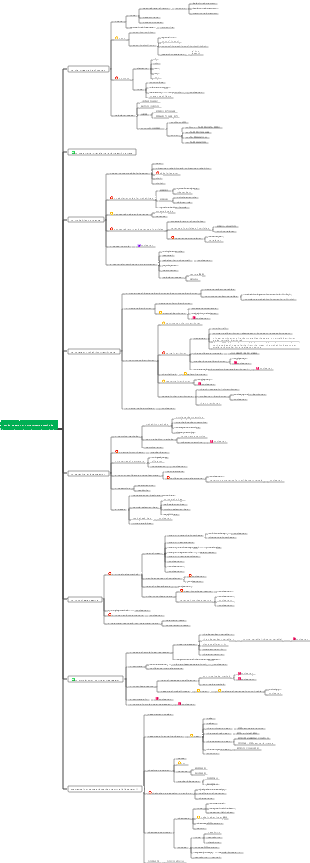
自己總結一遍腦子清楚多了。本心智圖主要內容有:Reading33.Market organization and structure、Reading 34.security market indexs(指數)、Reading35 market efficiency。
編輯於2022-04-30 15:32:55
- Microbiologia medica Infezione batterica e immunità
Microbiologia medica, Infezioni batteriche e immunità riassume e organizza i punti di conoscenza per aiutare gli studenti a comprendere e ricordare. Studia in modo più efficiente!
- teoria cinetica dei gas
La teoria cinetica dei gas rivela la natura microscopica dei fenomeni termici macroscopici e le leggi dei gas trovando la relazione tra quantità macroscopiche e quantità microscopiche. Dal punto di vista del movimento molecolare, vengono utilizzati metodi statistici per studiare le proprietà macroscopiche e modificare i modelli di movimento termico delle molecole di gas.
- Breve História do Tempo
Este é um mapa mental sobre uma breve história do tempo. "Uma Breve História do Tempo" é um trabalho científico popular com influência de longo alcance. Ele não apenas introduz os conceitos básicos da cosmologia e da relatividade, mas também discute os buracos negros e a expansão. Do universo. questões científicas de ponta, como inflação e teoria das cordas.
CFA一級 權益Equity
- Microbiologia medica Infezione batterica e immunità
Microbiologia medica, Infezioni batteriche e immunità riassume e organizza i punti di conoscenza per aiutare gli studenti a comprendere e ricordare. Studia in modo più efficiente!
- teoria cinetica dei gas
La teoria cinetica dei gas rivela la natura microscopica dei fenomeni termici macroscopici e le leggi dei gas trovando la relazione tra quantità macroscopiche e quantità microscopiche. Dal punto di vista del movimento molecolare, vengono utilizzati metodi statistici per studiare le proprietà macroscopiche e modificare i modelli di movimento termico delle molecole di gas.
- Breve História do Tempo
Este é um mapa mental sobre uma breve história do tempo. "Uma Breve História do Tempo" é um trabalho científico popular com influência de longo alcance. Ele não apenas introduz os conceitos básicos da cosmologia e da relatividade, mas também discute os buracos negros e a expansão. Do universo. questões científicas de ponta, como inflação e teoria das cordas.
- 推薦給您
- 大綱



Equity
Reading33.Market organization and structure
金融市場的功能與市場管理
金融市場的3個功能
1 實現金融市場的目的
savings borrowing債 issuing equity發股票 risk management exchange asset utilizing information(information- motivated traders)
2 return determination
平衡貨幣的供給與需求 (平衡點取決於risk,liquidity,maturity)
3 allocation of capital
市面上錢有限,需合理配置ppt5-7
well functioned financial market4個特徵
1:complete markets(參與者都能實現目的) 2.operational efficiency(交易價格低廉) 3.information efficiency(反應訊息的速度很快) 4.allocational efficiency(資金使用效率高)
market regulation(想要實現well functioned financial market必須有監管 市場監理的目標有5條)
金融市場的各種中介與服務
brokers,dealers,and exchange
1.brokers(市場活躍時較好):撮合交易,賺取佣金bid是買價,較低;ask是賣價,較高。 2.block brokers:主要撮合大宗交易或房地產 3.investment bank:幫助公司賣股票,賣債券等 4.dealers(市場不活躍時較好,可提供流動性:做市商(一級做市商的對手方為央行) 5.broker-dealer:同時是broker和dealer 6.exchange:交易所,使得市場更有秩序 7.alternative trading systems ATS:另類的交易場所,通常缺乏監管,會有dark pool(匿名的交易)
securitizers
證券化,會在固定收益中詳細介紹
depository institutions
通常指的是銀行等存款機構,賺取利差。
insurance company
名詞:insured(受保的) policyholders(投保人) 有三類風險要注意,詳見右圖
arbitrageurs
同一個商品在兩個市場價格不同的時候,就會出現套利
clearinghouses and custodians
clearinghouse:當客戶想要出售資產時充當買方,當客戶想要購買資產時充當賣方,從而限制交易對手方的風險。 custodians託管行:一般在券商開戶的時候錢都放在託管行,不能直接放在券商處。
資產的分類
financial asset
security
fixed income vs. equity securities
fixed income:債券之類的,詳見右圖
equity securities:普通股,優先股,權證(購買股票的權利),詳見右圖
Pooled Investment Vehicles(集合投資產品,一般說的是fund)
public vs. private
currency
匯率代表著一種經濟實力
derivative contract
real asset
commodity:大宗商品一般為經濟復甦的先行指標
real estate:一般是房產、機場、設備等。在購買之前必須詳細的調查
市場的分類
Money vs. Capital markets
Money:the market for short-term debt instruments (oneyear maturity or less).
Capital markets:financial markets that trade securities of longer duration, such as bonds and equities.
Traditional vs. Alternative markets
Traditional:markets for traditional investments, include all publicly traded debts and equities and shares in pooled investment vehicles that hold publicly traded debts and/or equities.
Alternative markets:hedge fund/private equity fund/commodity/real estate/infrastracture
Primary vs. Secondary markets
Primary
basic information
Primary market: the market where newly issued securities are sold. Newly issued securities involve: IPO (initial public offerings): first-time issues by firms whose shares are not currently publicly traded. Seasoned offerings 增發(secondary issues): new shares issued by firms whose shares are already trading in the marketplace.
how securities are sold
Sold Publicly
Underwritten Offering (the most common way):投行包銷,一般投行希望價格能低一些容易賣,公司希望定價高一些能融資更多,所以有conflict
Best Efforts:代銷,投行盡量幫忙賣股票,投行與公司都希望價格能高一些
Indications of Interest:詢價,投行找來一堆投資人詢價的過程
Book building:詢價過程中投行會記錄下來每一個詢到的價格
Sold Privately
Private Placement定向增發:Securities are sold directly to qualified investors, typically with the assistance of an investment bank.一般是少於30人的高淨值客戶,最小投資金額是1000萬元,限售期內不允許賣出。
Other transaction methods
Shelf Registration:一次註冊多次發行
Dividend Reinvestment Plan:股息再投資
Rights Offering:配股認購權,是一種權力。例如每持有100股,就有權力以折扣價買入10股,如果不想參與的話最好在配股之前出售,不然股權會被稀釋。
Secondary
basic information
Secondary Capital Markets The secondary market is the place where securities are traded after their initial offerings.The secondary market supports the primary market by providing Liquidity and Price discovery
在二級市場交易時
Call Markets:集合競價,這段時間內不允許交易,例如每天開市的9.15-9.30
Continuous Markets:連續競價,交易在此時間內隨時可能發生
how securities are sold
Order-Driven Market:訂單驅動型,broker主導的市場。一般都是匿名的。撮合的原則是時間優先與價格優先
Price priority: trades with the highest bid (buy) and lowest ask (sell) prices are traded first, this is so-called price priority. Time precedence: if orders are at the same prices, the earliest arriving orders are traded first.
Quote-Driven Market又叫price-driven market or an over-the-counter market.:報價驅動型,是dealer主導的市場。 dealer之間會相互競爭,做市者透過自己買賣股票為市場提供流動性。
Brokered Markets:中介市場(大宗交易),一般是出售價格很高的投資標的,比如說房子,藝術品,一大堆的股票等。
positions and leverage(交易部位與槓桿)
Long Position:多頭,買方,從價格的上漲中獲利,最大損失為購買股票的成本,最大收益是無限的。
Short Position:空頭,賣方,從價格的下跌中獲利,最大損失是無限的,最大收益是藉入股票時的價格,即最大收益為100%。
注意:Payment-in-lieu代付款,收到的股利與利息都必須償還給股票的借出人。 Short Rebate Rate做空返還率:1.賣空者必須將賣空的收益作為抵押,不能亂花。 2.經濟商會把收到的收益再投資,並將利息的一部分當作做空回饋率還給做空者。 3.如果股票很難借,那麼做空回饋率有可能是0甚至是負數。
Leveraged Position:槓桿頭寸,融資業務。
basic information
Leveraged Positions(簡而言之,借錢投資) Definition: An investor is said to be take leveraged positions if he borrowed funds to purchase an asset. Buy on margin: Investors who use leverage to buy securities by borrowing from their brokers are said to buy on margin and the borrowed funds are referred to as a margin loan.The interest rate paid on the funds is the call money rate. Leverage ratio: The leverage ratio of a margin investment is the value of the asset divided by the value of the equity position.(自有資金2購買價格為10的股票,槓桿率就是10/2=5.
margin requirement
Initial Margin(IM)
Maintenance Margin(MM)
Margin Call
期貨必須回到初始保證金,股票回到維持保證金。
calculation
Margin Call Price for a Leverage Position(跌到多少錢的時候接電話)
Order Execution and Validity(訂單,買單與賣單)
Execution instructions看訂單如何被執行
Market orders以當前最佳價格買賣的指令,交易速度快,成本不可控,是最常見的一種類型
Limit orders限價委託訂單
Make the market:限價的買賣價就是目前市面上最優的買賣價,提供流動性
Make a new market:限價的買家比目前市場最有的買價高,但是低於最優的賣價,提供流動性
Take the market:限定的賣價等於市面上最優的買價,可以立即成交,減少了市場的流動性
Behind the market:限定的買價比市面上最優的買價低,或限定的賣家比市面上最優的賣價高,提供流動性
Far from the market:限定的買家遠低於目前市場上最優的買價,或限定的賣價遠高於目前市場上最優的賣價,提供流動性
Instructions concern the volume of the trade涉及交易量的說明
All-or-nothing orders execute only if the whole order can be filled要不是全成交或不成交
stop order
Stop-sell order:站在多頭的角度,如果有股價下跌觸發指令,就會自動賣出
Stop-buy:站在空頭角度,如果股價上漲觸發指令,就會自動買入
Instructions concern the visibility of the trade涉及交易可見的說明
Hidden orders只有交易商能看到指令,盤口不顯示
Iceberg orders只顯示指令的一部分
Validity instructions:有效指令,看指令何時生效
Day orders日內指令,當天有用,過期作廢
Good-till-cancelled orders(GTC):一直有效直到取消或成交
Immediate or cancel orders:目前訂單能成交的全部成交,無法成交的全部取消
Good-on-close orders:例如訂單在收盤前的5分鐘內成交
Good-on-open orders:開盤後的一段時間成交
Clearing instructions:清算指令,是broker與exchange之間的事情,考試時不涉及
Reading 34.security market indexs(指數)
Security Market Indexes
definition
Price index只考慮成分股的價格因素: uses only the prices of the constituent securities in the return calculation. A rate of return that is calculated based on a price index is referred to as a price return.
Return index考慮了成分股的價格與股利: includes both prices and income from the constituent securities. A rate of return that is calculated based on a return index is called a total return.
如何建構指數?
五種加權指數
Price-Weighted Index
特徵
A price-weighted index is an arithmetic average of current security prices, which means that indexes movements are influenced by the differential prices of the components. The price-weighted index assumes you purchase an equal number of shares (one) of each stock represented in the index
公式
實際演算
優缺點
1.買相同的股票數,簡單易操作 2.容易受到高價股的影響 3.如果有拆分的情況是需要調整的(2 for 1,一股拆2股,與拆分之前的市值應該相同)詳情見衝刺筆記P24。
Equal-Weighted Index
特徵
購買相同的金額,剔除了收到高價股的影響
公式
幾何平均始終是小於算數平均的
實際演算(先計算RA,RB,RC,然後再算平均數)
優缺點
容易受到小型股的影響,因為小型股的價格波動較大
Market Capitalization-Weighted Index
特徵
市值加權指數,每個成分股的權重等於其市值除以該指數中所有成分股的總市值
公式
實際演算
優缺點
容易受到大盤股的影響,因為在指數中大盤股的市值佔比較大,動量效應(momentum effect)
A Float-Adjusted Market Capitalization-Weighted Index
特徵
經過浮動調整的按市值加權:每隻股票的權重是由該股票的流通股的市值在總市值中的比重來決定的
優缺點
剔除了限售股和非流動股的影響,股票只有在能夠交易的情況下才會對市場產生影響。
Fundamental weighting
特徵
透過價值面的指標來決定成分股的權重。價值面的指標通常用股利
優缺點
購買的價值股會更多,從而剔除了市值加權法的缺點
其他
value-tilted:更傾向於價值股
contrarian-style:逆向選擇,一般低估的股票大家都覺得還得跌,需要在大家都拋售的時候買入,所以是逆市的
Rebalancing and Reconstitution of an index
Rebalancing
通常每季調整一次,價格的變動可能會對權重產生影響,所以需要把權重重新調整成目標權重(一般調整權重最頻繁的是等權重指數)
Reconstitution
調整構成,隨著時間的發展,有的股票不再符合指數標準,所以需要被剔除出指數(一般調整構成影響最大的是市值加權型的指數)
證券市場指數的使用
Other Investment Indexes
equity index
Broad market index:全市場指數,如上證綜指
Multi-market index:多市場指數,一般是多個國家的市場指數組成,例如BRICS金磚五國
Multi-market index with fundamental weighting:基本面加權的多市場指數,對國家指數使用市值加權,並且使用基本面因素在全球指數中對國家指數收益進行加權
Sector Index:產業指數
Style index:依規模分為小型股,中盤股,大盤股,依風格分為價值股與成長股
fixed income index(討論固定收益指數與股票指數的差異)
Large universe of securities
1.固收的範圍比股票的範圍大很多 2.固收類不僅由公司發行,還可以以政府發行 3.一個公司只能發一種股票,但是卻可以發多種債券 4.固收的周轉率比較高因為會有一些到期的固收被剔除出指數
Dealer markets and infrequent trading
固收證券主要是由做市商交易,所以做指數的時候很大程度依賴做市商定的價格。例如:長期債券的流動性差,定價難度很高。
Alternative Investment Indexes(非重點)
Commodity Indexes
Real Estate Indexes
Hedge Fund Indexes
Reading35 market efficiency
Introduction of market efficiency
Efficient capital market and the assumptions
定義
在有效市場中,證券的當前價格可以充分、快速、合理的反應有關該證券的所有可用信息
假設
1. The time frame for an asset’s price to incorporate information can be used to measure a market’s efficiency. If the time frame of price adjustment allows many traders to earn profits with little risk, then the market is relatively inefficient. 2. An informational efficient capital market is where security prices adjust rapidly to the infusion of new information. 3. Prices should be expected to react only to the elements of information releases that are not anticipated fully by investors.(已經被合理預測到的信息,而這個信息真的發生了,是不會影響股價的,只有新公佈的信息與市場預期不符,財務影響到市場預期)
market values and intrinsic values.(在有效市場中,市場價值就是內在價值)
內在價值是對資產有充分了解的理性投資者願意支付的價值 如果市場不夠有效,那麼投資人會買進內在價值大於市場價值的資產,賣出內在價值低於市場價值的資產。
Factors affect the degree of market efficiency
Number of market participation:參與者越多越有效
Availability of information:取得資訊越容易市場越有效
Impediments to trading:交易限制越少越有效(不限制套利與做空)
Transaction and information costs:交易成本越低市場越有效
Contrast weak form, semi-strong form, strong form market efficiency
Market Anomalies市場異常,CFA認為市場一場並不能駁斥市場有效假說,一般都是因為研究方法有誤導致結果與有效市場假說相左
definition
Definition: something deviates and helps to disprove the EMH(反駁市場有效假說) Most evidence suggests anomalies are not violations of market efficiency but are due to the methodologies used in anomaly research, such as data mining or failing to adjust adequately for risk.
3種異常
Time-series data
Calendar anomalies
definition:在1月份的前5天之內,股票回報率(尤其是小型股)顯著的高於其餘時間。
原因: 1. Tax-loss selling, as investors sell losing positions in December to realize losses for tax purposes and repurchase stocks in January; 12月的時候把浮虧變成實際虧損來避稅,1月的時候再把證券買回來。 2. Window dressing, as portfolio managers sell risky stocks in December to remove them from year-end statements and repurchase them in January.帳面的粉飾,基金經理人會出售高風險的證券,提升自己的排位,在1月的時候再買回來。
The overreaction effect:
refers to the finding that firms with poor stock returns over the previous three or five years (losers) have better subsequent returns than firms that had high stock returns over the prior period.贏家表現差,輸家表現好
Momentum anomalies:
High short-term returns are followed by continued high returns市場存在慣性,應該追漲殺跌
cross-sectional data
Size effect:規模效應,小公司的股票表現往往優於大公司股票的表現
Value effect:價值效應,價值股的表現優於成長股的表現
Other identified anomalies
Closed-end investment funds:封閉式投資基金的價值通常會比基金的淨資產值低,因為流動性比較差。但是封閉式基金的交易是有成本的,所以雖然折價,也不能獲得超額報酬。與弱勢有效市場的假設是一致的。
Earnings announcements:獲利公告,公司的獲利狀況可能不能第一時間反應在股價上,中間會有時間差,那麼就可以透過基本面的分析獲得超額收益,這與弱勢有效市場的假設是一致的。
Initial public offerings:整體而言,IPO公司的長期表現低於平均水平,IPO之後的表現是比較差勁的,因為投行基於自己的利益考慮,發行時候的價格並不公允。
Economic fundamentals:經濟基本面,股票的波動有時會與基本面的情況相背離(僅在短期內),基於股息率的交易策略不會產生持續的異常回報。
Behavior Finance
rational vs. irrational
有效市場假說認為只有市場是理性的,行為金融學被用來解釋一些非理性行為所帶來的市場異常
Behavioral biases(10個)
Loss aversion:更討厭損失帶來的風險
Overconfidence: explains that investors or analysts are overconfident in their earning forecasts which result in the overestimation of growth, good news.
Herding:trading that occurs in clusters and is not necessarily driven by information.
Information Cascades:資訊級聯:訊息的傳遞來自於那些首先採取行動的參與者,他們的決定影響其他人的決定。
Representativeness:Investors assume good companies or good markets are good investments.
Mental accounting:Investors classify different investments into separate mental accounts instead of viewing them as a total portfolio
Conservatism: Investors react slowly to changes.
Narrow framing: Investors view events in isolation.
disposition effect:投資者更傾向於持有輸家,賣掉贏家
gambler's fallacy: 希望反轉發生的頻率高於實際發生的頻率,例如認為一個股票10天後就能反轉,實際上反轉的速度沒有這麼快。賭一把
reading 36 overview of equity securities
Types of Equity Investments
Common Shares
definition
普通股是最常見的,如果公司被清算,普通股股東對資產有剩餘索取權(在債權人與優先股之後),並且透過投票權管理公司。
voting
Common stockholders are able to vote for the board of directors, on merger decisions, and on the selection of auditors. statutory voting system:每一股股份在選舉董事會成員時得一票,假如一個公司有100股股票,我佔有40%,那麼我就有40票,投給兩個候選人,每個人分攤的票數太少,投票結果很容易被大股東左右。 cumulative voting :股東可以根據自己的選擇將選票分配給一個或多個候選人,可以保護少數股東。例如一個公司有100股股票,我佔有40%,要選出來2個候選人,那麼我就有80票,比原來多了許多。
classification
Callable common shares可贖回普通股
給公司權力以提前設定好的價格贖回普通股,對公司有利,對投資人不利。
Putable common shares可回售普通股
給投資人權力以提前設定好的價格把股票賣還給公司,對投資人有利,對公司不利。
Preference shares(本質上是永續年金)不受市場漲跌的影響
definition
basic
Preference shares (or preferred stock) have features of both common stock and debt.
characteristics
1. Features of common stock: do not mature 2. Features of debt: fixed dividend payment, but dividends are not contractual obligation and do not usually have voting rights. 3. Preferred shares have less risk than common shares because the dividend is stable and they have priority over common stock in receiving dividends and in the event of liquidation of the firm.
classification
Cumulative preference shares
累計優先股,公司需先補累計優先股的股利,再支付普通股股利。例如有企業今年業績不好,不發股利,明天業績好轉,應該先補發累計優先股的股利。
Convertible preference shares
可轉換優先股,可以發行時確定的轉換比率轉換成普通股
優點: 1.優先股的股利高於普通股股利。 2.如果公司獲利增加,可將優先股轉換成普通股來分享利潤。 3.當普通股的價值上漲時,可轉換優先股會變得更有價值。 4.優先股的風險要低於普通股。
participating preference shares
參與優先股,如果公司利潤超過預期水平,參與優先股的股東將會獲得額外的股利。
Private equity
definition
Private equity is usually issued to institutional investors via private placements.
characteristics
Less liquidity because no public market for the shares exists.
Share price is negotiated between the firm and its investors, not determined in a market.
More limited firm financial disclosure because there is no government or exchange requirement to do so.
Lower reporting costs because of less onerous reporting requirements.
Potentially weaker corporate governance because of reduced reporting requirements and less public scrutiny.
Greater ability to focus on long-term prospects because there is no public pressure for short-term results.
Potentially greater return for investors once the firm goes public.
classification
Venture capital
創投: 在公司生命週期的早期階段,一般涉及的有種子階段、新創階段、早期階段或夾層階段。
Leveraged buyout(LBO):風險小,所以通常都舉著槓桿
槓桿收購: 投資者透過債務融資購買公司的全部股權。如果投資人為公司的管理層,那麼就被成為管理層收購 MBO
Private investment in public equity(PIPE)
私人投資公共股權: 上市公司迅速把私募股權出售給投資人。此時公司可能面臨困境、有大量的債務,或有可以成長的機會。
Investment in non-domestic equity securities
國際市場的趨勢(新興市場尤其受惠於這些趨勢)
更多的公司願意在國外市場發行股票
股票在境外市場交易的公司數量增加
越來越多的公司選擇在兩個或兩個以上的市場發行股票
classification
Direct investing
直接在外國市場購買外國的公司的證券,但是存在一些障礙: 1.投資與收益用外幣計價,會受到匯率波動的風險 2.有一些外國的證券交易所可能缺乏流動性 3.有一些地區報告的要求不嚴格,可能會影響分析 4.投資者必須熟悉當地的法規與程序。
Global registered shares
全球註冊交易:在全球各交易所以不同的貨幣進行交易 優點:不用考慮匯率的風險。 缺點:能做到全球註冊發行的公司太少了,投資標的非常有限。
Depository receipts(存託憑證)
definition
是指在中國證券市場流通的,代表美國公司股票的可轉讓憑證,由存託機構簽發(銀行或公司)
classification
Sponsored DR: 參與型存託憑證:公司參與存託憑證的發行,投資人有投票權
Unsponsored DR: 非參與型存託憑證:公司不參與存託憑證的發行,存託銀行有投票權
Global depository receipts (GDRs)are issued outside the U.S. and the issuer’s home country. Most GDRs are traded on the London and Luxembourg exchanges.
American depository receipts (ADRs) are denominated in U.S. dollars and trade in the United States.
Basket of listed depository receipts:是一種ETF,裡面有一籃子的DR
Risk and return characteristics of equity securities
Equity returns
Dividends
Gains from dividends and the reinvestment of dividends have been an important part equity investors’ long-term returns.
Capital gains or losses from changes in share prices
Foreign exchange gains or losses.
For investors who purchase depository receipts or foreign shares directly also subject foreign exchange gains (or losses)
Equity risk(注意排序)
Preferred stock is less risky than common stock
Putable shares are less risky for investor (for both common and preferred shares)
Callable shares are more risky for investor (for both common and preferred shares)
Risk and Return of Equity Securities
The book value of equity
The market value of equity
Return on Equity
ROE淨資產收益率,投資人觀察公司管理階層是否有效運用資本產生利潤
Cost of equity
定義:股權成本,股東要求的報酬率,股票在市場上的預期均衡總回報(包括股利)
說明
在任何時間點,其餘條件不變,股價下跌預期報酬率上升,股價上漲預期報酬率下降
公司的股權成本可以解釋為為了補償投資者所承擔的風險所需的最低迴報率
一般用CAPM模型計算:RE=RF β(RM-RF)
Reading37. Introduction to industry and company analysis 定性分析
Current industry classification systems
The Uses of Industry Analysis
Understanding a company’s business and business environment
Industry analysis is often a critical early step in stock selection and valuation because it provides insights into the issuer’s growth opportunities, competitive dynamics, and business risks .
Identifying active equity investment opportunities
Industry valuation can be used in an active management strategy to determine which industries to overweight or underweight in a portfolio. Some investors engage in industry rotation(產業板塊輪動), which is overweighting or underweighting industries based on the current phase of the business cycle.
Portfolio performance attribution.(業績歸因)
Performance attribution, which addresses the sources of a portfolio’s returns, usually in relation to the portfolios benchmark, includes industry or sector selection. Industry classifications chemes play a role in such performance attribution.
Industry Classification
Products and services they offer;
products
services
Sensitivity to business cycles;
Cyclical firm:highly dependent on the stage of the business cycle.(基礎製造業,非剛需品)
High earnings volatility
high operating leverage
Growth industries: demand so strong they are largely unaffected by the stage of the business cycle.
Non-cyclical firm:demand is relatively stable over the business cycle
Defensive industries: least affected by the stage of the business cycle and include utilities, consumer staples (such as food producers), and basic services (such as drug stores).
(不考)Statistical methods, such as cluster analysis(聚類分析)
definition
This method groups firms that historically have had highly correlated returns. The groups (i.e., industries) formed will then have lower returns correlations between groups.
limitation
Historical correlations may not be the same as future correlations.
The groupings of firms may differ over time and across countries.
The grouping of firms is sometimes non-intuitive.
The method is susceptible to statistical error (i.e., firms can be grouped by a relationship that occurs by chance, or not grouped together when they should be).
Commercial industry classification;
Peer group
A peer group is a set of similar companies an analyst will use for valuation comparisons.
Industry life cycle models
Embryonic stage
the industry has just started Slow growth: customers are unfamiliar with the product. High prices: the volume necessary for economies of scale has not been reached. Large investment required. to develop the product. High risk of failure: most embryonic firms fail.
Growth stage
(industry growth is rapid ) Rapid growth: new consumers discover the product. Limited competitive pressures: The threat of new firms coming into the market peaks during the growth phase, but rapid growth allows firms to grow without competing on price. Falling prices: economies of scale are reached and distribution channels increase. Increasing profitability: due to economies of scale.
Shakeout stage(淘汰階段)
industry growth and profitability are slowing due to strong competition. Growth has slowed: demand reaches saturation level with few new customers to be found. Intense competition: industry growth has slowed, so firm growth must come at the expense of competitors. Increasing industry overcapacity: firm investment exceeds increases in demand. Declining profitability: due to overcapacity. Increased cost cutting: firms restructure to survive and attempt to build brand loyalty. Increased failures: weaker firms liquidate or are acquired.
Mature stage
Mature stage: there is little industry growth and firms begin to consolidate Slow growth: market is saturated and demand is only for replacement. Consolidation: market evolves to an oligopoly, High barriers to entry: surviving firms have brand loyalty and 下 cost structures. Stable pricing: firms try to avoid price wars, although periodic price wars may occur during recessions. Superior firms gain market share: the firms with better products may grow faster than the industry average.
Decline stage
Decline stage: industry growth is negative. Negative growth: due to development of substitute products, societal changes, or global competition. Declining prices: competition is intense and there are price wars due to overcapacity. Consolidation: failing firms exit or merge.
Strategic analysis of an industry
Competitive Advantage(波特五力模型)競爭優勢
Rivalry(競爭) among existing competitors
Rivalry increases when many firms of relatively equal size compete within an industry.
Threat of new entrants.
Industries that have significant barriers to entry will find it easier to maintain premium pricing.
Threat of substitute products
Substitute products limit the profit potential of an industry.
Bargaining power of buyers
Buyers’ ability to bargain for lower prices or higher quality influences industry profitability.
Bargaining power of suppliers
Suppliers’ ability to raise prices or limit supply influences industry profitability.
Pricing power
Barriers to entry
1. low barriers to entry->little pricing power 2.high barriers to entry do not necessarily mean high pricing power (Overcapacity) 3. Low barriers to exit may have higher pricing power(退出障礙太高會導致很多人退不出來,就會造成行業內的公司太多,定價權就會缺失)
Industry concentration
High Industry concentration does not guarantee pricing power(因為衰退期雖然集中度很高,但是定價權並不大)
Industry capacity
Undercapacity(產能不足)->higher pricing power and higher return on capital Overcapacity(產能過剩)->lower pricing power and lower return on capital
Market share stability
More stable market shares likely indicate less intense competition. 市場佔有率穩定,那麼競爭就不會太激烈,定價權會更大一些。
External Influences and Company Analysis
External Influences
Macroeconomic factors
Can be cyclical or structural (longer-term) trends, most notably economic output as measured by GDP or some other measure, such as interest rates, inflation and education level.
Technology
Change an industry dramatically through the introduction of new or improved products.
Demographics
The demographics includes not only the population growth and the age distributions, but also the geographical distribution of people, the changing ethnic mix in a society, and changes in income distribution.
Governments
Today’s social trend may be tomorrow’s law, regulation, or tax
Social influence
How people work, play, spend their money, and conduct their lives.
Environmental influences
Consumer perception for certain brands, products, and services
Increased government regulations and protections
Potential disruptions to supply chains and the ability to operate, such as an increase in natural disasters or resource shortages in water or energy
Company Analysis
A company analysis should include the following elements
Firm overview, including information on operations, governance, and strengths and weaknesses.
Industry characteristics.
Product demand.
A product costs.
Pricing environment.
A financial ratios, with comparisons to other firms and over time.
Projected financial statements and firm valuation.
Three generic competitive strategies
Cost leadership
With the same product, the firm seeks to a lower cost.
Differentiation
With the same cost, the firm seeks to provide product benefits that other firms do no provide.
Focus
The firm targets a niche with either a cost or a differentiation focus.(注重細分領域)
reading 38. Equity valuation. Concept and basic tools 定量分析
Equity valuation models
Evaluate a Security
Intrinsic value vs. Market price:比較內在價值與市值,看看股票是否被高估、低估,或平價。
根據估算的內在價值去估算時應該考慮的因素
Percentage difference between market prices and estimated values.
Confidence of the appropriateness of the valuation model.
Confidence of the inputs used in the valuation model.
Reasons why stock is mispriced.
Assume that market price will actually move toward estimated intrinsic value and that it will do so to a significant extent within the investment time horizon.
Major Categories of Equity Valuation Models
Discounted cash flow models現金流折現模型
dividend discount models
free cash flow to equity models
Multiplier models市場價格倍數模型
the ratio of stock price to fundamentals
the ratio of enterprise value to fundamentals
Asset-based models基於資產的模型,基於目前的資產,沒有考慮公司未來的增漲,屬於清算價值
Background for DDM: Stock Dividends
Dividend
A dividend is a distribution paid to shareholders based on the number of shares owned, and a cash dividend is a cash distribution made to company’s shareholders.
Extra dividend or special dividend
The dividends paid by a company that does not pay dividends on a regular schedule or a dividend that supplements regular cash dividend with an extra payment.
Stock dividends
Stock dividends is a type of dividend in which a company distributes additional shares of its common stock to shareholders instead of cash.
Stock split/ Reverse stock split(拆股與並股)
Background for DDM: Share Repurchase(股票回購)
Definition
A share repurchase is a transaction in which a company uses cash to buy back its own shares. 已經回購的股票不考慮股利、投票權與計算每股收益
Key reasons for engaging in share repurchases
Signaling a belief that their shares are undervalued;
Flexibility in the amount and timing of distributing cash to shareholders;
Tax efficiency in markets where tax rates on dividends exceed tax rates on capital gains;(避稅:資本利得稅比分紅稅低)
The ability to absorb increase in outstanding shares because of the exercise of employee stock options.(反稀釋)
Dividend Payment Chronology(股息支付的時間表)
The declaration date股利宣告日
The ex-dividend date除權除息日(由交易所決定的日期)它的前一天是最後一天購買股票可以得到分紅的日期)
Holder-of-record date股權登記日
Payment date股利發放日
DCF models
權益估計的關鍵原則:discounted future cash flow
Valuing Preferred Stock
相當於一個永續年金
Gordon Growth dividend discount model (GGM) or Dividend Discount Model(DDM)
恆定成長的高登股利成長模型
equation
Other variable parameters(如何得到其他的參數)
Assumption
Dividends grow at a constant rate.
The constant growth rate will continue for an infinite period.
The required rate of return r is greater than the infinite growth rate g...if it is not, the model gives meaningless results.
Limitations
Very sensitive to estimates of r and g
Difficult with non-dividend stocks
Difficult with unpredictable growth patterns (use multi-stage model)(難以預測成長模式)
Important Conclusion
The wider is the difference between r and g, the smaller the value of the stocks.
Small changes in the difference between r and g will cause large changes in the stocks’ value
兩階段的DDM模型
the growth rate starts at a high level for a relatively short period of time, then reverts to a long-run perpetual level.
原理:將現金流拆分成左右兩部分 1.以現金流量折現的方式計算出一階段的現值公式:PV1=D1/(1 r ) D2/(1 r )² 2.根據 GGM 模型計算出永續成長時點的現值,稱為 terminal value ,再將terminal value 折現到0時點,即為二階段現值 3.最後將一階段和二階段現值相加,即為股票的價值
三階段的DDM模型
把三個階段的PV都加起來就是股票的估值
free cash flow to equity
implications
1.Valuation obtained by using FCFE involves discounting expected future FCFE by the required rate of return on equity. FCFE reflects the firm’s capacity to pay dividends. 2. FCFE is useful the firm that does not pay dividends or pays dividends but the dividends paid differ significantly from the company’s capacity to pay dividends;
equation
Price multiples
Price multiples used for valuation include:
Price to Earnings (P/E):本益比,股價與每股盈餘之比
Price to Sales (P/S)市銷率,股價與每股銷售額之比
Price to Book Value (P/BV):市淨率,股價與每股淨值之比
Price to Cash Flow (P/CF):市現率,股價與每股現金流量比率
Two main ways to apply these price multiples
Multiples based on fundamentals
basic information
The value justified by (based on) fundamentals or a set of cash flow predictions (intrinsic value) therefore are independent of the current market prices.
equation
先計算出本益比,在用本益比乘以公司的EPS,得到調整後的本益比:
Multiples based on comparables
Compare relative values between one firm to another using price multiples with market price.
basic information
The methodology involves using a price multiple to evaluate whether an asset is fairly valued, undervalued, or overvalued in relation to a benchmark value of the multiple.
Identify companies that are most similar according to a number of dimensions. These dimensions include (but are not limited to) overall size, product lines, and growth rate.
The economic rationale underlying the method of comparables is the law of one price: Identical assets should sell for the same price.
優勢
Can be calculated easily.
Can be used both cross-sectional (versus the market or another comparable) and in time series.可用於橫斷面或時間序列。
劣勢
The conclusion drawn under the comparable and fundamental method may be reverse.
Price multiples may lose validity when firms use different accounting methods.
Price multiples for cyclical firms may be highly influenced by current economic conditions.
Enterprise value multiples公司價值,收購一個企業時候的價值
Enterprise value
Enterprise value (EV) is total company value, not equity. EV = market value of common stock market value of preferred equity market value of debt– cash and short-term investments
Advantage
Useful for comparing firms with different degrees of financial leverage
EBITDA is useful for valuing capital-intensive business EB
EBITDA is usually positive even when EPS is not.
EBITDA is useful for comparing firms with different effective tax rate.
Disadvantages
Market value of debt is often not available.
Asset-based models
An asset-based valuation of a company uses estimates of the market or fair value of the company’s assets and liabilities.一般是從資產負債表開始的
The asset-based valuation approach is not applicable when:
Intangible assets or “off the books” assets take up a large proportion.
Under a hyper-inflationary condition.
Companies with assets don’t readily determinable market (fair) value——such as those with significant property, plant, and equipment.
The asset-based valuation approach is most applicable when:
Financial companies, natural resource companies, and formerly goingconcerns(正在清算的公司) that are being liquidated. 這些類型的公司公允價值好獲得
Asset-based models are frequently used for valuation of private companies.非上市公司對自己的資產與負債如數家珍
Comparison of The Three Valuation Methods
Discounted Cash Flow Models
Comparable Valuation Using Price Multiples
Price multiple valuations based on fundamentals
Asset-based models