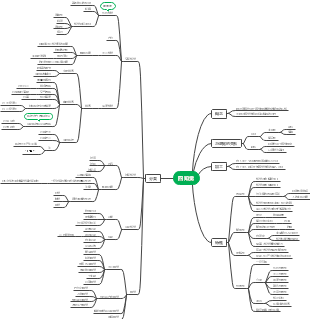
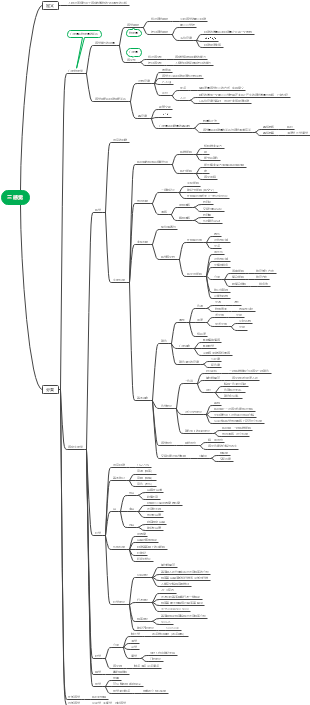
MindMap Gallery Pharmacology 9th Edition Chapter 20 Antipyretic, Analgesic and Anti-Inflammatory Drugs
Antipyretic, analgesic and anti-inflammatory drugs, a class of drugs that have antipyretic and analgesic properties, and most of them have anti-inflammatory and anti-rheumatic effects. Their anti-inflammatory effects are different from those of glucocorticoids. To distinguish them from glucocorticoids, these drugs are also called For non-body anti-inflammatory drugs (NSAIDs).
Edited at 2024-01-16 16:15:09This is a mind map about bacteria, and its main contents include: overview, morphology, types, structure, reproduction, distribution, application, and expansion. The summary is comprehensive and meticulous, suitable as review materials.
This is a mind map about plant asexual reproduction, and its main contents include: concept, spore reproduction, vegetative reproduction, tissue culture, and buds. The summary is comprehensive and meticulous, suitable as review materials.
This is a mind map about the reproductive development of animals, and its main contents include: insects, frogs, birds, sexual reproduction, and asexual reproduction. The summary is comprehensive and meticulous, suitable as review materials.
This is a mind map about bacteria, and its main contents include: overview, morphology, types, structure, reproduction, distribution, application, and expansion. The summary is comprehensive and meticulous, suitable as review materials.
This is a mind map about plant asexual reproduction, and its main contents include: concept, spore reproduction, vegetative reproduction, tissue culture, and buds. The summary is comprehensive and meticulous, suitable as review materials.
This is a mind map about the reproductive development of animals, and its main contents include: insects, frogs, birds, sexual reproduction, and asexual reproduction. The summary is comprehensive and meticulous, suitable as review materials.
Chapter 20 Antipyretic, analgesic and anti-inflammatory drugs
Early summary: A class of drugs that have antipyretic and analgesic properties, and most of them have anti-inflammatory and anti-rheumatic effects. Its anti-inflammatory effect is different from that of glucocorticoids. To distinguish it from glucocorticoids, these drugs are also called nonsteroidal anti-inflammatory drugs (NSAIDs).
Inhibit prostaglandin synthase (cyclooxygenase, COX) - prostaglandin (biosynthesis of PG)
Section 1 Overview
1. Pharmacological effects and mechanisms
Overview
Synthesis
Phospholipids
‘Phospholipase A2’ – Arachidonic acid (AA)
‘Lipoxygenase’ – Leukotrienes
‘Cycloxygenase’ – prostaglandin (PG) and thromboxane (TXA2)
PGI2: dilates blood vessels; inhibits platelet aggregation - now mostly used for cardiovascular diseases
TXA2: constrict blood vessels; platelet aggregation
Supplement: Steroidal anti-inflammatory drugs – inhibit phospholipase A2 Non-steroidal anti-inflammatory drugs – inhibit cyclooxygenase
PG is a type of highly active inflammatory mediator in inflammatory reactions, which can dilate blood vessels, increase microvascular permeability, induce heat, attract neutrophils, etc.
1. Anti-inflammatory effect
Mechanism: Inhibiting the biosynthesis of COX in the body - reducing PG production
COX has two isoenzymes - COX-1, COX-2 Physiological stimulation - the former - vasodilation, platelet aggregation, protection of gastric mucosa, regulation of renal blood flow - the inhibition of COX-1 by NSAIDs constitutes the toxicological basis of adverse reactions Inflammatory stimulation - the latter - catalyzes the production of PG - increases body temperature, causes pain, and causes inflammation - the inhibition of COX-2 by NSAIDs is considered to be the basis for its efficacy.
Features: Anti-inflammatory but not antibacterial, it targets the symptoms but not the cause; it works quickly, relieves pain and reduces inflammation
2. Analgesic effect
Inhibition of PG synthesis - reduced sensitivity of local pain receptors to bradykinin and other pain-causing substances
Features: Especially effective for dull inflammatory pain; ineffective for acute sharp pain and visceral colic; no euphoria, no respiratory depression; no dependence or tolerance for long-term use (relative to sedative-hypnotic drugs)
3. Antipyretic effect
Mechanism of action: Inhibits the synthesis of PG in the hypothalamus - exerts antipyretic effect
2. Common adverse reactions: 1. Gastrointestinal reaction (COX-1) 2. Skin reaction 3. Kidney damage
Selective COX-2 inhibitor: celecoxib
Section 2 Non-selective cyclooxygenase inhibitors
1. Salicylic acids
Aspirin (acetylsalicylic acid)
Process in the body: Rapidly absorbed after oral administration, it is a weak organic acid (detoxifies and alkalizes urine); liver metabolism; kidney excretion
Pharmacological effects and clinical applications
1. Antipyretic, analgesic and anti-rheumatic: dull inflammatory pain, rheumatic fever, rheumatoid arthritis
High-concentration aspirin—directly inhibits PG synthetase in the blood vessel wall—reduces prostaglandin (PGI2) synthesis
2. Affect platelet function: Small dose (50-100mg/d) - anti-thrombotic Large dose (100-200mg/d) - Promotes thrombosis
Adverse reactions
1. Gastrointestinal reaction (most common): prone to gastric ulcer Directly stimulates gastric mucosal cells and inhibits the synthesis of PGE2 (gastric wall prostaglandins have a protective effect on gastric mucosal cells)
2. Aggravate bleeding tendency: Aspirin inhibits platelet aggregation
3. Salicylic acid reaction
4. Allergic reactions: rash, urticaria, aspirin asthma (arachidonic acid - 'lipoxygenase' leukotriene ↑)
medicine interactions
Aspirin sulfonylurea oral hypoglycemic drugs → hypoglycemia
Mechanism: Displacement of sulfonylureas from plasma protein binding sites
2. Anilines
Acetaminophen (paracetamol)
Pharmacological effects: Antipyretic and analgesic are similar to aspirin, but the anti-inflammatory effect is extremely weak
No obvious gastrointestinal irritation
Can be used in children
3. Arylpropionic acids
Ibuprofen: strong antipyretic, analgesic and anti-inflammatory effect