 Wondershare EdrawMind
MindMap Gallery Tour of a Cell
- 156
- 3
Tour of a Cell
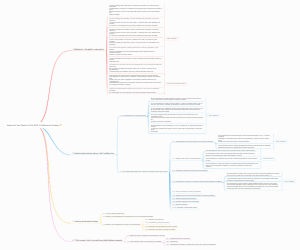
This is a mind map talking about the tour of a cell. You can create a mind map like this effortlessly.
Edited at 2020-09-28 09:55:37
- Recommended to you
- Outline

Tour of a Cell
Studying the Cell
- 3 Paramters of control amount of informatin in a micrscope image
- Magnigication
- Ratio of image size to object size
- Light Microscope
- Resolution
- The minimum distance between two distinguishable points
- Contrast
- Visible range of brightness
- Types ofMicroscopes
- Electron Microscope
- Beam of electron thru the specimen or into its surface
- Trasmisson
- thin samples
- electrons thru samples
- heavy metal staining
- Scanning
- Thicker samples
- Depth of image
- Gold-plated sample
Eukaryotic vs Prokaryotic
- ALL CELLS HAVE
- Plasma Membrane
- Cell Membrane
- Barrier
- passage of oxygen, nurtirents & waste
- it makes itself
- phospholidpis form double layer in water
- Light Microscope
- self healing
- Can pinch of parts form membrane bubbles
- in or out of cell
- Cytosol
- gel-like liquid
- Chromosomes
- Protein recipes
- Ribosomes
- Protein markers
- Cell Fractionation
- to separation different organelles to studytheir function separate from the rest of thecell
- Prokaryotes
- Small, singles cell oragnisms
- Bacteria & Archaea
- No membrane around DNA (nucleoid)
- Lack an internal membrane compartment
- Major difference
- Location of DNA
- Eukaryotes
- Larger, multicellular
- some unicellular(Protist)
- Animal Cells
- Membrane bound
- Nuclues
- other organelles
- Double lay of phospholipids & other lipids
- Cytosol
- semi fulid
- jelly like
- Cytoplasm
- between nucleus and plasma membrane
- nucleus has its fluid
- Fungi
- not plants
- mushrooms, Penicillin, yeast, mycorrhizae
- cell wall
- no chloroplasts
- Heterotrophic
Genetic Information: Nucleus to Ribosomes
- Nucleus
- where proteins begin
- DNA recipes for every protein
- one gene
- Ribsomes are made here
- DNA locked inside nucleus
- mRNA is working copy
- Genes and other DNA
- Most genes in eukoryotic cells
- Chromosomes are the stuctes that carrygentic info
- Chromatin is the protein that makes up chromosomes
- Connection to rough ER
- Nuclear membrane is 2 double layers ofphospholipids
- double membrane w/ a gap between them
- Envelope
- nuclear pore
- Each pore is ringed by protein particles
- Nuclear envelope
- enclosed nucles
- sperating contents from the cytoplasm
- Nuclear lamina
- Intermediate filaments
- shape of nucleus by mechanically supporting the NE
- Ribosomes
- Read mRNA copies of DNA's instructions
- made in nucleus
- free or bound from nucleus
- translate instruction into proteins
- Not membrane bound
- not considered organells
- protein synthesis
- Free in cytosol
- bound outside nuclear envelope
Endomembrane System
- interconnected tubes,sac,tiny floating vesicles
- Change shape and size
- Separate contents frm rest of cytoplasm
- 1. Nuclear enevlope
- 2. Endoplasmic Reticulum
- Storage, manufacturing, and making
- Smooth
- Rough
- Has bound ribosomes all over it
- makes protein for export
- protein synthesis
- makes more membrane
- Glycoproteins
- carbs attached to proteins
- Enzymes make lipids(steroids)
- detoxifitions (add -OH)
- Drug resistance
- Store Ca+
- Lacks ribosomes its outsuface
- phospholipids
- 3. Golgi apparatus
- finishes, packages, sorts and ships
- Vesicles from ER to GA
- Stack of flat sacs
- cisternae
- each layer further modifies products
- final layer sorts into vesicles for transport
- proteins are modified and stored
- refines product of ER
- 4. Lysosomes
- looks like a vacuoles
- digestive cells
- Phagocytosis
- contain enzymes that break down chemicalbonds
- sent to other places for cell specilaization
- secretion
- Recycle organelles
- autophagy
- self eating
- self destruct cell
- autolysis
- part of development
- common in animals
- in plants sometimes???
- 4. Vacuoles
"little emptiness"
- actually full of water/ clear liquid
- Large vesicles
- often storage/organization
- food,water, toxins(process of eating)
- contractile vacuole
- squirting H20 out of cell
- some & others connected vialtravelling vesicles
- 50% of membrane in many cells
- Vesicles of membrane bubble off to whereverthe membrane( Vesicles contents) areneeded.
- Membrane grows, not stactic
- dynamic(Moving, shifitng, growing,shrinking)
Engery-Converting Organelles
- 1. Mitochondria
- All eukaryote cells
- cellular respiration
- outer & inner membrane (Cristae)
- own circular DNA
- only inherited from female parent
- Plants can be from both parents
- Use energy from sugars
- ATP(andenosine triphosphate)
- immediate energy source
- stores & releases energy
- mDNA
- free ribosomes
- reproduce in cells
- Matrix
- DNA & ribosomes enclosed by the innermembrane
- need to make things between 2 membranes
- 2. Chloroplast
- some plant cells
- fruit, root plants & animals don‘’t have it
- 3 layers of outer & inner membrane
- own circular DNA
- Filled w/thick fluid=stroma
- where sugars are born
- DNA & ribosomes
- contain stacks(granum) of thylakoids
- chlorophyll inside
- chlorophll collects sunlight
- using stored energy
- mitochondrion
- can't surivie on its own. too dependent
- 3.Peroxisomes
- oxidation organelles
- single membrane
- many oxidation reactions
- Remove H from various molecules using O
- Hyroden peroxide
- H2O2
- Converts to H20
- Prepare fatty acids for mitochondria
- detox
- Glyoxysomoes
- special version of peroxisomes in fat titssue
- fats to sugar
Cytoskeleton
- Cell Skeleton
- shape to cell
- Movement of organelles/whole cell
- activity of cell
- extending thru cytoplasm
- organizing structure
- Microfilaments
- Actin(globular protein)
- holds things together
- easily movable
- provides shape
- microvilli
- 3D network
- myosin & actin filaments in muscle
- eukaryotic cells bear tenison
- pulling force
- Intermediate filaments
- cable structure of several proteins
- permanent
- long term structure to cell
- remain after cell death
- Keratin in skin
- reinforcing shape
- fixing position of cell
- certain organelles
- Microtubules
- tubulin
- cilia
- large's
- flagella
- few cells, longer
- Both move fuild over the suface of tissue
- vesicles & organelles travel
- differ in beating patter
- uses ATP for energy
- organize chromosomes during cell divison
- unstable ends are different
- +end grows & disassembles faster
- -end grows& disassembles slower
- length can change rapidly
- coverage on centrosome(near nucleus)
- go out supporting cell
- providing tracing from center to surface cell
Connection between cells
- Plant cell walls
- made of cellulose (polysaccharide)
- protects each cell
- provides support for plants weight
- Plasmodesmata connects cells thru PCW
- prevents isolation
- prevents excessive uptake of H2O
- found in prokaryotes fungi
- some unicellular Eukaryotes
- Secondary
- between plasma membrane
- primary wall cell protection & support
- Primary
- thin & flexible
- cell growth
- cellulose, pectin and hemicellulose
- Middle Lamella
- thin & sticky
- Polysaccharides
- pectin
- Animals' extracellular matrix
- Matrix (embedded)
- like a skeleton outside cell
- holds tissue together
- communicates w/ cells
- affects gene expression
- made largely of glycoproteins
- proteins + carbs
- collagen
- most abundant/main ingredient
- strong; hanging on matrix
- regulates cell behavior
- Intergrins
- proteins binding cell membrane to ECM
- Connected to cytoskeleton
- Cell junctions in animal cells
- 1. Tight
- makes a layer of cells fluid tight
- 2. Anchoring
- desmosomes
- like bolting
- very strong connections
- 3. Gap
- allow transport
- communication
- have gaps
- heart muscles
- Plasmodesmata
- in plants