Galería de mapas mentales Common methods for sample preparation
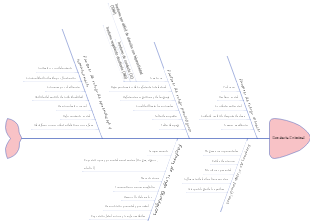
This is a mind map about common methods of sample preparation, including direct dissolution method, extraction separation method, extraction concentration method, etc.
Editado a las 2023-11-05 23:29:48,Common methods for sample preparation
direct dissolution method
principle
Dissolve the test sample directly in an appropriate solvent or disperse it in an appropriate diluent to prepare a solution or dispersion for analysis.
application
Preparations with a single active ingredient and simple excipients, such as single-prescription conventional preparations and injections
Example
The method for determining the content of naproxen (Chp2015) is as follows. Take about 0.5g of this product, weigh it accurately, add 45ml of methanol to dissolve it, add 15ml of water to 3 drops of phenolphthalein indicator solution, and titrate with sodium hydroxide (0.1mol/L ) titration, and correct the titration results with the blank test
Classification
solvent dissolution method
Dissolve the test sample directly in the appropriate solvent
solid dispersion method
Disperse solid samples in solid or liquid diluents
extraction separation method
principle
The process of separating the test substance from the test sample matrix using an appropriate water-miscible polar organic solvent.
application
Preparation of analysis samples with complex matrices, such as syrups, ointments, suppositories and other excipients that seriously interfere with chemical pharmaceutical preparations or sample preparation for the analysis of Chinese medicinal materials and their simple preparations
Example
The preparation method of the test solution for naproxen suppository content determination (ChP2015) is as follows: Take 10 tablets of the test sample, weigh them accurately, melt them on a water bath, let them cool under constant stirring, accurately weigh an appropriate amount (approximately equivalent to 0.2g of naproxen), place it in a 100ml measuring bottle, add 70ml of A, and place it at 50~ Shake on a 60°C water bath to dissolve naproxen, keep it for 10 minutes, take it out, let it cool, dilute it with methanol to the mark, shake well; put it in the refrigerator to freeze for 1 hour (-18°), then filter immediately, precision Measure 2 ml of the cooled filtrate, place it in a 200 ml measuring bottle, dilute to the mark with mobile phase, shake well, and obtain the test solution.
extraction concentration method
principle
The process of selectively separating the substance to be measured from the sample using an appropriate organic solvent, and purifying and concentrating the sample.
application
Sample preparation for analysis of trace amounts or trace substances in complex matrices, such as traditional Chinese medicine compound preparations or biological samples.
Example
TLC identification (ChP2015) of sastratrione in the traditional Chinese medicine Saururus chinensis. The preparation method of the test solution is as follows: Take 2g of this product powder, add 30ml of methanol, ultrasonicate for 20 minutes, filter, and concentrate the filtrate to 2ml, add it to the activated carbon-alumina column (0.2g of activated carbon, 100-200 mesh of neutral lead oxide, 4g, inner diameter of 10mrm, Dry packing column), elute with 60 ml of methanol, collect the eluate, evaporate to dryness, add 1 ml of ethyl acetate to the residue to dissolve, and use it as the test solution
Classification
Solvent extraction method
The process of selectively separating the measured substance from the test sample or extraction solution using water-immiscible organic solvents under appropriate solution conditions.
solid phase extraction
The process of selectively separating the test substance from the test sample or extract using solid-phase adsorbent in the form of column chromatography.
organic destruction method
Acid destruction method
principle
Organic destruction method using strong acid as decomposition agent
application
The decomposition and destruction of elements that can generate cations is often used for the inspection of metallic inorganic impurities in raw materials, nitrogen-containing organic matter, and sample preparation for quantitative analysis of metal elements in biological products and biological samples.
Example
Determination of primidone content: primidone is a substituted malonimide. Its structural formula, molecular formula and molecular weight are as follows: This product has two amide nitrogens in its structure. ChP2015 uses the Kjeldahl nitrogen determination method to determine the content: take about 0.2g of this product, weigh it accurately, and determine it according to the nitrogen determination method (General Chapter 0704 Method 1). Each 1ml of sulfuric acid titrant (0.05mol/L) is equivalent to 10.91mg of C12 H14N2O2
alkali destruction method
principle
It is an organic destruction method that uses metal oxides, hydroxides or salts as decomposers. The organic drugs containing the elements to be analyzed are mixed with the decomposer and then ignited and ashed at high temperature to decompose the organic structure and transform the elements to be analyzed. process for soluble inorganic salts
application
Mainly used for sample preparation when identifying halogen-containing or sulfur-containing drugs, and also used for sample preparation when determining the content of phosphorus-containing drugs.
Example
The identification method of bromine element in benzbromarone (ChP2015) is as follows: Take 0.1g of this product, put it in a crucible, add 1g anhydrous sodium carbonate, ignite at 700 degrees Celsius for 1 hour, let it cool, add 50ml of water, heat to dissolve, add dilute nitric acid Neutralization, identification reaction of bromide in solution (General Chapter 0301)
Oxygen bottle combustion method
principle
It is an organic destruction method that uses oxygen as the decomposer. The organic drugs containing the elements to be analyzed in the molecules are fully burned in a closed combustion bottle filled with oxygen (called an oxygen bottle), so that the organic structural part is completely decomposed into carbon dioxide and water. The elements to be analyzed are converted into oxides or anaerobic acids of different valence states according to different electronegativities, and are absorbed into the appropriate absorption liquid (mostly in the form of acid ions) for identification, quantitative inspection and analysis of the elements to be analyzed. For content determination
application
Sample preparation for quantitative analysis of characteristic elements
Example
Dexamethasone sodium phosphate (ChP2015) should show the identification reaction of organic fluoride: take about 7mg of the test sample, conduct organic destruction according to the oxygen bottle combustion method, use 20mL of water and 6.5mL of 0.01mol/L sodium oxide solution as the absorption liquid, wait until After the combustion is completed, the absorbent solution reacts with the Alizarin Fluorine Blue Test Solution-Cerous Nitrate Test Solution to turn blue-purple.
chemical derivatization
principle
A structural modification process that introduces functional groups with characteristic properties into drug molecules through appropriate chemical reactions.
application
Sample preparation for analysis of drugs without detectable groups or characteristic elements
Example
Determination of the component content of gentamicin sulfate: USP37-NF32. Use o-phthalaldehyde (OPA) as the derivatization reagent, adopt the pre-column derivatization HPLC method, and measure at a wavelength of 330nm. Gentamicin is required to contain C125%. ~50%, C1a is 10%~35%, the total amount of C2a and C2 is 25%~55%
chemical decomposition
principle
A process in which the organic structure of a drug is partially degraded through appropriate chemical reactions to generate functional groups or characteristic element ions with characteristic reactions.
application
Suitable for sample preparation that does not have characteristic reactions in molecular structure but has potential characteristic groups or drugs containing metals, halogens, etc.
hydrolysis method
acid hydrolysis
The method for identification of clobetasol propionate (ChP2015) is as follows: take a small amount of this product, add 1ml of ethanol, mix, place on a water bath and heat for 2 minutes, add 2ml of nitric acid, shake well, add a few drops of silver nitrate test solution to form a white precipitate
alkaline hydrolysis
The identification method of aspirin (ChP2015) is as follows: Take about 0.5g of this product, add 10ml of sodium carbonate test solution, boil for 2 minutes, let it cool, add excess dilute sulfuric acid, a white precipitate will precipitate, and the odor of acetic acid will occur.
Zinc powder reduction method
Identification of thiabendazole (ChP2015): There is a sulfur-containing thiazole heterocycle in the structure. The sulfur element is reduced to hydrogen sulfide and then identified. The method is as follows: Take about 10 mg of this product, add 0.1 g of zinc powder and 1 ml of dilute hydrochloric acid, and release gas. Can make wet lead acetate test paper appear black