心智圖資源庫 blood (peripheral blood)
Clinical medicine! Embryonic mind map! Blood, these blood cells mainly include red blood cells, white blood cells and platelets, which play an important role in maintaining the body's basic life activities.
編輯於2024-04-16 14:36:09blood (peripheral blood)
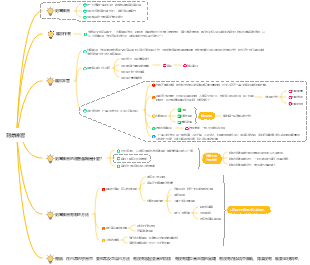
composition
blood cells
The thin layer in the middle is white blood cells and platelets
The lower layer is red blood cells
Source: bone marrow
The measurement results of the shape, number, percentage and hemoglobin content of blood cells are called hemogram (blood routine)
Commonly used Wright's and Giemsa stains to stain blood smears
plasma
The upper layer of light yellow plasma (equivalent to extracellular matrix)
Water (90%)
The rest are plasma proteins (albumin, globulin, fibrin, etc.), lipoproteins, enzymes, hormones, inorganic salts and various nutritional metabolites
PH7.3~7.4
1. Red blood cells
Under electron microscope
Biconcave disc shape
About 7.5 microns in diameter
The center is thinner, about 1 micron
The periphery is thicker, about 2 microns
In the blood smear, the center of the red blood cells appears light red (compared to the normal spherical structure of the same volume, the surface area increases by 25%)
No point in the cell is more than 0.85 microns away from the cell surface, which is conducive to rapid exchange of gases inside and outside the cell.
Mature red blood cells have no nuclei or any organelles. The cytoplasm is filled with hemoglobin, which makes red blood cells red.
Hemoglobin has the function of binding and transporting oxygen and carbon dioxide
Red blood cells have morphological variability and can change shape when passing through capillaries smaller than their own diameter. This is because red blood cells are fixed in a deformable disc-like network structure of the red blood cell membrane skeleton.
Main components of red blood cell membrane skeleton
spectrin
The molecular structure of spectrin in hereditary spherocytosis is abnormal. Spherical red blood cells are easily cleared by macrophages when passing through the spleen, leading to congenital hemolytic anemia.
actin
There is a type of mosaic protein in the cell membrane, namely blood group antigen A and/or blood group antigen B, which constitute the human ABO blood group antigen system.
There are natural antibodies in human blood against heterotypic blood (the reason for their production is unknown) For example: People with blood type A have antibodies against blood type antigen B. If the blood type is mismatched, the first blood transfusion can cause the antigen-antibody to combine, causing the red blood cell membrane to rupture and hemoglobin to escape, which is called hemolysis.
The red blood cell membrane vesicles remaining after hemolysis are called blood shadows. Snake venom, hemolytic bacteria, lipid solvents, etc. can also cause hemolysis.
The average lifespan is about 120 days. Because red blood cells do not have any organelles, they cannot synthesize new proteins and enzymes required for metabolism. As red blood cells gradually age, their hemoglobin and membrane skeleton proteins are denatured, resulting in reduced deformability of red blood cells. These aging red blood cells When passing through the spleen and liver, they are phagocytized and cleared by macrophages. Every day, immature red blood cells enter the blood from the bone marrow. Some ribosomes are still retained in these cells, which are stained with coal tar blue and appear in a fine mesh shape, so they are called mesh. Red blood cells, immature red blood cells become fully mature in the blood stream in about one day, and ribosomes disappear. Reticulocytes account for 0.5%-1.5% of the total number of red blood cells in adults, 3%-6% in newborns, and bone marrow hematopoietic dysfunction. In patients with anemia, the reticulocyte count decreases. If the reticulocyte count increases in an anemic patient, it indicates that the treatment is effective.
2. White blood cells
Source: bone marrow
Generally, within 24 hours after entering the blood, it passes through the walls of microvessels and capillaries through deformation motion, enters connective tissue or lymphoid tissue, and exerts defense and immune functions.
Depending on whether there are special particles
Granulocytes (granulocytes)
1. Neutrophils
most numerous white blood cells
Diameter 10-12 microns
The nucleus is darkly stained, curved rod-shaped or lobulated
The lobulated core generally has 2 to 3 leaves, and there are thin narrow portions connecting the leaves. Normal people mostly have 2 to 3 leaves.
The number of lobes in the nucleus is positively correlated with the degree of cell senescence.
After severe bacterial infection, a large number of new cells enter the blood from the bone marrow, and the number of cells in the rod-shaped nucleus and the 2-lobed nucleus is increased, which is called left shift of the nucleus.
The increase in cells in the 4th and 5th lobe nuclei is called right shift of the nucleus, indicating that the bone marrow hematopoietic function is impaired.
The cytoplasm is very light pink and contains many small particles.
Light purple is azurophilic particles (20%)
The particles are larger, with a diameter of 0.6 to 0.7 microns.
Round or oval shape, high electron density
A lysosome containing acid phosphatase, myeloperoxidase and a variety of acid hydrolases, which can digest and phagocytose bacteria and foreign matter.
Light red is special particles (80%)
The particles are small, with a diameter of 0.3 to 0.4 microns.
Dumbbell or oval shape
A secreted granule containing lysozyme, phagocytosin (defensin), etc., which has a bactericidal effect
Like macrophages, they have strong chemotactic and phagocytic functions. They mainly phagocytose bacteria and also phagocytose foreign bodies. After phagocytosis and processing of a large number of bacteria, neutrophils die themselves and become pus cells.
It enters the blood from the bone marrow, stays there for about 6 to 8 hours, and then leaves the connective tissue to survive for 2 to 3 days.
2. Basophils
The smallest number of white blood cells
Diameter 10~12 microns
The nucleus is lobed or S-shaped or irregular, and the coloring is lighter.
The cytoplasm contains basophilic granules, varying in size, unevenly distributed and stained blue-purple, which can cover the nucleus.
Basophilic granules are secretory granules, containing heparin, histamine, neutrophil chemoattractant, eosinophil chemoattractant, etc.
Cells can also synthesize and secrete leukotrienes
It is basically the same as the secretion of mast cells and has basically the same function, that is, initiating an inflammatory response against pathogens and also participating in allergic reactions, but the two cells are derived from different hematopoietic progenitor cells in the bone marrow.
Can survive in tissues for 10 to 15 days
3. Eosinophils
Diameter 10~15 microns
The nucleus is mostly divided into 2 lobes
The cytoplasm is filled with thick, bright red eosinophilic granules
Diameter 0.5~1.0 micron
Under the electron microscope, there are rectangular crystals in the particle matrix.
A special lysosome that contains not only general lysosomal enzymes, but also cationic proteins, histidase, and arylsulfatase
It can perform deformation movements and has chemokine properties. It can be affected by the eosinophil chemoattractant released by mast cells and move to areas where pathogens or allergic reactions occur.
It can phagocytose antigen-antibody complexes and release a variety of lysosomal enzymes with bactericidal effects. Cationic proteins have a strong killing effect on parasites. At the site of allergic reaction, the released histamine can decompose histamine, and arylsulfatase can inactivate leukotrienes, thereby inhibiting allergic reactions. Therefore, when suffering from allergic diseases or parasitic diseases, eosinophils increase in the blood.
It stays in the blood for 6 to 8 days and then enters the connective tissue, especially the intestinal connective tissue, where it can survive for 8 to 12 days.
agranulocytosis
1. Monocytes
largest white blood cell
Diameter 14~20 microns
The nucleus is kidney-shaped, horseshoe-shaped or twisted and folded irregularly.
Chromatin particles are fine and loose, so the coloring is lighter
The cytoplasm is rich, gray-blue due to weak basophilia, and contains many small lavender azurophilic granules, namely lysosomes
It stays in the bloodstream for 12 to 48 hours, then enters connective tissue or other tissues and differentiates into cells with phagocytic function such as macrophages.
2. Lymphocytes
Small lymphocytes 6 to 8 microns in diameter
The nucleus is round, often with shallow concavities on one side, and the chromatin is dense and lumpy, with deep coloring.
Very little cytoplasm, forming a thin ring around the nucleus
Medium lymphocytes with a diameter of 9 to 12 microns
There is more cytoplasm, and the cytoplasm may contain azurophilic granules.
Large lymphocytes in lymphoid tissue with a diameter of 13 to 20 microns, not found in blood
Under the electron microscope, the cytoplasm of lymphocytes contains a large number of free ribosomes, as well as lysosomes, rough endoplasmic reticulum, Golgi complex and mitochondria, etc.
Lymphocytes are not only derived from bone marrow, but also from lymphoid organs and lymphoid tissues. They are divided into three categories according to their origin, morphological characteristics, and immune function.
1. Thymus-dependent lymphocytes (T cells)
produced in thymus
Account for 75% of the total number of blood lymphocytes
Small size, containing a small number of lysosomes in the cytoplasm
2. Bone marrow-dependent lymphocytes (B cells)
produced in bone marrow
Accounting for 10%~15%
Slightly larger in size, generally does not contain lysosomes, and has a small amount of rough endoplasmic reticulum
B cells proliferate and differentiate into plasma cells after being stimulated by antigens to produce antibodies.
3. Natural killer cells (NK cells)
produced in bone marrow
10%
They are medium lymphocytes with more lysosomes
Lymphocytes are the main immune cells and play a key role in the body's defense against disease.
3. Platelets
Source: Small pieces of cytoplasm shed from bone marrow aggregation cells, not cells in the strict sense.
biconvex disc shape
Diameter 2~4 microns
When subjected to mechanical or chemical stimulation (such as adhesion to a glass slide), protrusions protrude and take on an irregular shape.
On blood smear, often clustered in groups
There are small blue-purple platelet granules in the center, which is called the granule area.
The peripheral part is uniformly light blue and is called the transparent zone
Under electron microscope
Plasma proteins are adsorbed on the surface of platelets, including a variety of coagulation factors.
The transparent zone contains microtubules and vitreous filaments, which are involved in the maintenance and deformation of platelet shape.
The granular area contains special granules, dense granules and a small amount of lysosomes
Special particles, also known as alpha particles, are large, round, with medium electron density, and contain platelets because of IV, platelet-derived growth factor, thrombospondin, etc.
The lethal particles are small, have high electron density, and contain 5-hydroxytryptamine, ADP, ATP, calcium ions, adrenaline, etc.
There are also open canalicular systems and dense canalicular systems
The tubes of the open canalicular system are continuous with the platelet surface membrane, thereby increasing the contact area between platelets and plasma, which is beneficial to the intake of plasma substances and the release of granule contents.
The dense tubule system is a closed tubule with a medium lumen electron density that can collect calcium ions and synthesize prostaglandins, etc.
Function
1. Platelets participate in coagulation and hemostasis
2. Promote endothelial cell proliferation and repair blood vessels
4. Lymph
fluid within the lymphatic system
Unidirectional lymphatic capillaries flow to lymphatic ducts and then merge into large veins
Composed of lymph fluid and lymphocytes
Lymph is actually part of the exudate of plasma at the arterial end of capillaries. The protein content is lower than that of plasma, so lymph is a bypass for plasma circulation.
When lymph flows through lymph nodes through lymph vessels, lymphocytes are added
The lymph in the lymphatic vessels of the small intestine often contains an variable number of chylosomes, which are formed by the epithelial cells of the small intestine combining absorbed fat-soluble substances with carrier proteins.
Liver lymph contains large amounts of plasma proteins synthesized by hepatocytes
Blood cells such as monocytes and neutrophils are commonly found in lymph
5. The occurrence of bone marrow and blood cells
(1) The evolution of hematopoietic organs
1. Yolk sac hematopoietic stage
The earliest thing to learn is the blood island that occurs during the embryonic period
2. Hematopoietic stage of liver, spleen, thymus and lymph nodes
Characteristics of liver and spleen hematopoiesis: Hematopoietic stem cells show multi-directional differentiation into committed hematopoiesis or adult hematopoiesis
3. Bone marrow hematopoietic stage
In the late embryonic stage, bone marrow begins to form hematopoietic cells and maintains them throughout life.
(2) Structure of bone marrow
Located in the medullary cavity, divided into red bone marrow and yellow bone marrow
The main component of red bone marrow is hematopoietic tissue, blood sinusoids Distributed in flat bones, irregular bones, and cancellous bones at the epiphysis of long bones
Yellow bone marrow is mainly adipose tissue It still retains a small amount of immature blood cells, so it has hematopoietic potential and can be converted into red bone marrow when the body needs it.
1. Hematopoietic tissue
Composed of reticular tissue, hematopoietic cells and stromal cells
Reticular cells and reticular fibers form a grid, and the mesh is filled with various blood cells at different stages of development as well as a small amount of macrophages, adipocytes, bone marrow stromal stem cells, etc.
The environment in which hematopoietic cells grow and develop is called the hematopoietic-inducing microenvironment. The core component of the environment is stromal cells, including macrophages, fibroblasts, reticular cells, bone marrow stromal stem cells, sinusoidal endothelial cells, etc.
Stromal cells act as a hematopoietic scaffold, secrete a variety of hematopoietic growth factors, regulate the proliferation and differentiation of hematopoietic cells, and produce reticular fibers and adhesive glycoproteins. Extracellular matrix components can retain hematopoietic cells.
2. Sinusoids
Capillaries with large lumens, irregular shapes, large gaps between endothelial cells, and incomplete endothelial basement membrane are intermittent, which is conducive to the entry of mature blood cells into the blood.
(3) Hematopoietic stem cells and hematopoietic progenitor cells
1. Hematopoietic stem cells (pluripotent stem cells)
Protocells that generate many types of blood cells
Features
1. It has strong proliferation potential and can divide repeatedly and proliferate in large quantities under certain conditions. Under normal physiological conditions, most cells are in a quiescent state in the G0 phase.
2. Multi-directional differentiation ability, which can differentiate into different progenitor cells under the influence of some factors
3. Have the ability to self-replicate, that is, some of the daughter cells after cell division still have their original characteristics, so hematopoietic stem cells can maintain a constant number throughout life.
Mouse spleen colony formation experiment confirmed
2. Hematopoietic progenitor cells (committed stem cells)
Red blood cells are hematopoietic progenitor cells that generate red blood cells under the action of erythropoietin (EPO)! EPO is mainly secreted by the kidneys, and a small amount is also secreted by the liver.
Granulocyte-monocyte hematopoietic progenitor cells are the common progenitor cells of neutrophils and monocytes. Their colony-stimulating factors are secreted by cells such as macrophages, including CM-CSF. When inflammation occurs in the body, the inflammatory site Interleukin-1 released by macrophages can stimulate the proliferation and release of these two cells in the bone marrow into the blood
Megakaryocytes are hematopoietic progenitor cells. They need to form megakaryocyte colonies under the action of thrombopoietin (TPO) and eventually produce platelets. TPO is secreted by cells such as vascular endothelial cells. Eosinophils, basophils and mast cells also have their own characteristics. progenitor cells and colony-stimulating factor
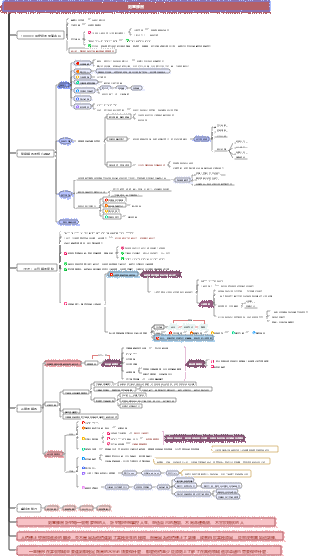
(4) Morphological evolution during blood cell generation
The occurrence of red blood cells
The occurrence of granulocyte lineage
Occurrence of monocyte lineage
The occurrence of lymphocyte lineage
The development of the megakaryocyte-platelet lineage