MindMap Gallery Analytical Chemistry Titration Method Mind Map
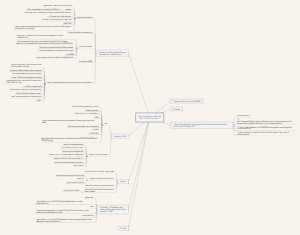
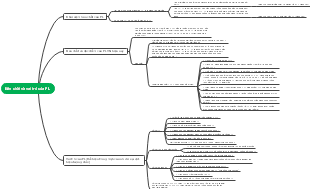
This is a mind map about titration in analytical chemistry, including an introduction, coordination titration, acid-base titration, redox titration, etc.
Edited at 2023-11-16 17:15:03titration
Introduction
Related terms
Titrant T
stoichiometric pointsp
Titration end point ep
Titration error TE 0·02%
Titer: The amount of the substance to be measured per milliliter of standard solution, unit g/ml
Require
The reaction must be completed quantitatively
Fast response
Has a simple and reliable titration endpoint
Way
direct titration
Back titration
displacement titration
indirect titration
reference material
Purity between 99.95~100.05%
The composition is completely consistent with the chemical formula and has good uniformity.
Stable properties
Larger molar mass
standard solution
Prepare
Direct configuration: only applicable to reference materials
Indirect preparation method: calibration required
Standard solution concentration: between 0.01~1.000mol/L
Calibration of standard solutions
Calibration with reference material
comparison calibration
Precautions
3 to 5 parallel experiments
Rd and relative error are less than 0.1%
The weighing error of the reference material should be small, and the weighing amount should not be less than 0.2g.
The titrant volume is above 20ml
Try to use direct titration
Acid-base titration
Acid-base balance in solution
acid-base proton theory
Acids give protons and bases accept protons.
The essence of acid-base reaction is the transfer of protons
relativity
conjugate acid-base pair
There is no concept of salt
solvated proton
Proton self-transfer constant and conjugate acid-base pair dissociation constant
Distribution of components in acid-base solutions
Acidity Alkalinity Equilibrium concentration Distribution coefficient
Calculation of hydrogen ion concentration in acid-base aqueous solutions
Mass Balance MBE
Charge Balance CBE
Proton Balance PBE
Monobasic strong acid and base Monovalent weak acid and weak base Polybasic acids and bases amphoteric substances Buffer
Acid-base indicator
Color changing principle
The indicator is an organic weak acid or weak base
Conjugate acids and bases have different colors
Solution pH changes
single color indicator
Two-color indicator
Indicator color change range and influencing factors
indicator constant
Theoretical color change range, theoretical color change point
Methyl red discoloration range
Influencing factors
mixed indicator
Acid-base titration curves and indicator selection
Titration curve: acid-base titration PH-V curve
Titration of Strong Acid and Strong Base
Basic reaction
Titration curve characteristics, pH changes and calculations before and after sp
Indicator selection
PH jump range
Factors affecting the jump range: concentration
monobasic weak acid
Basic reaction
Titration curve
Strong acid drops weak base
Strong base drops weak acid
Indicator selection
Judgment of titration feasibility
Titration of polybasic weak acids (bases)
Strong base drops polybasic weak acid
Strong acid drops multiple weak bases
Titration of mixed weak base
Calculation of titration error
Preparation and calibration of acid-base standard solutions
Acid standard solution
indirect method
Anhydrous sodium carbonate: stoichiometric point PH3.9 methyl orange, methyl red-bromocresol green
Boric acid: not easy to absorb water, large M, dose relationship 1:2, stoichiometric point ph5.1, methyl red
Alkali standard solution
Indirect preparation: Prepare a saturated solution now
Potassium hydrogen phthalate KHP: metering relationship 1:1, metering point ph9.1, phenolphthalein
Oxalic acid: metering relationship 1:2, metering point ph8.4, phenolphthalein
Applications
Determine the chemical composition of unknown patterns
redox titration
Basics: Redox Reactions Reaction essence: electron transfer reaction between oxidizing agent and reducing agent Features: complex reaction mechanism
redox balance
conditional electrode potential
Electrode potential: The higher the potential, the stronger the oxidizing ability; the lower the electrode potential, the stronger the reducing ability.
Nernst equation of reversible redox couple
Influencing factors
Ionic strength effect (salt effect)
Effect of Acidity (Acid Effect)
generate complex
The equilibrium concentration of oxidant decreases and E decreases
The equilibrium concentration of the reducing agent decreases and E increases
generate precipitate
Temperature: T increases, E increases
The extent of the redox reaction
reaction equilibrium constant, conditional equilibrium constant
Titration analysis conditions
Factors affecting reaction rate
own nature
external factors
Reaction concentration: The greater the concentration, the greater the rate
Reaction temperature: increase the temperature to increase the reaction rate
Catalyst: positive catalyst, negative catalyst
Induction (harmful, should be avoided)
Principle of redox titration
Titration curve
Confirmation of titration endpoint
self-indicator
special indicator
redox indicator
Instrumental analysis method: potentiometric method (0.25~0.4, TE less than 1%)
The potential difference is greater than or equal to 0.4, TE is less than 0.1%
iodometric method
Other redox titrations
Calculation of redox titration results
coordination titration
Base
Based on coordination reaction, complex titration
Necessary conditions
Complete quantification (the complex is stable enough) The reaction proceeds according to a certain reaction formula Response must be quick Have an appropriate method to determine the titration endpoint
Commonly used complexing agents
Monomer complexing agent (inorganic complexing agent): unstable, multiple coordination forms often exist at the same time,
Multimeric complexing agents (organic complexing agents, chelating agents): form chelates, which are complex and stable.
Properties and complexes of EDTA
Ethylenediaminetetraacetic acid: white crystalline powder, slightly soluble in water, insoluble in organic solvents. The actual use of EDTA disodium salt has a large water solubility and a pH of about 4.4
Dissociation equilibrium of EDTA in aqueous solution
Partition coefficient is related to pH
Properties of metal-EDTA complexes
6 coordination atoms, the complex is generally stable and has various configurations
Most of them are coordinated 1:1
Mostly 5-membered ring chelates with good stability
Forms acid-base complexes, which are unstable and can be ignored.
The complex is charged and has good water solubility. Colorless ions form colorless complexes, and colored ions form colored complexes.
The coordination reactions of most metal ions are fast, such as aluminum ions, ferric ions, trivalent chromium ions, etc., which require heating or boiling to quantitatively coordinate.
Dissociation equilibrium of complexes in solution
Stability of complexes formed between EDTA and metal ions
Stability constants and dissociation constants of complexes
Factors affecting the stability of EDTA complexes
Side reactions and side reaction coefficients of complexing agent Y
Acid effect and acid effect coefficient
The pH is greater than 12, the side reaction coefficient is approximately equal to 1, and no side reactions occur in EDTA.
Coexisting ion effect and coexisting ion effect coefficient
Total side reaction coefficient of Y
Side reactions and side reaction coefficients of metal ions
cumulative equilibrium constant
Coordination effect and coordination reaction coefficient
MTotal side reaction coefficient
Side reactions of complex MY
Conditional stability constants of EDTA complexes
Basic principles of coordination titration
Titration curve
pM
Calculation of Titration Curve
Before starting
Before titration starts sp
sp time
after sp
Calculation of stoichiometric point pM
Factors affecting the size of the coordination titration jump
Effect of metal ion concentration
The influence of conditional stability constants
absolute stability constant
acidity
Other complexing agents
Measures: adjust ph, control other complexing agents, increase condition stability constant, increase titration jump
EDTA titration conditions for metal ions
titration error
Control of acidity and selection of conditions in coordination titration
The role of buffer solutions
highest acidity
lowest acidity
optimal ph range
metal ion indicator
Principle of action and conditions
Principle: displacement reaction
condition
The color of MIn should be significantly different from the color of In
The color development response is sensitive and rapid, and has good color reversibility.
The stability of MIn is appropriate
MIn is easily soluble in water
The color reaction between indicator and M has certain selectivity
In indicator is stable in nature
Choice of metal indicators
Occlusion, rigidity and deterioration of indicators
Blocking: the solution does not change color after sp Rigidity: The solution changes color slowly after sp.
Cause of sealing phenomenon: KNIn>KNY, indicator cannot change color Elimination method: Add a masking agent to form a more stable complex of interfering ions: triethanolamine masks ferric iron and aluminum ions; potassium cyanide or ascorbic acid masks Cu, Co Ni
Reasons for the rigidity phenomenon: MIn has low solubility, slow replacement reaction with EDTA, and delayed end point Elimination method: add organic solvent or heat
Deterioration phenomenon: contains double bonds, unstable aqueous solution Avoidance method: Prepare a solid mixture and add masking agent or reducing agent
Commonly used metal indicators
EBT
NN
XO
Improving the selectivity of coordination titrations
Eliminate the effects of coexisting ions
Control acidity
Mask interfering ions
coordination masking method
precipitation masking
redox masking
Separate interfering ions
Preparation and calibration of EDTA standard solution
Coordination titration methods and their applications
direct titration
Back titration
displacement titration
Replacement metal ions
Replace EDTA
indirect titration
application
Determination of water hardness
Determination of alum content
Titration of calcium in clam shells