 Wondershare EdrawMind
Galerie de cartes mentales Python机器学习库对比导图
- 22
Python机器学习库对比导图
Discover the landscape of Python machine learning libraries with our comprehensive comparison map! This guide delves into three major libraries: Scikit-learn, TensorFlow, and PyTorch. You'll explore their unique features, such as Scikit-learn's user-friendly API and strong baseline models, TensorFlow's end-to-end ecosystem for deep learning, and PyTorch's research-friendly flexibility. Learn about the learning paradigms they support, from supervised and unsupervised learning in Scikit-learn to advanced deep learning and reinforcement learning capabilities in TensorFlow and PyTorch. Additionally, we cover their strengths, limitations, data processing capabilities, and typical use cases, enabling you to make informed decisions for your machine learning projects.
Modifié à 2026-03-20 03:56:15
- Recommandé pour vous
- Contour
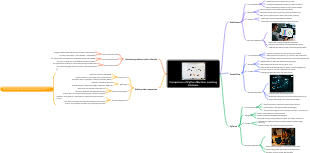
Python Machine Learning Libraries Comparison Map
Libraries Overview
Scikit-learn
Type: Classical ML library (CPU-first)
Core style: API-centric (fit / predict / transform)
Typical workflow: Feature engineering → model selection → evaluation → deployment
TensorFlow
Type: Deep learning framework + ecosystem
Core style: Graph-based execution (eager by default in TF2) with Keras high-level API
Typical workflow: Data pipeline → model building (Keras) → training/distributed → serving/mobile
PyTorch
Type: Deep learning framework (research-friendly, production-capable)
Core style: Eager execution, Pythonic, dynamic graphs
Typical workflow: Flexible model coding → training → export/serve (TorchScript/ONNX) → iterate
Learning Paradigms Supported
Scikit-learn
Supervised learning: classification, regression
Unsupervised learning: clustering, dimensionality reduction
Semi-supervised: limited (some algorithms)
Deep learning: not primary (integrates with external libraries)
TensorFlow
Deep learning: CNNs, RNNs, Transformers, diffusion models (via ecosystem)
Reinforcement learning: via TF-Agents and third-party tools
Classical ML: possible but not the focus
PyTorch
Deep learning: CNNs, RNNs, Transformers, diffusion models (strong community support)
Reinforcement learning: common via libraries (e.g., Stable-Baselines3 uses PyTorch)
Classical ML: less common (usually paired with scikit-learn)
Scikit-learn covers broad classical ML; TensorFlow/PyTorch dominate deep learning and RL via ecosystems.
Key Strengths
Scikit-learn
Simple, consistent API across models
Strong baseline models and proven algorithms
Pipelines and preprocessing are first-class
Excellent model evaluation utilities (cross-validation, metrics)
Great documentation and stability
TensorFlow
End-to-end ecosystem: training → serving → mobile/edge
Keras for rapid prototyping and standardized training loops
Strong distributed training support (multi-GPU/multi-node with strategies)
Mature production tooling: TensorFlow Serving, TF Lite, TF.js
Performance optimizations: XLA, TFRT (platform-dependent)
PyTorch
Highly flexible for custom research and novel architectures
Intuitive debugging (eager execution)
Strong community and fast adoption of new research
Distributed training: torch.distributed, FSDP, ecosystem tools
Good interoperability: ONNX export, TorchScript (varies by use case)
Limitations / Trade-offs
Scikit-learn
Not designed for large-scale deep learning or GPU training
Limited support for unstructured data end-to-end (images/audio/text) compared to DL frameworks
Scaling: can be limited for very large datasets without external tooling
TensorFlow
Lower-level components can feel complex
Debugging can be harder when mixing graph optimizations and tracing
Some users find the ecosystem fragmented (multiple ways to do the same task)
PyTorch
Historically less “batteries-included” for serving than TensorFlow (improving over time)
Production deployment paths can vary (TorchScript vs ONNX vs custom runtime)
Training loops are flexible but require more engineering for standardized pipelines
Data Processing & Pipelines
Scikit-learn
Built-in preprocessing: scaling, encoding, imputation
Pipeline / ColumnTransformer for reproducible workflows
Feature selection and model selection integrated
Works best with tabular/numeric/categorical data
TensorFlow
tf.data for scalable input pipelines
Built-in support for streaming, sharding, caching, prefetching
Integrates with TF Transform and data validation tools (in broader ecosystem)
Strong for large unstructured datasets at scale
PyTorch
Dataset / DataLoader for flexible loading and augmentation
Easy custom collate functions and dynamic batching
Commonly paired with torchvision/torchaudio/torchtext (or Hugging Face datasets)
Model Types & Typical Use Cases
Scikit-learn
Tabular ML
Credit scoring, churn prediction, forecasting baselines
Fraud detection with classical models
Interpretable models
Linear/Logistic regression, decision trees, random forests
Traditional NLP pipelines
TF-IDF + linear models for text classification
Clustering & reduction
KMeans, DBSCAN, PCA, t-SNE (t-SNE historically available; UMAP via external)
TensorFlow
Production-grade deep learning
Recommendation systems, ranking models (with ecosystem add-ons)
Large-scale vision and speech pipelines
Edge/mobile deployment
TF Lite for on-device inference
Web deployment
TF.js for browser inference/training
Enterprise MLOps pipelines
Integration with managed platforms and serving infrastructure
PyTorch
Research & rapid iteration
Novel architectures, custom losses, experimental training loops
State-of-the-art NLP/vision
Transformers, diffusion models (often via external libraries)
Fine-tuning pretrained models
Common with Hugging Face and community checkpoints
Computer vision pipelines
torchvision models and custom training
Performance & Hardware Support
Scikit-learn
CPU-optimized; uses NumPy/SciPy; limited GPU usage
Parallelism via joblib for some algorithms
Best for small-to-medium datasets on CPU
TensorFlow
Strong GPU/TPU support
TPU support is a major differentiator in some environments
High-throughput training with graph optimizations and XLA
PyTorch
Strong GPU support; commonly used for multi-GPU training
Good performance with CUDA; growing support for alternative backends
Compilation/optimization options exist (e.g., torch.compile in modern stacks)
Distributed Training & Scalability
Scikit-learn
Limited native distributed training
Can scale via external tools (Dask, Spark integrations)
TensorFlow
Mature distributed training APIs (strategies)
Designed for multi-worker training and large clusters
Strong integration with production serving infrastructure
PyTorch
torch.distributed for multi-node/multi-GPU
Ecosystem for sharded training and large models (FSDP, etc.)
Often used for large-model training in research and industry
Ecosystem & Tooling
Scikit-learn
Strong integration with:
NumPy, SciPy, pandas
Matplotlib/Seaborn for analysis
Extensions:
XGBoost/LightGBM/CatBoost often used alongside (not part of scikit-learn but compatible APIs)
TensorFlow
Keras (high-level modeling)
TensorBoard (visualization)
TF Serving (serving)
TF Lite (mobile/edge)
TF.js (web)
TF-Agents (RL)
TFX (end-to-end ML pipelines, if adopted)
PyTorch
torchvision/torchaudio (modalities)
PyTorch Lightning (structured training loops)
TorchServe (serving option)
Hugging Face ecosystem (Transformers, Accelerate, Datasets) commonly paired
Strong third-party research code availability
Usability & Developer Experience
Scikit-learn
Lowest barrier to entry for ML fundamentals
Consistent, stable APIs; great for teaching and quick baselines
Less code required for common workflows
TensorFlow
Easy start with Keras; complexity grows for custom training/distributed setups
More configuration options for production scenarios
Debugging can be harder when using tracing/graph optimizations
PyTorch
Most “Pythonic” for custom deep learning code
Debugging is straightforward
Requires more engineering discipline for large production codebases (unless using higher-level frameworks)
Interpretability & Model Explainability
Scikit-learn
Strong for interpretable models and traditional explainability approaches
Works well with SHAP/LIME and feature importance methods
TensorFlow
Explainability typically via external libraries (e.g., integrated gradients implementations)
Works with model-agnostic tools; more complexity for deep models
PyTorch
Similar to TensorFlow: explainability often via external tools and custom methods
Flexible for implementing custom attribution methods
Deployment & Serving Options
Scikit-learn
Common deployment patterns
Serialize model (joblib/pickle) + Python service (FastAPI/Flask)
Batch scoring pipelines
Best for CPU inference services and tabular models
TensorFlow
TensorFlow Serving for scalable inference
TF Lite for edge/mobile
TF.js for browser
Strong enterprise support for standardized deployment
PyTorch
Options
TorchScript for packaging models (where applicable)
ONNX export for cross-runtime deployment
TorchServe or custom inference services
Often deployed via Python services, Triton Inference Server, or ONNX runtimes
Typical Selection Guide (When to Use What)
Choose Scikit-learn when
You work primarily with tabular data
You need strong baselines quickly
You want simple pipelines with preprocessing + CV
You need interpretable classical ML models
Choose TensorFlow when
You need production-first deep learning with robust serving/mobile/web options
You expect large-scale distributed training and standardized pipelines
You benefit from TF ecosystem tools (Serving/Lite/JS/TFX)
Choose PyTorch when
You prioritize research flexibility and rapid iteration
You build custom architectures/training loops
You fine-tune pretrained deep models frequently
You want strong community momentum for state-of-the-art implementations
Common Combined Workflows
Scikit-learn + PyTorch/TensorFlow
Use scikit-learn for preprocessing, classical baselines, and evaluation
Use PyTorch/TensorFlow for deep learning model training
Use scikit-learn metrics and CV for comparison studies
Scikit-learn + Gradient Boosting Libraries
Use scikit-learn pipelines with XGBoost/LightGBM/CatBoost for tabular SOTA
TensorFlow/PyTorch + Serving Stack
Use model export (SavedModel/ONNX/TorchScript) and deploy via dedicated inference servers
Add monitoring, A/B tests, and drift detection via MLOps tools