MindMap Gallery Alkenes and Alkynes
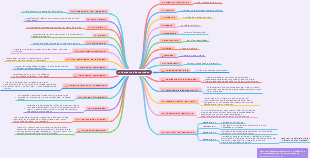
University organic chemistry alkenes and alkynes mind map, alkenes and alkynes are two important types of unsaturated hydrocarbons in organic chemistry. The introduction is detailed and the description is comprehensive. I hope it will be helpful to those who are interested!
Edited at 2024-11-12 19:44:45Alkenes and Alkynes
nature
physical properties
It is a gas below 4°C
Boiling point: Alkynes>Alkenes>Alkanes
Alkene Chemical Properties
Electrophilic addition (no other reaction conditions, the reaction occurs easily)
H-X
X2: Alkenes react with Br2 (CCL4), causing Br2 to fade, and the resulting brominated hydrocarbons are colorless, which can be used to test the presence of alkenes.
H2O(H)——>Alcohol
Concentrated H2SO4
Ethylene reacts with concentrated H2SO4 to form ethyl hydrogen sulfate
Ethyl hydrogen sulfate is easily hydrolyzed back to its original substance
Ethyl hydrogen sulfate is soluble in concentrated H2SO4, but alkanes are not, and can be used to remove alkenes from alkanes.
H-O-X (hypohalous acid)
Among alkenes, only the addition with Br2 is a cyclocation mechanism, and the rest are C mechanisms.
C mechanism (the essence of Markov’s rule)
C stability: tertiary C > secondary C > primary C
The alkyl group is an electron-donating group, and the I effect will reduce the positive charge density of C, making it more stable (if the density is high, it may not exist and react directly with the reagent)
The intermediate is C. The more stable the intermediate, the easier it is to exist, the higher the probability of survival, and the easier it is to continue the reaction.
Markov's rule: In electrophilic addition, the positively charged part of the electrophile is often added to the C that contains more H in the double bond - H is added to H
Electrophilic addition activity: The greater the density of the electron cloud, the easier it is for electrophilic addition to occur (CF2=CF2 does not produce electrophilic addition)
induction effect
Affected by other atoms/groups - the electronegativity causes the electron cloud to shift
Generally, the distance of conduction along the bond is 3 bonds.
I donates electrons; -I withdraws electrons
Donating/pushing/repelling electron groups
Saturated alkyl
Negatively charged group (electron surplus)
electron withdrawing group
Halogen atoms
Positively charged group (electron loss)
Neutral groups containing O, N, S
Anti-Markovitch addition (free radical reaction)
Olefins: such as propylene
Hydroboration reaction of alkenes (equivalent to anti-Markovitz addition, but Markovian addition)
Electronegativity: B<H, B has a positive charge during addition, and combines with C, which contains more H.
H3C-CH=CH2
oxidation reaction of alkenes
Alkaline oxidation: reacts with cold, dilute KMnO4 under alkaline conditions to form vicinal diol (only p bonds are broken)
Acidic oxidation: C contains
2 H:-CO2
1 H:-COOH
0H:-CO-
Ozone oxidation: react with O3 first, then react with Zn/H2O, C contains
2 H:HCHO
1:R-CHO
0:R-CO-R'
Oxidation
Inserting oxygen——>aldehyde/ketone——>acid
catalytic oxidation
Ag——>Alkylene oxide
CuCl2/PdCl2——>Aldehyde
a-H halogenation of alkenes
Alkenes do not undergo addition reactions at 500°C, but a-halogenation reactions occur (free radical reactions at high temperatures - substitution reactions)
Consider instead of H
Double bond effect: Maximize a-H activity
H activity: tertiary H>secondary H>primary H
Alkynes Chemical Properties
Electrophilic bonus
Halogen addition: The electrophilic addition activity of alkynes is less than that of alkenes and can be distributed. If the ratio is appropriate, the reaction will stay at the dihalogenated hydrocarbon stage.
Hydroboration reaction: reacts with BH3 to form trienyl boron, which is hydrolyzed to enolate under alkaline conditions and then rearranged to form aldehydes and ketones.
Alkynes hydration reaction: generate aldehydes and ketones under acidic conditions ==> enols rearrange into ketones
Acidity of terminal alkynes H (identifying terminal alkynes)
Ag(NH3)2NO3——>white precipitate (containing Ag)
Cu(NH3)2Cl——>reddish brown precipitate (containing Cu)
structure
Alkene structure
The p electrons surround the C-C and C-H s bonds like a hamburger, so the reagent will first come into contact with the electron cloud, so an electrophilic reaction occurs (electrophilic reaction: the p electron cloud attracts partially positively charged atoms)
The p key must coexist with the s key
The p bond cannot rotate, otherwise it will break, causing cis-trans isomerism.
The structure of alkynes
If the CC triple bond is at the end, the terminal H is acidic.
Chemically similar to alkenes
Naming alkenes and alkynes
open chain
Confirm the main chain: the longest C chain containing double bonds
Confirm the number: Make the number of the double bond as small as possible and indicate the position of the double/triple bond
Confirm parent: certain alkene/yne
Contains alkenes at the same time:
Keep double/triple bond numbers as small as possible
If the two numbers are the same, make the double bond number smaller
Name distinction when the atoms/groups on the same alkene C are different
Cis-trans isomerism: When the two C's of the double bond have the same atom or group, the same atom/group
On the same side--shun-
On the opposite side - on the opposite side -
Z/E isomerism: no need to have the same..., compare the original atoms/groups on each side respectively, if preferred
On the same side - Z-
On the opposite side——E-
cyclic olefins
Taking "cycloalkene" as the parent
The double bond has the lowest overall number
Indicate the position of the double bond (just indicate a smaller number). The lowest double bond position (1-) can be ignored.
Enol form<==>Keto form (tautomerism)
Zn prevents this step of oxidation
C3H7OH (alcohol that can be used for anti-Markovni addition to olefins)
(C3H7)3B
Hydrogen bromide first reacts with the free radicals generated by peroxide to form Br·, Br· attacks C which contains more hydrogen, and the formed C· is more stable, and C· then reacts with HBr
1-bromopropane
Among ethane, ethylene and acetylene, acetylene has the highest C-H polarity - C hybridization is different, the less p participates in the hybridization, the less electron cloud separated by s, the shorter the sp hybrid orbit, and the stronger the attraction to electrons. , so the C-H polarity increases