MindMap Gallery North American Literary Period
The North American literary period encompasses a rich and diverse history of literature, spanning from the early colonial era to the contemporary age. This mind map aims to explore the different literary movements, authors, and significant works that have shaped the North American literary landscape. From the Puritan writings of the 17th century to the modernist and postmodernist literature of the 20th century, this mind map will provide a comprehensive overview of the major literary periods, themes, and influences in North American literature.
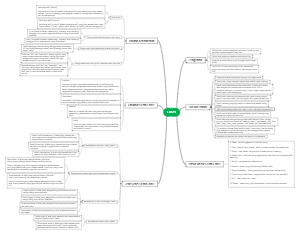
Edited at 2022-05-27 03:20:24This timeline highlights key innovations and advancements from the Anglo-Saxon period to the Norman conquest, showcasing the progression of technology, art, governance, and cultural exchange during this transformative era.
The North American literary period encompasses a rich and diverse history of literature, spanning from the early colonial era to the contemporary age. This mind map aims to explore the different literary movements, authors, and significant works that have shaped the North American literary landscape. From the Puritan writings of the 17th century to the modernist and postmodernist literature of the 20th century, this mind map will provide a comprehensive overview of the major literary periods, themes, and influences in North American literature.
Embark on a literary journey through time with our detailed map of North American literary periods. Discover the rich tapestry of writing that ranges from the oral traditions of Native American literature to the groundbreaking narratives of the contemporary era. Gain insights into Romanticism's focus on emotion and the Enlightenment's emphasis on reason. Learn how the Colonial Period shaped early American narratives, and delve into the characteristics of Realism, Naturalism, and Regionalism, which depicted ordinary life with stark honesty. Trace the bold contours of Modernism and its successors, and explore seminal works like Hemingway's "A Farewell to Arms" that have shaped modern consciousness. This guide is a valuable resource for students, educators, and literature enthusiasts looking to understand the historical and cultural contexts that have influenced North American writers across the centuries.
This timeline highlights key innovations and advancements from the Anglo-Saxon period to the Norman conquest, showcasing the progression of technology, art, governance, and cultural exchange during this transformative era.
The North American literary period encompasses a rich and diverse history of literature, spanning from the early colonial era to the contemporary age. This mind map aims to explore the different literary movements, authors, and significant works that have shaped the North American literary landscape. From the Puritan writings of the 17th century to the modernist and postmodernist literature of the 20th century, this mind map will provide a comprehensive overview of the major literary periods, themes, and influences in North American literature.
Embark on a literary journey through time with our detailed map of North American literary periods. Discover the rich tapestry of writing that ranges from the oral traditions of Native American literature to the groundbreaking narratives of the contemporary era. Gain insights into Romanticism's focus on emotion and the Enlightenment's emphasis on reason. Learn how the Colonial Period shaped early American narratives, and delve into the characteristics of Realism, Naturalism, and Regionalism, which depicted ordinary life with stark honesty. Trace the bold contours of Modernism and its successors, and explore seminal works like Hemingway's "A Farewell to Arms" that have shaped modern consciousness. This guide is a valuable resource for students, educators, and literature enthusiasts looking to understand the historical and cultural contexts that have influenced North American writers across the centuries.
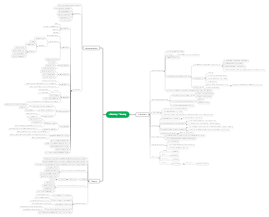
North American Literary Periods
ANTI- TRANSCENDENTALISM 1830- 1880 (A pessimistic offshoot of Romanticism) 1. Time period: mid 1800s to late 1800s. 2. Known as the Dark Side of Individualism. 3. The focus on the imagination in Romanticism led to a focus on the demonic, the fantastic and the insane for the Gothic. 4. Gothic writers took a pessimistic view of humans and saw the potential for evil in all people. 5. Essential truths about life were found in extreme situations or the darker side of human nature (greed, betrayal, fear, etc.). 6. Major writers: Edgar Allan Poe (“The Raven” and “Fall of the House of Usher”) and Nathaniel Hawthorne (“The Minister‟s Black Veil”). 7. Gothic lives on: Southern Gothic (William Faulkner, “A Rose for Emily” and Flannery O’Connor “A Good Man is Hard to Find”), and contemporary writers (Anne Rice, Interview with A Vampire).
TRANSCENDENTALISM 1830- 1880 Facts of the Period Relation between God, man and nature. A belief that " transcendent forms" of thruth exist beyond reason and experience. 1. Time period: mid 1800s to late 1800s. 2. A belief that “transcendent forms‟ of truth exist beyond reason and experience. 3. Values intuition as a means of gaining this higher truth. 4. Communing with nature made possible an intuitive connection with the entire universe. BOOK: WALDEN OR LIFE IN THE WOODS BY HENRY DAVID THOREAU 
Modernism is a period in literary history which started around the early 1900s and continued until the early 1940s. -Many Modernists wrote in free verse and they included many countries and cultures in their poems -Emily Dickinson and Walt Whitman are thought to be the mother and father of the movement because they had the most direct influence on early Modernists. -
Verisimilitude,local Color, Ordinary People Real-life, Every-day events,objective Narrator Open Interpretation.
CHARACTERISTICS:
BOOK: THE AWAKENING 
Included elements like:Transcendentalism and gothic romance
Romanticism was an artistic, literary, and intellectual movement that originated in Europe toward the end of the 18th century .
The writing style was focused on scienci, reality andreasoning
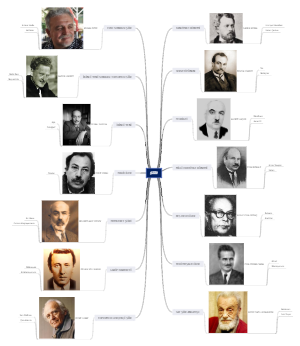
REPRESENTATIVES:  Benjamin Franklin,Patrick Henry, Thomas Paine,Thomas Jefferson 
Literature was transmitted orally. Most of the literature by that time was mythologycal as well as folktales..
Include ancient hieroglyphic and pictographic writings , extensive set of folktales, myths, and oral histories that were transmitted for centuries by storytellers and that live on in the language works of many contemporary American Indian writers.
Subtopic
Native American literature, also called Indian literature or American Indian literature, the traditional oral and written literatures of the indigenous peoples of the Americas.
BOOK: AMERICAN INDIAN STORIES  American Indian Stories is a collection of childhood stories, allegorical fictions and essays written by Sioux writer and activist Zitkala-Ša. The collection includes legends and stories from Sioux oral tradition, along with an essay titled America's Indian Problem, which advocates rights for Native Americans and calls for a greater understanding of Native American cultures. American Indian Stories offers a unique view into a society that is often overlooked though that society still persists to this day.
focuses on the characters, dialect, customs, topography, and other features particular to a specific region
REPRESENTATIVES: Jack London, Ambrose Bierce, Mark Twain, Bret Harte, Stephen Crane, Kate Chopin 
NATURALISM
NATURALISM - Naturalism was first proposed and formulated by Emile Zola, the French writer and theorist, who is universally labeled as the founder of literary naturalism. Naturalism was a literary movement taking place from 1865 to 1900 that used detailed realism to suggest that social conditions, heredity, and environment had inescapable force in shaping human character.
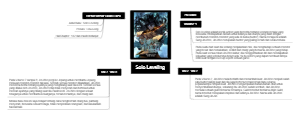
Book: THE CALL OF THE WILD Author: Jack London 
Regionalism was an American art movement that emerged in the Midwest in the 19th century and continued into the early 20th century. While Grant Wood, the leading artist of Regionalism and creator of the infamous American Gothic painting.
REALISM 1850-1900
Comprised of literature period that attempts to depict life in an entirely objective manner. Realism was a direct reaction to the horrors of Civil War • Realists felt that literature should reflect life as it really is- no romantic notions, but a true depiction of the horrors as well as the triumphs of individuals in adversity • Narration should be straight-forward • Characters should be REAL original subject matter Human rights vs. legal rights, poverty, Civil War, big city corruption, misery 
ROMANTICISM 1800-1865
Name of the book: Uncle Tom's Cabin or, Life Among the Lowly (1852) 
Focused on feelings, emotions, use of fiction
- - THE MOST FAMOUS ROMANTICISM WRITERS Washington Irving , Henry Weadsworth,William Cullen, Waldo Emerson, Allan Poe  
COLONIAL PERIOD 1620-1750-
REPRESENTATIVES:   ANNE BRADSTREET JONATHAN EDWARDS EDWAR TYLOR WILLIAM BRADFORT
Some important aspect about Colonial Period -Colonial American literature was focused in poems, journals, letters, narratives, histories and teaching materials written by settlers and religious and historic figures of the period. -In this period the Puritan groups separated from the Church of England. -During the whole colonial period Puritanism had direct impact on both religious thought and cultural patterns in America. -Many Puritans immigrated to North America in the 1620-1640s because they believed that the Church of England was beyond reform.
Theygods used to adore different type of gods such as rain, sun, and corn
THE AGE OF THE REASON 1750-1815
THE AGE OF THE REASON - The Age of Reason represented a genesis in the way man viewed himself, the pursuit of knowledge, and the universe. -This period was the beginning of an open society where individuals were free to pursue individual happiness and liberty. -The Age of Reason saw the introduction of the Scientific Revolution and various progressions of new schools of thought. 
This period is known as the enlightenment period.
Name of the book: A Land As God Made It: Author:Jamestown and the Birth of America.(2006) 
NATIVE AMERICANS PRE-1620
Famous authors Scott Momaday, Leslie Marmon Silko, Simon Ortiz, Louise Erdrich, Gerald Vizenor, Joy Harjo, Sherman Alexie, D'Arcy McNickle, James Welch, Charles Eastman, Mourning Dove, Zitkala-Sa, John Rollin Ridge, Lynn Riggs, Diane Glancy, Hanay Geiogamah, William Apess, Samson Occom. 
MODERNISM 1900-1950
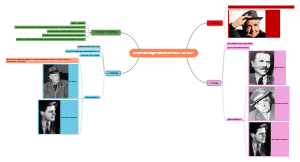
Book: A Farewell to Arms. (1929) Autor: Ernest Hemingway, he was an American writer and journalist, as well as one of the leading novelists and short story writers of that time. 
CHARACTERISTICS
Pessimism,American Dream,Imagism Lost Generation. Beat Generation Use of interior monologue & stream of consciousness ,plays, poetry, novels.
REPRESENTATIVES :Ernesth Hemingway, Scott F, 
COMTEMPORARY 1950 NOW
Subtopic
Book: A Farewell to Arms. (1929) Autor: Ernest Hemingway 
REGIONALISM