MindMap Gallery The Influencing Factors of Learning
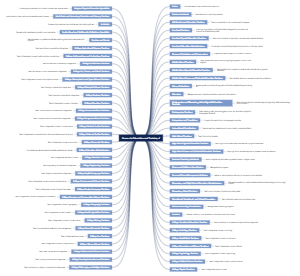
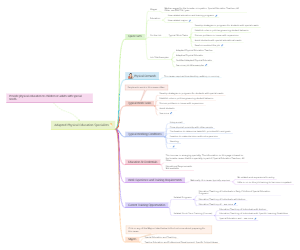
The learning environment is one of the important factors that affect individual and group learning. In addition to traditional classrooms, libraries, and other places, the learning environment also includes modern technological facilities such as digital learning resources and online learning platforms. Meanwhile, cultural diversity and social citizen participation can also influence the content and methods of learning, shaping our understanding of the world. In addition, morality and ethics are also important guiding principles in the learning process, ensuring that the direction and purpose of learning align with social values. Factors such as technology and innovation, economy and finance, and career development affect the quality and application of learning from different perspectives. This is a mind map about Learning Context. The map has 8 main branches, namely: Belonging, Cultural Diversity, Independent Pedaggy, Coming, Development Topics of Learning, Social and Cognitive Topics of Learning, Being, Legislation and Regulations and The Local Environment. Each branch has sub branches for detailed description. Each branch uses different colors, and in many places, the author has added lengthy text annotations. Suitable for people who focus on learning context research.
Edited at 2023-03-04 02:49:05Learning Context
Cultural Diversity
This is one of the main themes from the Learning context. The Centre has a significant number of children from multicultural backgrounds, with 60% of the children coming from diverse cultural backgrounds. The centre has a bilingual program (English and Mandarin) and recognizes the importance of embracing and celebrating cultural diversity in the learning environment.
Bilingual Education
The bilingual program offered by the centre recognizes the importance of multilingualism and its impact on the development of children's cognitive and language skills.
Cultural Storytelling
The strong relationship with the local Aboriginal community and the invitation of cultural storytellers highlights the importance of cultural awareness and appreciation in the learning environment.
Inclusive Pedagogy
The data shows that the children have diverse learning strengths and challenges, social and behavioural strengths and challenges, physical abilities and socioeconomic backgrounds. This highlights the need for an inclusive pedagogy that caters to the diverse needs of all children.
Differentiated Instruction
The recognition of diverse learning strengths and challenges requires the implementation of differentiated instruction to ensure all children are able to reach their full potential.
Positive Behavioural Supports
The recognition of diverse behavioural and social strengths and challenges requires the implementation of positive behavioural supports to promote a positive learning environment for all children.
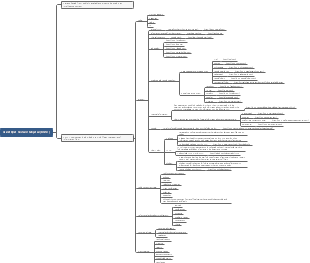
BECOMING
• The center is located in a bustling neighborhood with parks and playgrounds close by, providing opportunities for children to explore and learn about their environment
• Special topics of focus/interest include Nature and the Environment, Music and Movement, Science and Technology
Children with additional diagnosed needs (ADHD, autism)
Developmental Theories of Learning
The data highlights the diverse physical, social, cognitive and intellectual strengths and challenges of the children, emphasising the importance of considering developmental theories in planning and implementing learning activities.
Piaget's Cognitive Development Theory
This theory highlights the importance of considering the cognitive development of children and providing experiences that are developmentally appropriate.
Vygotsky's Social Development Theory:
This theory highlights the importance of considering the social and emotional development of children and providing opportunities for children to interact and learn from one another.
Social and Cognitive Theories of Learning:
The data highlights the diverse linguistic backgrounds and special topics of interest of the children, emphasising the importance of considering social and cognitive theories of learning when planning and implementing learning activities.
Bandura's Social Learning Theory:
This theory highlights the importance of considering the impact of social interactions on children's learning and development.
Chomsky's Linguistic Development Theory
This theory highlights the importance of considering the linguistic background of children and providing opportunities for language development.
BEING
• Children have a range of learning strengths and challenges (excelling in science and technology, love for nature, struggle with language development, fine motor skills)
• Children are diverse in their social and behavioral strengths and challenges (confident and outgoing, struggle with social interactions)
• Children have a range of physical abilities and challenges (athletic, underdeveloped gross motor skills)
Legislation and Regulations:
The data highlights the need for compliance with legislation and regulations regarding early childhood education in Australia.
The National Quality Framework (NQF)
The NQF sets the standards for the quality of early childhood education services in Australia, highlighting the need for the Little Sprouts Early Childhood Centre to comply with these standards.
The Education and Care Services National Law (ECSNL) and National Regulations
The ECSNL and National Regulations provide the legal framework for early childhood education in Australia, highlighting the need for the Little Sprouts Early Childhood Centre to comply with these regulations.
The Local Environment:
The data highlights the importance of considering the local environment in the learning experiences of children.
Location
The bustling neighbourhood and close proximity to parks and playgrounds provide opportunities for children to explore and learn about their local environment.
Traditional Owners
The recognition of the traditional owners of the land (The Wurundjeri people) and the presence of local Aboriginal sites highlights the importance of considering the local cultural heritage in the learning environment.
BELONGING
• Children from multicultural backgrounds make up 60% and 65% of the enrolment
• The center has a strong relationship with the local Aboriginal community and regularly invites cultural storytellers
• Children come from a range of socioeconomic backgrounds
• Bilingual program (English and Mandarin), Music and Movement, Yoga and Mindfulness programs
Outcome 2: Children are connected with and contribute to their world
Sub-outcome 2.1: Children develop a sense of belonging to groups and communities.
The center has a strong relationship with the local Aboriginal community, regularly inviting cultural storytellers to share their knowledge with the children, providing a sense of cultural identity.
The center offers special programs such as bilingual (English and Mandarin), Music and Movement, Yoga and Mindfulness, which aim to support children in developing a sense of safety, security and support.
• Sub-outcome 2.2: Children develop their emerging autonomy, inter-dependence, resilience, and sense of agency.
The children have diverse learning and intellectual strengths, which help them to develop their autonomy.
They are exposed to a range of cultures, which helps in developing inter-dependence and empathy.
The presence of children with additional needs such as ADHD and autism in the center helps develop resilience in all children, as they learn to interact and respect differences.
The center's location close to parks and playgrounds enables children to explore their local environment, promoting their sense of agency.
• Sub-outcome 2.3: Children develop knowledgeable and confident self identities.
The center provides special programs such as bilingual (English and Mandarin) and music and movement, which help children develop their interests and identity.
Children come from diverse socioeconomic backgrounds, which helps them develop a confident and knowledgeable self-identity.
• Sub-outcome 2.4: Children learn to interact in relation to others with care, empathy and respect.
Children are exposed to diverse cultures and languages, helping them develop care and empathy for others.
The center's focus on nature and the environment, music and movement, and science and technology provides opportunities for children to learn to interact with others in a respectful manner.
The center's strong relationship with the local Aboriginal community provides opportunities for children to learn about different cultures and customs, promoting respect for diversity.
Outcome 5: Children are effective communicators
Sub-outcome 5.1: Children interact verbally and non-verbally with others for a range of purposes
This means that the children at Little Sprouts Early Childhood Centre have the ability to communicate through different methods such as speaking, gestures, and expressions.
• This is supported by the diverse cultural backgrounds of the children, where 65% are from multicultural backgrounds, and the languages spoken in the centre including English, Mandarin, Korean, and Telegu.
• The centre also focuses on special programs, such as Music and Movement, which can help to further enhance the children's communication skills.
• Sub-outcome 5.2: Children engage with a range of texts and gain meaning from these texts
This means that the children are able to understand and interpret different forms of texts, including written, visual, and auditory materials.
The children also have diverse interests, including nature and the environment, music and movement, and science and technology, which can help them to engage with a range of texts that are relevant to their interests.
The centre is located in a bustling neighbourhood with parks and playgrounds close by, providing opportunities for children to explore and learn from their environment.
• Sub-outcome 5.3: Children express ideas and make meaning using a range of media
This means that the children have the ability to express their thoughts and ideas through different forms of media, such as drawings, videos, and computer programs.
The children are diverse in their learning strengths, with some excelling in science and technology, which can help them to express their ideas through digital media.
• Sub-outcome 5.4:Children begin to understand how symbols and pattern systems work
This means that the children are starting to develop an understanding of how symbols and patterns are used to communicate meaning.
This can be supported through special programs such as Yoga and Mindfulness, which can help children to understand how symbols and patterns can be used to convey emotions and ideas.
• Sub-outcome 5.5:Children use information and communication technologies to access information, investigate ideas and represent their thinking
This means that the children have the ability to use technology to gather information, explore ideas, and express their thoughts.
With 50% of the children speaking languages other than English, the use of technology can also provide an opportunity for them to access information in their native language.
The children also have diverse socioeconomic backgrounds, with some from low to middle class families, and others from disadvantaged backgrounds, which can impact their access to technology.
Outcome 4: Children are confident and involved learners
Sub-outcome 4.1: Children develop dispositions for learning such as curiosity, cooperation, confidence, creativity, commitment, enthusiasm, persistence, imagination and reflexivity
The centre values diversity and encourages children to explore their interests and develop their own learning dispositions, such as curiosity, cooperation, confidence, creativity, commitment, enthusiasm, persistence, imagination, and reflexivity.
• Sub-outcome 4.2: Children develop a range of skills and processes such as problem solving, enquiry, experimentation, hypothesising, researching and investigating
Through various programs such as music and movement, yoga and mindfulness, and a bilingual program in English and Mandarin, children are exposed to a range of learning experiences that help them develop skills in problem solving, enquiry, experimentation, hypothesising, researching, and investigating.
• Sub-outcome 4.3: Children transfer and adapt what they have learned from one context to another
By exploring their local environment, children are able to transfer and apply what they have learned in one context to another, enhancing their critical thinking and problem-solving skills.
• Sub-outcome 4.4: Children resource their own learning through connecting with people, place, technologies and natural and processed materials
The centre provides children with opportunities to connect with people, place, technologies, and natural and processed materials, empowering them to take charge of their own learning and develop a sense of autonomy and independence.
Outcome 3: Children have a strong sense of wellbeing
• Sub-outcome 3.1: Children become strong in their social and emotional wellbeing
The children are diverse in their social and behavioural strengths and challenges, with some being confident and outgoing, while others may struggle with social interactions.
The centre has a strong relationship with the local Aboriginal community and regularly invites cultural storytellers to share their knowledge with the children, promoting cultural diversity and understanding.
Special programs such as the Bilingual program (English and Mandarin), Music and Movement, Yoga and Mindfulness, support children's social and emotional wellbeing.
• Sub-outcome 3.2: Children take increasing responsibility for their own health and physical wellbeing
The children have a range of physical abilities, with some being athletic and physically active, while others may have physical limitations such as underdeveloped gross motor skills.
The centre is located in a bustling neighbourhood with parks and playgrounds close by, making it easy for children to explore and learn about their local environment, promoting physical activity and health.
3 children have been diagnosed with ADHD and 2 with autism, highlighting the importance of individual support and attention to children's physical and mental health.
The children come from a range of socioeconomic backgrounds, with some from low to middle class families, while others may come from disadvantaged backgrounds, influencing their access to resources and support for their physical wellbeing.
Outcome 1: Children have a strong sense of identity
Sub-outcome 1.1: Children feel a sense of belonging to a group and culture.
The center has a strong relationship with the local Aboriginal community, regularly inviting cultural storytellers to share their knowledge with the children, providing a sense of cultural identity.
The center offers special programs such as bilingual (English and Mandarin), Music and Movement, Yoga and Mindfulness, which aim to support children in developing a sense of safety, security and support.
• Sub-outcome 1.2: Children develop their emerging autonomy, inter-dependence, resilience, and sense of agency.
• The children have diverse learning and intellectual strengths, which help them to develop their autonomy.
• They are exposed to a range of cultures, which helps in developing inter-dependence and empathy.
• The presence of children with additional needs such as ADHD and autism in the center helps develop resilience in all children, as they learn to interact and respect differences.
• The center's location close to parks and playgrounds enables children to explore their local environment, promoting their sense of agency.
• Sub-outcome 1.3: Children develop knowledgeable and confident self identities.
• The center provides special programs such as bilingual (English and Mandarin) and music and movement, which help children develop their interests and identity.
• Children come from diverse socioeconomic backgrounds, which helps them develop a confident and knowledgeable self-identity.
• Sub-outcome 1.4: Children learn to interact in relation to others with care, empathy and respect.
• Children are exposed to diverse cultures and languages, helping them develop care and empathy for others.
• The center's focus on nature and the environment, music and movement, and science and technology provides opportunities for children to learn to interact with others in a respectful manner.
• The center's strong relationship with the local Aboriginal community provides opportunities for children to learn about different cultures and customs, promoting respect for diversity.