MindMap Gallery Managerial Process of Crafting and Executing Strategy
The "Managerial Process of Crafting and Executing Strategy" mind map is a strategic roadmap that illuminates the intricacies of developing and implementing effective organizational strategies. This map serves as a comprehensive guide for managers, executives, and business students seeking to understand the dynamic process of crafting, communicating, executing, and adjusting strategies. Dive into the realms of strategic management, explore key concepts, and grasp the art and science of navigating the competitive landscape.
Edited at 2023-11-12 15:53:49CH 2: The Managerial Process of Crafting and Executing Strategy
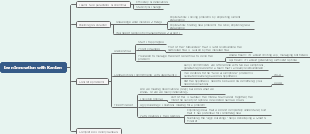
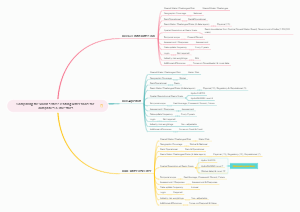
LO 2-1: Why it is critical for managers to have a clear strategic vision of where the company needs to head.
DEVELOPING ASTRATEGIC VISON, MISSION STATEMENT & CORE VALUES
STRATEGIC VISION describes management’s aspirations for the company’s future and, providing a panoramic view of “where we are going” and a convincing rationale for why this makes good business sense
Having a clear strategic vision is critical for managers for several reasons:
Effectively communicating a strategic vision is crucial for its success. The vision must be shared with all levels of the organization, from top executives to employees, to provide direction and motivation. Middle managers and employees need to be familiar with the vision. Executives must provide a compelling rationale for a new vision, as employees may resist change if they don't understand or accept the need for redirection.
An effectively communicated vision serves as a powerful management tool for engaging and mobilizing employees toward a common goal. When a vision is clearly articulated and consistently communicated throughout the organization, it becomes a guiding light that influences employee behavior and action
Developing a clear mission statement is a fundamental part of defining a company's strategic vision. A mission statement articulates the purpose of the organization, explaining why it exists, what it does, and who it serves
Linking the company's vision and mission with its core values is crucial for aligning the organization's behavior and actions with its strategic objectives. Core values represent the beliefs and norms that guide how the company and its employees conduct business in pursuit of the vision and mission. This alignment ensures that the company's culture and decisions are consistent with its long-term goals, creating a cohesive and purpose-driven organization.
LO 2-2: The importance of setting both strategic and financial objectives
SETTING OBJECTIVES
Setting both strategic and financial objectives is crucial for a business.
Strategic objectives provide direction, focus, motivation, innovation, and adaptability, guiding decision-making and inspiring employees. Financial objectives ensure financial health, attract investors, guide budgeting and resource allocation, measure performance with quantifiable metrics, and support long-term planning. Together, these objectives contribute to a company's growth, stability, and competitiveness in the market.
Setting both long-term and short-term objectives is crucial for a business's success. Objectives should adhere to the SMART criteria, ensuring they are Specific, Measurable, Achievable, Relevant, and Time-bound. Additionally, adopting the Balanced Scorecard approach provides a holistic view of the organization's performance and measures whether a firm is strengthening its competitiveness and market positions
LO 2-3 Explain why the strategic initiatives taken at various organizational levels must be tightly coordinated.
CRAFTING STRATEGIES
coordinating strategic initiatives across different levels in an organization is crucial for three main reasons:
Choosing the Best Strategy: Coordinating helps in selecting the best strategy from various options. Different parts of the organization might have different ideas. Coordination ensures everyone works together toward a common goal, avoiding conflicting strategies.
Teamwork Across Levels: Crafting and executing strategy involves teamwork among managers at different levels. Coordinating efforts ensures that everyone's skills and ideas are combined. Teamwork helps in making smart decisions and using resources wisely.
Standing Out from Competitors: Coordinated initiatives allow the organization to be unique. Instead of following what everyone else is doing, coordination helps in taking innovative actions. This helps the organization to stand out and be different from competitors.
A Company’s Strategy-Making Hierarchy: The coordination of initiatives reflects the hierarchy of strategy-making, where strategic decisions are made at different levels within the organization. Initiatives at the corporate, business, and functional levels must be coordinated to ensure they are aligned and contribute to the overall strategic plan.
Uniting the Strategy-Making Hierarchy: Coordination unites the various levels of the strategy-making hierarchy. It ensures that the corporate-level strategy aligns with business-level and functional-level strategies, creating a cohesive and synchronized approach to achieving competitive advantage.
A Strategic Vision + Mission + Objectives + Strategy = A Strategic Plan: The coordination of initiatives is essential for crafting a comprehensive strategic plan. This plan is built upon the foundation of a strategic vision, mission, and specific objectives, with strategies formulated to achieve those objectives. Coordination ensures that all components of the plan work together seamlessly to realize the company's strategic goals.

LO 2-5 Comprehend the role and responsibility of a company’s board of directors in overseeing the strategic management process.
EVALUATING PERFORMANCE AND INITIATING CORRECTIVE ADJUSTMENTS
Subtopic
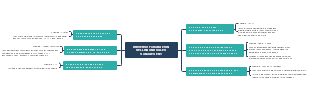
Oversee the company’s financial accounting and financial reporting practices
The board of directors is responsible for monitoring and overseeing the company's financial accounting and reporting practices.
They ensure that the financial statements are accurate, transparent, and in compliance with relevant accounting standards and regulations.
Critically appraise the company’s direction, strategy, and business approaches
The board critically evaluates the company's strategic direction and business approaches.
They provide an objective assessment of the company's strategy, offering guidance and ensuring alignment with long-term goals and objectives.
Evaluate the caliber of senior executives’ strategic leadership skills.
The board assesses the caliber of senior executives' strategic leadership skills.
They ensure that top management possesses the necessary capabilities to develop and execute effective strategies.
Institute a compensation plan for top executives that rewards them for actions and results that serve stakeholder interests, and most especially those of shareholders
The board plays a key role in designing and implementing a compensation plan for top executives.
They create incentive structures that reward executives for actions and results that prioritize the interests of stakeholders, particularly shareholders.
Every corporation should have a strong independent board of directors that: (1) is well informed about the company’s performance, (2) guides and judges the CEO and other top executives, (3) has the courage to curb management actions the board believes are inappropriate or unduly risky, (4) certifies to shareholders that the CEO is doing what the board expects, (5) provides insight and advice to management, and (6) is intensely involved in debating the pros and cons of key decisions and actions.
LO 2-4 Recognize what a company must do to execute its strategy proficiently
EXECUTING STRATEGY
Achieving operating excellence and executing strategy proficiently involves several key points
Creating a strategy-supporting structure.
Staffing the organization to obtain needed skills and expertise.
Developing and strengthening strategy-supporting resources and capabilities.
Allocating ample resources to the activities critical to strategic success.
Ensuring that policies and procedures facilitate effective strategy execution.
Organizing the work effort along the lines of best practice.
Installing information and operating systems that enable company personnel to perform essential activities.
Motivating people and tying rewards directly to the achievement of performance
Creating a company culture conducive to successful strategy execution.
Exerting the internal leadership needed to propel implementation forward.
A strategic vision portrays a company’s aspirations for its future (“where we are going”), whereas a company’s mission we are going”), whereas a company’s mission describes the scope and purpose of its present business (“who we are, what we do, and why we are here”).
A strategic plan maps out where a company is headed, establishes strategic and financial targets, and outlines the basic business model, competitive moves, and approaches to be used in achieving the desired business results.
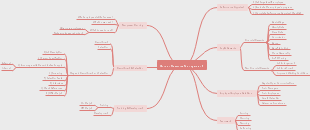
Developing a strategic vision that charts the company’s long-term direction, a mission statement that describes the company’s purpose, and a set of core values to guide the pursuit of the vision and mission
Crafting a strategy for advancing the company along the path management has charted and achieving its performance objectives.
Monitoring developments, evaluating performance, and initiating corrective adjustments in the company’s vision and mission statement, objectives, strategy, or approach to strategy execution in light of actual experience, changing conditions, new ideas, and new opportunities
Executing the chosen strategy efficiently and effectively
Setting objectives for measuring the company’s performance and tracking its progress in moving in the intended long-term direction.