 Wondershare EdrawMind
MindMap Gallery Everyone is a sales expert
- 26
Everyone is a sales expert
"Everyone is a Sales Master" is a book about sales skills and methods, aiming to help readers master the core skills of sales and become sales masters.
Edited at 2024-02-09 17:49:08
- Avatar Character Relationship Chart
Avatar 3 centers on the Sully family, showcasing the internal rift caused by the sacrifice of their eldest son, and their alliance with other tribes on Pandora against the external conflict of the Ashbringers, who adhere to the philosophy of fire and are allied with humans. It explores the grand themes of family, faith, and survival.
- Zootopia 2 Easter Egg
This article discusses the Easter eggs and homages in Zootopia 2 that you may have discovered. The main content includes: character and archetype Easter eggs, cinematic universe crossover Easter eggs, animal ecology and behavior references, symbol and metaphor Easter eggs, social satire and brand allusions, and emotional storylines and sequel foreshadowing.
- Zootopia 2 Character Relationship Chart
[Zootopia Character Relationship Chart] The idealistic rabbit police officer Judy and the cynical fox conman Nick form a charmingly contrasting duo, rising from street hustlers to become Zootopia police officers!
Everyone is a sales expert
- Avatar Character Relationship Chart
Avatar 3 centers on the Sully family, showcasing the internal rift caused by the sacrifice of their eldest son, and their alliance with other tribes on Pandora against the external conflict of the Ashbringers, who adhere to the philosophy of fire and are allied with humans. It explores the grand themes of family, faith, and survival.
- Zootopia 2 Easter Egg
This article discusses the Easter eggs and homages in Zootopia 2 that you may have discovered. The main content includes: character and archetype Easter eggs, cinematic universe crossover Easter eggs, animal ecology and behavior references, symbol and metaphor Easter eggs, social satire and brand allusions, and emotional storylines and sequel foreshadowing.
- Zootopia 2 Character Relationship Chart
[Zootopia Character Relationship Chart] The idealistic rabbit police officer Judy and the cynical fox conman Nick form a charmingly contrasting duo, rising from street hustlers to become Zootopia police officers!
- Recommended to you
- Outline
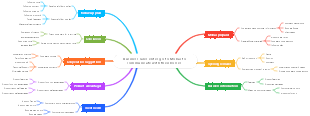
everyone is Sales master
Why being a talking salesperson is easier than you think
Because sales talking routines are traceable, just like playing chess. The routines of sales speaking are actually traceable, just like playing chess. Chess has a set of basic rules, such as the bishop moving the field and the knight moving the sun. If someone uses the knight to move the field when playing chess, you would say this is not allowed. After reading this book, you will be surprised to find that the sales process also has a set of established rules, and everyone follows the routine. Therefore, every step taken by others should be expected by you, and you should also know how to deal with it. But I found that most salespeople have not received professional training, have not studied systematic courses, and do not understand these rules. So, you can read this book, first of all, I want to congratulate you for finally finding a correct reference template.
steps, training
Lecture 2: Taking the initiative is the shortest way to close the deal
I think there is a very important secret to quarreling, which is to never pick up the fight talk
2. Take control of the conversation
First, whoever asks the question takes the initiative; secondly, whoever makes the request takes the initiative. Many times, customers will feel that the offer you are giving is genuine only if you make a request. When faced with a customer’s initial question, what should you do if you don’t want to answer? I will teach you two methods: one is to hold the customer down and not let him speak; the other is to learn to ask the customer back.
Ask a question
(2) Hold down the customer and prevent him from speaking
I usually praise the questioner first: "This is a great question, I will set aside time to answer later. Let me explain this link to you first over. " You can understand it from another perspective: I am here to better answer customers’ questions. I just asked the question in reverse If a customer says your price is too high, you can tell him: "May I ask you and Have you compared it with others? What type of products are you comparing? Your comparison price is high If you compare our products to those with lower prices, you will of course think our products are cheap. Our products are expensive. It depends on your reference. "
Ask rhetorically and explain why.
Lecture 3: Deal is easier than rejection
The 16-character rule for closing a deal: stalk, nudge, coerce and induce, and close the deal repeatedly.
Continuous follow-up and insight into needs, Satisfy demand and make repeated transactions
2. Sales and customers are equal
Because you have strength. Another sign of strength is that you show a strong sense of equality in front of your customers. you
Awareness of equality of strength
Lecture 4: Start by showing value and arouse customer interest
The entire sales process can be divided into five parts - opening remarks, demand research, product introduction, resolving objections and forcing orders.
The first part is the opening, how to break the ice.
The first is to show value.
There are four steps to show your value in your opening remarks: the first step is to confirm the information, the second step is to show your muscles, the third step is to package the bait and lower the hook, and the fourth step is to call for action.
1. Confirm information What is confirmation information? "Hello, Mr. Wang" "Hello, Mr. Li" "Hello, Brother Wang" "Hello, Sister Li" , to confirm the identity of the other party.
The second step is more important, to show off your muscles, that is, to explain clearly who you are and how awesome you are. What is a packaged bait under the hook? In most cases, I will show the client a case that we have served, and
What is a packaged bait under the hook? In most cases, I will show the client a case that we have served, and
The call to action is to either add WeChat, meet in person, or have a more in-depth exploration. opportunity to discuss.
call; own cattle; Cases served; In-depth communication case
The second type is risk warning, that is, if you don’t care about issues that you don’t care about, customers will be more interested.
the other party’s needs
The third type is trust grafting, which is to use people whom customers trust or know to build trust.
Lecture 5: Talk about purchasing motivations rather than resistance
1. Seize the window period
It is difficult to empathize when conveying information through words, which can destroy the atmosphere of communication. Therefore, you must have a sense of control and strive for an opportunity to communicate with customers via voice.
Language is greater than words
2. Talk about your customers’ motivations
open-ended topics
"Why did you choose our company?
Why choose this product
3. Don’t talk about customer resistance
Why not choose your company.
4. Ask the customer what they need
Keywords - "dissatisfaction"
: Hidden needs, explicit needs and urgent needs
Customer demand points
Lecture 6: Ask good background questions and follow up with customers No worries
1. Learn to ask background questions
1) Questioning rights
The first thing to ask about power is who is in charge.
Ask for money
, is to tentatively understand the customer's approximate budget.
3) Ask about needs
(4) Ask about competing products
Besides us, which other companies are you considering? "In addition to looking at our products, which other companies' products have you looked at?"
Bought similar products
"You What car was driving in front of you? What now? "
decision maker; Budget; demand, product; competitors; Similar products, etc.
2. Three stages of following up with customers
Auditions stage, screening stage and decision stage.
Audition, screening, decision-making
Audition stage
There is no need to quote an extremely low price
During the screening stage
what are your products price? Are there any other offers? Can it be cheaper?
Entering a critical stage
I advise you to use coupons as soon as possible, there are policies
Customers do not reply to messages, but continue to send messages and send messages in a rhythmic manner. First, don’t be weak. Second, don't be afraid.
3. Make yourself valuable
Customers think you have no value,
2) The information you send is not of sufficient value
The first is to always ask if the customer is there. The second one likes to send greeting messages, such as "Good morning" and "Good night" The third type is sending purely harassing messages. The fourth type, advertising swipes the screen
worthless information
CHAPTER Lecture 7 7 Create a circle of friends and use good feelings to promote friendship It is "authentic and trustworthy", "warm" and "professional". Industry".
1. Send information about personal hobbies
One is personal hobbies, preferably at a fixed time Post; the second is selfies; the third is warm family scenes; the fourth is social activities
Hobbies, taking selfies, family, social
2. Send valuable information
The first, the simplest is to like and receive benefits
The second one is to spread some common knowledge and talk about some common sense of life.
The third type is to provide customers with other opportunities
Welfare; common sense; other opportunities
3. Post advertising information
The first is to hype hot spots, also called popularity. Compare
The second is to send screenshots of customer feedback.
The third type is to send company activities.
heat Customer feedback chart; Company Activities; There must be intermittent
.Have good hair tie habits
Two reasons: First, the message this person sent has nothing to do with you; Second, this person keeps refreshing the screen.
The information doesn’t matter; Keep refreshing the screen
Ask targeted questions including:
1. Questioning rights: Understand the customer’s status and decision-making rights in the company. 2. Ask about money: Understand the customer’s budget and spending power. 3. Ask about background: Understand customer needs and pain points. 4. Ask about motivation: Understand the reasons and purposes of customers buying products. Related original text: Page 59 Page 97
Deciding people, purchasing power Need, why to buy the product
Implied questions can amplify customer needs,
include: 1. Emphasize the past, present and future: Make customers aware of the urgency of the problem by emphasizing the losses they may face in the past, present and future. 2. Talk about customers’ motivations: Understand the reasons and purposes of customers purchasing products, and make customers aware of the benefits that purchasing products can bring. 3. Talk about customer resistance: Understand the difficulties and resistance customers may encounter during the purchase process, and make customers aware of the problems that purchasing the product can solve. 4. Ask customers about their needs: Through asking questions, you can understand your customers’ needs and pain points and make them aware of the value that purchasing products can bring. Related original text: Page 102 Page 104
Reinforce the other person’s needs product benefits past, present, future losses
Why selling products is not as good as selling scenes
, because the scene can better demonstrate the value of the product and allow customers to feel the advantages and features of the product more intuitively. Through scenarios, customers can better understand the usage scenarios and effects of the product, making it easier to have a desire to buy. In addition, scenarios can help sales better understand customers’ needs and pain points so they can better provide solutions to customers. Related original text: Page 109
Better demonstrate the value of your product
1.Daily scenes
Daily scenes are scenes that often occur, while extreme scenes are those that occur The probability is very small, but the consequences are very serious and very scary.
Many salespeople attach great importance to the ability to tell stories, because storytelling can make customers feel Engagement, especially when the story you tell is close to the customer's experience.
tell a story
2. Extreme scenes
What is an extreme scene? It is this matter that has had relatively serious consequences.
serious consequence
3.Special scenes
A special scene refers to a scene where a specific event occurs on a specific occasion and among a specific group of people. When sales shape scenes, they usually transition from daily scenes to extreme scenes, and there is an amplification process. Special scenes usually resonate and pay more attention to customers than daily scenes, so sales need to pay attention to the selection and shaping of the scene when shaping the scene. Related original texts: Page 110 Page 111 Page 112 Page 114
special scene
4. Shaping different scenarios can support different conclusions.
Shaping different scenarios to support different conclusions means changing the scenarios to support different views and conclusions. During the sales process, salespeople can better convince customers by creating different scenarios to support their point of view. For example, a salesperson can create an extreme scenario to emphasize the importance of the product, thereby making customers more willing to purchase the product. Likewise, salespeople can create a special scenario to highlight the uniqueness of the product, thereby making customers more willing to purchase the product. In summary, shaping different scenarios that support different conclusions is an effective sales technique that can help salespeople better convince customers.
Convince customer service through scenarios
Lecture 11: Paying attention to customers is always right
1. Use the results to verify customer needs
Using results to verify customer needs refers to showing customers the benefits that the product can bring, so that customers can recognize the value of the product. Sales can find the pain points of customers by asking targeted questions, and then tell customers that the product can solve their problems, so that customers can recognize the value of the product. Sales can also give customers a sense of involvement by showing successful cases, thereby recognizing the value of the product. Sales can also make customers recognize the value of the product by providing valuable information. In short, using results to verify customer needs is a very important part of the sales process and can help sales better convince customers.
bring value
If customers agree with the results, they will imagine that they already own the product.
2. Tell customers "You are good"
Telling a customer "You're just great" is a sales technique to make the customer feel owned and then take it away. This technique can make customers want to buy, thus improving sales performance. Related original text: 124 pages
Everyone wants to be seen, so you have to pay attention to your customers
3. How much you value your customers, how much your customers value you
3. How much you value your customers, how much your customers value you When communicating with customers, I talked about providing differentiated services. The products purchased by customers may be exactly the same, but the people providing services are different. Same. Your attitude, the importance you attach to your customers, and the connection between you and your customers will Be different from others. Everyone wants to be seen, so you have to value your customers.
manner
Lecture 12: Correctly introduce products and use value say
1. FABEG sales rules
The FABEG sales rule is a product introduction process, including Features, Advantages, Benefits, Evidence and Grabber. Among them, characteristics refer to the intrinsic attributes of the product, advantages refer to the advantages of the product compared with products of the same type or with the same efficacy, benefits refer to the benefits of the product in actual use scenarios, and evidence refers to relevant certification documents through on-site demonstrations. , brand effect, etc. to confirm the product introduction. A rhetorical question refers to asking a rhetorical question at the end to complete the product demonstration and obtain a positive response from customers.
specialty, advantage, benefit, proof
2. Enter the scene and create imagination
I usually put the "E" in the FABEG Sales Rules Put it at the front, and the order becomes EBFAG, that is, talk about the scenarios and benefits first, and then Why can this result be achieved.
Scenarios, Benefits, Advantages, Proofs
3. Use addition, subtraction, multiplication and division to reflect the value of the product
The method of adding, subtracting, multiplying and dividing to reflect the value of the product is as follows: 1. Addition: First list the value of the individual functions of the product, then add them together to calculate the total price, and finally give a preferential price to let customers know that buying now is a good deal. 2. Subtraction: Used when resolving customer price objections. Subtract the part that the customer thinks is expensive to let the customer know that the total price is not high. 3. Multiplication: Telling customers that buying one thing can solve multiple problems is called "giving you more"; or telling customers that this problem will cause multiple problems is called "losing more". 4. Division: Spread the total price equally over the year, month or day, and the price gap with competing products will be smaller. Related original text: Page 137 Page 139 Page 140
Addition, total price, last discounted price Addition, price splitting; Multiplication, one thing solves multiple problems Division, amortization with yearly, monthly, daily
Lecture 13: Handling Common Objections (Part 1)
1. Understand what the customer is saying
Understanding what the customer is saying means that during the sales process, the salesperson needs to understand the true intentions and motivations behind the objections raised by the customer. This includes understanding customer needs, concerns and expectations in order to better provide solutions to customers. For example, when a customer says that a product is too expensive, the salesperson needs to understand that the customer may actually be concerned about the product's price/performance or budget constraints, rather than simply complaining about the price. Related original text: 143 pages
Understand customer needs
2. Clarify customer objections
Sometimes the objections raised by customers and the objections answered by sales are not the same thing at all. There are two reasons for this: first, the customer did not express clearly, and second, there is a problem with the sales understanding. Therefore, when a customer raises an objection, the salesperson should clarify it in his own words.
repeat
3. "I'll think about it"
(1) Solve key demands
Ask customers what matters most.
Change the topic and start looking for the core demands of customers. This is truly valuable.
Resolving objections is definitely not about convincing the customer, but about showing buy-in.
(2) Identify with customers
If you can't convince your customers, you can only let them convince you
People tend to make decisions immediately when faced with time pressure, so you should take the initiative to set a deadline for the customer, and don't always follow the customer's wishes.
(3) Set a deadline
No matter what type of customer you are, you must take the initiative to give him a deadline.
the other party’s needs; express approval; Let customers convince themselves; Set deadline
4. “Too expensive”
First, the price of the product is indeed too high and exceeds the customer’s spending power; second, compared with the reference product, the customer feels that this product is relatively expensive.
When the customer feels that it is not worth it, what the salesperson has to do is to adjust the customer’s reference
(1) Adjust the customer’s reference
, affirm him first: "You're right." Then, you said to him: "It depends on who you are comparing it to. Our products are not of the same grade as you are talking about. You should compare it with a product of the same grade, such as ×× product."
change reference
(2) Measure the psychological price of customers
When measuring the value of a product, sales sometimes also need to measure its value in the customer's mind, that is, the psychological price.
psychological feelings
(3) Use division
Sales must learn to break down prices. There are several ways to decompose it, one of which is to spread the total price equally to the year, month or day, so that the price gap with competing products will be relatively small.
Apportioned time
(4) Use subtraction
Using the subtraction method to compare with competing products means reducing a lot of costs so that the total price does not appear high.
pay less
(5) Calculate the use price of the product
In addition to pricing, products also have a usage price. For example, a certain product can generally be used for 3 years, but you use imported materials. It can be used for 5 years and gives customers a different feeling.
Different ingredients, different prices
(6) Start with the product’s application scenarios and customers’ psychological satisfaction
A classy person like you should use better products. Once your relatives and friends see that you are using a branded product, you can tell them not to underestimate this thing, it is valuable.
psychological vanity satisfaction
Lecture 14: Handling Common Objections (Part 2)
Lecture 14: Handling Common Objections (Part 2)
1. “I need to go back and discuss it.”
In fact, they are all for the same reason, which is to transfer decision-making power.
1) Deal with the person in front of you. When the customer says that he wants to go back for discussion or ask the leader for instructions, I will give you a suggestion: deal with the person in front of you.
"Of course I know that the general manager's opinion is also important, but I want to know what you think about this matter. If you think it's OK, then one word you say is worth a hundred words; if you don't think it's OK, then I don’t think there is any need to ask the general manager for instructions.”
Ask the parties for their opinions
Even a refundable deposit is better than no deposit at all.
(2) Get the deposit. If the customer likes your product, then you have to try to get the deposit:
: Even a refundable deposit is better than no deposit at all.
(3) Help customers anticipate objections in advance
To understand the customer's real objection, you should first assume that the transaction cannot be concluded and ask him what it is. What reason.
There is a deposit; Cause of problem
(4) Treating a dead horse as a live doctor
Why do you need to break the customer’s intention? Because many customers do not refuse directly Instead, you used the excuse of "going back to discuss it".
Uncover the customer’s intentions, Failure to refuse directly is an excuse, and discussion is an excuse.
2. “Can you guarantee the effect?”
Therefore, the sales expert’s answer should be: “I can guarantee that.
(1) Set threshold
The most important thing is that you have to give your customers confidence
Set conditions
(2) Raise the threshold
You didn't reject the customer directly, you just told him that as long as he meets certain conditions, you can get what he wants.
To meet the conditions
3. When customers come up, ask about the price.
? Most customers do so out of fear, fear of being ripped off, at a loss, or I was fooled, so I wanted to confirm whether I could afford the money from the beginning.
Remember, you have to take advantage of the customer's insecurity, first point out that he is a novice, then teach him how to select products, give him an evaluation standard, and then focus on whether the supplier he contacts is reliable.
Then, the problem changes from comparing prices to comparing suppliers, and customers don’t know how to judge. Pass
What should you do when a customer asks if it can be cheaper? This shows that the customer is already interested. At this time, what you want to emphasize is not the price itself, but giving the customer a reason to buy.
4. “Can it be cheaper?”
Why do customers ask for cheaper prices? First, I want to save money. Second, I am afraid that the current quotation is watery.
At this time, you are constantly outputting information to the customer, telling him that there must be something wrong with the low price. For example, someone will modify the product parameters, or attract customers with a low price first, and then add items later. This situation abounds.
"If we simply compare prices, we won't be able to make it if it's too low, because our requirements and standards are very high, and we are responsible for product quality. Many people quote low prices because they are not responsible for quality or even authenticity. Responsibility. When quality cannot be guaranteed, price comparison is actually meaningless.
5. When customers conduct a three-party price comparison
In the price comparison process, customers usually choose whoever quotes the lowest price first.
Competitors usually will not quote a particularly low price for the first time, but will leave a certain amount of space for customers to slowly counteroffer, but I suggest you quote a naked price at this time.
Customers need to pay some surcharges when purchasing this product, but you should not mention it at this time.
Compare and give low price;
(2) Boarding
I will introduce a way to beat the competition, which is called "the trump card for letting go of competing products" , is to do information coverage.
You only need to conduct a survey every half month or month to have a good understanding of the actual situation of your competitors.
Only by understanding the situation of your competitors and knowing their base prices can you have the confidence to negotiate with customers and demonstrate your professionalism.
Know your competitors’ prices
Know your competitors
(3) Provide multiple solutions
Plans for different product prices
6. “I won’t consider it for now.”
Let me teach you a formula: expected, risk warning, value comparison, strengthening core demands.
"I had already guessed that you would tell me today that you weren't coming.
additional value
main needs
7. “Make it cheaper” “Just give this gift to me”
Everyone should standardize the handling of customer objections and write down the methods word for word.
Lecture 15: Three Principles of Forced Orders
Sales must have 100% confidence in the product. If you are not confident enough, you will not be able to sell your products well, and you will be soft-hearted when forced to place orders.
Customers are more impulsive and emotional when making decisions
1. Strike while the iron is hot
Therefore, you must negotiate money with your customers. Moreover, when you talk about money, you are responsible for your customers.
emotional appeal
2. Start from the customer’s perspective
Every time I tell the salesperson, "You come and force an order," the salesperson tells the customer: "If you don't buy it, the price will go up immediately." "If you don't buy it, the discount will be gone." "If you don't buy it, the event will be over." If you don’t buy it, there will be no free gifts. “If you don’t buy it, there will be no quota.”
"First, we are the best choice; second, buying now is the best choice; third, you deserve better."
All victories are passionate victories, and all decisions are emotional decisions.
emotional victory
3. Start rationally and end with emotion. Let me ask you a question:
“Do you think the customer’s final decision was based on rationality or emotion?”
Everyone remember this sentence: All victories are passionate victories, and all decisions are emotional decisions.
Such as responsibility, honor, face
emotionally
Lecture 16: 7 practical ways to force orders
1. Small point trading method
Then break the order into zeros: "Well then, don't worry about it, just buy some and try it out.
Buy some first
2. Action force order
Acting to force an order is actually relatively simple, that is, when you are almost done talking with the customer, you take out the contract, let him look at the relevant terms, fill in the content that you talked about, and hand it to him after filling it out.
The content is almost the same, let the other party fill it in
Send contract comparison order
3.Choose one of the two
The choice between the two is to ask the customer if he wants A or B. That
4. Simple transaction method
The simple closing method is to leave the complicated things to yourself and leave the simple things to the customer.
Complex to myself, Simple to customers
I regret losing the transaction method,
It means card time and card quota, urging customers to sign orders as soon as possible.
6. Follow the herd trading method
Everyone has a herd mentality. When people go to eat, they also look at which restaurant has the most customers. Customers are afraid of being the first to eat crabs, so you can use the herd mentality to tell them that many people have already bought it.
Customer Testimonials
7. Use special windows
When you give a discount, customers often don't believe that what you give is already the lowest price, or they don't believe that what you give is a promotional price, thinking that you are going up first and then down. That
Reasons for price reduction and price increase
More important than running a promotional event is that you must remember to post the news that the event has ended. Congratulations to those customers who grabbed the discount, saying that this event has come to a successful conclusion. Welcome everyone to come again next time.