MindMap Gallery Classic cases of financial risks
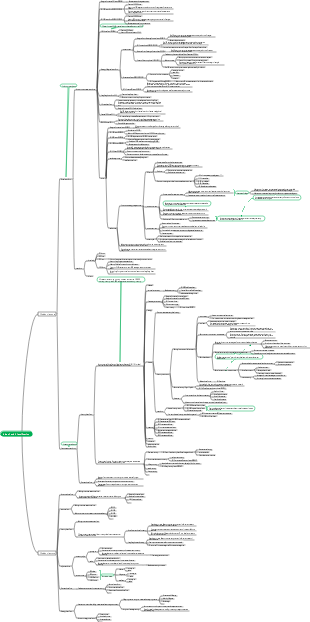
Internationally renowned financial risk cases in recent decades briefly describe the incident process and lessons learned. Friends in need should quickly collect it!
Edited at 2024-02-08 10:19:34Avatar 3 centers on the Sully family, showcasing the internal rift caused by the sacrifice of their eldest son, and their alliance with other tribes on Pandora against the external conflict of the Ashbringers, who adhere to the philosophy of fire and are allied with humans. It explores the grand themes of family, faith, and survival.
This article discusses the Easter eggs and homages in Zootopia 2 that you may have discovered. The main content includes: character and archetype Easter eggs, cinematic universe crossover Easter eggs, animal ecology and behavior references, symbol and metaphor Easter eggs, social satire and brand allusions, and emotional storylines and sequel foreshadowing.
[Zootopia Character Relationship Chart] The idealistic rabbit police officer Judy and the cynical fox conman Nick form a charmingly contrasting duo, rising from street hustlers to become Zootopia police officers!
Avatar 3 centers on the Sully family, showcasing the internal rift caused by the sacrifice of their eldest son, and their alliance with other tribes on Pandora against the external conflict of the Ashbringers, who adhere to the philosophy of fire and are allied with humans. It explores the grand themes of family, faith, and survival.
This article discusses the Easter eggs and homages in Zootopia 2 that you may have discovered. The main content includes: character and archetype Easter eggs, cinematic universe crossover Easter eggs, animal ecology and behavior references, symbol and metaphor Easter eggs, social satire and brand allusions, and emotional storylines and sequel foreshadowing.
[Zootopia Character Relationship Chart] The idealistic rabbit police officer Judy and the cynical fox conman Nick form a charmingly contrasting duo, rising from street hustlers to become Zootopia police officers!
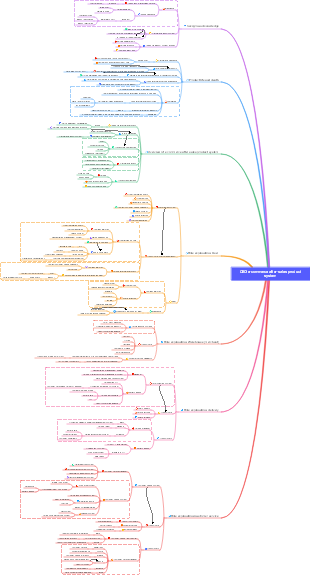
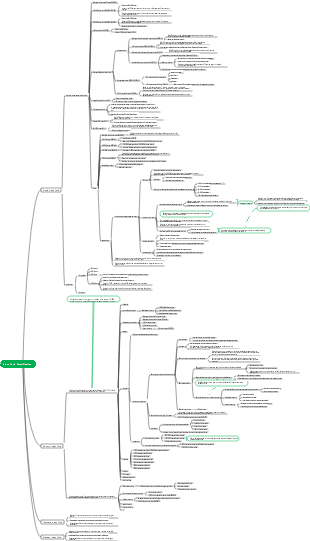
Classic cases of financial risks
Interest Rate Risk
U.S. savings and loan crisis
1. Case introduction
(1) In the late 1970s, rising inflation prompted the Federal Reserve to implement tightening monetary policies, leading to a sharp rise in short-term interest rates.
(2) The rise in short-term interest rates has pushed up the financing costs of savings and loans, reducing or even offsetting the spreads that savings and loan associations rely on to make profits.
(3) With the surge in short-term interest rates, and the continuous emergence of other attractive financial investment tools such as money market funds,
result
The cost of funds has increased significantly, savings have outflowed massively, and savings and loan institutions have incurred negative net interest margins.
2. Cause analysis
Savings and loans failed to manage their interest rate risk and suffered significant losses when interest rates moved in adverse directions.
3. Lessons learned
Banking financial institutions should properly manage interest rate risks
Manage the structure of a company's balance sheet so that the impact of any interest rate changes on assets and liabilities remains highly correlated and even consistent
In an environment with fluctuating interest rates, assets and liabilities move in a consistent manner, which means that the company is not affected by interest rate changes.
How this is achieved: Partially through classic duration instruments, more sophisticated approaches involve the use of interest rate derivatives
interest rate cap
interest rate floor
interest rate swap
Financing liquidity risk
Lehman Brothers
Reason analysis
Banks as naturally highly leveraged entities
Excessive pursuit of leverage before the crisis
At the same time, banks’ financing strategies bring fatal vulnerabilities to operations.
Specific instructions
Lehman borrowed huge amounts of short-term money to fund relatively illiquid long-term real estate investments
Such as borrowing funds from the repo market every day
Lessons learned
(1) Radical investment model, high-risk business accounts for too much, and business is too concentrated
(2) The leverage ratio is too high and over-reliance on short-term financing
(3) Financial derivatives are overly innovative and the corresponding risk management is relatively weak.
Continental Bank of Illinois
Reason analysis
(1) Business concentration is too high and risk diversification management is not carried out.
(2) There are weaknesses in the financing strategy. The main source of funds comes from the wholesale market of funds, and the source of funds is relatively single.
Lessons learned
(1) Internal credit portfolio problems may trigger a financing liquidity crisis and avoid excessive concentration of the company's business.
(2) Correspondingly, financing sources should also be diversified.
Northern Rock Bank
Reason analysis
Funding sources for long-term assets were excessively concentrated in short-term financing, the mismatch in asset and liability maturities and the sudden loss of market confidence jointly triggered Northern Rock Bank's liquidity crisis.
Lessons learned
(1) Don’t “put eggs in the same basket”. Both the liability side and the asset side need to pay attention to risk diversification. Even if the products on the liability side are diversified, it is necessary to look at the root cause to see whether their sources are concentrated and do a good job in risk prevention and control.
(2) When developing interbank business, we must grasp the rhythm well. When the deposit and loan business encounters bottlenecks, seeking transformation in the financial market business is the way out for banks in the future.
Asset/liability management (ALM) decisions require trade-offs
There is a trade-off between funding liquidity and interest rate risk
When the maturity of the liability is shorter than the holding period of the asset, the financing liquidity risk is greater;
When the maturity of liabilities is greater than the holding period of assets, banks face greater interest rate risk.
There is also a trade-off between cost and risk reduction
In a positively sloping yield curve environment, in order to reduce financing liquidity risks, institutions can increase the maturity of their financing liabilities. However, long-term liabilities are obviously more costly than short-term liabilities.
Construct and implement hedging strategies
german metal company
Reason analysis
The financial disaster suffered by the company stemmed from an asymmetric term structure of gains and losses, culminating in losses due to liquidity problems.
(1) The market changes from backwardation (spot price > futures price) to conango (futures price > spot price), which creates basis risk and causes losses when opening positions.
(2) The drop in oil prices resulted in an immediate loss of US$900 million for futures bulls, but the gains from hedging transactions took many years to realize (short positions in forward contracts), which resulted in liquidity risks of funds.
(3) German accounting standards require that company statements must show realized futures losses, but cannot recognize unrealized forward contract gains.
It makes the company's financial statements "very ugly", which leads to its credit rating being lowered and its credit risk rising invisibly, ultimately triggering a chain reaction.
(4) The size of the position established by the company is so large that it lacks liquidity to avoid forced liquidation.
Lessons learned
(1) The company should establish appropriate liquidity risk control and management measures
(2) Risk assessment should be based on stress testing with reasonable assumptions and limit the margin and number of positions.
(3) However, when using short-term to hedge long-term contracts, the strategy can only be successfully implemented if appropriate risk control is implemented.
(4) It is very important to choose the appropriate model for pricing and hedging
(5) Accounting and tax policies need to be considered when developing hedging strategies
model risk
Victor Niederhoff Put Options
Reason analysis
It is possible to construct a strategy that chooses to make small profits over a period of time, but even with a less profitable strategy, there is still the possibility of significant losses.
Lessons learned
(1) Do not rely too much on personal professional knowledge and integrity and self-discipline
(2) There is no “free lunch” and no over-investment
long term capital management corp.
Case introduction
The company's basic investment philosophy is that "in the long run, unreasonable price differences between the same securities in different markets will inevitably disappear", and thus formulated a policy of "discovering abnormal market price differences through precise computer calculations and using leverage to amplify returns." Investment strategy process. Specifically, the company's main strategies are as follows:
(1) Relative value strategy
Over the long term, price differentials between similar securities will tend to return to their historical averages
If the price difference between similar securities deviates from the average historical level in the short term, a spread arbitrage opportunity exists
(2) Credit spread strategy
Over the long term, the credit spread (the difference between the yields on different bonds) between the two bonds will tend to return to its average historical level
If credit spreads deviate from the average historical level in the short term, there will be an arbitrage opportunity in credit spreads
(3) Equity volatility strategy
Over the long term, stock option volatility tends to revert to long-term averages
Shorting volatility when implied stock option volatility is high
When the Asian financial crisis broke out in 1997, LTCM believed that the market overreacted to the financial crisis, resulting in an excessively large interest rate difference between U.S. government bonds and bonds from developing countries, and that the interest rate spread would decrease and return to the historical average.
The reality is that LTCM suffered huge losses as Russia defaulted on its sovereign debt, causing credit spreads to rise further rather than fall. In addition, the sudden increase in market volatility also led to huge losses for LTCM.
Reason analysis
(1) The sharp increase in interest spreads and option volatility caused a large short-term loss of principal and the inability to meet margin calls, causing the company to face serious cash liquidity problems
(2) Behind LTCM’s high yield is the use of high leverage for large-scale transactions. When the market fails to fluctuate as expected, due to the existence of high leverage, there is not enough cash to maintain margin, and forced liquidation accelerates its losses.
(3) Both the valuation model and the trading model used have certain flaws.
The assumptions of the investment model are based on historical statistics. However, the past does not represent the future.
Traditional VaR models used by companies underestimate the fat-tail effect of financial asset return distributions
(4) Although LTCM’s investments are global and the asset classes and trading strategies are different, the strategies are all based on the assumption that credit spreads and market volatility will decrease.
The lack of risk diversity ultimately caused the company to suffer losses from market risk
(5) The report disclosure of regulatory authorities is not complete enough, especially the lack of complete disclosure of derivatives positions and trading strategies.
Lessons learned
(1) Companies should be familiar with the risks of investment strategies, especially liquidity risks
(2) When establishing derivatives positions, companies should not only meet the initial margin requirements, but also pay attention to potential liquidation costs and the risk of forced liquidation
(3) Promote counterparties to disclose their trading strategies, positions and other information to the maximum extent
(4) When assessing credit risk, stress testing should be used, especially comprehensive testing that highlights market risk and credit risk.
(5) Defects of VaR
The horizon is too short. A 10-day holding period is used. Considering factors such as LTCM’s ability to obtain funds and familiarity with closing positions in normal markets, the horizon is too short.
Ignoring liquidity risk, the traditional VaR is a static model, assuming that the market is under normal conditions and exhibits perfect liquidity.
In addition, insufficient stress testing was conducted to measure changes in correlation and volatility.
london whale incident
Reason analysis
(1) Excessive risk exposure: In credit derivatives transactions, JPMorgan Chase Bank’s derivatives holdings are huge, exceeding the capacity that the market can easily digest.
(2) Operational risk: The trading department can easily manipulate the pricing of derivatives, making the pricing more conducive to the bank reporting fewer losses and making the bank's income statement better-looking, and there are differences in the pricing of derivatives by different departments.
(3) The risk management culture is not in place: The management does not pay attention to the bank’s risk management, and violations are ignored or ended by raising the relevant risk limits.
(4) Model risk: A new model is used to reduce the requirements for risk management.
Lessons learned
(1) Strictly manage proprietary trading, conduct real-time monitoring of risk exposures held, and strictly implement the risk limit system.
(2) Prudently assess the impact of transaction size on market liquidity.
Irregular transactions and misleading reporting
barings bank
Case introduction
Unauthorizedly constructed a large number of speculative positions in interest rate futures and options on the Japanese stock market, and used fictitious accounts to cover up his speculative behavior in the report, ultimately resulting in losses of approximately US$1.25 billion.
The first strategy
He judged that the Japanese stock market was relatively stable at that time, that is, he believed that the fluctuations of the Nikkei 225 Index were small, so he constructed a short straddle option on the Nikkei 225 Index (i.e., a short call option position and a short put option position).
Second strategy
Since he initially judged that the Japanese stock market was relatively stable, Leeson wanted to use the price difference between the Nikkei 225 Index futures contracts traded on different exchanges for arbitrage (taking a long position in foreign exchange futures on an exchange with a relatively low price, while simultaneously taking a long position on another exchange with a relatively high price). exchange for hedging short positions).
Reason analysis
(1) Barings Bank allows Leeson to wear two hats, having the dual identities of trading director and back-end risk control department director.
(2) In fact, Leeson’s disguised “low-risk strategy” produced “huge returns”, which is very suspicious
Lessons learned
(1) The company must have an independent trading backend to record the profit and loss status of transactions. The trading and settlement positions must be separated from authority and responsibility, and company employees with dual roles and identities are not allowed to appear.
(2) The company should build a complete supervisory control system and conduct a thorough investigation into the source of any unexpected profits (or losses).
(3) Companies also need to conduct thorough investigations into large-scale unexpected cash flows.
financial engineering
Bankers Trust
Reason analysis
(1) Bankers Trust’s financial derivatives structure is too complex and customers are not fully informed of the nature of returns and risks.
(2) Inappropriate remarks made by staff members during telephone communications were published.
Lessons learned
(1) The company needs to conduct fair transactions with customers and ensure adequate communication of information.
(2) The company needs to pay attention to the rigor in the external communication process.
Bankruptcy in Orange County, USA
Case introduction
The investment strategy of the fund manager is
One is to borrow short-term loans by purchasing bonds as collateral, and then purchase long-term bonds. When the interest rates on medium- and long-term bonds are higher than the interest rates on short-term loans, this highly leveraged strategy can generate huge profits.
The second is to purchase complex structured securities and interest rate derivatives - inverse floating-rate derivatives. The premise that the above investment portfolio can make a profit is that long-term interest rates are higher than short-term interest rates; market interest rates tend to decline.
U.S. long-term and short-term interest rates are developing in the opposite direction than expected
Reason analysis
(1) Using high leverage, borrowing short-term funds to invest in medium and long-term bonds, investing in complex structured securities and interest rate derivatives, the risk increases sharply. When the market interest rate deviates from the direction predicted at the time of the original transaction, heavy losses will occur.
(2) Fiscal funds are almost unregulated and do not need to calculate and publish the price of fund shares on a daily basis.
Lessons learned
(1) The amount of investment risk should be proportional to the leverage ratio
(2) Financial derivatives can be used for hedging, but due to their complexity, new risks may arise when predictions are wrong.
So the risk exposure of the portfolio should be fully understood, risk management (particularly the use of derivatives) linked to risk appetite and overall business strategy, and communicated to stakeholders.
(3) Strengthen the internal management of financial derivatives transactions.
Specify transaction limits
Standardized transaction review
Standardized reporting system
regional bank of saxony
Reason analysis
(1) The bank’s operating scale and risk management should match its asset and liability scale
(2) Companies should be familiar with the risks of the products they invest in
Lessons learned
(1) Limit the company’s investment scale.
(2) Understand the characteristics of investment products and conduct risk management in a timely manner.
Reputation risk
Volkswagen emissions scandal
Case introduction
Although Volkswagen has set specific emission control procedures for its diesel engines, these are only activated during regulatory testing and not during actual driving. Therefore, although nitrogen oxide levels met U.S. standards in regulatory testing, when the vehicle was actually driven, the nitrogen oxide levels in its emissions significantly exceeded U.S. standards.
Reason analysis
The reputation of Volkswagen, the world's largest carmaker, especially in the U.S. market, has taken a serious hit.
The reputational impact of the incident went beyond the company itself to the extent that it affected other companies in the market.
Lessons learned
Traditional corporate reputation refers to being able and will fulfill its commitments to counterparties and creditors, or that the company is a fair trader that adheres to ethical standards
With the rapid development of social networks, news can spread quickly and will destroy a company's reputation in a very short time.
Businesses are also under increasing pressure to publicly demonstrate their commitment to environmental, social and corporate governance best practices
Corporate Governance
Enron
Reason analysis
(1) Corporate governance
Senior managers act in their own interests against the interests of shareholders (agency risk)
The board failed to discharge its fiduciary duties to shareholders
Financial falsification and making false and misleading public statements
(2) External audit
Lessons learned
(1) Pay attention to the company’s internal management and improve the internal control mechanism.
Starting from the system, we should limit financial fraud and strengthen the fraud control responsibilities of senior management departments and senior executives.
(2) Strengthen external supervision.
cyber risk
SWIFT
Reason analysis
Cyber risk has become a crucial risk factor in financial market transactions
A large number of bank transactions are based on system operations, and these systems can be hacked
Financial institutions spend billions of dollars every year on their systems to make them harder to hack and more secure.
Lessons learned
Strengthen internal and external supervision of network risks, and strengthen manual intervention for large abnormal transactions to prevent theft of funds.