MindMap Gallery Introduction to Policy Process Theory (edited by Sabatier)
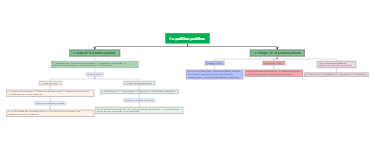
The introductory section of Policy Process Theory (edited by Sabatier) consists of "Chapter 1: In Search of a Better Theory" and "Chapter 2: A Staged Approach to the Policy Process: Where to Go," which explains the interactions involved in the policy process factors, the three concepts of policy analysis framework-theory-model and the relationship between them, the advantages and limitations of previous stage heuristics, and the eight policy frameworks and their discussion scope that will be introduced in this book.
Edited at 2024-04-10 21:01:53Avatar 3 centers on the Sully family, showcasing the internal rift caused by the sacrifice of their eldest son, and their alliance with other tribes on Pandora against the external conflict of the Ashbringers, who adhere to the philosophy of fire and are allied with humans. It explores the grand themes of family, faith, and survival.

This article discusses the Easter eggs and homages in Zootopia 2 that you may have discovered. The main content includes: character and archetype Easter eggs, cinematic universe crossover Easter eggs, animal ecology and behavior references, symbol and metaphor Easter eggs, social satire and brand allusions, and emotional storylines and sequel foreshadowing.
[Zootopia Character Relationship Chart] The idealistic rabbit police officer Judy and the cynical fox conman Nick form a charmingly contrasting duo, rising from street hustlers to become Zootopia police officers!
Avatar 3 centers on the Sully family, showcasing the internal rift caused by the sacrifice of their eldest son, and their alliance with other tribes on Pandora against the external conflict of the Ashbringers, who adhere to the philosophy of fire and are allied with humans. It explores the grand themes of family, faith, and survival.
This article discusses the Easter eggs and homages in Zootopia 2 that you may have discovered. The main content includes: character and archetype Easter eggs, cinematic universe crossover Easter eggs, animal ecology and behavior references, symbol and metaphor Easter eggs, social satire and brand allusions, and emotional storylines and sequel foreshadowing.
[Zootopia Character Relationship Chart] The idealistic rabbit police officer Judy and the cynical fox conman Nick form a charmingly contrasting duo, rising from street hustlers to become Zootopia police officers!
policy process theory
Chapter 1 Seeking a better theory
1 Simplification of a complex world
The policy process involves a complex set of interacting factors that develop over time
Numerous actors are involved in one or more aspects of policy, and their preferences differ
The policy process is greater than or equal to 10 years
There are dozens of different projects in a given policy area, involving different levels of government
The role of technical debate in legislative administration, litigation and the formation of administrative regulations
Most debates involve values/interests, money and the coercive power of authority
In most cases, the observation of social phenomena and things relies on a series of assumptions
intermediary function
Which factors play a more important role than those that are easily overlooked?
Define specific categories and group phenomena into different categories
Starting from different theoretical perspectives, analysts often observe different results (at least initially)
Two strategies for perfecting your analytical perspective
Common-sense approach: observing the world in an inherently specific way, using any taxonomies and assumptions acquired in practice
Easily troubled by internal discontinuities, ambiguities, false assumptions, and invalid statements
Unable to undergo detailed and careful inspection
Scientific method: logical assumptions are smaller, more important relationships that can explain puzzlingly complex phenomena
Data acquisition and analysis must be fully disclosed
Concepts and assumptions must be clear, maintain logical continuity, and produce propositions that can withstand practical testing
Hypotheses must be as general as possible
Methods and concepts are subject to criticism and evaluation by experts in the field
conceptual framework
A conceptual framework identifies a set of variables and the relationships between them that are hypothesized to explain a range of phenomena.
Able to provide something ranging from appropriate variables to something like a paradigm
No need to determine the direction of various relationships
theory
Provide a denser, more logically coherent set of relationships
Attach values to some of the variables, often showing how the relationship changes with the values of the important variables
Many theories can be aligned with the same conceptual framework
Model
Maturity for specific situations
narrower in scope
Be more precise in your assumptions
Ideally, the model can be quantified
The three can be conceptualized through the operation of continuous unified associations; The logical correlation and characteristics of the unified association are constantly increasing, and the scope is constantly shrinking.
Scientists should be able to use several different theoretical perspectives simultaneously
Multiple perspectives stimulate the development of different competing hypotheses, leading to strong "inferences"
Forces the analyst to be explicit about the differences between frameworks rather than making self-enclosed assumptions
Both knowledge and the use of multiple perspectives must gradually clarify the conditions for one perspective to be superior to another.
This book discusses seven conceptual frameworks, some of which gave rise to one and more theories, and which gave birth to multiple models designed to explain particular situations.
2 Theoretical framework of the policy process
stage elicitation framework
Divide the policy process into a series of stages
Agenda setting, policy construction and legitimation, policy implementation, evaluation
Analyze the influencing factors at each stage
Disadvantages
It is not a theory of causality in the true sense. Each stage is limited to internal research at that stage.
The sequence of stages is descriptively inaccurate
Legal and top-down bias exists
Focus on one important law rather than the implementation and evaluation of many small regulations in a given area
A single policy cycle that only focuses on one major law
Simplifying the diverse and interactive cycle involving numerous policy recommendations, laws and regulations at all levels of government
A more promising theoretical framework
Author selection criteria
Any framework must accurately conform to the criteria of a scientific theory
The concepts and assumptions of the framework must be relatively clear and internally consistent
Causal factors must be clearly defined
Must be able to generate hypotheses that can withstand testing
The framework must also maintain a fairly broad scope of applicability (e.g. applicable to most policy processes in different political systems)
Any framework must be conditional on a certain amount of recent conceptual development and/or practical testing
A group of active policy scholars must now consider it a viable approach to understanding the policy process
Any framework must be an actual theory designed to explain a large part of the policy process
Theoretical frameworks may contain explicit normative elements, but this is not required
Any framework must account for a wide range of influencing factors, such as conflicting values and interests, information flows, institutional arrangements, and diverse socioeconomic conditions.
These influencing factors are extremely important for traditional political scientists who stand in different perspectives on policy making.
Seven theoretical frameworks (the authors of each chapter are all big guys)
stage heuristic
Institutional Theoretical Choices
The most developed
Multivariate flow analysis framework
Discontinuity-equilibrium framework
Initially used to explain legislative changes, the scope of interpretation was later expanded.
Support alliance framework
Support interaction among alliances and share a common set of policy beliefs
Focus on explaining policy changes within the scope of an established political system or series of institutional arrangements
policy communication framework
Explain the reasons why many places adopt different approaches to policy innovation.
It is not only determined by the different characteristics of the political system, but also affected by the policy communication process.
The causal funnel framework and other frameworks for large-scale comparative research methods
Many frameworks to explain heterogeneity in policy performance across states and localities
Explain the differences among political systems
3 omitted frames
Some authors feel the prospects are relatively bleak for the framework
Incomplete (e.g. missing main categories of variables)
Not clear enough and cannot withstand examination
arena of rights
Propose three or four different sets of policy types and describe the corresponding process characteristics
In the early stages of formation, there were shortcomings such as vague concepts and lack of causal connections.
In recent years, few people have paid attention to
cultural theory
View policy as essentially governed by four distinct but universal ideologies: individualism, motivation theory, egalitarianism, and fatalism
Main concepts are unclear
The relationship with institutional arrangements and socio-economic conditions has not been developed as it should.
constructivist framework
Focus exclusively on policy issues and policy belief systems and/or “social constructions” of frames of reference
No link has been established with socio-economic conditions or institutions
Concepts have nothing to do with specific individuals
policy area framework
like a set of complex concepts that guide network analysis
Within a given policy area/policy subsystem, interested organizations develop ways of exchanging resources and seeking to influence policy matters.
More like an empirical version of institutional choice theory
Many concepts are difficult to understand (
The structure of this book
stage heuristic
institutional rational choice
Multi-source flow analysis framework
Discontinuity-equilibrium framework
Support alliance framework
Explanation of policy changes within the scope of an established political system or series of institutional arrangements
policy communication framework
A causal funnel framework for large-scale comparative research methods
Explain the differences between multiple political systems
Chapter 2 A staged approach to the policy process: where to go
The author focuses on a specific aspect of Lasswell's conception of policy science
Implementing many of his ideas for improving governance by improving the quality of information governments obtain
Focus on the policy process
Lasswell's (and others') policy framework can be examined to see whether it has become as stale as its critics charge
1 Knowledge in the policy process
The seven stages of the "decision-making process" proposed by Lasswell
intelligence
proposal
Regulation
legalization
application
termination
Evaluate
a process that he agrees with and is actually used by policy scientists
Founding
pre-evaluation
choose
implement
Evaluate
termination
A clear and continuous framework view of the policy process
Impact of decision-making process frameworks
A large number of scholars more or less refer to
Guided many scholars throughout the research process
relative strength
Policy science has rich new content
To detach research from its strict attachment to the study of public administration and institutions, increasingly in political science, and to the quasi-market research in favor of economics
Rationalization of the orientation perspective that facilitates a new problem
Enables policy process frameworks to explicitly cover social norms and personal values
There is a problem
Leads scholars to focus on one stage at a time and ignores the entire process
Does not fit into the life cycle of a given policy
Some linear relationship is suggested, but feedback or regression lines are difficult to characterize
2. Looking for a theory
Sabatier's Complaints about the Policy Process as a Unifying Problem for Policy Science
The stage model is not a true causal model
Stage models do not provide a clear basis for empirical hypothesis testing
The heuristic stage has the problem of loose description when constructing a series of stages.
Stage metaphors suffer from legalism and top-down focus
The stage metaphor approach inappropriately emphasizes policy cycles as temporary units of analysis
The stage metaphor method does not provide a good tool for integrating policy analysis and policy orientation research throughout the public policy process.
limitations of criticism
Reflects the intolerance of a certain empirical theory application
Ignores the existence of what Lasswell calls a core theory that helps integrate policy events
Lasswell et al. view the policy process as a device to help decompose different seamless networks of public policy processes.
Some other new concerns
The difference between dynamic and static policy principles
Triggering events and punctuated equilibria for policy initiatives
New project evaluation methods
Ignoring field research from a historical perspective
3 Consider everything
Sabatier and Jenkins-Smith predict that policy process frameworks will reduce research efforts
The authors believe that the framework will continue to serve as a valuable heuristic in policy research and project operations.
Brewer and DeLeon tend to view the policy process/stages heuristic as a basis for looking back to the past and looking cautiously into the future
Observations and classifications of actors and actions themselves help analyze and clarify established policies
The more radical iteration of policy research (a postpositivist theme) can also be incorporated into the policy process paradigm
A more pressing question is whether the policy process framework is conducive to promoting the development of policy science toward a series of policy-oriented theories.
Lasswell's maximization theorem
Unlike other methods, the existing methods will enable actors to adopt strategies that are more beneficial to themselves in action. This assumption focuses on the fact that actors can have their own understanding of the completion of open alternative behaviors in a given environment.
The theory relies on traditional economic reasoning, but in reality there are many examples where the dominance of economics does not prevail.
Overly biased towards understandable ambiguity, but not persuasive enough
Statements of standard precepts are unsatisfactory in a theory-building sense
For example, some policies are not strictly based on cost-benefit analysis
The large number of examples emphasizes the complexity of policy behavior, limiting the analysis to a limited perspective, thereby making it less effective and correspondingly increasing the value of policy process models.
Would policy sciences achieve better results if they adopted more of a systems analysis perspective (i.e. policy process models) as opposed to a general systems perspective, that is, if they tentatively accept policy stages/processes because of their limited value? framework and throw it away when bigger and better things happen
A general systems perspective may be viewed as a grand unified theory
Systems analysis attempts to answer questions about individual parts within a more rigorous overall context
In the case of policy processes, one may still not have a grasp of how the whole system works in terms of verifiable theory, but will have a better understanding of how to structure the agenda and how to present policy options
4 Conclusion
Before discarding a framework, you need to determine
It does have a place in the dustbin of abandoned paradigms
Can rely on a better, more dynamic framework
Even when we pursue theoretical problems, we do not have to consider operational problems. None of these criteria (or alternative models) fundamentally questions or even urges the abandonment of the policy stage framework.
Two additional questions for a policy process paradigm that cannot answer all questions
Regarding the issue of optional policy construction, have we excessively elevated the status of the policy stage framework?
The more central question is, what do we really ask it to provide? Is it a theory of some policy change or occurrence? But what about other phases of public policy—now neglected—perhaps? Moreover, if it is not ignored, as we certainly are not, at that time there was indeed insight into the operational process level, or as Lasswell observed that "better information leads to better government", it is to empty theory. An acceptable choice.