MindMap Gallery Histology Chapter 3 Connective Tissue
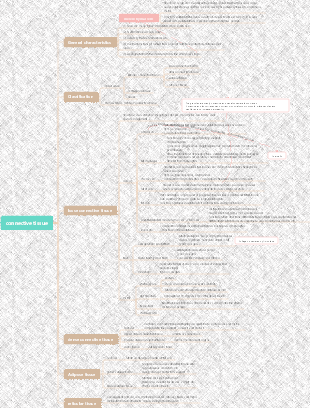
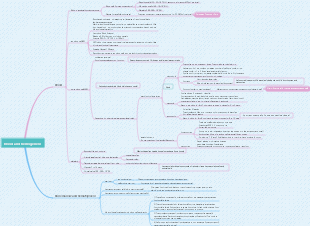
This is a mind map about connective tissue. Connective tissue is composed of cells and extracellular matrix. The cells in this tissue are non-polar and have the functions of connecting, supporting, protecting, storing nutrients, and transporting materials.
Edited at 2024-04-11 21:36:54Avatar 3 centers on the Sully family, showcasing the internal rift caused by the sacrifice of their eldest son, and their alliance with other tribes on Pandora against the external conflict of the Ashbringers, who adhere to the philosophy of fire and are allied with humans. It explores the grand themes of family, faith, and survival.

This article discusses the Easter eggs and homages in Zootopia 2 that you may have discovered. The main content includes: character and archetype Easter eggs, cinematic universe crossover Easter eggs, animal ecology and behavior references, symbol and metaphor Easter eggs, social satire and brand allusions, and emotional storylines and sequel foreshadowing.
[Zootopia Character Relationship Chart] The idealistic rabbit police officer Judy and the cynical fox conman Nick form a charmingly contrasting duo, rising from street hustlers to become Zootopia police officers!
Avatar 3 centers on the Sully family, showcasing the internal rift caused by the sacrifice of their eldest son, and their alliance with other tribes on Pandora against the external conflict of the Ashbringers, who adhere to the philosophy of fire and are allied with humans. It explores the grand themes of family, faith, and survival.
This article discusses the Easter eggs and homages in Zootopia 2 that you may have discovered. The main content includes: character and archetype Easter eggs, cinematic universe crossover Easter eggs, animal ecology and behavior references, symbol and metaphor Easter eggs, social satire and brand allusions, and emotional storylines and sequel foreshadowing.
[Zootopia Character Relationship Chart] The idealistic rabbit police officer Judy and the cynical fox conman Nick form a charmingly contrasting duo, rising from street hustlers to become Zootopia police officers!
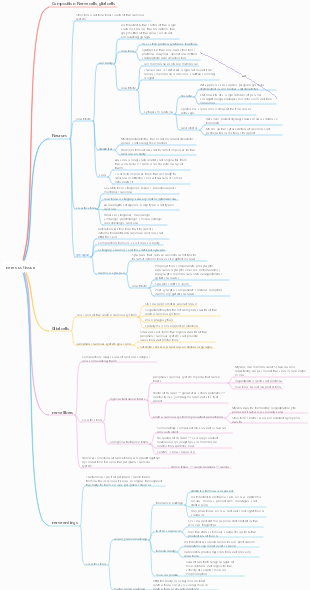
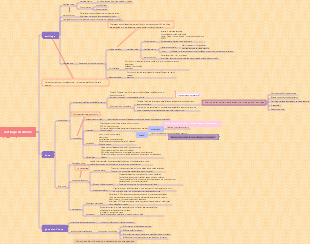
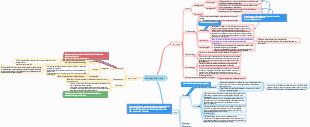
connective tissue
intrinsic connective tissue
loose connective tissue
cell
Fibroblasts
The largest and most important cells, often attached to collagen fibers
The cells of those with active functions are larger and have many processes; the nuclei are large, oval, light-colored, and have obvious nucleoli; the cytoplasm is rich and weakly basophilic.
The cells synthesize and secrete collagen and elastin and form an amorphous matrix
When in a resting state, they are called fiber cells. The cells are small, long spindle-shaped, with small and elongated nuclei, dark staining, and less eosinophilic cytoplasm.
Macrophages
A type of immune cell widely present in the body, derived from monocytes in the blood
Those with active functions often extend long pseudopods and have irregular shapes. The nuclei are small, round or renal, and deeply stained. The cytoplasm is rich, mostly eosinophilic, and may contain foreign particles and vacuoles.
When in a resting state, they are called tissue cells. When stimulated by chemokines, the cells are activated and move toward the site where the factors are released. This is chemotaxis.
immune response involved
Phagocytosis
specificity
There are recognition factors such as antibodies that recognize the adherent phagocytosed objects, and then macrophages specifically bind to the recognition factors, thus initiating the phagocytosis process.
non-specific
No need for the intermediary of recognition factors, direct adhesion and then phagocytosis
Antigen presentation
Macrophages phagocytose antigenic substances, and when decomposing them in the body, they retain the most characteristic molecular groups and combine them with their own MHC molecules to form an antigenic peptide-MHC molecule complex and present it to the cell surface. When T-lymphocytes Exposure to antigenic peptides activates the immune response mechanism
Secretory function
This cell can synthesize and secrete hundreds of biologically active substances
Plasma cells (effector B lymphocytes)
Mainly distributed in connective tissue or chronic inflammation sites of spleen, lymph nodes and mucous membranes
Oval or round, the nucleus is round or ovoid, mostly on one side, and there is a light staining area (LM) next to the nucleus; heterochromatin is often in the shape of thick strips, radiating from the center of the nucleus to the nuclear membrane. Distribution (wheel-shaped) (EM), abundant cytoplasm, basophilic
Synthesizes and secretes immunoglobulins (antibodies)
Mast cells
Hematopoietic progenitor cells derived from bone marrow are often distributed along small blood vessels and lymphatic vessels, and are more abundant in mucosal connective tissues.
The cells are larger, round or oval, with a small, round, central nucleus; the cytoplasm is filled with thick basophilic secretory granules, which can be stained purple by aldehyde-fuchsin.
Can initiate an inflammatory response against pathogens by releasing a variety of active substances: histamine, leukotrienes. These two substances can dilate local blood vessels, enhance permeability, increase tissue fluid leakage, and cause local edema; chemokines allow immune cells to enter connective tissue for sterilization
allergy
When mast cells come into contact with certain harmless substances for the second time, they undergo an immune response and release a large amount of granular content after being stimulated, which is called degranulation.
Urticaria can form; bronchial smooth muscles in the lungs spasm and mucus secretion increases, causing asthma; small arteries throughout the body dilate, blood pressure drops sharply, and then shock
fat cells
The cell body is large, spherical or polygonal; it contains a large lipid droplet that squeezes the rest of the cytoplasm and nucleus to the cell periphery.
In HE-stained specimens, lipid droplets are dissolved and cells appear vacuolated.
Can synthesize and store fat and participate in lipid metabolism
undifferentiated mesenchymal cells
Stem cells, mostly distributed around small blood vessels, resemble fibroblasts in shape
It can proliferate in large quantities during inflammation and wound repair, and can differentiate into fibroblasts, etc.
leukocyte
fiber
Collagen fiber (white fiber)
Eosinophilic in HE stained sections, usually present in bundles
The biochemical component is type I collagen.
Collagen is secreted by fibroblasts, polymerizes with extracellular cells to form collagen fibrils, and then forms collagen fibers with a small amount of adhesive.
High toughness and strong tensile strength
Elastic fiber (yellow fiber)
It is light red in HE-stained sections and purple in aldehyde-fuchsin staining.
Contains less collagen fibers, but is widely distributed
The core is composed of homogeneous amorphous elastin and the periphery is covered with microfibrils
Elastin molecules are extensively cross-linked by covalent bonds to form a network that can be bent at will; strong sunlight can break the elastic fibers in the skin, causing wrinkles on the skin.
Reticular fibers (argyrophilic fibers)
Mainly composed of type III collagen
It appears light red in HE stained sections and black in silver stained sections.
Mainly distributed in reticular tissue, reticular plate of basement membrane, acini, and around capillaries
matrix
Proteoglycans (Proteoglycans)
Polymers formed by covalent bonds between aminoglycans and proteins
Hyaluronic acid among the non-sulfated aminoglycans forms the backbone of proteoglycans
A large number of proteoglycan aggregates form a molecular sieve with many micropores, which only allows small molecules of nutrients to pass through, while large molecules and bacteria cannot pass through, forming a barrier that limits the spread of harmful substances.
Hemolytic streptococci and cancer cells can produce hyaluronidase, which can destroy the matrix structure and therefore can spread and metastasize.
fibronectin
The main adhesive glycoprotein of connective tissue matrix
There are binding sites for a variety of cells, collagen, and proteoglycans on the surface, forming an integrated collagen fiber network structure, thus affecting cell adhesion, migration, tumor metastasis, embryonic development, growth, and differentiation.
tissue fluid
Water-soluble small molecules penetrate into the matrix from the blood vessel wall at the arterial end of the capillary to form tissue fluid; most of it returns to the blood from the venous end of the capillary, and a small part enters the lymphatic capillary to form lymph, and finally returns to the blood
Tissue fluid is dynamically updated
dense connective tissue
regular dense connective tissue
Mainly composed of tendons, aponeurosis and most ligaments, attaching skeletal muscles to bones
A large number of dense collagen fibers are gathered into bundles, arranged in parallel along the direction of stress, and have strong resistance to pulling.
Irregular dense connective tissue
Mainly constitutes the dermis, dura mater and membranes of most organs
There are thick collagen fiber bundles forming a dense three-dimensional network structure that resists stress from different directions.
elastic tissue
Dense connective tissue dominated by elastic fibers
Thick elastic fibers arranged in parallel bundles
ligamentum flavum, nuchal ligament, vocal cords, suspensory ligament of penis
Adipose tissue
Yellow (single-vesicle) adipose tissue
Mainly distributed in the subcutaneous, omentum and mesangium, it is the largest energy storage bank in the body.
It can secrete leptin, suppress appetite by stimulating the activity of the hypothalamus, and participate in mediating the formation of new fat.
Brown (vesicular) adipose tissue
There are abundant capillaries in the tissue. The fat cells are small and dispersed with lipid droplets of different sizes. The mitochondria are large and abundant.
There are very few adults, and more newborns and hibernating animals; under cold stimulation, intracellular lipid droplets oxidize and decompose, generating a large amount of heat energy
reticular tissue
Mainly distributed in hematopoietic tissues such as bone marrow, spleen, lymph nodes, etc., composed of reticular cells and reticular fibers
Reticular cells are star-shaped cells with protrusions, and the protrusions of adjacent cells are connected to form a network; the nuclei are large, round or oval, lightly colored, and often have 1-2 nucleoli.
In the body, reticular tissue does not exist alone, but forms a scaffold for hematopoietic tissue and lymphoid tissue. Cells and liquids in the mesh flow freely, providing a suitable microenvironment for hematopoiesis and lymphocyte development.
Evolved from mesenchyme; mesenchymal cells are star-shaped, with processes interconnecting the cells to form a network, with large, oval nuclei and obvious nucleoli; the cytoplasm is weakly basophilic
Mesenchymal cells have a low degree of differentiation and strong proliferation and differentiation capabilities. They are pluripotent stem cells.
It is composed of cells and extracellular matrix, and the cells in this tissue are non-polar and have the functions of connecting, supporting, protecting, storing nutrients, and transporting materials.