MindMap Gallery Structure of matter and periodic table of elements (chemistry)
Structure of Matter and the Periodic Table of Elements (Chemistry), through this brain map summary, we can gain a deeper understanding of the properties and behavior of elements, predict the role of elements in chemical reactions, and develop new materials and compounds.
Edited at 2024-02-15 23:51:04Avatar 3 centers on the Sully family, showcasing the internal rift caused by the sacrifice of their eldest son, and their alliance with other tribes on Pandora against the external conflict of the Ashbringers, who adhere to the philosophy of fire and are allied with humans. It explores the grand themes of family, faith, and survival.
This article discusses the Easter eggs and homages in Zootopia 2 that you may have discovered. The main content includes: character and archetype Easter eggs, cinematic universe crossover Easter eggs, animal ecology and behavior references, symbol and metaphor Easter eggs, social satire and brand allusions, and emotional storylines and sequel foreshadowing.
[Zootopia Character Relationship Chart] The idealistic rabbit police officer Judy and the cynical fox conman Nick form a charmingly contrasting duo, rising from street hustlers to become Zootopia police officers!
Avatar 3 centers on the Sully family, showcasing the internal rift caused by the sacrifice of their eldest son, and their alliance with other tribes on Pandora against the external conflict of the Ashbringers, who adhere to the philosophy of fire and are allied with humans. It explores the grand themes of family, faith, and survival.
This article discusses the Easter eggs and homages in Zootopia 2 that you may have discovered. The main content includes: character and archetype Easter eggs, cinematic universe crossover Easter eggs, animal ecology and behavior references, symbol and metaphor Easter eggs, social satire and brand allusions, and emotional storylines and sequel foreshadowing.
[Zootopia Character Relationship Chart] The idealistic rabbit police officer Judy and the cynical fox conman Nick form a charmingly contrasting duo, rising from street hustlers to become Zootopia police officers!
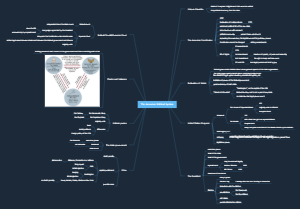
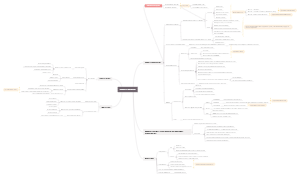
Structure of matter and periodic table of elements
Atomic structure and the forces between particles
Atomic composition
Atomic composition and quantitative relationship between particles
Mass number (A) = number of protons (Z) number of neutrons (N)
Number of protons = atomic number = number of nuclear charges = number of electrons outside the nucleus
The arrangement rules and applications of foreign electrons
The arrangement of electrons outside the nucleus
Energy law: from near to far from the nucleus, from low to high energy
Quantity rule: Each layer can accommodate up to 2 electrons, and the outermost layer does not exceed 8 (when there is only one layer, no more than 2)
Energy layer symbols: K, L, M, N, O, P, Q...
elements, nuclides, isotopes
Element: a general name for atoms of the same type with the same number of protons
Nuclide: An atom with a certain number of protons and a certain number of neutrons
Isotopes: different atoms of the same element with the same number of protons but different numbers of neutrons
Allotropes: Same element symbol but different molecular formula
Note
Isotopes have different numbers of neutrons, the same number of protons, and the same number of electrons in their outermost shell, but have the same chemical properties.
Different nuclides may have the same number of protons, the same number of neutrons, or the same mass number
There are as many atoms as there are nuclides in an element
An element can have multiple nuclides or only one nuclide
forces between particles
Chengjian particles
Ionic bond: a chemical bond formed by electrostatic interaction between anions and cations (whether there are anions and cations in the compound)
covalent bond
A chemical bond formed by sharing electron pairs between atoms (atoms have different abilities to attract electrons, so the electron pairs are offset)
The same non-metal atoms have the same electronegativity and the electron pairs do not shift - non-polar covalent bond
Different non-metal atoms have different electronegativities, and electron pairs tend to attract atoms with strong electron ability (strong electronegativity) - polar covalent bonds
There must be breaking and forming of chemical bonds in chemical changes
Representation methods of various symbols and models
subtopic
Intermolecular force: The greater the intermolecular force, the higher the melting and boiling points.
hydrogen bond
Hydrogen bonds can be formed between N, O, and H atoms and H atoms
Physical properties: Melting and boiling point, solubility, volume expansion and density decrease when water freezes
One water molecule can form four hydrogen bonds, each hydrogen bond is shared by two water molecules
display method
electronic writing
Atom: Arrange all the outermost electrons of the atom around the element symbol
Metal cations: ion symbol
Non-metal anions: Mark the obtained electrons around the element symbol, surround the symbol with [ ], and mark the number of charges in the upper right corner
Covalent compound (element): When writing, write the shared electron pair between the two atoms, and the unbonded electrons of each atom should also be written.
Ionic compounds: Write the electronic formulas of anion and cation respectively.
Structural formula: Draw a pair of shared electrons as a short line "—"
The structure of 8 electrons outside the nucleus in Madman
|Valence| Number of electrons in the outermost shell of an atom = 8
Diatomic element: number of electrons in the outermost shell of the atom, chemical health number = 8
Periodic table of elements and periodic law
periodic table of elements
law
Relationship between the atomic number differences of main group elements in the same period
The difference in atomic numbers of short-period elements = the difference in group numbers
When two elements are distributed on the same side of the transition element, the difference in atomic number = the difference in group number When the oxygen element is distributed on both sides of the transition element, the difference in atomic number of the elements in the fourth or fifth period = the difference in group number 10, and the difference in atomic number of the elements in the sixth and seventh periods = the difference in group number 24
The difference in atomic number between Group IIA and Group III in the fourth and fifth periods is 11, and in the sixth and seventh periods it is 25
Differences in atomic numbers between elements in the same main group and adjacent periods
For Group IA elements, as the electron shell increases, the atomic numbers differ by 2, 8, 8, 18, 18, and 32.
For elements in Group IIA and Group 0, as the number of electron shells increases, the atomic numbers differ by 8, 8, 18, 18, and 32.
For elements in groups IIIA to VII, as the number of electron shells increases, the atomic numbers gradually change from 8, 18, 18, 32, and 32.
describe
Cycle ___, family ___
Inference method
contrast method
Noble gas atomic numbers (helium, neon, argon, krypton, xenon, radon, Og)
If there are 1 or 2 more adjacent rare gases, it should be in the IA and IIA of the next cycle.
If the number of adjacent rare gases is 1 to 5, it is because they are in groups IIIA to VIIA of the same period.
If you know the sum of the number of electrons in the outermost shell, you can use the average method
periodic law of elements
Valence rules and applications
Chemicals in the same main group have the same valence, and the highest positive valence = group number
Particle radius comparison
Same element
r (anion)>r (atom)>r (cation)
r (low-valent cation) > r (high-valent cation)
Particles of different elements
Same cycle
The greater the atomic number, the smaller the corresponding atomic radius of the element and the ionic radius with the same charge.
r (anion)>r (cation)
Same main group: from top to bottom, the corresponding atomic radius and ionic radius gradually increase
Different particles with the same atomic structure: the greater the nuclear charge, the smaller the ionic radius
Particles with different nuclear charges, electron shells, and electron numbers (select a reference particle for comparison)
metallic non-metallic
Metallicity
The more easily an atom loses electrons, the stronger its metallicity (it has nothing to do with the number of electrons lost by the atom)
In the metal activity sequence table, the higher the position of the metal, the stronger the metallicity.
The more violent the reaction between the element and water or non-oxidizing acid, the stronger the metallicity.
The stronger the elemental reducing property or the weaker the cationic oxidizing property, the stronger the metallicity.
The stronger the alkalinity of the hydrate corresponding to the highest valence oxide, the stronger the metallicity.
The position of an element in the periodic table: Elements to the left or below are more metallic
Non-metallic
The easier it is for an atom to obtain electrons, the stronger its non-metallic property (it has nothing to do with the number of electrons obtained by the atom)
The easier it is to combine with H, the more stable the gaseous hydride is and the stronger its non-metallic property.
The stronger the oxidizing property of the element or the weaker the reducing property of the anion, the stronger the non-metallic property.
The stronger the acidity of the hydrate corresponding to the highest valence oxide, the stronger the non-metallic property.
The position of an element in the periodic table: Elements to the right or above are more non-metallic
application
Similarity: refers to the similarity in the properties of elements, elements, and their compounds (shown in the same family)
Gradient nature: refers to a property that gradually changes (gradually increases or decreases). Gradient properties in the periodic table refer to the increasing or decreasing changes in the properties of elements, elements, and their compounds as their atomic numbers increase. [Gradient properties can appear in the same family or in the same cycle. In the main group in the middle of the periodic table, there are very few similarities in chemical properties (similarity is only shown in the highest positive valence), but the gradient is very obvious. 】
cyclical
A property in which regular changes can occur over and over again
Periodicity is an irregular periodicity, which includes not only regularity and repetition, but also variability and particularity.
in conclusion
Semiconductor elements are near the dividing line between metals and non-metals
Commonly used elements in pesticides are in the upper right corner of the periodic table
Catalysts and high-temperature and corrosion-resistant alloy materials are mainly among the transition elements
Diagonal rule: In Groups IA to IVA of the second and third periods of the periodic table, the two elements in the upper left and lower right have similar properties.
nuclear neutral molecule
"10 Electronic Structure" Particles
"18 electron structure" particles
information
structural information
Number of protons in an atom = Number of nuclear charges = Number of electrons outside the nucleus = Atomic number
The number of electron shells = period number; the number of electrons in the outermost shell = group number
Ion charge number
Gradient changes in the radius of particles with the same period and the same main group
property information
Gradient rules and similarities of metallic and non-metallic properties of elements
Oxidizing and reducing properties of C, N, O, S, Cl, Na, Al and other elements and their compounds
Physical properties of common substances
Position information: the position of the first 20 elements