MindMap Gallery The formation, development and consolidation of a unified multi-ethnic country in ancient Chinese history
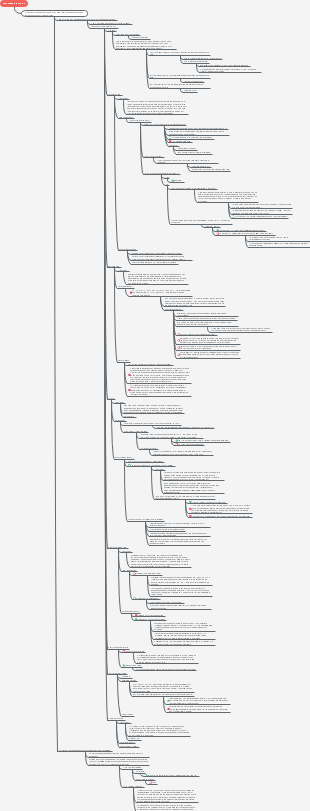
The formation, development and consolidation of a unified multi-ethnic country in ancient Chinese history is a long and complex process. In this process, the close ties and friendly exchanges between people of all ethnic groups in politics, economy, and culture, jointly building the motherland, and jointly opposing class oppression and foreign aggression are the main contents of China's ethnic relations.
Edited at 2024-01-30 14:34:14Discover how Aeon can navigate the competitive online landscape with a strategic SWOT analysis. This comprehensive overview highlights Aeon’s strengths, such as its strong brand recognition, omnichannel capabilities, and customer loyalty programs, alongside its weaknesses, including digital maturity gaps and cost structure challenges. Opportunities for growth include enhancing e-commerce competitiveness and leveraging data-driven strategies, while threats from online-first players and market dynamics require attention. Explore how Aeon can strengthen its market position through innovation and customer-centric approaches in the ever-evolving retail environment.
Discover how Aeon effectively tailors its offerings to meet the diverse needs of family-oriented consumers through a comprehensive Segmentation, Targeting, and Positioning (STP) analysis. Our approach begins with demographic segmentation, examining family life stages, household sizes, income levels, and parent age bands to identify distinct consumer groups. Geographic segmentation highlights store catchment types and community characteristics, while psychographic segmentation delves into family values and lifestyle orientations. Behavioral segmentation focuses on shopping missions, price sensitivity, and channel preferences. Finally, needs-based segmentation reveals core family needs related to value and budget considerations. Join us as we explore these insights to enhance family shopping experiences at Aeon.
Discover the dynamics of sneaker transactions with our Kream Sneaker Consumption Scene Analysis Template. This comprehensive framework aims to visualize the purchasing and consumption journeys of sneakers, identifying key demand drivers and obstacles. It covers user behavior within Kream and external influences, targeting various sneaker categories over specific timeframes and regions. The analysis defines user segments, including collectors, resellers, sneakerheads, casual trend followers, and gift purchasers, each with unique values and KPIs. It outlines the consumption journey from awareness to resale, highlighting critical touchpoints such as search, purchase, inspection, and sharing experiences. Key performance indicators are established to measure engagement and satisfaction throughout the process. Join us in exploring the intricate world of sneaker trading!
Discover how Aeon can navigate the competitive online landscape with a strategic SWOT analysis. This comprehensive overview highlights Aeon’s strengths, such as its strong brand recognition, omnichannel capabilities, and customer loyalty programs, alongside its weaknesses, including digital maturity gaps and cost structure challenges. Opportunities for growth include enhancing e-commerce competitiveness and leveraging data-driven strategies, while threats from online-first players and market dynamics require attention. Explore how Aeon can strengthen its market position through innovation and customer-centric approaches in the ever-evolving retail environment.
Discover how Aeon effectively tailors its offerings to meet the diverse needs of family-oriented consumers through a comprehensive Segmentation, Targeting, and Positioning (STP) analysis. Our approach begins with demographic segmentation, examining family life stages, household sizes, income levels, and parent age bands to identify distinct consumer groups. Geographic segmentation highlights store catchment types and community characteristics, while psychographic segmentation delves into family values and lifestyle orientations. Behavioral segmentation focuses on shopping missions, price sensitivity, and channel preferences. Finally, needs-based segmentation reveals core family needs related to value and budget considerations. Join us as we explore these insights to enhance family shopping experiences at Aeon.
Discover the dynamics of sneaker transactions with our Kream Sneaker Consumption Scene Analysis Template. This comprehensive framework aims to visualize the purchasing and consumption journeys of sneakers, identifying key demand drivers and obstacles. It covers user behavior within Kream and external influences, targeting various sneaker categories over specific timeframes and regions. The analysis defines user segments, including collectors, resellers, sneakerheads, casual trend followers, and gift purchasers, each with unique values and KPIs. It outlines the consumption journey from awareness to resale, highlighting critical touchpoints such as search, purchase, inspection, and sharing experiences. Key performance indicators are established to measure engagement and satisfaction throughout the process. Join us in exploring the intricate world of sneaker trading!
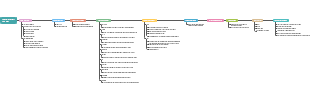
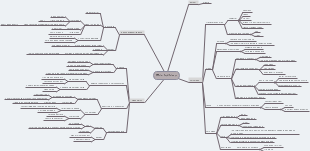
ancient Chinese history to unify a multi-ethnic country Form, develop and consolidate
early states
paleolithic age
Yuanmou native, Beijinger
Neolithic
Yellow River: Yangshao, Dawenkou, Longshan Yangtze River: Hemudu, Liangzhu Liaohe: Hongshan
The ancestors of China: Emperor Yan, Emperor Huang
Xia, Shang and Western Zhou
Yu, Xia Dynasty, the earliest slave state wide-area royal state
Tang, Shang Dynasty, the earliest written history of China
King Wu of Zhou, Western Zhou, feudal system and patriarchal system
Spring and Autumn Period and Warring States Period
Hegemony and merger war
"Chinese" ethnic blending
Economy: Iron farm tools, cattle plowing
A hundred schools of thought contend
Qin
Shang Yang’s Reform laid the foundation
Autocratic monarchy: Three Gongs and Nine Ministers Centralization of power: county system Unify weights and measures
Burning books and harassing Confucians, social conflicts The first great peasant uprising
Western Han Dynasty
Recuperation policy, "Government of Wenjing"
Issued the "Order of Promoting Favor", inspected the promotion system, and respected Confucianism Minting power was returned to the central government, salt and iron were government-run, and prices were stabilized
Attack the Xiongnu in the north (Wei Qing, Huo Qubing), Protectorate of the Western Regions Zhang Qian’s departure from the Western Regions, the “Silk Road”
Eastern Han Dynasty
The alternation of power between relatives and eunuchs
"Book of Han" and "Shen Nong's Materia Medica" Cai Lun improved papermaking technology
Western Han Dynasty: "Historical Records" and "Huang Tui Jing"
Three Kingdoms, Two Jins, Southern and Northern Dynasties
The imperial power weakened and the gentry became a dictatorship
Northern Wei Emperor Xiaowen's reforms (ethnic blending)
Nine-grade Zhongzheng system
"Pictures of Proverbs of Female History" and "Pictures of Luo Shen Fu"
Sui and Tang Dynasties
Sui Dynasty: Imperial Examination System, Grand Canal
"The Rule of Zhenguan" and "The Prosperous Age of Kaiyuan" Three provinces and six ministries system, district and city system, two tax laws Princess Wencheng enters Tibet and nationalities blend together
Sent envoys from the Tang Dynasty, Jianzhen traveled eastward, Xuanzang traveled westward
Jiedushi, Anshi Rebellion, Huangchao Uprising, Five Dynasties and Ten Kingdoms
Song
Northern Song Dynasty: Two-prefecture and three-division system, advocating literature and restraining martial arts, Wang Anshi's reform Chanyuan Alliance, Qingli Peace Conference Confucian revival movement, "Cheng-Zhu Neo-Confucianism", Ci
Southern Song Dynasty: Yue Fei resisted the Jin Dynasty, Shaoxing Peace Negotiation Economic center moved southward completed
Agriculture, porcelain making, mining and metallurgy developed, and the paper currency "Jiaozi" appeared Overseas trade is prosperous and there are entertainment venues
Liao Xia Jin Yuan
Yuan: Provincial system, intertwined Qu, vernacular novels, landscape paintings
Liao: south, north official Xixia: Yuan Hao of the Dangxiang Clan Gold: "Meng An Mo Ke"
bright
Abolition of the prime minister, direct control of the six ministries, establishment of a cabinet, Dongchang, and Jinyiwei
Zheng He's voyages to the West (to promote the country's prestige), Qi Jiguang's resistance to the Japanese, and Li Zicheng's uprising
Economic crops increased, handicraft industry developed, business gangs,
"Water Margin", "Three Kingdoms" and "Journey to the West"
"Compendium of Materia Medica", "Compendium of Agriculture", "Tiangong Kaiwu"
clear
Memorial system, establishment of military aircraft department
Eight-part essay to recruit scholars, literary prison
Zheng Chenggong recovered Taiwan in 1662 and established a government in 1683 Close-door policy, Guangzhou Thirteenth Bank
"Treaty of Nerchinsk", the Great and Small Hezhuo Rebellion, General Ili "Dalai Lama, Panchen Erdeni", Minister in Tibet
"The Scholars", "A Dream of Red Mansions", Kun Opera, Peking Opera