MindMap Gallery Management Chapter 1 General Introduction
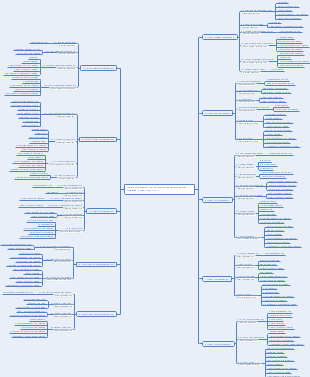
University management mind map, which can be clearly understood, comes with knowledge points, preview before class, review after class, and sorting out before the exam. I hope it will be helpful to you!
Edited at 2024-01-28 19:17:59Avatar 3 centers on the Sully family, showcasing the internal rift caused by the sacrifice of their eldest son, and their alliance with other tribes on Pandora against the external conflict of the Ashbringers, who adhere to the philosophy of fire and are allied with humans. It explores the grand themes of family, faith, and survival.
This article discusses the Easter eggs and homages in Zootopia 2 that you may have discovered. The main content includes: character and archetype Easter eggs, cinematic universe crossover Easter eggs, animal ecology and behavior references, symbol and metaphor Easter eggs, social satire and brand allusions, and emotional storylines and sequel foreshadowing.
[Zootopia Character Relationship Chart] The idealistic rabbit police officer Judy and the cynical fox conman Nick form a charmingly contrasting duo, rising from street hustlers to become Zootopia police officers!
Avatar 3 centers on the Sully family, showcasing the internal rift caused by the sacrifice of their eldest son, and their alliance with other tribes on Pandora against the external conflict of the Ashbringers, who adhere to the philosophy of fire and are allied with humans. It explores the grand themes of family, faith, and survival.
This article discusses the Easter eggs and homages in Zootopia 2 that you may have discovered. The main content includes: character and archetype Easter eggs, cinematic universe crossover Easter eggs, animal ecology and behavior references, symbol and metaphor Easter eggs, social satire and brand allusions, and emotional storylines and sequel foreshadowing.
[Zootopia Character Relationship Chart] The idealistic rabbit police officer Judy and the cynical fox conman Nick form a charmingly contrasting duo, rising from street hustlers to become Zootopia police officers!
management
Chapter 1 General Introduction
Chapter 1 Introduction to Management
Section 1 The connotation and essence of management
1. Organization and management
organize
1. The concept of organization An organization refers to a collection of people who work together to achieve a common goal.
2. Characteristics of an organization: Two or more members; independent existence; clear goals; special activities.
manage
2. Elements of management
Carrier: organization
Purpose: To effectively achieve organizational goals
Functions: Decision-making, planning, organizing, leadership, control, innovation
Subject: Manager
Object: All resources that can be mobilized, people are the main objects 2.
decision making
Decision making (plan first)
Decision-making is when an organization chooses a more reasonable plan among many possible future actions.
Managers first need to study the internal and external context of the organization's activities. Detailed analysis of what specific actions need to be taken to achieve the decision-making goals, and what specific requirements these actions place on the work of various departments and links of the organization in various periods in the future.
organize
Organization: is the process of assigning tasks, allocating resources, arranging and coordinating the activities of individuals and groups to achieve plans
lead
Leadership refers to the process of management activities that uses the power given by the organization and one's own abilities to direct and influence subordinates to work hard to achieve organizational goals.
control
Control is a series of work carried out to ensure that the organizational system operates according to predetermined requirements, including inspecting and supervising the work of each department and link according to pre-established standards, and judging whether the work results are consistent with the target requirements.
innovation
Continuous changes inside and outside the organization require continuous changes in the organization's internal activity technologies and methods, continuous optimization of organizational activities and personnel arrangements, and even the direction, content, and form selection of organizational activities need to be constantly adjusted. These changes, optimizations and adjustments are achieved through the innovation function of management.
3.The nature of management
Management is the management of people or their behavior
The essence of management is to coordinate human behavior
The science and art of management
Natural and social attributes of management
Section 2 Basic Principles and Methods of Management
1. Basic principles of management
(1) Humanistic Principle People are the center of the organization and the center of management. The humanistic principle should be the primary principle of management.
The people-centered humanistic principle requires that the management of organizational activities is both "management by people" and management for people.
Rely on people management Organizational managers participate in management Pay attention to the humanization of management.
For the management of people The purpose of management is to enable the organization to better meet the requirements of its service recipients All members of the organization share in the improvement of organizational results promoted by management
2. System principle
Although artificial, open, and dynamic social and economic organization systems exist in many forms, they generally have the following common characteristics: integrity, correlation, orderliness, and interaction with the external environment.
According to the perspective of systems theory, we should pay attention to the following aspects when organizing management activities: 1. Every problem to be dealt with by management activities is a problem in the system. 2. Management must have a hierarchical perspective. 3. Management work must have a development perspective.
three. benefit principle
Four. principle of moderation
2. Basic methods of management
Basic tools for management
1. Power: Managers need to use power to directly regulate the behaviors that managers must perform in the organization and to track and control them.
manager's power
Composition, nature, role, basis, scope of application
Dominance orders must be obeyed to work needs and managers within the scope of work responsibilities
The power to force subordinates to perform their duties through threats and fear of coercion
Reward rights rewards induce extra work exchange principle
2. Organizational culture
work overtime
Managers need to use organizational culture to guide organizational members’ behavioral choices in different time and space during their participation in organizational activities.
The core of organizational culture is the values generally recognized and accepted by organizational members and the behavioral norms determined by such values.
Once an organizational culture is formed, its impact on the behavior of organizational members will be sustained, pervasive, and low-cost. As a low-cost management tool, culture works unconsciously.
Section 3 The historical background of management activities
one. Informatization
two·. globalization
three. Marketization
Chapter 2 Historical Evolution of Management Theory
Classical management theory Basic point of view: The effectiveness of management does not only depend on the manager's personal experience, but also on the basis of scientific methods to manage activities and organize representatives: Taylor-scientific management theory -General Management Theory Fayol-- Weber's theory of bureaucratic organization (Administrative Organization Theory
Section 1 Scientific Management Theory
Taylor experiment:
The main idea of Taylorism
Fundamental purpose: improve labor productivity
Leading idea: Replace traditional experience management with scientific management methods
subtopic
Scientific Work Quota 1 - Study of Working Hours and Movements Standardization 1 - Study of Working Hours and Movements
principles of scientific management
Ability is suitable for the job - select first-class workers, differential piece rate wages - incentives
Separation of planning and execution functions
Implement the functional foreman system
Management by exception - decentralization
subtopic
Comments on Taylorism
contribute
Taylor introduced science into the field of management and created a set of specific management methods, which greatly improved production efficiency and laid the foundation for the systematic formation of management theory.
insufficient
treating people as homo economicus;
Attach importance to technology and despise crowd society
Only focus on efficiency and limit grassroots management
Fayol experiment
Evaluation of Fayol’s Thoughts
contribute
It is more systematic and theoretical, attaches great importance to the study of organizational theory, creates the field of organizational research, and forms general management theory; the management principles proposed are still generally correct after years of research and practice.
Management principles are inflexible and sometimes actual management workers cannot fully comply with them
limitation
still regard man as homo economicus
Ignore the impact of external environment on management
Weber's management thought
The main points of Weber's management thought
01 Bureaucratic organization
Rules for the establishment and operation of hierarchical organizations
Assign daily activities as formal responsibilities
authorized and strictly limited by some coercive means over which officials can control
Methods for exercising corresponding powers in the normal and continuing performance of duties are stipulated: Only persons who meet the conditions in accordance with general provisions are employed
02 Type of power
traditional power
charismatic power
legal power
The basis of bureaucratic organization