MindMap Gallery World History 33 - The Origins of British Capitalism
The origins of British capitalism are part of the origins of capitalism in Western Europe. The origin of capitalism in Western Europe marked the entry into the modern stage of world history, followed by a new era of capitalism.
Edited at 2024-01-27 19:07:57Avatar 3 centers on the Sully family, showcasing the internal rift caused by the sacrifice of their eldest son, and their alliance with other tribes on Pandora against the external conflict of the Ashbringers, who adhere to the philosophy of fire and are allied with humans. It explores the grand themes of family, faith, and survival.

This article discusses the Easter eggs and homages in Zootopia 2 that you may have discovered. The main content includes: character and archetype Easter eggs, cinematic universe crossover Easter eggs, animal ecology and behavior references, symbol and metaphor Easter eggs, social satire and brand allusions, and emotional storylines and sequel foreshadowing.
[Zootopia Character Relationship Chart] The idealistic rabbit police officer Judy and the cynical fox conman Nick form a charmingly contrasting duo, rising from street hustlers to become Zootopia police officers!
Avatar 3 centers on the Sully family, showcasing the internal rift caused by the sacrifice of their eldest son, and their alliance with other tribes on Pandora against the external conflict of the Ashbringers, who adhere to the philosophy of fire and are allied with humans. It explores the grand themes of family, faith, and survival.
This article discusses the Easter eggs and homages in Zootopia 2 that you may have discovered. The main content includes: character and archetype Easter eggs, cinematic universe crossover Easter eggs, animal ecology and behavior references, symbol and metaphor Easter eggs, social satire and brand allusions, and emotional storylines and sequel foreshadowing.
[Zootopia Character Relationship Chart] The idealistic rabbit police officer Judy and the cynical fox conman Nick form a charmingly contrasting duo, rising from street hustlers to become Zootopia police officers!
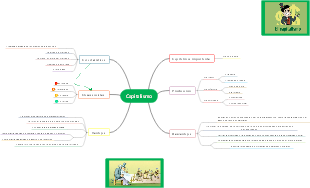
World History 33 - The Origins of British Capitalism
1. Enclosure movement
From the late 15th century to the early 19th century, the enclosure movement took place in England.
The British sheep industry developed rapidly from the late 13th century, and wool was mainly exported. In the 15th century, the export of woolen goods increased significantly, and the substantial development of the wool industry became the most direct factor stimulating enclosure. In the 1570s, enclosures occurred in 35 of the 40 counties in England.
The enclosure movement developed rapidly, driving thousands of farmers from their own land and homes, turning them into homeless vagrants, beggars, and wage laborers. In Marx's words, it is to separate the direct producers from the means of production.
2. Bloody legislation
The British government, controlled by the property owners and wealthy people, used a series of bloody legislation to suppress and exploit the deprived in order to protect social stability and the vested interests of the property owners. Marx made a profound analysis and criticism of this in "Das Kapital".
The laws of 1530 and 1536 stipulated that all vagrants capable of working should be arrested and whipped, or tied to the back of a carriage, whipped until they bleed, and then made to swear an oath to work and sent back to their hometowns. Anyone who disobeys the law for the second time will be whipped and have half of his ear cut off. The third offender shall be punished by death.
The 1547 decree stipulates that if a wanderer cannot find a job within a month, once someone reports him, he will be sentenced to be the slave of the whistleblower, and the owner has the right to force him to work with chains and whips. If such a slave escapes for more than 14 days, he will be sentenced to life-long slavery and the S mark will be branded on his forehead or back. The master has the right to sell or transfer him. A slave who escapes three times will be executed. If a homeless man did not work for three days in a row, he would be sent back to his hometown, branded with a V mark on his chest, and tied with a chain to serve.
In 1563, the British government's "Legislation Concerning Artisans, Workmen, Agricultural Servants and Apprentices of All Trades" stipulated that all the above-mentioned people, according to this legislation, must be compulsorily employed by any farmer and engage in agricultural labor for one year. Any servant who leaves without this certificate will be arrested and imprisoned or whipped.
It is said that during the reign of King Henry VIII of England alone, more than 70,000 landless peasants were executed. At that time, the total population of the UK was only around 4 million.
This is a shameful page in British history. It reflects the most ugly side of the primitive accumulation of capital in the UK. It is the same as the accumulation of British and European capitalism abroad, that is, the colonial plunder of the bourgeoisie in America, Africa, and Asia. It was a bloody storm.
The land enclosure movement, which was based on depriving farmers of their means of production, laid the foundation for the establishment of modern capitalist large-scale agriculture and large-scale animal husbandry.
3. Capitalism
The so-called large-scale capitalist agriculture and large-scale animal husbandry means that agricultural capitalists occupy land and other means of production, hire workers, and carry out large-scale, market-oriented, corporate agricultural and animal husbandry operations. It is the relationship between capitalists and wage workers, the early bourgeoisie and the proletariat.
In the sixteenth century, a large number of large farms and pastures had appeared in England. By the mid-sixteenth century, in some areas about half of the land had been transferred to farmers, equivalent to approximately all the land held by tenant farmers.
Capitalist management in agriculture has greatly liberated productive forces. It is estimated that the economic benefits of the enclosed land system are 1.5 times that of the open land system.
4. Capitalism in industry
It has generally gone through three stages: simple collaboration of capitalism, manual workshops and machine industry.
1) Simple collaboration stage
Some merchants first went to the market to purchase large quantities of wool raw materials, and handed them over to household craftsmen, allowing them to card and spin the threads. After the wool is spun, merchants collect it and distribute it to home craftsmen who weave cloth. After the cloth is woven, the merchants organize people to dye, package and sell it.
These merchants are called package buyers. They cut off the connection between producers and the market, making them lose their economic independence and become dependent on them. The purchasers pay wages to the producers, and the producers have actually become their hired workers.
In these decentralized manual workshops, because producers are often engaged in labor operations in a certain production link, they are increasingly skilled in technology. Although the venues are scattered around, division of labor and cooperation have been achieved under the organization of the buyer. Therefore, labor productivity has increased significantly compared with traditional cottage industries.
On the one hand, the purchasers organized scattered households one by one and brought them employment opportunities; on the other hand, they created a confrontation between employers and employees, and between capital and labor.
2) Manual workshop
In the 14th century, some concentrated handicraft workshops appeared in coastal cities such as Florence, Italy, where craftsmen were gathered together to work together to produce wool products. In England in the 16th century, such workshops employed one to two thousand people.
This organizational system is characterized by large scale, fine division of labor, and high efficiency, which is conducive to the improvement of technology and production tools. Therefore, it is the pioneer of modern machine production and factory systems.
3) The situation of workers
1563 British Government "Legislation Concerning Artisans, Workmen, Agricultural Servants and Prentices of All Trades" All craftsmen and workers who are employed on a daily or weekly basis, from March to September, must start working at or before five o'clock in the morning and work until At seven or eight o'clock in the evening. Breakfast, lunch and drinking time are excluded, but these times should not exceed two and a half hours per day.
The emergence and existence of a large number of capitalist farms and pastures in agriculture and animal husbandry, and capitalist manual workshops in industry are the most basic signs of the origin of capitalism in modern Western Europe.
5.The meaning of capitalism
The origin of capitalism is of epoch-making significance in human history. Compared with feudalism, capitalism replaces status relationships politically with contractual relationships between people and establishes the equality of capitalism; economically, it replaces the inefficient natural economy and regulated economy with a highly efficient market economy. Greatly liberating productivity.
However, the origin of capitalism is full of evil and is a history written in blood and fire. Marx said that capital comes to the world, from head to toe, and every pore is dripping with blood and filth.
Reasons for the earliest development of capitalism in Western Europe
① In the Middle Ages, Western Europe, especially the British countryside, had relatively sufficient agricultural surplus materials that were exchanged with handicraft products, which was conducive to the development of commerce and also promoted the improvement of the economic structure.
② The villagers do not grow cotton, so the household textile industry is mainly based on wool weaving, resulting in many sheep raising. In addition, people have traditional meat-eating habits, so livestock, mainly cattle and sheep, account for a large proportion, which is conducive to exchange with agricultural products and other non-agricultural products.
③Politics is pluralistic. The king, nobility, and church are relatively independent of each other. The cities and rural areas are also relatively independent. The local feudal lords are very separatist. Therefore, individuals can develop their own strength, accumulate their own wealth, and strengthen their ability to exchange commodities in the gaps between them, which is conducive to the development of capitalism.
An assessment of the origins of capitalism
On the positive side, it is a historical event of progress. Compared with medieval feudalism, modern Western capitalism has two major advantages: ① It can greatly liberate and develop productivity. Marx once said that the productive forces created by the bourgeoisie in less than a hundred years of its rule were more numerous and greater than the total of all productive forces created in all previous eras. ② It is stronger than feudalism in achieving justice in the distribution of social property.
Opposite aspect: ①The death of countless lives. Including those people in Western Europe, as well as the people in colonies in Asia, Africa and Latin America, some of them died of exhaustion, some of them froze to death, some of them starved to death, and some of them were tortured to death. ② Countless people suffer, their property is deprived, their homes are occupied, they live in extremely poverty, and they are burdened with extremely heavy labor. It can be said that they are displaced and unable to control themselves. ③The annihilation of conscience and the loss of morality. Capitalism openly, thoroughly and completely advocates and implements a value and outlook on life of individualism and money worship.