MindMap Gallery Developmental and Educational Psychology (1)
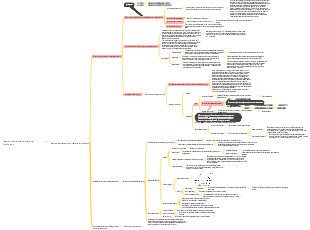
This is a mind map about developmental and educational psychology (1), including basic issues and theories on children's psychological development, stimulating students' learning motivation, etc.
Edited at 2024-01-13 15:53:22This infographic, designed with EdrawMax, presents a quarterly pre-production checklist for film and TV crews. It organizes tasks into weekly segments across 12 weeks, covering script reading, contract negotiation, preliminary research and communication, and image customization. The schedule ensures a systematic approach to pre-production, detailing specific actions like script analysis, contract signing, character image finalization, and verification of contracts. It serves as a vital tool for production teams to manage tasks efficiently and maintain a smooth workflow leading up to filming.

This infographic, created using EdrawMax, showcases influential female historical figures across different eras, from ancient times to the present. It highlights their contributions in various fields such as politics, science, literature, and activism. Each section details key personalities and their impact on society, celebrating their achievements and the barriers they overcame. The chart serves as an inspiration, illustrating the pivotal roles women have played throughout history in shaping the modern world.
This detailed career planning chart, crafted with EdrawMax, is tailored for women navigating their professional journeys. It systematically breaks down the process into self-assessment, goal setting, development planning, learning strategies, coping mechanisms for challenges, and regular evaluations. The guide emphasizes understanding personal skills, setting realistic career objectives, and creating actionable plans for growth. It also addresses overcoming gender-specific obstacles and maintaining work-life balance, making it a comprehensive resource for achieving long-term career success and personal fulfillment.
This infographic, designed with EdrawMax, presents a quarterly pre-production checklist for film and TV crews. It organizes tasks into weekly segments across 12 weeks, covering script reading, contract negotiation, preliminary research and communication, and image customization. The schedule ensures a systematic approach to pre-production, detailing specific actions like script analysis, contract signing, character image finalization, and verification of contracts. It serves as a vital tool for production teams to manage tasks efficiently and maintain a smooth workflow leading up to filming.
This infographic, created using EdrawMax, showcases influential female historical figures across different eras, from ancient times to the present. It highlights their contributions in various fields such as politics, science, literature, and activism. Each section details key personalities and their impact on society, celebrating their achievements and the barriers they overcame. The chart serves as an inspiration, illustrating the pivotal roles women have played throughout history in shaping the modern world.
This detailed career planning chart, crafted with EdrawMax, is tailored for women navigating their professional journeys. It systematically breaks down the process into self-assessment, goal setting, development planning, learning strategies, coping mechanisms for challenges, and regular evaluations. The guide emphasizes understanding personal skills, setting realistic career objectives, and creating actionable plans for growth. It also addresses overcoming gender-specific obstacles and maintaining work-life balance, making it a comprehensive resource for achieving long-term career success and personal fulfillment.
Developmental and Educational Psychology
Chapter 2 Basic Issues and Theories of Children’s Psychological Development
Basic issues in children's psychological development
The connotation of psychological development
广义
动物种系进化过程中的心理发展特点和变化规律
同一种类的人类心理的产生、发展特点和变化规律
个体从出生到死亡过程中的心理发展特点和变化规律,即个体心理发展
狭义
个体心理发展
The relationship between heredity, environment and psychological development
Genetic influences on psychological development
Curry
A group of white rats were divided into smart rats and dumb rats based on their maze-walking abilities. Smart rats were paired with smart rats, and dumb rats were paired with dumb rats. Finally, it was found that the performance difference between the smart group and the dumb group was obvious, which illustrates the influence of genetics on animal behavioral abilities.
Galton
advocates genetic determinism
认为遗传在心理发展中起决定作用
Celebrity genealogy survey method: look at how many celebrities are among the relatives of celebrities and how many celebrities are among the relatives of ordinary people. It turns out that the proportion of famous celebrities in the two groups is very different.
Bath
Twin study design
The genetic similarity between identical twins is almost 100%, while that between fraternal twins is about 50%, and the similarity between identical twins is even greater
The environment has an impact on psychological development
environment
自然环境
生物有机体所共有的维持生存所必需的(食物营养、地理气候等)
社会环境
个体所处的社会生活条件和教育条件(家庭、学校等)
Watson advocates environmental determinism
early experience
Harlow
Rhesus monkey experiment
Mohsen
Psychological development of children in orphanages
Children in orphanages lack cognitive and social stimulation and responsiveness, which will cause emotional and social defects that will last until adulthood.
family
direct impact
Interact directly with children's development
eg. Parents gently persuade, and children cooperate; parents criticize harshly, and children resist.
Indirect effects
No direct interaction with children (family relationships, family structure, family economic status, parents’ education level, etc.)
eg. Parents who have a good relationship tend to cooperate in raising children, and will praise and encourage their children more and nag and scold them less; The relationship between parents is tense and full of hostility. They often interfere with each other in raising children, are less responsive to children's needs, and often criticize, express anger, and punish children. The above two situations will have different impacts on children's psychology.
The interaction of genetics and environment in psychological development
The effects of genetics and environment on psychological development are interdependent and interpenetrating.
Views held by more contemporary researchers
Heredity is the necessary material prerequisite for psychological development, and lays the innate foundation for individual differences in psychological development. It stipulates the high and low limits of development, but it cannot limit the development process and the level achieved.
Within the limits prescribed by heredity, a child's level of development is determined by the environment
The relative effects of heredity and environment on psychological development have different effects at different stages and fields of individual development.
Some simpler primary psychological functions (perception, movement, basic language, etc.) are greatly restricted by genetics
More complex advanced psychological functions (abstract thinking ability, emotion, etc.) are greatly restricted by the environment
Basic characteristics of psychological development
Continuity and stages
continuity perspective
Developmental psychology theories that emphasize "environmental factors," such as behaviorism and social learning theory, hold this view
Development is only the accumulation of quantity, that is, a small and gradual process. There are no stages.
stage view
Developmental psychology theories that emphasize "genetic factors", such as maturity theory, Piaget's epistemology, and the new and old psychoanalytic theories of Freud and Erikson, all hold this view.
Development has stages and leaps, unfolding in the form of new behavioral patterns. During a specific period of development, thoughts, emotions, and behaviors all undergo qualitative changes.
Current comprehensive view
Psychological development is the unity of continuity and stages
Example: Under the influence of external things, children aged 2 to 3 can also carry out certain thinking activities with the help of sensory perception and movements, that is, intuitive action thinking. As the age increases, the images of external things maintained in children's memory ( (i.e., more and more representations). On the basis of quantitative changes, children can rely on the images retained in memory to carry out thinking activities. In other words, children's thinking activities have undergone qualitative changes - concrete image thinking has emerged.
When the quantity of certain elements representing new quality accumulates to a certain extent, the new quality replaces the old quality and leaps to the dominant position. Quantitative changes cause qualitative changes, a break in the continuity is found, and a new stage begins to form.
The old quality breeds the new quality, and the new quality contains the old quality, but the dominant characteristics of each stage are the essential characteristics that dominate that stage.
universality and diversity
The development of human psychology has both universality and diversity (psychological development is the unity of universality and diversity)
universality
Example: Children first learn to talk and then to walk.
Diversity
Examples: Some children are precocious, some are born with intellectual disabilities, and some are late bloomers / Some children have advantages in language, while others are good at operations and reasoning
Stability (consistency) and variability (adaptability)
Initiative and passivity.
Directionality and irreversibility
The order of maturation of various brain areas: occipital lobe (vision), temporal lobe (hearing), parietal lobe (motor), frontal lobe (thinking)
Imbalance
critical period of psychological development
Source of the concept of critical period
Lorenz's "imprinting phenomenon"
Goslings and ducklings regard the first person they see after birth as their mother
critical period for psychologists
There is a certain time limit for the development of certain behaviors and abilities of humans or animals. If appropriate stimulation is given at this time, it will promote better development of their behaviors and abilities; otherwise, it will hinder development and even lead to the lack of behaviors and abilities.
Four studies can prove the existence of critical periods
Social development of rhesus monkeys
bird imprint
human language acquisition
wolf boy
Binocular vision in mammals
The critical period does not start and stop suddenly. It develops gradually, reaches a peak, and then slowly subsides.
child cognitive development theory
Piaget's theory of cognitive development
The essence and causes of cognitive development
Human cognition is the product of the interaction between subject and object. Knowledge comes from action (or activity), and the essence of action is the subject's adaptation to the object. The subject's adaptation to the object through action is the real cause of psychological development
Factors and Structures of Psychological Development
factor
Maturation (the growth of the organism, especially the maturation of the brain and nervous system)
Natural experience (obtained through contact with the external environment)
physical experience
Mathematical logic experience
Social experience (obtained during social interaction and social transmission)
Language, education, social life…
balance
Basic factors of development, necessary factors for coordinating maturity, natural experience, and social experience
structure
Schema (core concept)
Illustration is the cognitive structure of the subject's actions and is the basic mode for human beings to understand things. Anything that can be repeated and summarized in behavior can be called a schema
Schema refers to the existing network of knowledge and experience in the human brain. It also represents the cognitive structure of specific conceptual things or events. It can be either a thinking pattern or a repeatable behavior pattern. For example, swimming is a A behavioral schema. People know freestyle, breaststroke, butterfly and other swimming strokes. This is a schema about the concept of swimming.
assimilation
It is only a quantitative change and cannot cause structural changes or innovations in the illustration.
When an individual is learning, the process of filtering or changing the input information. For example, a person originally knew how to breaststroke. This is the behavioral diagram he mastered about swimming. Later, he learned freestyle, so he enriched his swimming experience. Behavioral schema enriches one's swimming style and expands the original schema
adapt
It is a qualitative change that can promote the creation of new schemas or the adjustment of original schemas.
It means an individual changes himself to adapt to the new external environment. For example, a child takes the bus to school every day because his home is only three stops away from the school. Students can ride the bus for free by swiping their bus card, so it is very convenient and they will not be late. Question, it snowed heavily that day, the roads were slippery in the snow, there were traffic accidents on the road, and there were many traffic jams, so he was late. When he got to school, he found that none of his classmates who were walking to school were late, so he knew that it was snowing heavily. It is best not to take the bus when walking, but walking is the best choice. This is a reflection of his cognitive structure adapting to the external environment.
balance
The balance between assimilation and accommodation functions
For example, when a child rides a bus, he is originally in a balanced state. However, it snows heavily and he cannot ride the bus, so he becomes unbalanced. When he learns that walking is faster than riding a bus in the snow, he returns to a balanced state.
stages of cognitive development
Sensory motor stage (0-2 years old)
At this stage, children form some low-level behavior diagrams during activities, and use them to adapt to and further explore the external environment. Among them, grabbing by hand and sucking by mouth are their main means of exploring the world around them (relying on perception). and movements, etc. to understand the surrounding world. Through feelings and movements, babies realize that they and others, themselves and objects exist separately)
Piaget believed that children will only show planned actions in the later stages of the sensorimotor stage. This kind of action shows that children have formed the ability to mentally represent events. However, some researchers have proven that children can mentally represent events. The age of maintaining representations or representations of objects and using representations to organize their behavior in advance predates Piaget's age. Piaget also pointed out that delayed imitation can prove that children already have memory representations of things they have seen previously, but research has proven that children as young as six weeks old can imitate behaviors they have seen the day before.
Preoperational stage (2-7 years old)
During this stage, children's speech and concepts develop at an alarming rate
Features
Egocentricity ("Three Mountains" Experiment)
Irreversibility (failure to grasp the conservation principle)
For example, if you pour milk from a tall and narrow container into a shallow and wide one in front of children, the children will think that there is more milk in the tall cup. At this time, the children will only pay attention to one aspect of the thing and height of milk, while ignoring other aspects and not believing that milk is equal
Intuitive (only focused on results)
Animism (the belief that everything has an spirit, just like him)
Concentration of thinking (noting only certain salient features)
two sub-stages
Symbolic function sub-stage (2-4 years old)
At this stage, children can describe non-existent objects in their brains, allowing children's psychological world to extend into new spaces.
feature
Egocentricity (the inability to distinguish one’s own perspective from others’ perspectives) The “Three Mountains” Experiment
Animism (everything is alive and has feelings)
Intuitive thinking sub-stage (4-7 years old)
At this stage, children begin to use rudimentary reasoning skills and want to know the answers to all questions
feature
No ability to form categories
The "centralization" of thinking, such as the concentration of thinking and the irreversibility of thinking
Teaching suggestions
Let children sort objects
To reduce egocentric tendencies, children should be allowed to engage in social interactions
Let children make comparisons
Ask children to draw scenes from a certain perspective
Have the children build an incline or hill
Let children experience sequence operations
Ask children to find a basis for their conclusions when drawing conclusions
Concrete operational stage (7-11 years old)
Children at primary school level are already able to accept conservation issues
Older children in the concrete operational stage can respond to implicit essences. Preschool children only understand what they see with their eyes and do not have the ability to infer the real meaning behind what they see.
The formation of serialization (arranging things in a certain logical order) to transitivity (understanding the relationship between two objects and a third object, and inferring the relationship between two objects accordingly)
Class containment ability: the ability to re-establish the relationship between parts and the whole, and the ability to pay attention to two types of things at the same time
Formal Operations Stage (11-15 years old)
At this stage, individuals are no longer limited to reasoning about specific experiences, but think in a more abstract, idealized, and logical way.
Features
egocentricity in adolescence
Hypothetical-deductive reasoning ability
Within and between propositions
Influence
positive
contribute
Reveal the basic laws of children's psychological development, create inspiration for children's psychological development research, and the latter's progressive research on children's psychological development
meaning of education
In line with children’s psychological development characteristics, adapt to children’s psychological development education, and take care of children’s individual differences
limitations
Piaget underestimated the cognitive abilities of children and overestimated those of adolescents
Vygotsky's theory of cognitive development
The theory of social development of children's personality
Erikson's theory of personality development
value
Paying attention to the role of education in development has positive guiding significance for modern educational concepts.
Helps educators understand students, take appropriate educational guidance, and help students develop correctly
Chapter 6 Stimulating students’ learning motivation
learning motivation theory
attribution theory
The theory of how people analyze the successes and failures of their actions
Hyde proposed in 1958
personal attribution
environmental attribution
Roth control point concept
internal locus of control
external locus of control
Weiner attribution theory
content
ability
Determine whether you are qualified for the job based on your own assessment
effort
Personal reflection on whether you are doing your best in the work process
task difficulty
Determine the difficulty of the job based on personal experience
luck
Do you think this failure is related to luck?
physical and mental condition
Whether personal physical and emotional conditions during work affect work effectiveness
other
can be summarized as
three dimensions
control point
Determines whether a person's pride and self-esteem will change with success or failure. Internal attribution after success will increase self-esteem, internal attribution after failure will decrease self-esteem, and external attribution after success or failure will not change self-esteem.
Whether the cause is controlled internally or externally by the actor
stability
Influence people's subjective expectations for success. If success is attributed to a stable cause, such as talent, then people will have expectations for future success; if failure is attributed to a stable cause, people will infer that future success is unlikely. Therefore, in the face of failure, if it is attributed to unstable factors such as insufficient effort or bad luck, people's persistence will increase
The property of a cause that does not change over time
Controllability
The extent to which causes change with subjective will
Implications for education
Predicting students’ subsequent learning motivation based on their attributions helps teachers help students form correct attributions
Long-term negative attributions hinder students' personality development
Students who pursue success
Attribute success or failure to one's own responsibility and be more positive
Avoid failing students
Attributing failure to one's own lack of ability or other external uncontrollable factors is more negative
learned helplessness
A state in which an individual feels out of control, powerless, and self-defeating over the consequences of his or her behavior. If you attribute failure to your own lack of ability for a long time, you will have the idea of "since you have no ability to change the status quo, it is better to give up your efforts."
Teachers' feedback will affect students' attributions, so teachers should give students appropriate feedback
Change students' negative self-perception and improve learning motivation through attribution training
Chapter 10 Teacher Psychology (short answer)
teacher growth
The process of teacher growth
Fowler's three stages theory
Pay attention to the survival stage
Spend a lot of time on building good relationships with students and colleagues instead of focusing on students’ progress in learning
focus on situational stage
The focus of attention is on improving students' performance. At this stage, teachers are concerned about how to teach each class well.
Pay attention to the student stage
At this stage, teachers will consider the individual differences of students and realize that students with different development levels have different needs. Certain teaching materials and methods may not be suitable for all students. They must learn to teach students in accordance with their aptitude.
Paulina's five stages theory
Novice teachers (1-2 years)
Learn general teaching principles, course content and teaching methods, become familiar with the steps of classroom teaching and various teaching situations, and gain the most preliminary teaching experience
Senior novice teacher (2-3 years)
Integrate theoretical knowledge and teaching experience, and can use some teaching strategies to improve teaching effects, but cannot consciously control and adjust their teaching behaviors
Competent teacher (3-5 years)
Clarify their teaching goals and content, become more conscious in their teaching behavior, and be able to prioritize, but their teaching skills are not yet proficient, they lack flexibility, and their handling of unexpected events is not flexible enough
Professional teacher (5-8 years)
Have keen observation of classroom teaching situations and students' reactions, be able to foresee teaching effects and students' reactions, be able to identify students' understanding of content based on students' expressions, and adjust their teaching plans in a timely manner based on the teaching process and students' reactions.
Expert teacher (more than 8 years)
Have your own characteristics and easily solve problems