MindMap Gallery Engineering project management investment and implementation
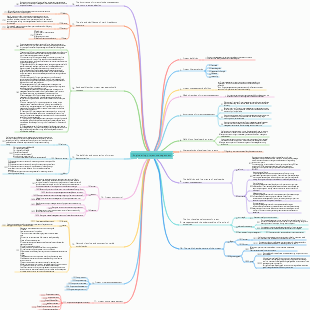
This is a mind map about engineering project management investment and implementation, including engineering project investment management system, Project investment approval, verification, Project construction implementation procedures, etc.
Edited at 2024-01-05 22:25:38This strategic SWOT analysis explores how Aeon can navigate the competitive online landscape, highlighting strengths, weaknesses, opportunities, and threats. Strengths include strong brand recognition (trusted Japanese heritage, quality), omnichannel capabilities (stores + online + mall integration), customer loyalty programs (Aeon Card, points, member pricing), and physical footprint (extensive store network for pickup/returns). Weaknesses encompass digital maturity gaps (e-commerce penetration, app functionality, personalization vs. Amazon, Alibaba), cost structure challenges (store-heavy, real estate, labor), and supply chain complexity (fresh food, frozen logistics for online). Opportunities include enhancing e-commerce competitiveness (faster delivery, wider assortment, lower minimum order), leveraging data-driven strategies (purchase history, personalized offers, inventory optimization), expanding omnichannel integration (buy online pick up in store, ship from store), and private label growth (Topvalu, localized brands). Threats involve online-first players (Amazon, Alibaba, Sea Limited) with lower costs, wider selection, faster delivery, market dynamics (changing consumer behavior post-COVID, discount competitors), and regulatory risks (data privacy, cross-border e-commerce rules). Aeon can strengthen market position by investing in digital capabilities, leveraging store assets for omnichannel, and using customer data for personalization, while addressing cost structure and online competition.

This analysis explores how Aeon effectively tailors offerings to meet the diverse needs of family-oriented consumers through a comprehensive Segmentation, Targeting, and Positioning (STP) framework. Demographic segmentation examines family life stages (young families with babies, school-aged children, teenagers, empty nesters), household sizes (small vs. large), income levels (mass, premium), and parent age bands (millennials, Gen X). This identifies distinct consumer groups with different spending patterns. Geographic segmentation highlights store catchment types (urban, suburban, rural), community characteristics (density, income, competition), and local preferences (fresh food, halal, Japanese products). Psychographic segmentation delves into family values (health, safety, education, convenience), lifestyle orientations (busy professionals, home-centered, eco-conscious). Behavioral segmentation focuses on shopping missions (daily grocery, weekly stock-up, seasonal shopping), price sensitivity (value seekers, premium), channel preferences (in-store, online, pickup). Needs-based segmentation reveals core family needs related to value (good-better-best pricing), budget considerations (affordability, promotions, member pricing), safety (food quality, product recall), convenience (one-stop shopping, parking, store hours). Targeting prioritizes young families with school-aged children, budget-conscious households, and convenience-seeking shoppers. Positioning emphasizes Aeon as a family-friendly, value-for-money, one-stop destination with Japanese quality and local relevance. These insights enhance family shopping experiences through tailored assortments (kids’ products, school supplies), promotions (family bundles, weekend events), and services (nursing rooms, kids’ play areas).
This Kream Sneaker Consumption Scene Analysis Template aims to visualize purchasing and consumption journeys of sneakers, identifying key demand drivers and obstacles. User behavior within Kream includes searching, bidding, buying, selling, authentication, and community engagement. External influences include brand drops (Nike, Adidas), social media (Instagram, TikTok), influencer hype, and cultural trends. Target categories: limited editions, collaborations, retro releases, performance sneakers, and general releases. Timeframes: launch day, first week, first month, long-term (seasonal, yearly). Regions: North America, Europe, Asia (Korea, China, Japan). User segments: Collectors: value rarity, condition, completeness (box, accessories). KPIs: collection size, spend, authentication rate. Resellers: value profit margin, volume, turnover. KPIs: sell-through rate, average profit, listing frequency. Sneakerheads: value hype, trends, community validation. KPIs: purchase frequency, social engagement, wishlist adds. Casual trend followers: value style, convenience, price. KPIs: conversion rate, average order value, repeat purchases. Gift purchasers: value ease, presentation, brand trust. KPIs: gift message usage, return rate. Consumption journey: Awareness: social media, email, push notifications. Search: browse, filter, search by brand, model, size. Purchase: bid, buy now, payment, shipping. Authentication: inspection, verification, certification. Resale: list, price, sell, transfer. Sharing: review, unboxing, social post, community discussion. Key performance indicators: conversion rate, sell-through rate, average order value, customer lifetime value, authentication pass rate, return rate, Net Promoter Score. This framework helps understand sneaker trading dynamics, user motivations, and touchpoints for engagement and satisfaction.
This strategic SWOT analysis explores how Aeon can navigate the competitive online landscape, highlighting strengths, weaknesses, opportunities, and threats. Strengths include strong brand recognition (trusted Japanese heritage, quality), omnichannel capabilities (stores + online + mall integration), customer loyalty programs (Aeon Card, points, member pricing), and physical footprint (extensive store network for pickup/returns). Weaknesses encompass digital maturity gaps (e-commerce penetration, app functionality, personalization vs. Amazon, Alibaba), cost structure challenges (store-heavy, real estate, labor), and supply chain complexity (fresh food, frozen logistics for online). Opportunities include enhancing e-commerce competitiveness (faster delivery, wider assortment, lower minimum order), leveraging data-driven strategies (purchase history, personalized offers, inventory optimization), expanding omnichannel integration (buy online pick up in store, ship from store), and private label growth (Topvalu, localized brands). Threats involve online-first players (Amazon, Alibaba, Sea Limited) with lower costs, wider selection, faster delivery, market dynamics (changing consumer behavior post-COVID, discount competitors), and regulatory risks (data privacy, cross-border e-commerce rules). Aeon can strengthen market position by investing in digital capabilities, leveraging store assets for omnichannel, and using customer data for personalization, while addressing cost structure and online competition.
This analysis explores how Aeon effectively tailors offerings to meet the diverse needs of family-oriented consumers through a comprehensive Segmentation, Targeting, and Positioning (STP) framework. Demographic segmentation examines family life stages (young families with babies, school-aged children, teenagers, empty nesters), household sizes (small vs. large), income levels (mass, premium), and parent age bands (millennials, Gen X). This identifies distinct consumer groups with different spending patterns. Geographic segmentation highlights store catchment types (urban, suburban, rural), community characteristics (density, income, competition), and local preferences (fresh food, halal, Japanese products). Psychographic segmentation delves into family values (health, safety, education, convenience), lifestyle orientations (busy professionals, home-centered, eco-conscious). Behavioral segmentation focuses on shopping missions (daily grocery, weekly stock-up, seasonal shopping), price sensitivity (value seekers, premium), channel preferences (in-store, online, pickup). Needs-based segmentation reveals core family needs related to value (good-better-best pricing), budget considerations (affordability, promotions, member pricing), safety (food quality, product recall), convenience (one-stop shopping, parking, store hours). Targeting prioritizes young families with school-aged children, budget-conscious households, and convenience-seeking shoppers. Positioning emphasizes Aeon as a family-friendly, value-for-money, one-stop destination with Japanese quality and local relevance. These insights enhance family shopping experiences through tailored assortments (kids’ products, school supplies), promotions (family bundles, weekend events), and services (nursing rooms, kids’ play areas).
This Kream Sneaker Consumption Scene Analysis Template aims to visualize purchasing and consumption journeys of sneakers, identifying key demand drivers and obstacles. User behavior within Kream includes searching, bidding, buying, selling, authentication, and community engagement. External influences include brand drops (Nike, Adidas), social media (Instagram, TikTok), influencer hype, and cultural trends. Target categories: limited editions, collaborations, retro releases, performance sneakers, and general releases. Timeframes: launch day, first week, first month, long-term (seasonal, yearly). Regions: North America, Europe, Asia (Korea, China, Japan). User segments: Collectors: value rarity, condition, completeness (box, accessories). KPIs: collection size, spend, authentication rate. Resellers: value profit margin, volume, turnover. KPIs: sell-through rate, average profit, listing frequency. Sneakerheads: value hype, trends, community validation. KPIs: purchase frequency, social engagement, wishlist adds. Casual trend followers: value style, convenience, price. KPIs: conversion rate, average order value, repeat purchases. Gift purchasers: value ease, presentation, brand trust. KPIs: gift message usage, return rate. Consumption journey: Awareness: social media, email, push notifications. Search: browse, filter, search by brand, model, size. Purchase: bid, buy now, payment, shipping. Authentication: inspection, verification, certification. Resale: list, price, sell, transfer. Sharing: review, unboxing, social post, community discussion. Key performance indicators: conversion rate, sell-through rate, average order value, customer lifetime value, authentication pass rate, return rate, Net Promoter Score. This framework helps understand sneaker trading dynamics, user motivations, and touchpoints for engagement and satisfaction.
Engineering project management investment and implementation
Engineering project investment management system
Project capital system
Capital construction, technological transformation, real estate development projects and collective investment projects of state-owned units are subject to a trial capital system. Investment projects must first implement capital before they can be constructed.
Understand: The capital system is to use your own money, and you must use your own money to build.
Project capital refers to the amount of capital subscribed by investors in the total project investment. Investors can enjoy ownership rights in accordance with the law in proportion to their capital contributions, and can also transfer their capital contributions, but cannot withdraw them in any way.
Understanding: The capital of the project is paid according to the amount approved by the investor, (for example, if it is 500W, then you can pay a little first, and then make up the full amount later. Your own money = the money contributed, and you can enjoy the rights and interests brought by it, and you can also transfer it. But it cannot be withdrawn in any way. It cannot be withdrawn in any way. Because if the money is withdrawn, the project cannot be built, so it cannot be withdrawn.
Source of project funding
(1) Project capital can be contributed in currency, or in kind, industrial property rights, non-patented technology, and land use rights; [money, material, rights, skills]
Understanding: Literal meaning
(2) The proportion of capital contribution based on industrial property rights and non-patented technology shall not exceed 20% of the total capital of the investment project.
Understanding: The proportion of capital invested in industrial property and non-patented technology shall not exceed 20% of the capital invested. That is to say, if it is invested in industrial property and patented technology, only 20% of the total amount can be deducted, and 100W can only be deducted 20W.
Minimum capital ratio for investment projects
The form mainly remembers 25% of airports
Projects in the infrastructure field and industries encouraged by the state can raise capital through the issuance of equity and equity financial instruments, but the total capital of the project shall not exceed 50% of
Understanding: The above items shall not exceed 50% of the total project capital. For example, the total amount of 1 million shall not exceed 50W.
Project investment approval and approval. Or record management
What system is used for investment projects (three categories)?
Direct investment and capital injection of government investment projects
Approval system
The project proposal
Feasibility Study Report
Preliminary design and budget estimate
Corporate investment projects
Catalog of investment projects approved by the government
approval system
Project application form
General project
Filing and registration system
Enterprises use government subsidies to transfer loans, interest discounts and other projects
Approval only, fund application report
Project construction implementation procedures
engineering design
1. Preliminary design → technical design → construction drawing design stage
2. If the total budget estimate proposed in the preliminary design exceeds 10% of the investment estimate in the approved feasibility study report, it must be resubmitted for approval.
3. Construction drawing design documents must be reviewed and approved before implementation. Construction drawing design documents shall not be used without review and approval.
Construction preparation
1. Land acquisition, demolition and site leveling;
2. Complete the connection work of construction water, electricity, communication network, traffic roads, etc.;
3. Prepare necessary construction drawings
4. Organize project supervision, construction and material and equipment procurement bidding;
5. Handle construction permit, project quality supervision and other procedures.
The above work should mainly be completed by the construction unit.
Engineering construction
After obtaining the construction permit, you can enter the construction stage and start time
(1) Permanent projects, breaking ground and trenching;
(2) No need for grooving or piling
(3) Railways, highways, reservoirs, etc., earthwork and stonework projects.
For projects constructed in phases, the start time of each phase of the project shall be the start time. For example, the second phase project shall be based on the start time of the permanent project specified in the engineering design document. as start time.
Completion acceptance
When the construction project is fully completed and the conditions for project completion acceptance are met, the project completion acceptance can be organized. A construction project will enter the defect liability period from the date it passes the completion acceptance inspection. The maximum defect liability period shall not exceed 2 years. If a quality defect is discovered during the defect liability period, the Timely repairs, repair and inspection costs shall be borne by the responsible party.
Construction contracting model
General construction contracting
General construction contractor
subcontracting unit
Construction general contracting management unit
parallel contracting
It is helpful for the construction unit to select the construction unit on the basis of merit. There is a wide range of construction units to choose from.
Conducive to controlling project quality
Helps shorten the construction period
Engineering cost control is difficult
The workload of organization, management and coordination is large, requiring the construction unit to have strong organizational and coordination capabilities
Compared with general contracting, it is not conducive to giving full play to the comprehensive advantages of general contractors with high technical levels and strong comprehensive management capabilities.
joint contracting
cooperative contracting
Consortium and cooperative contracting model
consortium
Share blessings and share hardships
Consortium contracting model
signed with the consortium contract
·For construction units: the contract structure is simple, the workload of organization and coordination is small, and it is conducive to cost and construction period control. ·For consortiums: they can pool the advantages of each member unit in terms of capital, technology and management to enhance competition. ability to compete, and also enhance the ability to resist risks.
cooperative
We share the blessings, and when disaster strikes, we fly separately and shoulder our own responsibilities.
cooperative contracting model
and cooperative entities respectively Signing a contract
·For construction units: the workload of organization and coordination is small, but the risks are high ·For cooperative entities: Each contracting unit has a desire to cooperate, but lacks trust and is unwilling to form a consortium.
Contractors in the general construction contracting model
General construction contractor
subcontracting unit
Construction general contracting management unit
International Engineering, Management Contractor
General project contracting, general project contracting management
Engineering general contracting management: The owner will subcontract the design and construction to an engineering management company that specializes in engineering design and construction organization management, and subcontract all design and construction to Other design and construction units are dedicated to project management.
General contracting of projects (fully responsible for quality, safety, construction period, cost, etc.
Engineering Procurement and Construction (EPC)
Design and Construction(DB)
Compared with general construction contracting, construction general contracting management has the following characteristics
Signing of subcontract
Usually, the owner signs with the subcontractor The owner requires and the "general manager" unit agrees, and the "general manager" signs with the subcontracting unit
Payment to subcontractors
Both owners and general contracting management units can pay Only the general contracting management fee is charged, and the price difference between the general contracting and subcontracting is not earned.
Subcontract interface
The "General Management" unit is responsible to reduce the organization and coordination work of the owner. The owner signs a contract with the subcontractor. The owner's contract management workload is heavy and the cost control risk is also high.
Subcontracting quality control
The "general management" unit is responsible, which conforms to the principle of "control by others" and is conducive to quality control.
Construction general contracting management
The general construction management unit is referred to as the general manager
1. Responsible for the overall management, organization and coordination of the contracted construction tasks. Specific construction tasks can be subcontracted to subcontracting units. For those with construction capabilities, they can also compete through bidding. Strive to undertake some project construction tasks.
2. All subcontracting units must accept the work instructions of the "general management" unit. Obey its organization and command. (Two categories in the picture below)
3. The subcontracting units selected by the owner must be approved by the construction general contracting management unit.
4. Similarity with the construction general contractor: the construction management tasks and responsibilities are the same.
) Contractors in the general construction contracting model
parallel contracting model
general contracting model
Characteristics of general construction contracting model
1. Bidders usually make bids based on construction drawing designs, and have a clear contract price before the project starts.
2. It is helpful for the construction unit to control the total project cost at an early stage.
3. Compared with the parallel contracting model, there are fewer entities responsible for construction quality, and the construction unit has a smaller workload in construction bidding, contract management, organization and coordination.
legend