MindMap Gallery A Brief History of Mankind Agricultural Revolution
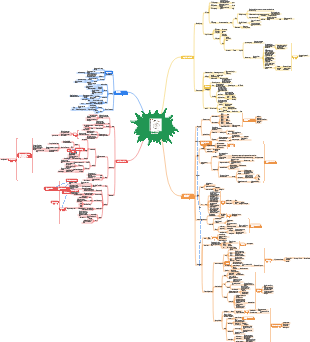
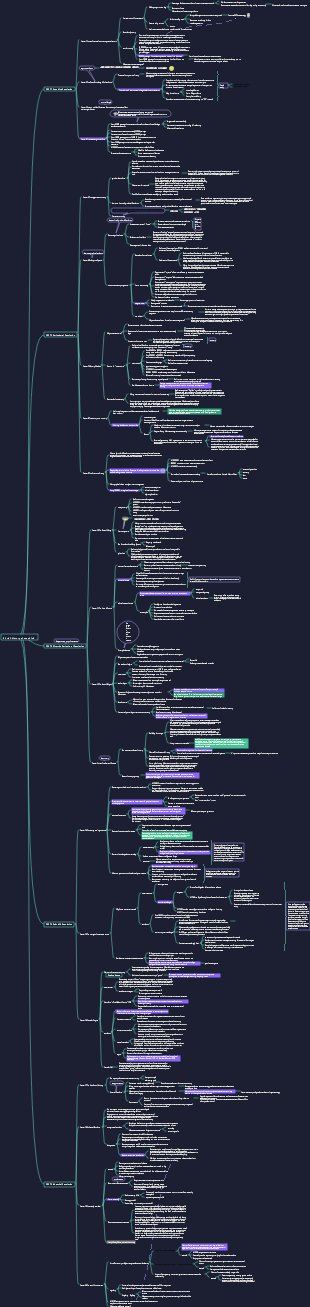
Share useful information! A mind map will help you understand the details of the Agricultural Revolution in "A Brief History of Mankind". The following figure introduces the Agricultural Revolution in detail from four aspects: the biggest scam in history, the building of pyramids, memory overload, and the lack of justice in history. When you Take a look at this mind map when you feel confused! Collect and follow to avoid getting lost!
Edited at 2019-06-04 09:23:35Mappa mentale per l’analisi del controllo della gestione del portata di progetto. Tre sezioni principali: 1. WBS Scope Breakdown – scomposizione gerarchica del lavoro con dettaglio dello Scopo del progetto. 2. Scope Boundary / Exclusions – definizione chiara dei confini del progetto e di ciò che è escluso per evitare scope creep. Strumento ideale per project manager e team di controllo per mantenere allineamento e ridurre rischi.

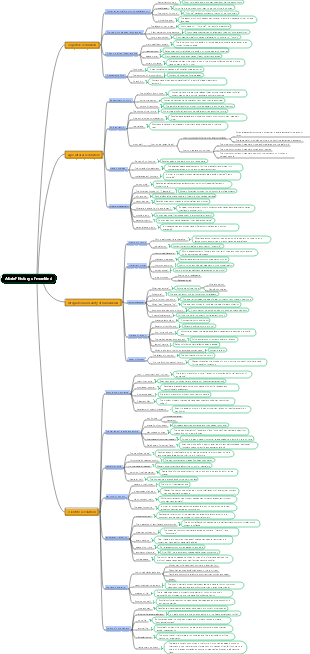
Questo template, ideato con EdrawMind, è un modello completo per il miglioramento continuo del sistema di gestione della qualità, con una descrizione di circa 500 parole. È strutturato come un diagramma a lisca di pesce, strumento efficace per analizzare le cause principali dei problemi di qualità e definire le leve di controllo necessarie per risolverli. Il processo è organizzato in quattro fasi chiave: la prima è lo standard e la pianificazione, dove si definiscono gli obiettivi di qualità, i criteri di accettazione, i requisiti di prova e le porte di qualità (Quality Gate). La seconda fase analizza i processi e le porte di controllo, per garantire che ogni passaggio del lavoro segua i standard stabiliti. La terza fase riguarda l’esecuzione QA/QC, con la definizione di metodi di prova e ispezione, nonché regole per la gestione dei difetti e delle non conformità. L’ultima fase è il miglioramento e le azioni correttive e preventive (CAPA), insieme a una catena di audit per monitorare l’efficacia delle misure adottate. In basso, una tabella "Quality Gate" permette di tracciare ogni punto di controllo, con criteri specifici, metodi di prova, proprietario e stato di avanzamento. Grazie alla visualizzazione chiara e intuitiva di EdrawMind, questo strumento aiuta il team a identificare le cause root dei problemi di qualità, implementare azioni efficaci e mantenere un ciclo di miglioramento continuo, garantendo la qualità finale del prodotto o servizio.
Questo template, creato con EdrawMind, è un modello di piano di comunicazione ottimizzato, con una descrizione di circa 500 parole. È uno strumento chiave per evitare incomprensioni tra stakeholder, garantire la trasparenza e mantenere il team allineato agli obiettivi del progetto. Il modello è composto da tre elementi fondamentali e interconnessi: la matrice di comunicazione, la cadenza timeline e le regole di comunicazione/SLA. La matrice di comunicazione è una tabella dettagliata dove per ogni pubblico o stakeholder, si definisce il tipo di informazioni da condividere, lo scopo della comunicazione, il canale da utilizzare (email, riunioni, piattaforme di progetto), la frequenza, il proprietario responsabile, il formato e il percorso di escalazione in caso di problemi. La cadenza timeline è una linea temporale che definisce le scadenze delle comunicazioni chiave, garantendo che le informazioni siano condivise in momento opportuno e non si verifichino ritardi o omissioni. Le regole di comunicazione e gli accordi sul livello di servizio (SLA) definiscono le norme formali della comunicazione, come i tempi di risposta, il tono da adottare e le responsabilità di ciascun membro del team. Grazie alla struttura visuale di EdrawMind, questo template permette di pianificare la comunicazione in modo strategico, trasparente e efficiente, riducendo i rischi di cattiva informazione, migliorando la collaborazione e garantendo che tutti gli stakeholder siano informati e coinvolti nel progetto.
Mappa mentale per l’analisi del controllo della gestione del portata di progetto. Tre sezioni principali: 1. WBS Scope Breakdown – scomposizione gerarchica del lavoro con dettaglio dello Scopo del progetto. 2. Scope Boundary / Exclusions – definizione chiara dei confini del progetto e di ciò che è escluso per evitare scope creep. Strumento ideale per project manager e team di controllo per mantenere allineamento e ridurre rischi.
Questo template, ideato con EdrawMind, è un modello completo per il miglioramento continuo del sistema di gestione della qualità, con una descrizione di circa 500 parole. È strutturato come un diagramma a lisca di pesce, strumento efficace per analizzare le cause principali dei problemi di qualità e definire le leve di controllo necessarie per risolverli. Il processo è organizzato in quattro fasi chiave: la prima è lo standard e la pianificazione, dove si definiscono gli obiettivi di qualità, i criteri di accettazione, i requisiti di prova e le porte di qualità (Quality Gate). La seconda fase analizza i processi e le porte di controllo, per garantire che ogni passaggio del lavoro segua i standard stabiliti. La terza fase riguarda l’esecuzione QA/QC, con la definizione di metodi di prova e ispezione, nonché regole per la gestione dei difetti e delle non conformità. L’ultima fase è il miglioramento e le azioni correttive e preventive (CAPA), insieme a una catena di audit per monitorare l’efficacia delle misure adottate. In basso, una tabella "Quality Gate" permette di tracciare ogni punto di controllo, con criteri specifici, metodi di prova, proprietario e stato di avanzamento. Grazie alla visualizzazione chiara e intuitiva di EdrawMind, questo strumento aiuta il team a identificare le cause root dei problemi di qualità, implementare azioni efficaci e mantenere un ciclo di miglioramento continuo, garantendo la qualità finale del prodotto o servizio.
Questo template, creato con EdrawMind, è un modello di piano di comunicazione ottimizzato, con una descrizione di circa 500 parole. È uno strumento chiave per evitare incomprensioni tra stakeholder, garantire la trasparenza e mantenere il team allineato agli obiettivi del progetto. Il modello è composto da tre elementi fondamentali e interconnessi: la matrice di comunicazione, la cadenza timeline e le regole di comunicazione/SLA. La matrice di comunicazione è una tabella dettagliata dove per ogni pubblico o stakeholder, si definisce il tipo di informazioni da condividere, lo scopo della comunicazione, il canale da utilizzare (email, riunioni, piattaforme di progetto), la frequenza, il proprietario responsabile, il formato e il percorso di escalazione in caso di problemi. La cadenza timeline è una linea temporale che definisce le scadenze delle comunicazioni chiave, garantendo che le informazioni siano condivise in momento opportuno e non si verifichino ritardi o omissioni. Le regole di comunicazione e gli accordi sul livello di servizio (SLA) definiscono le norme formali della comunicazione, come i tempi di risposta, il tono da adottare e le responsabilità di ciascun membro del team. Grazie alla struttura visuale di EdrawMind, questo template permette di pianificare la comunicazione in modo strategico, trasparente e efficiente, riducendo i rischi di cattiva informazione, migliorando la collaborazione e garantendo che tutti gli stakeholder siano informati e coinvolti nel progetto.
agricultural revolution
Biggest scam in history
The transition from gathering to agriculture began around 9500 to 8500 BC in the hilly regions of southeastern Turkey, western Iran, and the eastern Mediterranean
Agriculture developed and blossomed independently in each place at the same time, rather than being spread around the world by farmers in the Middle East.
Why the Agricultural Revolution Happened in the Middle East, China, and Central America
Most animals and plants cannot be domesticated, and very few species suitable for agriculture and animal husbandry only grow in specific places.
The Agricultural Revolution increased the total amount of human food, exploded the population, and produced a pampered elite.
Plants domesticated Homo sapiens
To measure the evolutionary success of a species, the criterion is the number of copies of its DNA helix in the world.
The pitfalls of luxury living
The rise of agriculture was not overnight, but a slow process that took hundreds of thousands of years
Humans, like many mammals, have hormonal and genetic mechanisms to control fertility
natural mechanism
The more resources, the more reproduction. With adequate nutrition, women enter puberty earlier
Less resources, less reproduction. Undernourished, women enter puberty later
cultural mechanism
For migrating collectors, it is inconvenient for young infants to move around, so the intervals between births are lengthened.
Infanticide, induced abortion, abstinence, etc.
Human domestication of wheat
Start living in a permanent village
Increased food supply
population increase
Disease rages
Breast milk intake of infants and young children decreases, and mortality rates soar
Increased adult burden
divine intervention
Gobekli Tepe
The reason why foragers switched from collecting wild wheat to growing their own wheat may not be to increase their daily food supply, but to support the construction and operation of some kind of temple
Build a faith center first, then form a village around it
victims of revolution
livestock
Slaughter those that are aggressive, disobedient, and have poor reproductive ability
Keep the obedient ones
Domestication
nomadic tribe
Livestock footprints begin to spread across the world
From a narrow evolutionary perspective, these domestic animals are evolutionarily successful
But an evolutionary perspective is not the only criterion for judging the success of a species
Build a pyramid
The Agricultural Revolution not only affected architecture but also psychology
After the Agricultural Revolution, humans became far more self-centered creatures than before, closely connected to "home" but drawing boundaries from other species around them.
In the agricultural era, human space shrank and time lengthened
Imagine the future
artistic creation
crops harvest
Grain reserves
order made of imagination
During millions of years of evolution, humans have always been small tribes of dozens of people. But after the Agricultural Revolution, cities and empires appeared in just a few thousand years, but it was not enough time for humans to develop the instinct to cooperate on a larger scale.
Fictional stories are more powerful than anyone’s imagination
true believer
The reality constructed by imagination requires violence to maintain
Most of the elites must truly believe in it in order to maintain the order in the long term.
prison wall
How to make people believe in these orders
When speaking to the outside world, we must insist that they are absolutely true and not fiction.
The same set of principles must also be thoroughly implemented in education
How to prevent people from discovering that all kinds of order are actually fiction
The order constructed by imagination is deeply integrated with the real world
The order constructed by imagination shapes our desires
The order constructed by imagination exists in the connection of thoughts between people
objective
The existence of objective things is not affected by human consciousness and beliefs
subjective
The existence of things depends on the consciousness and belief of a single person
intersubjective
The existence of things depends on the connection network between many individual subjective consciousnesses
For example: law, money, god, country
As human beings, we cannot break away from the order constructed by our imagination.
memory overload
The social order of Homo sapiens is constructed through imagination. The key information required to maintain the order cannot be maintained simply by passing on DNA replication to future generations. Otherwise, the social order will soon collapse.
The human brain is not a very good storage device
Limited brain capacity
Humans are bound to die, and the brain dies with it
The human brain has evolved to process only certain types of information
Limitations of the human brain limit the scale and extent of human cooperation
Therefore, thousands of years after the agricultural revolution, human social networks were still relatively small and simple.
The first people to overcome this problem were the Sumerians in ancient southern Mesopotamia.
invention of writing
At first it was only partially expressive
The miracle of bureaucracy
Archiving, cataloging, retrieval
Invest in talent for copywriting, data management and accounting matters
Changed the way humans think and view the world. Free connection and holistic thinking transformed into segmented thinking and bureaucracy
the language of numbers
Mathematics Symbol
For example: in physics and engineering, almost the entire field is about to be out of touch with human spoken language, and mathematical symbols alone take the lead.
History is never fair
All classes are constructed from imagination
Most rich people are rich just because they were born in a rich family. Most poor people will never have money in their life just because they were born in a poor family.
No human society is truly free from discrimination
Class has important functions
Strangers can know how to treat each other without wasting time and energy on truly getting to know each other
Innate abilities may also influence social class differences, with various abilities and personalities affected by imagined class
Most abilities need to be cultivated and developed
But opportunity is not equal for everyone
People in different classes have developed exactly the same abilities, but they face different rules of the game, and the results will be very different.
vicious circle
The class system was mostly an accident that happened in history. However, after some groups gained vested interests, they continued to improve it from generation to generation, forming what it is now.
The rulers argued that the caste system reflected eternal cosmic realities and was not an accident of historical development.
The American Concept of “Cleanness”
European conquerors introduced millions of African slaves to the Americas to work as mining slaves or serfs. Why did they choose Africa?
Africa and America are geographically close
Africa has developed a mature slave trade, but slavery is still very rare in Europe
Colonial farms in the Americas often had hernia and yellow fever from Africa. Africans developed partial immunity through evolution, but Europeans were unable to resist it.
Genetic advantages create social disadvantages
No one will admit that they keep people of a certain race or origin as slaves just for financial gain
Use religious and scientific fictions to make excuses
Fictional stories affect American culture and also influence Western culture
The conditions of slavery disappear, but the story remains and the impact lingers
forming a vicious cycle
As time goes by, prejudice becomes deeper and deeper
him and her
Different societies have quite different imagined class systems.
But almost all societies distinguish gender classes
Core difference: Men do not have a uterus, so pregnancy and childbirth are only women’s work
Other differences: Society’s ideas about “masculine” and “feminine” traits often have no solid biological basis
sex on gender
The various laws and norms that stipulate how men should be and how women should be are mostly human imagination rather than biological realities.
Patriarchy is too common a phenomenon to be caused by some accidental factor entering a vicious cycle.
muscle theory
argument
Men are stronger and control food production, which in turn has political influence.
question
Not every man is stronger than a woman
Women are generally more resistant to hunger, disease and fatigue than men
There were many jobs in history that did not require manual labor, but instead of being assigned to these jobs, women were engaged in more strenuous physical labor.
gangster theory
Male dominance depends on an aggressive personality
paternal gene theory
Over millions of years of evolution, men and women have developed different strategies for survival and reproduction