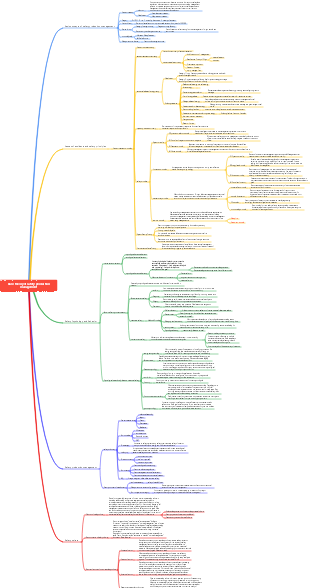
MindMap Gallery Electrical safety technology
The mind map of the electrical safety knowledge of safety production technology for the Note Safety Examination is here! It can be used for both exam preparation and daily electrical safety management, so collect it now!
Edited at 2021-10-29 08:37:57This Valentine's Day brand marketing handbook provides businesses with five practical models, covering everything from creating offline experiences to driving online engagement. Whether you're a shopping mall, restaurant, or online brand, you'll find a suitable strategy: each model includes clear objectives and industry-specific guidelines, helping brands transform traffic into real sales and lasting emotional connections during this romantic season.

This Valentine's Day map illustrates love through 30 romantic possibilities, from the vintage charm of "handwritten love letters" to the urban landscape of "rooftop sunsets," from the tactile experience of a "pottery workshop" to the leisurely moments of "wine tasting at a vineyard"—offering a unique sense of occasion for every couple. Whether it's cozy, experiential, or luxurious, love always finds the most fitting expression. May you all find the perfect atmosphere for your love story.
The ice hockey schedule for the Milano Cortina 2026 Winter Olympics, featuring preliminary rounds, quarterfinals, and medal matches for both men's and women's tournaments from February 5–22. All game times are listed in Eastern Standard Time (EST).
This Valentine's Day brand marketing handbook provides businesses with five practical models, covering everything from creating offline experiences to driving online engagement. Whether you're a shopping mall, restaurant, or online brand, you'll find a suitable strategy: each model includes clear objectives and industry-specific guidelines, helping brands transform traffic into real sales and lasting emotional connections during this romantic season.
This Valentine's Day map illustrates love through 30 romantic possibilities, from the vintage charm of "handwritten love letters" to the urban landscape of "rooftop sunsets," from the tactile experience of a "pottery workshop" to the leisurely moments of "wine tasting at a vineyard"—offering a unique sense of occasion for every couple. Whether it's cozy, experiential, or luxurious, love always finds the most fitting expression. May you all find the perfect atmosphere for your love story.
The ice hockey schedule for the Milano Cortina 2026 Winter Olympics, featuring preliminary rounds, quarterfinals, and medal matches for both men's and women's tournaments from February 5–22. All game times are listed in Eastern Standard Time (EST).
Electrical Safety
2.1 Electrical accidents and hazards
electric shock
Check whether the charged object is charged normally
direct contact electric shock
Insulation, screen protection, spacing
indirect contact electric shock
Grounding, zero connection, equipotential bonding, double insulation, Reinforced insulation, non-conductive environment, electrical isolation
According to the method of human body touching electrified objects
single line shock
Voltage, human body resistance, ground status
Two-wire shock
Voltage, human body resistance
step voltage shock
Voltage between two pins
Electric current passes through the human body
Electrical injury
arc burn
The most dangerous electrical injuries
electric current burns
Electric current passing through the human body generates heat
Skin metallization
Electric branding
Electrical and mechanical damage
Electric current acts directly on the human body. If the electric shock bounces off and hits the wall, the injury will not be counted.
electrophotophthalmia
Electric current is converted into other energy
The effect of electric current on the human body
50Hz power frequency current
Sense current
Perception probability is 50%
smallest
Male 1.1mA
Female 0.7mA
Minimum sensing current 0.5mA, independent of time
May cause secondary accidents such as falling and falling
get rid of current
maximum
The probability of getting rid of is 50%
Male 16mA
Female 10.5mA
The probability of getting rid of it is 99.5%
Male 9mA
Female 6mA
Places with high explosion risk, fire risk and high safety requirements
Suitable for use in factories with main substations, low-voltage power distribution places and non-production buildings
ventricular fibrillation current
smallest
t>Heart beating cycle is 50mA
t<heart beat cycle is 500mA
t<0.1S The vulnerable period of the heart is number A
duration
Left hand to chest heart current factor 1.5 most dangerous
The DC current sensing threshold is approximately 2mA; there is no definite escape threshold for DC currents below 300mA.
The surge current does not escape the threshold
Under dry conditions, when the contact voltage is 100-220V, the human body resistance is approximately 2000-3000Ω
2.2 Electric shock protection technology
Electrical isolation and non-conductive environment
Both defense and defense
non-conductive environment
Uniformly distributed insulation resistance
U≤500V, Ω≥50kΩ
U>500V,Ω≥100kΩ
Keep distance or put up barriers
have permanent characteristics
There must be no protective neutral wire or ground wire in the premises
Measures to prevent the introduction of high potential in the field and the introduction of low potential outside the factory
electrical isolation
The rated capacity of single-phase isolation transformer does not exceed 25kVA
Three phases do not exceed 40kVA
No-load output voltage does not exceed 1000V
The voltage drop does not exceed 5-15% under load
The isolated circuit must not have any connection with other circuits or the earth.
If the secondary side line voltage is too high or the line is too long, reliability will be reduced.
U≤500V
L≤200m
UL≤100000Vm
Protective grounding Protection connected to zero
Ground protection
IT system
Protective grounding
Low resistance grounding reduces the voltage to a safe range without eliminating the leakage condition
矿山
医院手术室
高压输电
In low-voltage distribution networks with long lines, the risk of single-phase electric shock is greater
U=I R, I remains unchanged, R is larger and U is larger
The protective grounding resistance is generally RE≤4Ω. When the capacity is ≤1000kVA, RE≤10Ω.
TT system
Working ground
Partially reduce the leakage voltage and cut off the main power supply to eliminate the leakage state.
The protection against overvoltage (neutral point N drift) is good and the risk of single-phase electric shock is small.
The fault current will not be too large. Generally, short circuit protection will not work, and the power supply cannot be cut off in time, and the fault will continue for a long time.
Leakage protection devices (residual current protection devices) should be installed
RN≤4Ω, RE≤4Ω; high resistivity soil RN≤10Ω
Repeated grounding
Reduce the risk of electric shock when the neutral line is disconnected or has poor contact
Reduce the ground voltage of leakage equipment
Shorten the duration of leakage faults
Improve lightning protection performance of overhead lines
Equipotential bonding
Main equipotential bonding
Connection between protective conductor terminal strip and natural conductor in main switch cabinet
The minimum cross-sectional area of the conductor is not less than 1/2 of the maximum protective conductor cross-sectional area, and is not less than 6mm2
Without permission, the connected wires shall not be used for other electrical circuits.
Snake pipes, pipe insulation outer metal sheaths or metal mesh, and cable metal protective layers are not allowed to be used as grounding wires.
Ground body
The upper end is ≥0.6m deep from the ground and below the frozen layer
The lead conductor should lead out more than 0.3m from the ground
The underground horizontal distance from the independent lightning rod grounding body is ≥3m
The underground horizontal distance from the building wall foundation is ≥1.5m
Avoid sidewalks, near building entrances and exits, and highly corrosive areas
Protects against mechanical damage and chemical corrosion
The copper-aluminum joint should be welded with a copper-aluminum transition plate.
Prevent the possibility of high potential lead-out and low-point lead-in
The underground part adopts overlap welding, and no false welding is allowed.
Flat steel 2L, round steel 6D
subtopic
Connect to zero protection
TN system fault duration
Distribution lines or supply fixed electrical lines ≤5S
Handheld power tools, mobile electrical equipment, socket circuits
220V ≤0.4s
380V≤0.2s
TN-S system
N line and PE line are completely separated
Separate
Places with explosion hazards, fire hazards and other demanding requirements
The equipment leaks and is directly short-circuited, and the over-current protector cuts off the power supply.
The protective neutral line PE is not allowed to be disconnected and is not allowed to enter the leakage switch.
The beginning and end of the PE wire should be grounded repeatedly to reduce the risk of wire breakage.
Equipment in the same power system is not allowed to be partially grounded or partially connected to zero.
TN-C-S system
The trunk part is PEN, and the equipment terminal N and PE are separated.
On-site low-voltage power distribution sites and civil buildings
TN-C system
The N line overlaps the PE line and the PEN line
Combine
Situations where the risk of electric shock is small and the electrical equipment is simple
The neutral line passing through the leakage protector can only be the N line and not the PE line.
The connecting wire of the repeated grounding device is strictly prohibited from being connected to the N wire of the leakage switch.
Protective conductor cross-sectional area
Single-core insulated conductor as protective neutral line
With mechanical protection ≥2.5mm2
No mechanical protection ≥4.0mm2
PEN line
Copper ≥10mm2
Aluminum ≥16mm2
Cable core ≥4mm2
Copper 10 leads to 16 aluminum, without protection it will be 4
double insulation
Class II return
working insulation
Insulation between live parts and inaccessible conductors
protective insulation
Insulation between inaccessible conductors and accessible conductors
Basic conditions
500V DC voltage for testing
Working insulation ≥2MΩ
Protective insulation ≥5MΩ
The statement that double insulation ≥7MΩ is incorrect
Reinforced insulation ≥7MΩ
insulation, screen protector, spacing
Insulating material properties
Electrical properties
Insulation resistance
DC Resistance
Compressive strength
Voltage
leakage current
Dielectric loss
The larger the dielectric constant, the slower the polarization process
Mechanical properties
Thermal properties
Arc resistance
Inorganic materials are better than organic materials
heat resistance
allowable operating temperature
Flame retardancy
flammable materials
Ol<21%
self-extinguishing material
21%≤Ol<27%
Flame retardant materials
Ol>27%
Softening temperature
viscosity
Moisture absorption performance
Anti-biological properties
insulation damage
insulation breakdown
Gas breakdown and liquid breakdown are caused by impact ionization
Gas breakdown recovers quickly; liquid breakdown partially recovers; solid breakdown loses its original performance
The electrical breakdown time is short and the voltage is high; the thermal breakdown/electrochemical breakdown time is long and the voltage is low; Discharge breakdown depends on the external environment and has nothing to do with time or voltage.
The average breakdown field strength decreases as the degree of uneven electric field increases
The breakdown characteristics of liquid insulation are related to its purity
Not necessarily positively related
Insulation aging
long
Insulation damage
moment
screen protector
The height of the barrier is ≥1.7m, and the height of the lower edge from the ground is ≤0.1m. Install signaling devices and interlocking devices at blocked entrances
Temporary, removable
Fence height: indoor ≥ 1.2m; outdoor ≥ 1.5m
Low-voltage equipment shielding and bare conductors ≥0.8m, bar spacing ≤0.2m
The distance between mesh shielding and bare conductors is ≥0.15m
Metal material shielding device must be connected to zero/ground
spacing
Overhead lines should not cross roofs of combustible materials
Obtain consent from relevant departments when crossing over
Minimum distance between conductors and building
The distance between overhead lines and trees in green areas or parks is ≥3m
Safe maintenance distance
Low pressure environment ≥0.1m
10kV without obstruction ≥0.7m
10kV with obstruction ≥0.35m
Leakage Protection
Leakage Protection
Measures to prevent direct or indirect electric shock
Measures to prevent direct contact with electric shock can only be used as a supplement to basic measures.
Can prevent leakage fires
Can be used to monitor one phase ground fault
Unable to prevent electric shock accidents between phases and between phases and N wires
Residual current protection device
Can only be installed on the N line
When the grounding equipment of the TN-S system is equipped with an automatic protection device that quickly cuts off faults, the TT system can be mixed with the TN system.
High sensitivity 30mA to prevent personal electric shock accidents
Medium sensitivity 1000mA to prevent electric shock and leakage fire accidents
Low: more than 1000mA, prevent leakage fire, one-phase ground fault
The rated non-operating current is not less than 1/2 of the rated operating current; The delay type can only be used for protection devices above 30mA.
Places where leakage protection must be installed
Class I mobile electrical equipment and hand-held power tools
Electrical equipment for production and construction sites
Outdoor and temporary electrical equipment
Electrical sockets other than wall-mounted air conditioning sockets
Electrical equipment for swimming pools, fountains and baths
Power supply lines and equipment in water
Electrical medical equipment in hospitals that may come into direct contact with the human body
Low voltage electrical line end
Alarm type leakage protection
Only alarm and no power supply
Passage lighting and emergency lighting power supply in public places
Elevators for fire protection and power supplies to ensure safety in public places
Places where missing insurance is not required
Extra low voltage equipment
Electrical equipment with double or reinforced insulation
Equipment that uses an isolation transformer and whose secondary side supplies power to an ungrounded system
Other electrical equipment without the risk of leakage or electric shock
safe voltage
Class III
Safety isolation transformer
The extra-low voltage side should maintain double insulation with the high-voltage side.
Single-phase rated capacity does not exceed 10kVA
Three-phase rated capacity does not exceed 16kVA
The metal parts that may be touched by Class I power transformers must be grounded or connected to zero.
Class II has no grounding terminal and is not grounded; Class III safety voltage is not grounded
Loop configuration
The point part of the safety voltage circuit should be electrically isolated from the higher voltage circuit. It must not be connected to the earth, protective zero (ground) wire or other electrical circuits
Protects against both direct and indirect contact electric shock
Rating
42V
When using handheld power tools in particularly hazardous environments, Class III lamps should be used
36/24V
Use hand-held lights and local lights wherever there is a risk of electric shock
Electrical equipment uses voltages above 24V. Measures must be taken to prevent direct contact with electric shock
12V
There are large areas of grounded conductors in and around metal containers, tunnels, and wells. Such as working in a cramped environment with limited mobility
6V
Used in special places, such as underwater lighting
limit
National standard
Power frequency safety voltage effective value limit 50V
DC safety voltage effective value limit 120V
Contact time exceeds 1S
dry environment
Power frequency 33V
DC 70V
humid environment
Power frequency 16V
DC 35V
2.5 Electrical device safety technology
Low voltage electrical equipment
Protection level of electrical equipment enclosure
The first type of protection: prevent the human body and solid foreign objects from entering (0-6)
The second type of protection: prevent the entry of water and liquids (0-8)
51251 Dust droplet spray sea immersion
electric motor
Danger factors of electric motors
Leakage, wiring errors, sparks, fault shutdown, sudden start or loss of control
safe operating conditions
Voltage fluctuation does not exceed -5%~10%
The fuse should be 1.5-2.5 times the rated current of the motor.
The thermal relay should not be greater than 1-1.5 times the rated current
Loss of pressure protection device
Install phase loss protection unit
Electrical classification
Category 0
There is no grounding terminal on the shell or inside
Class 01
The metal shell has a ground terminal and no power cord to protect the core wires.
Category 1
The shell has no grounding terminal, but there is a grounding terminal inside and a power cord, which must be grounded or connected to zero.
Category 2
Double insulation or reinforced insulation, grounding or zero connection is not allowed
Category 3
Safety extra-low voltage power supply, grounding or zero connection is strictly prohibited
Safe use of handheld power tools and mobile electrical equipment
Both phase and N lines of single-phase equipment should be equipped with fuses and bipolar switches
Protective lines should not be laid separately
Class 2 equipment is used in general places
Wet or highly conductive equipment must be Class 2 or 3 equipment
Category 3 equipment is used in narrow places within boiler vessel pipes
Electrical lighting
In particularly hazardous environments and when H≤2.2m, 24V voltage should be applied
Emergency lighting lines cannot be used in conjunction with power lines or lighting lines.
Low voltage electrical appliances
Control electrical appliances
Makes, breaks, and controls electrical equipment
Knife switch, low voltage circuit breaker, pressure reducing start or electromagnetic starter
Protect electrical appliances
Electrical equipment that acquires, converts and transmits signals
Fuses, thermal relays, etc.
Isolating switch
No or only a simple arc extinguishing mechanism
Cannot cut off short circuit and large load current
Mainly used to isolate voltage and used in series with fuses
breaker
Powerful fire extinguishing device
Can break short circuit current
Various protection functions
Line main switch
Automatically opens when a fault occurs
contactor
Have fire extinguishing device
Able to open and close load current
Cannot break short circuit current
Line main switch
Loss of pressure protection
controller
Multiple contacts, multiple gears
Crane control, etc.
thermal relay
Only used for overload protection, not for short circuit protection
Delay type
The main circuit is disconnected
fuse
Lines with inrush current cannot be used for overload protection.
instantaneity
Low voltage distribution box cabinet
Floor installation should be 50-100mm above the ground
The operating handle is 1.2-1.5m high, and the front of the cabinet is 0.8-1.2m barrier-free.
High voltage electrical equipment
building structure
fire-resistant level
Level 1
All major components are non-combustible
Oil-immersed power transformer room, battery room
Level 2
Suspended ceilings are flame retardant and others are non-flammable
High voltage distribution room and high voltage capacitor room
Level three
Roof load-bearing components are flame retardant
Low-voltage power distribution room
Level 4
Firewalls are non-combustible, others are refractory or combustible
doors and passages
The door opens outwards and is a solid door made of non-flammable or flame-retardant materials.
At least 2 doors for high-voltage or low-voltage distribution rooms longer than 7m or 10m
transformer
The high voltage side voltage difference does not exceed the rated value ±5%
The maximum oil temperature in the upper layer of the fuel tank shall not exceed 95°C
Generally no more than 85°C
The relative humidity of dry-type transformers does not exceed 70-85%
High voltage switch
breaker
Vacuum arc extinguishing gas blowing arc extinguishing
Able to cut off short-circuit current and automatically trip when fault occurs
Main switch for control machine protection
Load switch
Vacuum arc extinguishing gas blowing arc extinguishing
Unable to cut off short-circuit current, capable of switching load current
Connected in series with fuse for main switch
Drop open fuse
Air blowing arc extinguishing, extended arc extinguishing
Load current with small opening and closing
Small capacity line control and protection
Isolating switch
No arc extinguishing device
No-load current with small opening and closing
for isolation voltage
safe to use
High voltage circuit breaker must be used in series with high voltage isolating switch
Circuit breakers make and break current and isolating switches isolate power.
To cut off the power supply, first open the circuit breaker and then the isolating switch.
There are isolation switches at both ends of the circuit breaker. Open the load side and then open the isolation switch on the power side.
The high-voltage load switch must be connected in series with a high-voltage fuse
The fuse cuts off the short-circuit current, and the load switch operates the load current.
Falling start fuses are only used to operate unloaded lines or unloaded transformers
Fall start fuse
pull the switch
First pull the middle phase, then pull the downwind and upwind side phases respectively.
Close
First phase with the upwind and leeward sides respectively, and then close the middle phase
Electrical wiring
overhead lines
Strongly corrosive copper wires
Single strand aluminum or aluminum alloy wires shall not be laid overhead
Cable lines
Especially suitable for corrosive environments, flammable and explosive places
indoor wiring
Metal tube
Suitable for explosions, fires, dusty, high temperatures, and in ceilings; not suitable for particularly humid environments
hard plastic
Suitable for humid, corrosive and dusty environments; not suitable for high temperature and environments susceptible to mechanical damage
Testing equipment
Megohmmeter use
The equipment under test must be powered off, and large capacitor equipment should be fully discharged.
Double insulated wires are not allowed
The crank should be moved from slow to fast, and the rotation speed should be stable.
Rotate at 120r/min and shake continuously for 1min
The pointer points to bit 0 and stops immediately.
has been penetrated
Performed when the equipment has just stopped
Combustible gas detection probe
The distance between the valve and the pipe joint should not exceed 1m
Usually 1.5-2m above the ground
2.4 Lightning and electrostatic protection technology
Lightning parameters
Thunderstorm Day: A thunderstorm day is when thunder is heard within one day
≤15 days/year is an area with less mines; >40 days/year is an area with many mines
ball mine
It is a ball of charged gas in a special state
Red, orange, white light or other colors
Lightning protection building classification
the first sort
Fire Explosives Huge Destruction
Zone 0, Zone 20
no important buildings
Calcium carbide warehouse, acetylene station
Rolling ball radius 30m
Lightning network 5*5 or 6*4
The minimum distance to prevent secondary discharge is 3m
Category 2
Fire Explosives General Destruction
Zone 2, Zone 22
National level protection
Gas tank, oil tank
Rolling ball radius 45m
Lightning network 10*10 or 12*8
The minimum distance to prevent secondary discharge is 2m
Category III
no fire explosives
no explosion zone
Provincial protection
If the thunderstorm days are more than 15 days/year, the chimney is 15m; if the thunderstorm days are less than 15 days/year, the chimney is 20m
Rolling ball radius 60m
Lightning network 20*20 or 24*16
Lightning hazard
Electrical properties
thermal properties
mechanical properties
Fire and explosion, electric shock, damage to equipment and facilities, large-scale power outage
Line overload is a phenomenon, not a result, and is not a manifestation of lightning hazards.
Lightning protection device
External lightning protection
Air terminal, down conductor, grounding device
Lightning wire: hot-dip galvanized steel stranded wire or copper stranded wire with a cross-section of 50mm2
When the metal roof is an air-termination device, its overlap length is ≥100mm
If 30% of the air-termination cross-section is corroded, it should be replaced (same as the downline)
The resistance of the independent lightning rod should not be greater than 10 ohms.
The resistance of the valve type arrester is not greater than 5 ohms.
independent lightning pin
It is strictly prohibited to erect communication lines or low-voltage lines on structures with lightning rods.
Should not be located in a place where people frequently pass by
Internal lightning protection
Lightning protection equipotential connection, lightning protection spacing
lightning arrester
Protect electrical equipment and power lines and prevent high voltage from intruding indoors
Installed at the entrance end of the protected facility
Static electricity protection technology
Static electricity generation
Contact-separation is the most common method of electrification
Induction electrification is also common
Breaking, squeezing, adsorption
Influencing factors
Materials that easily gain and lose electrons and have high resistivity tend to generate static electricity
In general, impurities tend to increase static electricity
Flat belts generate more static electricity than triangle belts
The filter can increase the electrostatic voltage of the liquid by more than ten to a hundred times.
Humidification is static electricity leakage, conductive materials are static electricity discharge
Static electricity hazards
fire and explosion
static shock
Usually secondary accidents occur frequently
hinder equipment production
Electrostatic protection measures
Environmental risk control
Replace flammable media
Such as trichlorethylene, carbon tetrachloride, caustic soda instead of gasoline
Reduce the concentration of explosive gas and vapor mixtures
Reduce oxidant content
Such as filling with inert gases such as nitrogen and carbon dioxide
process control
ground
Resistance does not exceed 1 megohm
Metal conductors may require no more than 100-1000 ohms
humidify
Relative humidity above 50%
2.3 Electrical fire and explosion-proof technology
electrical ignition source
Danger temperature
Poor contact
resistance increases
short circuit
overload
Third and odd harmonic currents cause neutral line overload
Three-phase motor single-phase operation or asymmetric operation
Current increases
Iron core overheated
Iron loss
Poor heat dissipation
Long-term operation under rated conditions will not produce dangerous temperatures.
Leakage
Concentrate on a certain point, local overheating
mechanical failure
Torque is too large
Voltage is too high or too low
The voltage is too high. The I of the constant resistive load increases and T increases.
The voltage is too low. The I of constant power load increases and T increases.
High voltage overhead electrical lines
Electric heating appliances and lighting fixtures
Sparks and arcs
work spark
Control switches, circuit breakers, and contactors on and off
Instantaneous high voltage
Plug and unplug
Sliding contact between DC motor brushes and commutator
Sliding contact between brushes and slip rings of wound asynchronous motors
accident spark
short circuit or ground
blown fuse
Loose connection points or disconnected wires
Flashover occurs in transformers and circuit breakers due to reduced insulation quality
The sparks caused by the collision between the rotating parts of the motor and other parts are mechanical sparks.
hazardous substances
Category I Mine Methane
Category II Explosive gas, vapor, mist
Maximum test safety gap and minimum ignition current ratio determine hazard
Category III Explosive Dust, Fiber
ⅢA is flammable flying dust, ⅢB is non-conductive dust, and ⅢC is conductive dust
Risk C>B>A
Flash point
Randian
Ignition temperature
Auto-ignition temperature
explosion limit
Risk R=(upper-lower)/lower
Minimum Ignition Current Ratio (MICR)
Maximum Test Safety Gap (MESG)
Explosive hazardous environment
gas, steam
Zone 0
Normally, it occurs continuously or for a long time or frequently in a short period of time.
zone 1
Possible under normal circumstances (expected to occur periodically or occasionally)
Zone 2
It does not appear normally, and even if it does appear, it only appears occasionally for a short period of time.
Affected by release source characteristics, ventilation conditions, Effects of Hazardous Substances
dust, fiber
District 22
District 21
District 20
Dust quantities, dust explosion limits and ventilation conditions
Explosion hazard areas
Grading principle
1 release source
continuous release source
primary release source
secondary release source
2 Ventilation conditions
lower when good
1/4 of the lower explosion limit
The enclosed area must provide at least 0.3m3/(m2 min) air or 6 ventilation times/h.
Improve when bad
Local mechanical ventilation reduces
Obstacles, pits, and blind spots have been partially improved
3 Use embankments and walls to limit spread and reduce the danger zone
Explosion-proof electrical equipment and wiring
type
Explosionproof type d can withstand internal explosion energy
Increased safety type e does not produce sparks, arcs or high temperatures under normal conditions
Intrinsically safe i Sparks and high temperatures generated under normal or fault conditions cannot ignite explosive mixtures
Positive pressure type p Fill the shell with clean air, inert gas or continuous clean air with positive pressure
Three forms: ventilation, inflatable and airtight
Oil-filled type o Parts that may generate ignition sources are immersed in insulating oil
Sand filling type q Fill fine granular materials into the equipment
Non-sparking n Prevents the generation of sparks, arcs or dangerous temperatures
Pouring type m: Pouring the parts that may generate ignition sources in a potting agent such as epoxy resin
protection level
Class I equipment/ coal mine
Ma
Mb
Class II equipment/ GasGas
Ga
Gb
Gc
Class III equipment/ DustDust
Da
Db
DC
Category A: very high level, will not become a source of ignition Category b high level will not become a source of ignition during normal operation and expected failure Category c enhanced level will not ignite during normal operation