MindMap Gallery Plant Physiology Chapter 1 Water Physiology of Plants 2
Plant Physiology, which has well organized the main content and logical structure of the chapter, helps to understand and remember the knowledge points, and is suitable for exam review!
Edited at 2024-03-21 20:31:42This Valentine's Day brand marketing handbook provides businesses with five practical models, covering everything from creating offline experiences to driving online engagement. Whether you're a shopping mall, restaurant, or online brand, you'll find a suitable strategy: each model includes clear objectives and industry-specific guidelines, helping brands transform traffic into real sales and lasting emotional connections during this romantic season.

This Valentine's Day map illustrates love through 30 romantic possibilities, from the vintage charm of "handwritten love letters" to the urban landscape of "rooftop sunsets," from the tactile experience of a "pottery workshop" to the leisurely moments of "wine tasting at a vineyard"—offering a unique sense of occasion for every couple. Whether it's cozy, experiential, or luxurious, love always finds the most fitting expression. May you all find the perfect atmosphere for your love story.
The ice hockey schedule for the Milano Cortina 2026 Winter Olympics, featuring preliminary rounds, quarterfinals, and medal matches for both men's and women's tournaments from February 5–22. All game times are listed in Eastern Standard Time (EST).
This Valentine's Day brand marketing handbook provides businesses with five practical models, covering everything from creating offline experiences to driving online engagement. Whether you're a shopping mall, restaurant, or online brand, you'll find a suitable strategy: each model includes clear objectives and industry-specific guidelines, helping brands transform traffic into real sales and lasting emotional connections during this romantic season.
This Valentine's Day map illustrates love through 30 romantic possibilities, from the vintage charm of "handwritten love letters" to the urban landscape of "rooftop sunsets," from the tactile experience of a "pottery workshop" to the leisurely moments of "wine tasting at a vineyard"—offering a unique sense of occasion for every couple. Whether it's cozy, experiential, or luxurious, love always finds the most fitting expression. May you all find the perfect atmosphere for your love story.
The ice hockey schedule for the Milano Cortina 2026 Winter Olympics, featuring preliminary rounds, quarterfinals, and medal matches for both men's and women's tournaments from February 5–22. All game times are listed in Eastern Standard Time (EST).
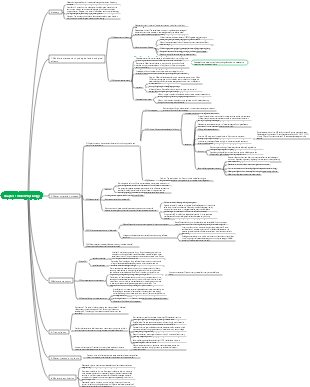
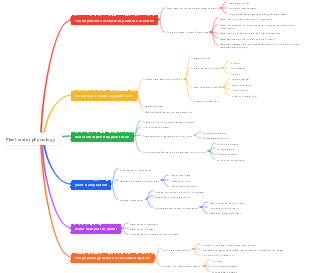
Plant water physiology
The role of water in life activities
plant water content
different plants
Aquatic plants>Xerophytes
Herbs>Woody plants
different habitats
Shade and moisture > Sun and dryness
different organs and tissues
The part with more vigorous life activities, More moisture content
The state of water present in plants
Bound water: close to the colloidal particles and bound by the colloidal particles Adsorbs and binds moisture that cannot flow freely
Generally not involved in plant metabolic reactions
Free water: far away from the colloidal particles free flowing moisture
Mainly involved in various metabolic reactions in plants
Free water/bound water: one of the physiological indicators to measure the metabolic strength and resistance of plants
The role of water in plant life activities
Physiological effects
1. Water is the main component of protoplasm 2. Water directly participates in important metabolic processes in plants 3. Water is a good medium for absorption and transportation of substances. 4. Water maintains the inherent posture of plants 5. Cell division and growth require sufficient water
ecological role
1. Regulate plant body temperature ①High specific heat: Stabilize plant body temperature ②High heat of vaporization: lower body temperature and avoid high temperature damage ③High dielectric constant: conducive to the dissolution of ions 2. Water has good permeability to visible light 3. Water can adjust the living environment of plants
absorption of water by plant cells
Pathways for water transport across membranes
diffusion (transmembrane phospholipid bilayer)
A single water molecule passes through Slower rate
Convergence (transmembrane aquaporin)
Swarms of water molecules pass through linear diffusion Fast speed
The principle of water transport across membranes
Free energy: energy available to do work at a constant temperature Bound energy: energy that cannot be used to do work
1. Chemical potential: free energy of 1 mol of substance 2. Water potential: chemical potential difference per partial molar volume of water (Pa) 3. Partial molar volume: Under certain temperature and pressure, and other components remain unchanged, Volume increase caused by adding 1 mol of water (effective volume occupied)
Pure water has the largest free energy and the highest water potential
The concentration increases and the water potential decreases (directly related to solute particle number, not concentration)
Water potential = chemical potential of water/partial molar volume of water
Osmosis: the movement of water from a system with high water potential to a system with low water potential through a semipermeable membrane
cell water potential
Solute potential (osmotic potential)
The water potential decreases due to the presence of solute particles. Always negative
pressure potential
Due to the presence of cell wall pressure Generally, it is a positive value, it is zero when the mass wall separates, and it is a negative value when there is severe transpiration.
gravitational potential
Moisture exists due to gravity Positive value, generally ignored
lining potential
Caused by the hydrophilic nature of cell colloidal substances and the binding of free water by capillaries negative value The cell substrate potential of the formed vacuole is neglected
water movement between cells
Adjacent cells: Depending on the difference in water potential, water flows from cells with high water potential to cells with low water potential.
Multiple cells: form a water potential gradient, and water flows from the end with higher water potential to the end with lower water potential.
Water absorption by plant roots
moisture in soil
Gravity water, capillary water and bound water (soil organic and inorganic colloids)
Water absorption by roots (radial transport)
Mainly the root tip root hair area
1. The number of root hairs in the root hair area is large, which increases the absorption area.
2. Root hair cell wall
3. The conductive tissue in the root hair area is well developed and has little resistance to water movement.
Root water absorption pathways
1. Apoplast pathway 2. Transmembrane pathway 3. Symplasmic pathway
The power of roots to absorb water
Transpiration pull (passive absorption)
Root pressure (active absorption)
Injury, vomiting water
Soil conditions that affect root water uptake
available moisture in soil
Soil aeration status
soil temperature
soil solution concentration
Moisture is transported upward (axial transport)
The rate of water transport in xylem
The force of water rising along vessels or tracheids
Transpiration-cohesion-tension theory
plant transpiration
physiological significance
Forming a water potential gradient: conducive to the absorption and transportation of water, Conducive to the absorption and transportation of minerals and organic matter
Keep plant body temperature relatively stable
parts
1. When the plant is young: the entire epidermis exposed to air 2. When the plant grows up: lenticel transpiration (woody plants) 3. Leaves: transpiration from cuticle membrane, transpiration from stomata (most important)
index
1. Transpiration rate: the amount of water transpired by a plant per unit leaf area within a certain period of time 2. Transpiration ratio (TR): The ratio of water lost through plant transpiration to the amount of substances that assimilate CO2 during photosynthesis. 3. Water use efficiency (WUE): the reciprocal of TR
stomatal transpiration
Principle of stomatal movement
Potassium ion, malic acid, sucrose
Osmoregulatory guard cells, Swells when absorbing water, shrinks when losing water
Exceptions: CAM plants, endogenous rhythms, Both sides of the leaf react differently to external conditions. ABA administration → stomatal closure
Factors affecting stomatal movement
Light intensity, light quality, stomata closing, temperature, Gases, humidity, chemicals
pore diffusivity
The diffusion rate through a small hole is proportional to the circumference of the hole, not to the area.
Factors affecting transpiration
external conditions
Light (most important), relative air humidity, temperature, wind
Internal factors
Stomata and substomatal space
Leaf internal area
The physiological basis of rational irrigation
Crop water requirements
Different crops require different water
The same crop has different water requirements at different growth stages.
Reasonable irrigation indicators
morphological indicators
Growth rate, leaf color, etc.
Physiological indicators
Leaf water potential, cell sap concentration or osmotic potential, Stomatal opening, water content
Water-saving irrigation methods
sprinkler irrigation
drip irrigation
regulated deficit irrigation
Controlled alternate root irrigation
Reasons for rational irrigation to increase production
1. It can improve various physiological functions, especially photosynthesis. 2. Can change the soil conditions and climate conditions of the cultivation environment (to meet ecological water needs) 3. Prevent soil drought (meet physiological water needs)
Li Mengwei from Class 2 Biotechnology Student ID: 22113386