MindMap Gallery Metal technology mind map
This is a mind map about metal technology, including casting, Plastic processing, welding, Cutting processing, etc. Friends in need hurry up and collect it!
Edited at 2023-12-21 14:47:56Avatar 3 centers on the Sully family, showcasing the internal rift caused by the sacrifice of their eldest son, and their alliance with other tribes on Pandora against the external conflict of the Ashbringers, who adhere to the philosophy of fire and are allied with humans. It explores the grand themes of family, faith, and survival.
This article discusses the Easter eggs and homages in Zootopia 2 that you may have discovered. The main content includes: character and archetype Easter eggs, cinematic universe crossover Easter eggs, animal ecology and behavior references, symbol and metaphor Easter eggs, social satire and brand allusions, and emotional storylines and sequel foreshadowing.
[Zootopia Character Relationship Chart] The idealistic rabbit police officer Judy and the cynical fox conman Nick form a charmingly contrasting duo, rising from street hustlers to become Zootopia police officers!
Avatar 3 centers on the Sully family, showcasing the internal rift caused by the sacrifice of their eldest son, and their alliance with other tribes on Pandora against the external conflict of the Ashbringers, who adhere to the philosophy of fire and are allied with humans. It explores the grand themes of family, faith, and survival.
This article discusses the Easter eggs and homages in Zootopia 2 that you may have discovered. The main content includes: character and archetype Easter eggs, cinematic universe crossover Easter eggs, animal ecology and behavior references, symbol and metaphor Easter eggs, social satire and brand allusions, and emotional storylines and sequel foreshadowing.
[Zootopia Character Relationship Chart] The idealistic rabbit police officer Judy and the cynical fox conman Nick form a charmingly contrasting duo, rising from street hustlers to become Zootopia police officers!
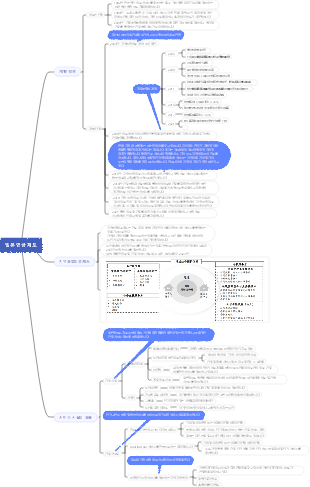
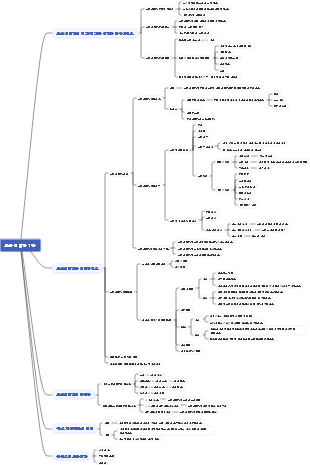
Metal Technology
casting
basic knowledge
Charging ability
The concept of filling ability
Influencing factors
Alloy fluidity (spiral specimen)
Pure metals and eutectics are best
Pouring conditions
Pouring temperature
Filling pressure
Mold filling conditions
Material (thermal conductivity)
Temperature (preheat)
Structure (wall thickness)
Gas (open a gas outlet)
solidification and shrinkage
Three zones and three solidification methods
Three kinds of contraction
The difference and prevention between shrinkage cavities and shrinkage porosity
Sequential solidification (riser and chilled iron)
Internal stress (causing deformation and cracks)
Thermal Stress
The thick wall at the core is under tension, and the thin wall at the surface is under compression.
Uneven heating and cooling causes inconsistent shrinkage
Prevention approach (simultaneous coagulation principle)
mechanical stress
Solid state shrinkage is mechanically hindered
Cracks and prevention
Deformation and prevention: (Spontaneous) When pulled out, it will be compressed and concave inward. The areas under pressure stretch and bulge outward. Prevent: Thick wall uniformity, symmetrical structure, simultaneous solidification principle, anti-deformation process, aging treatment
Sand casting (mechanical molding can be produced in batches but not three boxes)
Important processing surfaces and large flat surfaces should face down or to the side, and thick walls should be placed on top (page 75 of the book)
Parting surface selection
The number of straight parting surfaces is small, and the maximum cross-section is
Less loose pieces and cores
Most of the castings are in the lower box (accurate)
Process parameters
Machining allowance, large holes and unmachined holes are cast
Draft angle (note the tilt direction)
Questions on page 80 and questions 5 and 6 on page 81 of the book
Casting structural design (85 pages in the book)
Avoid undercutting in the direction of mold removal
The parting surface is a plane (remove the outer fillet)
The convex and concave platforms are extended, and the angle of the ribs is convenient for mold removal.
Structural slope
Use less cores and change the core supports into process holes (fixing and cleaning)
wall thickness
Use stiffeners for thick walls
Thin walls will lead to insufficient pouring and cold insulation
The inner wall is thinner than the outer wall
Wall thickness should be uniform
wall connection
Change right angles to rounded corners (columnar crystals at right angles are prone to cracks, stress concentration, and shrinkage cavities)
The acute angle is changed to a right-angled joint and then the angle is turned, and the thickness gradually transitions
Scattered joints, staggered joints
Odd number of spokes, curved spokes (minimum deformation to relieve internal stress)
Symmetrical cross-section (thermal stresses cancel each other out)
Flat plates are provided with stiffeners (to increase stiffness)
Plastic processing
Plastic deformation (concept and essence)
Cold deformation strengthening concept
Recovery and recrystallization (calculated in K)
Cold deformation and hot deformation
The concept and directionality of fibrous tissue (try not to cut the fibrous tissue)
Malleability of metals (measured by plasticity and resistance to deformation)
metallic nature
Temperature (the initial forging temperature of carbon steel is below the solidus line (1500) 200 degrees Celsius, and the final forging temperature is 800 degrees Celsius)
Strain rate (cold deformation strengthening and thermal effects)
The greater the number of compressive stresses, the better the forgeability
Forging
Classification
Free forging (upsetting, drawing, punching)
Die forging (mass production)
Forging Technology (Question 6 on page 130)
Remainder block (used less), machining allowance, parting surface (symmetrical), skin included
Die forgings must have forging slopes and rounded corners to avoid thin-walled deep holes.
Free forging cannot have cones and bevel structures, and the intersecting lines should be changed to straight lines.
Complex components are forged separately
Sheet metal stamping
separation
Blanking deformation process
Gap between concave and convex molds
Design the blanking mold (the falling one is necessary), take the concave mold as the design reference part, and then determine the size of the punch according to the gap. Design the punching die (the dropped ones are unnecessary), determine the punching edge size according to the punching part, take the punch as the design reference part, and then determine the die according to the gap.
Layout of punched parts (with or without overlapping edges)
deformation
Deep drawing
The drawing coefficient (small diameter to large diameter) is not less than 0.5 to 0.8. Due to cold deformation strengthening in multiple deep drawing processes, annealing is required after one or two deep drawings.
Corner radius of convex and concave mold
If the gap is too small, it will easily pull through the workpiece. If the gap is too large, it will easily cause the tensile parts to wrinkle (the flange is easy to wrinkle and needs a edge ring
Bend (the bending line should be as perpendicular to the sheet fiber as possible
welding
Arc welding
Direct connection and reverse connection
Welding heat affected zone (area where the structural properties of the metal on both sides of the weld change due to the action of welding heat (not melted)): Fusion zone (as cast structure, superheated coarse grain Overheating zone (coarse grains) Normalizing zone (recrystallization, fine) Part of the area you want to change (uneven size)
Welding stress and deformation (produced by thermal expansion and cold contraction, plastic deformation)
Prevent the elimination of welding stress: select materials with good plasticity, correct welding sequence (T-shaped welding seal, weld small first and then large, cross welding), preheat before welding, weld with medium or small capacity or hammer the weld, and remove stress after welding annealing.
Prevent and eliminate deformation: stress measures, anti-deformation measures before welding, mechanical correction or flame heating correction after welding, low current, multi-layer welding
Electrode arc welding (welding core and coating)
Submerged arc welding (wire and flux)
Electric welding (shunt phenomenon) Seam welding Butt welding Friction welding Brazing characteristics
Welding of metal materials (hardenability of crack pores)
Welds should be dispersed, symmetrically arranged, and convenient for welding operations. It is necessary to avoid stress concentration locations (sharp changes and edges) and maximum stress sections (middle of beams), and avoid machined surfaces.
Cutting
Cutting knowledge
Main movement and feed movement
Three cutting quantities
Tool material (hardness, strength, wear resistance and heat resistance)
Three sides, two knives and one tip (9 pages)
Four-sided and five-sided concepts, drawings, effects and working angles of tools (page 11)
Band-like (chip-breaking) knot-like chipping cutting
The concept, causes, advantages, disadvantages and control of built-up edge
Cutting force and cutting power
When cutting shaping materials, the temperature of the front tool near the tip is the highest. Rear cutter for brittle materials
The principle of cutting amount (the three elements should be as large as possible)
The transmission chain of machine tools, several speeds and maximum transmission ratio (topic on page 37)