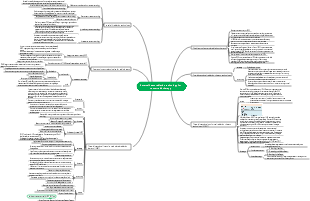
MindMap Gallery Radiotherapy plan design and evaluation
A mind map about radiotherapy plan design and evaluation, including external beam treatment plan evaluation, external beam treatment plan design, etc.
Edited at 2023-12-06 20:58:08This Valentine's Day brand marketing handbook provides businesses with five practical models, covering everything from creating offline experiences to driving online engagement. Whether you're a shopping mall, restaurant, or online brand, you'll find a suitable strategy: each model includes clear objectives and industry-specific guidelines, helping brands transform traffic into real sales and lasting emotional connections during this romantic season.

This Valentine's Day map illustrates love through 30 romantic possibilities, from the vintage charm of "handwritten love letters" to the urban landscape of "rooftop sunsets," from the tactile experience of a "pottery workshop" to the leisurely moments of "wine tasting at a vineyard"—offering a unique sense of occasion for every couple. Whether it's cozy, experiential, or luxurious, love always finds the most fitting expression. May you all find the perfect atmosphere for your love story.
The ice hockey schedule for the Milano Cortina 2026 Winter Olympics, featuring preliminary rounds, quarterfinals, and medal matches for both men's and women's tournaments from February 5–22. All game times are listed in Eastern Standard Time (EST).
This Valentine's Day brand marketing handbook provides businesses with five practical models, covering everything from creating offline experiences to driving online engagement. Whether you're a shopping mall, restaurant, or online brand, you'll find a suitable strategy: each model includes clear objectives and industry-specific guidelines, helping brands transform traffic into real sales and lasting emotional connections during this romantic season.
This Valentine's Day map illustrates love through 30 romantic possibilities, from the vintage charm of "handwritten love letters" to the urban landscape of "rooftop sunsets," from the tactile experience of a "pottery workshop" to the leisurely moments of "wine tasting at a vineyard"—offering a unique sense of occasion for every couple. Whether it's cozy, experiential, or luxurious, love always finds the most fitting expression. May you all find the perfect atmosphere for your love story.
The ice hockey schedule for the Milano Cortina 2026 Winter Olympics, featuring preliminary rounds, quarterfinals, and medal matches for both men's and women's tournaments from February 5–22. All game times are listed in Eastern Standard Time (EST).
Radiotherapy plan design and evaluation
External beam radiation treatment plan design
basic concept
Tumor control probability and normal tissue complication probability
TCP: refers to the probability of tumor control
NTCP: refers to the probability of radiation complications within a period of time after normal tissue is irradiated with a certain dose.
tumor lethal dose
Tumors of different types, different pathological grades, different stages, and different lesion volumes, The lethal dose is different. The higher the lethal dose of a tumor, the more difficult it is to cure it with radiation.
The tumor lethal dose is defined as the dose required when the tumor control rate reaches 95%, which is expressed as TCD95
normal tissue tolerated dose
Divided into clinically acceptable minimum organ damage dose (expressed as TD5/5) and maximum organ damage dose (expressed as TD50/5)
TD5/5 refers to the radiation dose when no more than 5% of cancer patients treated with standard treatment conditions will suffer serious damage due to radiation therapy after 5 years of treatment.
TD50/5 refers to the radiation dose when no more than 50% of patients treated with standard treatment conditions will suffer serious damage due to radiation therapy after 5 years of treatment.
The optimal tumor irradiation dose DT<=TD5/5
treatment ratio
The therapeutic ratio is the ratio of the tolerated dose to normal tissue to the lethal dose to the tumor
Treatment ratio >1, radiotherapy plan is less restrictive
Treatment ratio <1, pay attention to normal tissue protection
The lethal dose of seminoma is 35gy, while the tolerable dose of the intestine in the irradiation field is 50gy. The tumor can be cured only when the therapeutic ratio is >1. When the therapeutic ratio is <1, the possibility of curing the tumor with radiotherapy is very small, but it can be cured through careful treatment. Design treatment plans to improve the dose of normal tissue surrounding the tumor to achieve better treatment results
Basic concepts in treatment planning
Gross tumor volume GTV
Gross tumor volume refers to the location and extent of the malignant tumor as shown by clinical physical examination, imaging examination, and pathological examination.
Including primary tumor area gtv-p, regional lymph node metastasis tumor area gtv-n, distant metastasis tumor area gtv-m, if the tumor has been removed, it is considered that there is no gtv
clinical target volume CTV
Clinical target volume = gtv Subclinical focus around tumor Area of possible invasion
Planning target volume PTV
The planning target volume refers to taking into account various uncertain factors to ensure that the CTV can obtain the prescribed dose. Based on ctv, add the volume included in a certain range
Uncertain factors include machine errors, positioning errors, errors between treatments, and errors caused by physiological movements of organs.
The boundary that needs to be externalized due to the physiological movement of the organ is called the inner boundary (IM), which is asymmetrically surrounding the ctv. Based on the ctv, the range included in the externalized internal boundary is called the internal target volume (ITV). On the basis of gta Consider the internal target volume as the internal gross tumor volume (IGTV)
Treatment volume TV
It is best when Tv=ptv, but in clinical applications, tv is usually larger than ptv.
Irradiation area IV
Organs at risk OAR
Planned Organs at Risk PRV
clinical dosimetry principles
Tumor dose must be accurate and GTV delineation must be accurate
The dose distribution within the treated tumor area should be uniform
When designing the irradiation field, the measurement within the tumor treatment area should be maximized. The target area is not equal to the irradiation field.
Protect important organs around the tumor from being exposed to radiation, and protect the spinal cord during esophageal cancer treatment
High energy x(r) ray irradiation plan design principle
When a single irradiation also irradiates a certain target area, if the target area is in the dose built-up area, due to the large measurement change gradient in the dose built-up area, Dose is difficult to determine, so tumors should be placed behind the maximum dose depth
However, the dose after the maximum dose depth decreases exponentially with depth. When the target area is large, the dose distribution in the area is very uneven, and the dose of important organs and normal tissues located behind the target area is also very high, so it does not meet the requirements. Clinical dosimetry principles do not advocate the use of single-leaf high-energy x(r) irradiation in general clinical applications.
beam shaping
field block
To make the radiographic field block, we first use a hot wire to cut foam plastic, and then cast low-melting point lead to process it into irregular radiographic field blocks.
Multi-leaf collimator (MLC)
The multi-leaf collimator can be quickly determined. The coordinate position of each leaf forms an irregular radiation field. The thinner the blade thickness, the better the field fitting effect.
organizational compensation
equivalent tissue filler
The irregular contour of the human body leads to distortion of the dose distribution within the tissue or uneven dose in the target area. For this reason, tissue equivalents can be implanted on the skin surface and in locations where tissue is lacking to improve dose distribution and increase the dose to the skin tissue, etc. Effective substances, including wax block silicone
Deficit Organization Compensation Board
Although equivalent tissue filler can improve dose distribution, it destroys the skin protection effect. The missing tissue compensation plate is based on equivalent tissue filler, its length and width are scaled down and placed on the accelerator accessory rack to simulate being far away from the human body. On the body surface, the share of tissue scattering is reduced
dose compensation plate
subtopic
Wedge plate
A wedge-shaped block of metal, often made of lead or copper
It can change the dose distribution. If the body surface is uneven, it can be corrected with wedge plates at different angles to compensate for the tissue. For tangential irradiation of breast cancer and cervical irradiation for esophageal cancer, wedge plates can be used instead of equivalent tissue fillers.
plan design (3DCRT/IMRT plan design process)
outline
The outline of the body should be drawn accurately to avoid affecting the calculation.
The outline of normal organs and organs at risk must be accurate
Some organs at risk that are not at the target volume level also need to be delineated
Fusion images
Radioactive source selection
KV level x-ray treatment of superficial lesions and keloids
Megavoltage x-ray
4-6mv, 10-25mv
The greater the energy, the greater the damage to the patient's normal tissue, which is not conducive to the radiation safety of medical staff.
Electronic beams attenuate quickly and can better protect normal tissue after tumors.
Field design
Radiation field direction design principles
The principle of proximity
parallel principle
tangent principle
Protect vital organs and tissues
Debugging the weight of each field
Large near, small far
Is it necessary to add organizational compensation?
organizational compensation
Adjust the uniformity of the shot field
Application of wedge plate
Zi Ye
Adjust the uniformity of the shot field
Wedge plate
Zi Ye
advantage
More flexible than wedge plates
Wider scope of action
Fewer machine hops
It can make forward intensity adjustment plans and realize complex feasible plans such as synchronous dosage increase.
Not demanding on machinery and equipment
shortcoming
The process is cumbersome
Physicians have an increased workload and are prone to errors
Cold and hot spots are prone to occur at the junction of the sub-field and the dose is uneven.
application
organizational compensation
Uneven body thickness
segmented irradiation
When irradiating the whole brain and the whole spinal cord, the radiation field is too long and is irradiated in sections (Tomo can achieve one-time treatment)
Whole brain: Isocenter irradiation on both sides of the field (whole brain above C4)
Whole spinal cord: prone, calcar origin (thoracic, lumbar, sacral foramen)
The irradiation fields are spaced 1cm apart, and the fields are changed after every 10gy of irradiation to avoid hot and cold spots in the dose.
Synchronous addition
Multi-leaf collimator static intensity modulation
High energy electron beam irradiation plan design
High-energy electron beam irradiation is different from high-energy The built-up effect is not obvious, and the surface dose is generally above 75% to 80%, and increases with the increase of energy.
E=3d (3~4)MeV (d is the treatment depth)
As the electron beam energy increases, the skin dose and X-ray pollution increase. Therefore, the electron beam energy commonly used in clinical practice cannot be too high, generally 4~25mev.
External beam treatment plan evaluation
Dosimetry index
Target dose assessment
The target dose refers to the lethal dose required to cure the tumor or the therapeutic dose required in the target area, that is, the prescription dose.
Dose limitations for organs or tissues at risk
Dosage hotspots
Avoid areas outside the target area with doses higher than the target area.
maximum tissue dose
mean tissue dose
Normal tissue or organ volume dose
Physical parameter index
Dose volume histogram
Target area D95% is the radiation dose obtained by 95% of the target area volume.
V95% is the target volume surrounded by 95% of the prescribed dose line
The abscissa is the radiation dose, and the ordinate is the absolute volume value or volume percentage.
The commonly used integral dvh refers to the ratio of the volume addition result that is greater than a certain measurement value within the volume range of dose calculation or the volume of a specified organ or target area with a certain dose value and the total volume of the organ or target area. According to the dvh diagram Can evaluate treatment plans