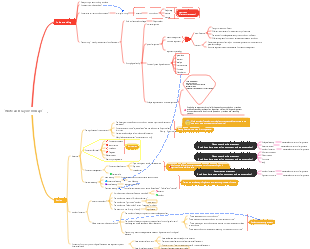
MindMap Gallery Five copywriting ideas, readers can understand in seconds and gain insight into users’ hearts
This article introduces five copywriting ideas to you, analyzes the principles of copywriting and specific cases, and helps you write thoughtful copywriting with a user perspective. There are five methods in total, which are: attribute decomposition, point out interests, Identify opponents, describe vision, Make connections etc. Copywriting ideas, 5 simple, crude, and worth understanding,
Edited at 2023-12-10 10:53:14This Valentine's Day brand marketing handbook provides businesses with five practical models, covering everything from creating offline experiences to driving online engagement. Whether you're a shopping mall, restaurant, or online brand, you'll find a suitable strategy: each model includes clear objectives and industry-specific guidelines, helping brands transform traffic into real sales and lasting emotional connections during this romantic season.

This Valentine's Day map illustrates love through 30 romantic possibilities, from the vintage charm of "handwritten love letters" to the urban landscape of "rooftop sunsets," from the tactile experience of a "pottery workshop" to the leisurely moments of "wine tasting at a vineyard"—offering a unique sense of occasion for every couple. Whether it's cozy, experiential, or luxurious, love always finds the most fitting expression. May you all find the perfect atmosphere for your love story.
The ice hockey schedule for the Milano Cortina 2026 Winter Olympics, featuring preliminary rounds, quarterfinals, and medal matches for both men's and women's tournaments from February 5–22. All game times are listed in Eastern Standard Time (EST).
This Valentine's Day brand marketing handbook provides businesses with five practical models, covering everything from creating offline experiences to driving online engagement. Whether you're a shopping mall, restaurant, or online brand, you'll find a suitable strategy: each model includes clear objectives and industry-specific guidelines, helping brands transform traffic into real sales and lasting emotional connections during this romantic season.
This Valentine's Day map illustrates love through 30 romantic possibilities, from the vintage charm of "handwritten love letters" to the urban landscape of "rooftop sunsets," from the tactile experience of a "pottery workshop" to the leisurely moments of "wine tasting at a vineyard"—offering a unique sense of occasion for every couple. Whether it's cozy, experiential, or luxurious, love always finds the most fitting expression. May you all find the perfect atmosphere for your love story.
The ice hockey schedule for the Milano Cortina 2026 Winter Olympics, featuring preliminary rounds, quarterfinals, and medal matches for both men's and women's tournaments from February 5–22. All game times are listed in Eastern Standard Time (EST).
Five copywriting ideas, readers can understand in seconds and gain insight into users’ hearts
Five copywriting ideas
"In place", "careful copywriting" and "user thinking", what do these words mean? In fact, the thoughtful copywriting and user thinking mentioned by leaders actually have underlying logic. Copywriting is not just about your words. You must first understand the underlying thinking to guide the copywriting you write before you can write leadership Desired copywriting. That is to say, we sometimes hear some insightful people often say: "Kung Fu is beyond Kung Fu!" When applied to copywriting, you can understand it as "Copywriting is beyond words!" Once you master the basic principles, you can quickly and efficiently write copy that embodies users’ thinking! Next, I will introduce you to five copywriting ideas, analyze the principles of copywriting and specific cases, and help you write thoughtful copywriting with a user perspective. There are five methods in total, namely: Attribute decomposition point out interests Identify opponents describe vision build connection
Attribute decomposition
If you were to write product details copy for a leather jacket, how would you describe it? If this jacket is characterized by: ultimate comfort. Most copywriting looks like this: The best craftsmen from Italy, Using the highest quality craftsmanship, perfectly anti-wrinkle; Perfectly matched to flatter your figure. What is the presentation effect of this copywriting? I think if you read it, you will know very well that this kind of copywriting makes people feel nothing when reading it. It is just to have a paragraph of copywriting where there should be copywriting. In my opinion, people who write this kind of copywriting either really don’t know how to write copywriting, or they are just pretending. So are there any good copywriting methods to highlight the characteristics of this dress?
Let’s look at another set of copywriting: Contains 100% Aksu long-staple cotton, which has both warmth and style; Made in 34 processes to ensure perfect connection at the seams; Using 10,000 sets of Chinese male figure data, it is specially designed for Chinese people; The X-principle tummy control design maximizes the appearance of a tall and straight figure; Adopts American standard zipper design to ensure smoothness of the zipper; Comparing these two sets of copywriting, you can intuitively feel the characteristics of the clothes conveyed by the second set of copywriting. Users can quickly perceive how extreme and comfortable the clothes are, and then make a purchase decision.
So how can you have the second type of copywriting thinking so that the next time you face a similar product, you can write copy that highlights the features of the product? I call this kind of copywriting thinking “attribute decomposition”. What's the meaning? The copywriting idea of "attribute decomposition" is as follows: decompose the attributes of a certain product and describe the product's production process, raw materials, origin and other details, so that readers can clearly and intuitively understand the advantages of the product, and then use it in other aspects. Label it in your mind. The advantage of this copywriting idea is: if you are a niche brand, this will help you bridge the gap with big brands and quickly let users understand your characteristics. Having said this, we must explain why we use the copywriting method of "attribute decomposition". When a person looks at something, he uses two cognitive modes. One is called the low cognitive mode. The low cognitive mode does not require energy to think and understand; the other is called the high cognitive mode. He It takes a lot of effort to think and understand. Most of the time, users will be in low cognitive mode, which is probably related to the evolutionary process of human beings. In the past, people would use energy at critical times, such as hunting, or escaping from danger. Therefore, human energy is limited and needs to be utilized sparingly. Therefore, most of the time, people activate low cognitive mode, which helps to save his energy, because if he does not think, he will not consume brain cells (this is also a manifestation of saving energy). When users are in low cognitive mode, they will think and judge in a labor-saving way, so a common method is to use past experience and cognition to judge and make decisions. Therefore, when we buy products, we always recognize the brand. You will also often hear people say when shopping: "You can't go wrong with big brands" and "Imported ones are definitely better than domestic ones." This is what it means to engage in low cognitive mode.
At this time, if you are a niche or unknown brand, it will be difficult for you to be recognized by users. then what should we do? At this time, the user's cognition should be switched to "high cognition" mode. How to switch? It is to break down the attributes of your product and present your advantages and features directly in front of users. Through these features and advantages, users will feel that you are good! In fact, we often encounter this method in life. For example, during an interview, the examiner will usually use the school you graduated from to determine who is in his priority list. If they are graduates from Tsinghua University and ordinary 211 graduates, then the former will have an advantage in the examiner's mind. This is what we call the advantage of a big brand. then what should we do? Even if you are 211, you should list your subject scores, grades obtained outside school, etc., to narrow the gap between you and Tsinghua graduates as much as possible, and let the examiner know that you are also good.
point out interests
Suppose you want to buy a computer now. With the same price and brand, through the following two sets of copywriting, which set of copywriting do you think will impress you more and make you make a purchase decision? Copywriting one: Adopt international high-end configuration; Use the super large capacity to your fullest; Suitable for business and leisure; Give away super cost-effective gifts; Worry-free after-sales, buy with confidence; Copywriting two: The 13th generation Core i7 processor takes only 4 seconds to boot; 512GB 1TB memory, you can play any game; Only A4 paper size, easy to carry; Comes with a hybrid mechanical keyboard for free gaming; 5-year limited warranty, 3-year on-site service;
I believe that in comparison, the second set of copywriting is more attractive in attracting you to make a purchase decision. Because it tells you directly what specific benefits you can get from buying this computer. In contrast, the descriptions in the first set of copywriting are relatively vague, making it difficult for people to have a direct sense of benefit. They also need to think about it further: "How high-end is your configuration? What are the cost-effective gifts? Can I use them?" Up?" This copywriting method is very simple and very practical. You only need to tell the user directly: What benefits can I bring to you! Why is this method so simple yet so effective? I would like to quote a very interesting thought from a business case to help you understand: When a customer buys an electric drill, what exactly is he buying? Are you buying an electric drill? Definitely not. Did you buy an electric drill to drill the holes for him? It doesn't seem to be the case. Why did you buy the hole? Is it to hang family photos? Why hang up family photos? Is it because the client wants family harmony or family time to enjoy together? … Using this case is not to let you answer what the customer who bought the electric drill wants, but to let you understand that most of the time, what the customer wants is the benefits that the product can bring to him. Therefore, you have to directly point out that you The benefits it can bring to customers can prompt them to buy quickly. Therefore, I want to ask you another question, when selling cars, what do customers want? Is it possible to reach the destination quickly, conveniently and efficiently? Or is it the sense of identity and status you get after buying a car?
find opponent
When writing copy, I found that many people think in a linear way, so most of the time the copy they write is not insightful. What is linear thinking? It is a single way of thinking that starts from the surface of things and does not see the deep essence of things. For example, if you want to make a plan for brand A’s takeaway coffee, who do you think its competitors are? Is it Starbucks? Or Luckin Coffee? Or instant coffee? If you position your competing products on coffee brands that appear to be in the same industry, you are making the mistake of linear thinking. Seeing this, you may be wondering, why? Isn’t coffee’s competitor coffee? What's wrong with this? Yes, on the surface, products of a certain category should be similar, and the competing product of coffee should be coffee. But if we change the angle and look at it from the user's perspective, it may be different. Suppose you are a user and you choose to order a takeout today. Then there is a high probability that you will not go to an offline cafe to buy coffee (the reason is very simple. The coffee is freshly made and tastes good. If you order takeout, That most likely means you order takeout because you don’t have time to go to the store); Since it is takeaway, it may be juice, milk tea, coffee, etc. A person's daily intake of takeaway drinks is limited. If you order juice, you probably won't order milk tea, and if you order milk tea, you probably won't order coffee. In other words, takeaway coffee is competing with other drinks for users’ stomach capacity. Therefore, your primary competitive product positioning should be other takeaway drinks! Therefore, the direction of your copywriting is to first tell users why you should have a takeaway coffee instead of milk tea or juice! Then tell users why they should choose you for takeaway coffee instead of other coffees! This copywriting idea should be said to be copywriting analytical thinking. When you write copywriting, you should be clear: What products will my target users compare me with? And who are my competitors? At this time, you should understand that if you are taking out coffee, what you should tell your customers is: "In busy work, neither juice nor milk tea can make you concentrate, but my A coffee can keep you alive, and you have Motivation to keep working! ”
Let me give you another example to help you understand this copywriting method better. For example, if you do online training, when you want to write copy to attract customers, how should you make customers choose you? Do you want customers to think you are the best online education and training institution? Is it to compete with competitors for more customer choices? “Eight out of ten who participated in online education chose us?” Half true, not quite. Because for online education, to a large extent, his opponents are not peers, but books, online forums and other free learning methods, because people who choose books or free online information to learn, because these people either have no money to participate You have to study by yourself, or you don’t have time and can only study according to your own schedule (after all, free things will not be wasted if you don’t use them. If you sign up and don’t study, the tuition will be in vain). Therefore, what online education should strive for is: for those who have no money, financial assistance policies should be provided, such as installments, such as other forms of borrowing to study; for those who have no time, appropriate study plans should be formulated for them, so that They can learn effectively. Therefore, your copy for people who don’t have money should be: “We provide installment study plans, and you can get a 20% discount if you study on time.” "If you invite 3 people, 1 person is free of charge"; For those who don’t have time it should be: "We provide you with a tailor-made study plan" “Helping professionals obtain 3 times the professional content in 1 time”
describe vision
How to let your target users directly, clearly and immersively feel how good your product is, so that they want to own your product immediately? The best way is to use a visual description method, which allows readers to think of the specific scene of using your product in one second. For example, when you want to write a product details copy for a rice or fruit mobile phone, how do you describe its latest and most powerful night photography function? If you want to use the first disassembly attribute introduced in this article, it is like this copy: "Our latest mobile phone adopts the latest hardware upgrade, a new generation of large aperture and the highest quality photosensitive element to ensure that the mobile phone can operate in dark light. The shooting effect in the scene is still powerful! ” Obviously, although this kind of copywriting uses part of the attribute disassembly method, it still does not give people an intuitive effect. We can try copywriting that describes the visual sense: "The ultimate night shooting experience, this time, you can shoot with your mobile phone To the bright starry sky!” How about this time, does it make people feel how good the effect of night photography is? You don’t need a camera, you can take pictures of the bright starry sky directly with your mobile phone! This method is to describe vision, and its method is: through concrete description, let readers immediately associate or recall specific scenes!
I think if I give you a few more classic cases for comparison, you can intuitively feel how effective this copywriting method is. Dumpling advertising: highlighting the taste Fuzzy copywriting: inheriting and creating classics Visual copywriting: The smell of my mother when I was a child Proposing to your girlfriend: highlighting happiness Fuzzy copy: We will live happily and grow old together Visual copy: I want to hold hands and walk on the beach under the afterglow of the sunset when we are old. Running for President: Eliminating Racial Discrimination Vague copy: I hope to pursue equality and reduce racial discrimination Visual copy: I have a dream that one day, in the red hills of Georgia, the sons of former slaves will be able to sit down with the sons of former slave owners and talk about brotherhood. (from Martin Luther King)
Job hunting: stand out Fuzzy copy: I have a sense of responsibility, mission, meticulousness, hard work and hard work Visual copywriting: I work all night for 1% of the details and never give up on the last improvement until I am satisfied How about comparing these cases to see if the visual copywriting method can give you a very direct feeling of the effect. Why the copywriting method of describing vision can make people so immersive? I tried to analyze the principle of visual sense from two angles. First of all, vision is our first way of communicating with the outside world. For example, when encountering unfamiliar things, observe first (visual), the speed of light is faster than the speed of sound, recall something (pictures appear in the mind); Secondly, there is the "vividness effect" in psychology, which means that we are more susceptible to the vividness of an event (whether it is visual or not), rather than the meaning of the event itself. Therefore, visual sense is physiologically necessary for us.
During the Iraq War, if you were a reporter, how could you arouse people's anti-war sentiment through copywriting? I think the first reaction of most people is to talk about the disadvantages of war, the benefits of peace, the benefits of peaceful development to human civilization, etc. In fact, if you learn how to describe visual copywriting, you may change your thinking: reporting that "the story of a certain family's wife losing her husband and the child losing their father is "better" than the death of thousands of American soldiers and the cruelty of war." Because such a story will be more "live", you don't need to elaborate too much on the advantages and disadvantages. You can arouse people's hatred of war through visual description! Speaking of which, I would like to give you a small example to deepen the power of this copywriting method. Suppose there is a customer who is considering buying a Maserati or a Honda. How should you impress him through copywriting? (I will not consider whether the two are comparable, brand, price, etc., but only use them as copywriting examples) I think the best copy is: "If you drive a Martha, others will call you Director Chen. If you drive a Wuling, others will only call you Master Chen!" I think this intuitive feeling can best arouse customers’ desire to drive a Masala!
build connection
Suppose that the company now has a new product that is about to be launched, and you are the person in charge of the product. You are responsible for introducing this new product to the public at the press conference. However, because it has a lot of new technologies, most people are not very familiar with the technology. Understand, so how do you introduce this new product to the audience through new features so that people can quickly understand what this product is? What can you do? For example, this product is a set-top box. How do you introduce it to the audience in one sentence? If you want to start with the technology, process, etc. of this product, it will be too lengthy, and after all, most of the audience will not be professionals, and they are likely to be confused about what you are saying, and then lose patience, even if Even if you are willing to listen to the end, I am afraid that due to limited professional knowledge, I don’t know what you are talking about. So how do you use one sentence of copy to make the audience understand? Next, I introduce the last copywriting method in this article: establishing connections! What is making connections? What it means is: when faced with new things, readers will not pay because they feel unfamiliar. At this time, you need to use things that readers are already familiar with to establish connections and quickly establish a sense of familiarity!
How to understand? Take the above set-top box as an example. As a TV set-top box, you use the four methods I mentioned above. Some of them are really not suitable for explanation, such as attribute disassembly. Then, you can tell the audience directly: the set-top box is a tool that can turn your TV into a computer in one second! You see, this description is very clear, because the threshold of "technology" and "craft" you mentioned is too high, and the audience does not know what it is and cannot generate cognition in their minds. But when you say "computer", people immediately understand What is it. Because everyone is familiar with "computer", a computer can play a lot of content, you can watch any video you want to watch, listen to any music you want to listen to, you can choose to start or pause, if you turn the TV into a computer, then it It adds many more functions to the TV. This set-top box is a bridge tool for the TV to become a computer, because the audience can instantly understand what it does! Its copywriting principle is: most people tend to prefer familiar things and rarely choose new things, because familiar things give people a sense of security and control.
In order for customers to quickly become familiar with new things, when writing copy, they need to be clear: How can I graft on things that they are familiar with and quickly understand new products? Therefore, you can see that some people who are very good at praising others use this copywriting thinking. For example, if you want to praise a girl for her beautiful singing voice, instead of saying "a beautiful voice", you should say "she is the next Teresa Teng!"; For example, if you want to praise a girl for her beauty, instead of saying "She is very beautiful" you should say "Dilraba from the Northeast" Because many people know Teresa Teng’s singing voice and Di Lieba’s appearance to a certain extent. As long as you connect them with the product you want to describe (the person you want to praise), people will understand in seconds! Having said that, we might as well do a small exercise. If I wanted to ask you to describe the quality of a marketer in one sentence, what would you say? If it were me, I would say: "If you don't want to be president, be a marketer!"
LY personal summary
The above five points are all written from the perspective of users and customers.