Wondershare EdrawMind
MindMap Gallery market prediction
market prediction
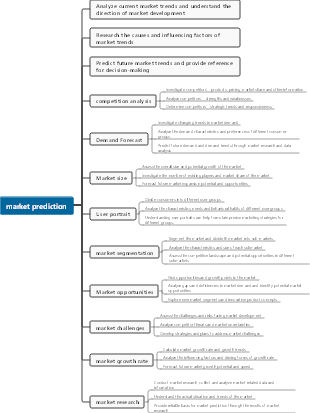
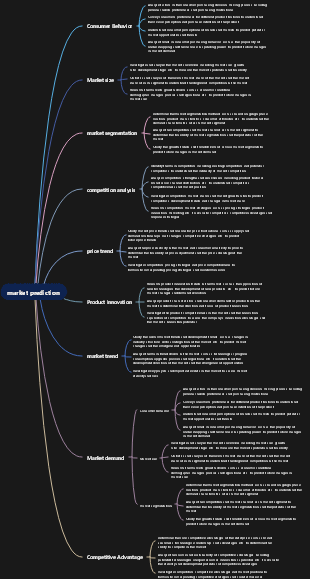
This is a mind map about market forecasting, telling stories related to market forecasting. If you are interested in the story of market forecasting, please feel free to collect and like this mind map~
Edited at 2022-11-20 15:50:20
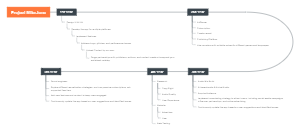
- Monthly Internal Control Testing Execution Plan
This flowchart outlines a Monthly Internal Control Testing Execution Plan, detailing a structured approach to internal control walkthrough testing, deficiency tracking, and closure. The process is divided into six key stages. "Testing Plan Development" involves determining this month's testing scope, selecting key control processes, and assigning testing personnel responsibilities. "Walkthrough Testing Execution" focuses on executing full-process walkthrough testing, verifying key control point effectiveness, and collecting testing process evidence. "Deficiency Identification and Recording" includes identifying internal control deficiencies, grading deficiencies by severity, and documenting deficiency details. "Deficiency Remediation Tracking" assigns deficiency remediation owners, develops specific corrective actions, and monitors remediation progress. "Remediation Effectiveness Verification" involves retesting remediated items, evaluating remediation effectiveness, and confirming deficiency closure. Finally, "Monthly Summary Report" summarizes monthly testing results, analyzes internal control root causes, and proposes continuous improvement suggestions. This plan ensures comprehensive and systematic internal control testing and improvement.
- Weekly Audit Working Paper Organization and Review Plan
This flowchart presents a Weekly Audit Working Paper Organization and Review Plan, detailing a systematic approach to managing audit working papers through collection, review, cross-review, issue rectification, archiving, and reporting. The process begins with "Working Paper Collection and Organization," which involves collecting weekly audit working papers, categorizing them by project, and indexing and creating an archiving directory. Next, "Working Paper Content Review" focuses on checking the completeness of paper content, verifying data accuracy, and confirming format compliance. "Cross-Review Execution" arranges cross-reviews among auditors, marks identified issues and deficiencies, and provides improvement suggestions feedback. "Issue Rectification Implementation" confirms identified review issues, develops a corrective action plan, and tracks rectification completion status. "Working Paper Archiving Management" formally archives working papers, updates the archiving directory index, and sets access permission controls. Finally, "Weekly Summary Report" prepares a weekly work summary, analyzes root causes of issues, and proposes next week's improvements. This structured plan ensures efficient and effective management of audit working papers.
- External Audit Coordination Weekly Meeting & Data Submission Plan
This infographic outlines a structured plan for external audit coordination weekly meetings and data submission. It is divided into four key stages to ensure smooth audit progress. Pre-meeting Preparation: Involves notifying participants by sending calendar invites and confirming attendees from the audit team. It includes preparing a pre-review package by collecting pending issues from the last week and updating data request status. Logistics such as booking the meeting room/video link and assigning a minute-taker are also arranged. Meeting Agenda: Focuses on progress sync through audit team highlights for the week and internal team reports on submission rates. Issue discussion covers clarifying ambiguous data requests and coordinating cross-departmental resources. Risk identification flags items at risk of delay and assesses their impact on the audit opinion. Next steps confirm deadlines for the coming week and assign ad-hoc requests. Data Submission Management: Manages data inventory with a list categorized by audit area and owners assigned for each item. Timeline details initial response times and final submission deadlines. Quality & format considerations include file naming conventions and data anonymization rules. Status tracking monitors in-progress, pending review, and completed items, with a status table updated weekly. Post-meeting Follow-up: Includes distributing meeting minutes with decisions and action items, confirming the next meeting time. Action item tracking updates the action plan tracker and sends reminders. Escalation reports major blockers to management and requests additional support if needed.
market prediction
- Monthly Internal Control Testing Execution Plan
This flowchart outlines a Monthly Internal Control Testing Execution Plan, detailing a structured approach to internal control walkthrough testing, deficiency tracking, and closure. The process is divided into six key stages. "Testing Plan Development" involves determining this month's testing scope, selecting key control processes, and assigning testing personnel responsibilities. "Walkthrough Testing Execution" focuses on executing full-process walkthrough testing, verifying key control point effectiveness, and collecting testing process evidence. "Deficiency Identification and Recording" includes identifying internal control deficiencies, grading deficiencies by severity, and documenting deficiency details. "Deficiency Remediation Tracking" assigns deficiency remediation owners, develops specific corrective actions, and monitors remediation progress. "Remediation Effectiveness Verification" involves retesting remediated items, evaluating remediation effectiveness, and confirming deficiency closure. Finally, "Monthly Summary Report" summarizes monthly testing results, analyzes internal control root causes, and proposes continuous improvement suggestions. This plan ensures comprehensive and systematic internal control testing and improvement.
- Weekly Audit Working Paper Organization and Review Plan
This flowchart presents a Weekly Audit Working Paper Organization and Review Plan, detailing a systematic approach to managing audit working papers through collection, review, cross-review, issue rectification, archiving, and reporting. The process begins with "Working Paper Collection and Organization," which involves collecting weekly audit working papers, categorizing them by project, and indexing and creating an archiving directory. Next, "Working Paper Content Review" focuses on checking the completeness of paper content, verifying data accuracy, and confirming format compliance. "Cross-Review Execution" arranges cross-reviews among auditors, marks identified issues and deficiencies, and provides improvement suggestions feedback. "Issue Rectification Implementation" confirms identified review issues, develops a corrective action plan, and tracks rectification completion status. "Working Paper Archiving Management" formally archives working papers, updates the archiving directory index, and sets access permission controls. Finally, "Weekly Summary Report" prepares a weekly work summary, analyzes root causes of issues, and proposes next week's improvements. This structured plan ensures efficient and effective management of audit working papers.
- External Audit Coordination Weekly Meeting & Data Submission Plan
This infographic outlines a structured plan for external audit coordination weekly meetings and data submission. It is divided into four key stages to ensure smooth audit progress. Pre-meeting Preparation: Involves notifying participants by sending calendar invites and confirming attendees from the audit team. It includes preparing a pre-review package by collecting pending issues from the last week and updating data request status. Logistics such as booking the meeting room/video link and assigning a minute-taker are also arranged. Meeting Agenda: Focuses on progress sync through audit team highlights for the week and internal team reports on submission rates. Issue discussion covers clarifying ambiguous data requests and coordinating cross-departmental resources. Risk identification flags items at risk of delay and assesses their impact on the audit opinion. Next steps confirm deadlines for the coming week and assign ad-hoc requests. Data Submission Management: Manages data inventory with a list categorized by audit area and owners assigned for each item. Timeline details initial response times and final submission deadlines. Quality & format considerations include file naming conventions and data anonymization rules. Status tracking monitors in-progress, pending review, and completed items, with a status table updated weekly. Post-meeting Follow-up: Includes distributing meeting minutes with decisions and action items, confirming the next meeting time. Action item tracking updates the action plan tracker and sends reminders. Escalation reports major blockers to management and requests additional support if needed.
- Recommended to you
- Outline