MindMap Gallery Product demand analysis idea sharing
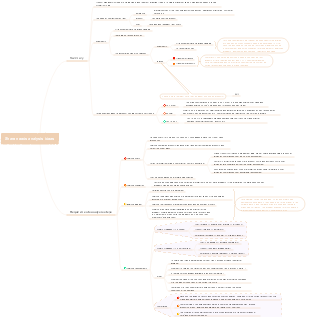
This is a mind map about sharing ideas for product demand analysis. Summary: 1. Contact needs come from 2. Assumptions 3. Three questions about the product based on current working habits. Requirements analysis steps: 1. Analyze users 2. Analyze scenarios 3. Analyze problems 4. Analyze needs
Edited at 2021-08-02 23:41:59This is a mind map about bacteria, and its main contents include: overview, morphology, types, structure, reproduction, distribution, application, and expansion. The summary is comprehensive and meticulous, suitable as review materials.

This is a mind map about plant asexual reproduction, and its main contents include: concept, spore reproduction, vegetative reproduction, tissue culture, and buds. The summary is comprehensive and meticulous, suitable as review materials.
This is a mind map about the reproductive development of animals, and its main contents include: insects, frogs, birds, sexual reproduction, and asexual reproduction. The summary is comprehensive and meticulous, suitable as review materials.
This is a mind map about bacteria, and its main contents include: overview, morphology, types, structure, reproduction, distribution, application, and expansion. The summary is comprehensive and meticulous, suitable as review materials.
This is a mind map about plant asexual reproduction, and its main contents include: concept, spore reproduction, vegetative reproduction, tissue culture, and buds. The summary is comprehensive and meticulous, suitable as review materials.
This is a mind map about the reproductive development of animals, and its main contents include: insects, frogs, birds, sexual reproduction, and asexual reproduction. The summary is comprehensive and meticulous, suitable as review materials.
Share needs analysis ideas
Summary
Product managers first need to create value, and the most important thing is to create maximum value, so analyzing needs is a very critical first step.
The need for contact comes from
enterprise
Internal sources within the company include bosses, operations, marketing, customer service, etc.
product
Key data from the product
user
Research and feedback from users
hypothesis
All requirements are clear and valuable
In this case, our demand pool is very large; therefore, we need to manage the demand and sort these valuable demands according to their value.
There are no technical issues
We plan versions according to the previous order of demand value. Such a plan is difficult to advance in technical development; we need to re-plan the version based on the technical development model and demand value. This result can ensure that the value of each version is the greatest. , and is reasonable in terms of technical development.
Two assumptions and two reasons
hypothesis
All requirements are clear and valuable
If it is not established, needs analysis is required
illustrate
It is relatively complicated and diverse, and the types of requirements are different, and the specific processes of demand analysis are also different. When communicating with the demand side, it is necessary to clarify the background and purpose of the demand, so that the value of the demand can be better judged.
No technical issues
If it is not established, technical aspects need to be considered
illustrate
Whether the technical team's ability can realize product needs, whether the allocation of technical personnel resources is sufficient, and the input-output ratio (labor costs, activity costs...the positive and negative ratios to the direct output and indirect output of the product)
For some requirements that cannot be given specific information, or when new functions suddenly need to be developed, I will re-verify the requirements through the four steps of analyzing users (user modeling), analyzing scenarios (mining problems), analyzing problems, and judging requirements. Feasibility and value.
reason
(These two are the least worth thinking about outsourcing products)
例子
产品前期的UGC等内容很少的时候,搜索功能存在的价值就没有中后期的价值高——这种情况下更该考虑增加内容数量,提升内容质量,提高内容传播方面功能,以及目前UGC产品在市场上的需求情况。
又比如抖音前期视频不会增加时间属性,是因为前期视频数量和质量偏低考虑时效性等因素,推荐给用户的可能是上个月上上个月甚至去年的视频内容;以及之后考虑到市场对长短视频的需求变化,从而调整了产品策略等等。
Planning for launch
It’s work as a fake product
illustrate
It is most common in outsourced products. Because it is a project delivery system, it needs to be launched quickly.
When planning, we think in terms of the four quadrants of time, the input-output ratio, and the Kano model.
Planning for products
It is work as a real product
illustrate
There are more issues with self-operated products, because products require sustainable development, so we need to think about more than just outsourced products.
What is more important is to think from the perspective of product life stages, followed by the perspective of market demand.
Summary: Outsourcing products only need to consider the four aspects of time, input and output, and KANO considers planning, while self-operated products must also consider the life cycle of the current product and changes in market demand.
Three questions about the product you are currently working on
Do it or not
The main consideration in whether to do it or not is the demand value: user value and exchange value (Yu Jun’s methodology is introduced on p41 a p6)
do what
What to do is the process of creating value and amplifying value: new experiences, new technologies, new models, new opportunities, etc., communicating the feasibility of the solution internally
How to do it
How to do it is to reasonably manage demand iteration: life cycle stage, market demand, technical resources, priority, etc.
Requirements analysis steps
Analyze users
Observe users: This method is used only if you happen to have this kind of friend around you
Analyze competing products: analyze direct and indirect competing products and select the useful parts
Collect information (mainly from market, society, education)
Market: industry situation, development area, market share, average salary, and user attributes summarized from the working environment
Society: Similar to the fashion circle, product circle, and business circle, user attributes are summarized from the social environment
Education: education level, school information, professional information, user attributes summarized from educational environment
User modeling based on information abstraction
Analyze scenarios
Restore the scene based on the collected information to dig out more problems (if the information is detailed enough, new problems can be discovered unexpectedly)
analyse problem
Detailed description of the problem
Analyze the purpose and value of the problem (different values will be generated according to different businesses)
Analyze the frequency of problem scenarios and the number of users
What solutions are currently available on the market for the problem? What problems do these solutions solve for users and to what extent do they solve the problems (how much do they meet users’ expectations)
For example: During the research, it was found that when designers choose fabrics, they need to go to the market to find suitable fabrics, and the fabric market is huge and there are many types of fabrics. The problem exposed in this scenario is that designers choose fabrics. A troublesome thing.
Some companies produce a hundred styles of clothes every quarter and one or two clothes every day. They must choose good fabrics before designing clothes or during the design; so we have to solve the problem of choosing designers to choose fabrics. This problem is based on Additional questions are added in three directions: before the occurrence/after the occurrence/after the resolution.
Before: Users need to obtain current fabric fashion trends/sales trends, etc.
Medium: User’s comparison of some professional attributes such as fabric texture/color value, etc.
Later: Communicate specific transaction details, etc.
Analyze requirements
What will happen if it is solved?
User: Improve XX experience? Improve XX efficiency?
Product: Improve XX indicators?
Enterprise: Increase XX income? XX strategic layout?
What will happen if it is not resolved?
User: Add feedback? Increase complaints?
Product: Indicators are abnormal?
Enterprise: Abnormal earnings? Strategic layout?
other
To what extent can the problem be solved? Can it exceed or reach the market average?
Whether it is related to or affects other functional services (logic, process, data...)
Is there a solution already available in an existing feature?
Whether the value of the solution can be reflected or the maximum value combined with the product conditions of the current life cycle
Combined with the current market demand trend, whether it meets the online conditions of this demand
Summarize
Based on the analysis results and collected users/scenarios, combined with the current product life cycle stage and market demand trends, analyze whether the demand is worth doing.
Communicate with demanders according to common standard procedures, provide product solutions, analyze and evaluate the feasibility of solutions
The situation of technical resources is prioritized according to “kano/four images of time” and other current needs.