MindMap Gallery Business Administration-Chapter 4-Distribution Channel Management
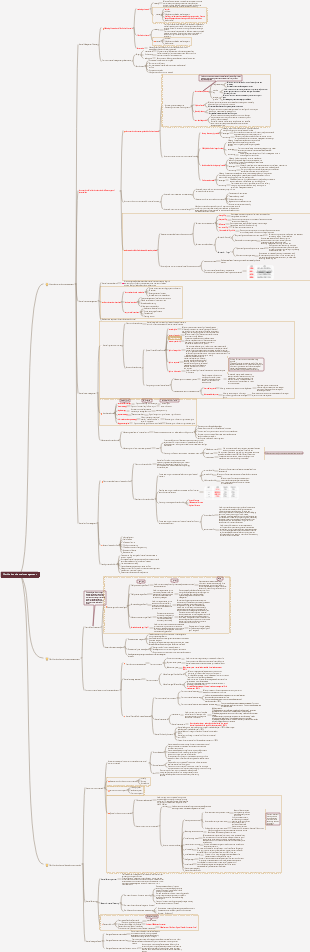
This is a mind map about distribution channel management in Chapter 4 of Business Administration, including three parts: channel operation management, distribution channel system evaluation, and distribution channel development trends.
Edited at 2021-08-20 12:09:55This is a mind map about bacteria, and its main contents include: overview, morphology, types, structure, reproduction, distribution, application, and expansion. The summary is comprehensive and meticulous, suitable as review materials.

This is a mind map about plant asexual reproduction, and its main contents include: concept, spore reproduction, vegetative reproduction, tissue culture, and buds. The summary is comprehensive and meticulous, suitable as review materials.
This is a mind map about the reproductive development of animals, and its main contents include: insects, frogs, birds, sexual reproduction, and asexual reproduction. The summary is comprehensive and meticulous, suitable as review materials.
This is a mind map about bacteria, and its main contents include: overview, morphology, types, structure, reproduction, distribution, application, and expansion. The summary is comprehensive and meticulous, suitable as review materials.
This is a mind map about plant asexual reproduction, and its main contents include: concept, spore reproduction, vegetative reproduction, tissue culture, and buds. The summary is comprehensive and meticulous, suitable as review materials.
This is a mind map about the reproductive development of animals, and its main contents include: insects, frogs, birds, sexual reproduction, and asexual reproduction. The summary is comprehensive and meticulous, suitable as review materials.
Distribution channel management
Channel operation management
Channel Management Overview
marketing channels
Supply→Production→China (Wholesale, Retail, Agency)→Consumer Auxiliary
Support provider: Logistics companies, banks, insurance companies, information companies
Distribution channel
Production→China→Consumption
Marketing channels include distribution channels Distribution channels are only one part of marketing channels
Distribution channel management goals and tasks
management objectives
market share
Marketing ability
Profit amount
Operating conditions
sales growth
Growth
Management tasks
Setting goals, monitoring, coordinating, promoting, modifying channels
Construction of distribution channels for different types of commodities
Construction of consumer goods distribution channels
Consumer goods and categories
Products for personal or household use
Convenience products
Daily necessities
emergency items
Impulse purchases (toys, fruits) stimulated by sensory organs
Optional items
Specialty products (special brands and styles)
Non-desired goods (encyclopedia)
Common consumer product distribution channel models
Factory direct supply model
Advantages: short channels, quick response to information, stable prices, easy to control, and good promotions Disadvantages: Greatly affected by traffic, blind sales area, high management costs
Multiple distribution (agent) model
Advantages: wide market coverage, strong market penetration, clear responsibilities at all levels Disadvantages: many channels and links, difficult management, cross-selling and confusing prices
Independent distribution (agent) model
Advantages: Reach a consensus with middlemen, stable prices Disadvantages: The sales right lies entirely with the middleman, and the manufacturer controls the risk
Platform sales model
Sub-assembly plant
Advantages: clear area of responsibility, small and good service radius, timely delivery, less affected by cross-selling goods Disadvantages: Limited by regional market conditions, direct delivery must go through the manufacturer, and there are many management personnel.
Construction of distribution channels for industrial products
Industrial product market and characteristics
definition
The market for means of production serves people's production (for the purpose of social reproduction)
Features
Derivativeness of requirements
Demand elasticity is small
Professional purchasing
Large amount purchased at one time
Customer concentration and stability
Industrial distribution channel design
Mainly short channels
Construction of distribution channels for service products
Service product and feature classification
feature
intangibility
inseparability
difference
non-storability
Non-transferability of title
Classification
Services for the human body
Ideology-oriented services: radio and television, consulting, concerts
people
Services for objects: storage, refueling
Services for intangible assets: information processing, accounting, banking, law, scientific research
thing
Commonly used distribution channel models for service products
Direct distribution model: medical institutions, accounting firms
Distribution Channels for Intermediary Components
agent
broker
wholesaler
Retailer
Channel member management
choose
excitation
Communication and motivation
information, public relations
business incentives
Commission, sales, business plan
support and incentives
Promotions, subsidies, training, financing
Evaluate and adjust
Channel power management
Channel power and its sources
source
reward rights
power of coercion
statutory authority
contract
Right of identification (right of reference)
brand, engaging in activities beneficial to the other party
right to expertise
right to information
Distinguishing sources of channel power
coercive power (coercive power)
non-coercive power
Intermediary power (reward power, coercive power, legal power)
Non-intermediary rights (expertise rights, information rights, identity rights, traditional legal rights)
use
commitment strategy
award
reward rights
threat strategy
punish
power of coercion
legal strategy
must
statutory authority
request strategy
Please follow
Right of recognition, reward, coercion
information exchange strategy
Discuss
Expertise, information, rewards
Suggest strategies
you would have if...
Expertise, information, rewards
Maintaining channel management
The essence is to maintain channel control
Maintaining manufacturer channel control
Manufacturers
Controlled by a few large manufacturers, no substitutes, forward integration
consumer side
Important to buyers, differentiation
Maintaining control over intermediary channels
Manufacturer Brand (National Brand)
Haier, Wahaha
Dealer Brand (Private Label)
Wumart, Watsons
Mixed brand, one product and two brands
Walmart Huiyi
Channel conflict management
channel conflict
define
Conflicts arise between members due to interests
Inconsistent vendor support
dumping or channeling
Classification
Divided by channel member hierarchical relationship
Horizontal conflict: same channel, same level
Vertical conflict: same channel, different levels
Multi-channel conflict: 2 or more channels, same market
Classification based on conflict of interest and confrontational behavior
conflict
latent conflict
false conflict
Do not conflict
According to the degree of channel conflict
low conflict zone
Moderate conflict zone
high conflict zone
Divided according to the direction of impact of channel conflicts on enterprise development
functional conflict
Psychological impact, positive
destructive conflict
external behavior, negative
cause
conflicts caused by differences
Goal difference
difference of opinion
Expectation difference
Conflict caused by non-differences
role misalignment
Difficulty communicating
Differences in decision-making authority
Scarce resources
Handling channel conflicts
Public interest as long-term goal
Participate in the formulation
Incentive means
personnel exchange
coordination
Negotiate
Equality and voluntariness
adjust
courts, regulatory committees
arbitration
non-judicial body
litigation
neutral referee
Clean up members promptly
Distribution channel development trends
Internet distribution channels
Compared with traditional channels
linear Zero level distribution channel Multistage
effect
two-way communication Convenient access Network technical support (training, after-sales)
structure
mesh Zero level distribution channel Only first-level distribution channels
Internet distribution
feature
virtuality
Economy
Convenience
network distribution system
Ordering system
settlement system
Distribution system
type
Online direct sales channels
Corporate official website
Directly enter Tmall, JD.com, etc.
Internet distribution channels
directory service provider
Comprehensive directory service provider
Categories organized hierarchically Sohu Portal
Commercial directory service provider
Index of commercial websites internet store directory
Professional directory service provider
a certain area of expertise or subject car home
Search engine service provider
Key words
virtual shopping street
Providing services for building and developing websites Sources of income: Rent from merchants renting servers, commission from sales revenue, etc.
Internet Content Provider ICP
Provide the required information: Search engines, virtual communities, e-mails, news and entertainment Tencent, Sina, NetEase
online retailer
pure online retailer
Amazon, Dangdang.com
Traditional retail companies go online
Walmart and Haiershun shopping malls
virtual assessment agency
third party rating agency dianping.com
Intelligent agent
Provider of search and filtering services Compare Shopping Agents
virtual market
virtual trading market Xianyu
Internet statistics agency
Internet financial institution
Professional financial services Alipay, Tenpay
Channel flattening
Minimize intermediate links as much as possible
Distributor role
The role of logistics, capital, and information flow platforms has gradually weakened, and it is only a logistics platform.
reason
The impact of network information technology
The impact of channel vertical integration
The influence of customer demand characteristics
Customers’ personalized requirements for products
Increased customer uncertainty and loss of commitment
consumption eclecticism
form
direct channel
Website, SMS order
A flat channel with a layer of middlemen
Hypermarkets, counters, chain stores
Flat channel with two layers of middlemen
The most commonly used and common
Features: The overall strength of the dealer is small Dealers undertake many logistics tasks Since business volume has grown, the sales team Salespersons expand with business coverage
Channel strategic alliance
between dealers
Centralize procurement and establish dealer alliances
between suppliers
short term behavior
between suppliers and distributors
Distribution channel system assessment
Channel Gap Assessment
Channel gap: The gap between design channels and end consumer requirements
type
quality perception gap
Unable to accurately perceive
Market research and analysis information is inaccurate
quality standards gap
Provider standards are inconsistent with management's perceived customer expectations
Lack of effective support from senior management. low management level
service delivery gap
Failure to comply with standards set by the company
Service standards are too complex, employees disapprove, and operational management is low
Market communication gap
The promised service is different from the actual service
Organization fails to implement promotional standards
Perceived service gap
core
Expected service and experience inconsistent
related to the aforementioned gap
Ideas to eliminate channel gaps
Eliminate demand-side gaps
Eliminate supply-side channel gaps
Channel gaps caused by changes in channel environment and management constraints
Distribution channel operation performance evaluation
Channel smoothness assessment
measure
"Heaven", the shorter the transmission time, the better the smoothness Transmission time = product inventory time, transportation time of each link
Evaluation index
Product turnover speed
Payment recovery speed
Sales recovery rate
Sales collection rate = actual sales received ÷ sales revenue × 100%
Channel coverage assessment
market coverage
Market coverage = channel market coverage area ÷ total market area × 100%
Market coverage
Market coverage = sum of distribution network terminal sales area - sum of overlapping sales areas
Channel Financial Performance Assessment
Economic benefits are the core content of measuring channel operation performance
Distribution channel cost indicators
Distribution channel expenses
Distribution channel expense ratio
= Distribution channel expenses ÷ channel product sales × 100%
Distribution channel expense rate increase and decrease rate
dynamic angle
Positive number, expenses increase, channel cost increases
= Distribution channel expense rate for the current period - Distribution channel expense rate for the previous period
Channel market share indicator
market share
Calculated based on overall market
Calculated by target market
Calculated according to the three major competitors
Calculated by largest competitor
Channel market share
=Sales of goods distributed through a certain channel ÷Total sales of the goods in the same period × 100%
Channel Profitability Indicators
Channel sales growth rate
= Sales growth rate this year ÷ Total sales last year × 100% = (Sales this year - Sales last year) ÷ Total sales last year × 100%
Channel sales profit margin
= Channel profit ÷ Channel product sales × 100%
Channel fee profit margin
= Channel profit ÷ Distribution channel cost × 100%
return on assets
= Channel profit ÷ Channel asset occupation × 100%