MindMap Gallery Porter value chain analysis model
This is a mind map about the Porter Value Chain Analysis Model. It tells the story about the Porter Value Chain Analysis Model. If you are interested in the story of the Porter Value Chain Analysis Model, you are welcome to collect and click on this mind map. Like~
Edited at 2020-09-01 16:43:45This is a mind map about bacteria, and its main contents include: overview, morphology, types, structure, reproduction, distribution, application, and expansion. The summary is comprehensive and meticulous, suitable as review materials.

This is a mind map about plant asexual reproduction, and its main contents include: concept, spore reproduction, vegetative reproduction, tissue culture, and buds. The summary is comprehensive and meticulous, suitable as review materials.
This is a mind map about the reproductive development of animals, and its main contents include: insects, frogs, birds, sexual reproduction, and asexual reproduction. The summary is comprehensive and meticulous, suitable as review materials.
This is a mind map about bacteria, and its main contents include: overview, morphology, types, structure, reproduction, distribution, application, and expansion. The summary is comprehensive and meticulous, suitable as review materials.
This is a mind map about plant asexual reproduction, and its main contents include: concept, spore reproduction, vegetative reproduction, tissue culture, and buds. The summary is comprehensive and meticulous, suitable as review materials.
This is a mind map about the reproductive development of animals, and its main contents include: insects, frogs, birds, sexual reproduction, and asexual reproduction. The summary is comprehensive and meticulous, suitable as review materials.
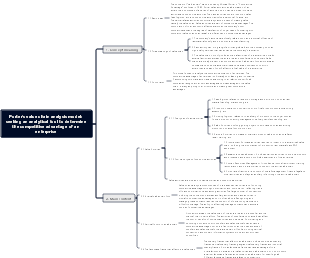
Porter value chain analysis model
Introduce the role, concepts and background of Porter's value chain analysis model (content)
Porter's value chain analysis model is a management tool proposed by Michael Porter for evaluating the value creation process of enterprises. (content)
This model divides an enterprise's activities into two levels: main activities and supporting activities. By analyzing these activities and finding out their core competitiveness, it helps enterprises optimize their value chain and improve their competitiveness. (content)
Porter's value chain analysis model is widely used in strategic management, marketing, operations management and other fields, providing important decision-making basis for enterprises. (content)
Main activities (content)
Procurement (Content)
Analyze the company's procurement strategy, supplier selection and procurement cost management to find opportunities to reduce costs and improve quality. (content)
Evaluate the impact of factors such as relationships with suppliers, negotiation capabilities, and supply chain flexibility on the company's procurement activities. (content)
Optimize the procurement process and improve procurement efficiency and management capabilities. (content)
Production (Content)
Analyze the company's production process, technology, technology and manufacturing costs, optimize the production process, and improve production efficiency and quality. (content)
Evaluate the impact of factors such as the company's production capacity, resource allocation, production planning and control capabilities on the production process. (content)
Optimize production layout and improve production efficiency and resource utilization. (content)
Sales & Marketing (Content)
Analyze the company's market positioning, marketing strategy, sales channels and customer relationship management, optimize sales and marketing activities, and increase sales and market share. (content)
Evaluate the impact of factors such as the company's market analysis capabilities, the sales capabilities of the marketing team, customer satisfaction and loyalty on sales and marketing activities. (content)
Optimize marketing strategies and improve product competitiveness and market share. (content)
Service Content)
Analyze the company's after-sales service, customer support and product maintenance, provide high-quality after-sales service, and enhance customer satisfaction and loyalty. (content)
Evaluate the impact of factors such as the company's service network, technical support capabilities and customer relationship management on the service link. (content)
Optimize the after-sales service process and improve service quality and customer satisfaction. (content)
Support activities (content)
Company Infrastructure (Content)
Analyze the company's management structure, internal organization, corporate culture and information systems, and establish a sound company infrastructure to support the smooth progress of major activities. (content)
Evaluate the impact of factors such as the company's decision-making capabilities, organizational structure, and information technology support on the company's infrastructure. (content)
Optimize the company's internal management processes and improve work efficiency and decision-making capabilities. (content)
Human Resource Management (Content)
Analyze the company's employee recruitment, training, incentives and performance management, optimize human resource management, and improve employee work efficiency and performance. (content)
Evaluate the impact of factors such as enterprise employee quality, training plans, incentive mechanisms, and performance evaluation on human resource management. (content)
Optimize the employee recruitment process and improve employee quality and teamwork capabilities. (content)
Technology Development (Content)
Analyze the company's R&D capabilities, technological innovation and knowledge management, improve technical levels and innovation capabilities, and promote the improvement and upgrading of products and services. (content)
Evaluate the impact of factors such as the company's R&D team, technical capabilities, intellectual property protection, and innovation mechanisms on technology development. (content)
Optimize R&D processes and improve technological innovation and knowledge management capabilities. (content)
Procurement (Content)
Analyze the company's supply chain management, inventory control, logistics management, etc., optimize the management and operation of the supply chain, reduce costs, and improve efficiency. (content)
Evaluate the impact of factors such as the company's supply chain network, inventory control capabilities, logistics management and cost control on procurement activities. (content)
Optimize the supply chain management process and improve logistics operation efficiency and cost control capabilities. (content)