MindMap Gallery Market segmentation and target market selection
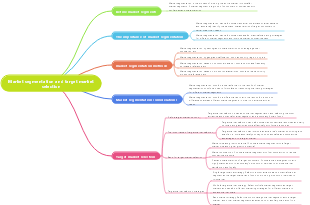
This is a mind map about market segmentation and target market selection. It tells stories about market segmentation and target market selection. If you are interested in the story of market segmentation and target market selection, welcome to this mind map. Favorites and likes~
Edited at 2021-10-14 19:48:38This is a mind map about bacteria, and its main contents include: overview, morphology, types, structure, reproduction, distribution, application, and expansion. The summary is comprehensive and meticulous, suitable as review materials.

This is a mind map about plant asexual reproduction, and its main contents include: concept, spore reproduction, vegetative reproduction, tissue culture, and buds. The summary is comprehensive and meticulous, suitable as review materials.
This is a mind map about the reproductive development of animals, and its main contents include: insects, frogs, birds, sexual reproduction, and asexual reproduction. The summary is comprehensive and meticulous, suitable as review materials.
This is a mind map about bacteria, and its main contents include: overview, morphology, types, structure, reproduction, distribution, application, and expansion. The summary is comprehensive and meticulous, suitable as review materials.
This is a mind map about plant asexual reproduction, and its main contents include: concept, spore reproduction, vegetative reproduction, tissue culture, and buds. The summary is comprehensive and meticulous, suitable as review materials.
This is a mind map about the reproductive development of animals, and its main contents include: insects, frogs, birds, sexual reproduction, and asexual reproduction. The summary is comprehensive and meticulous, suitable as review materials.
Market segmentation and target market selection
Definition and meaning
Market segmentation is the process of dividing the entire market into segments with common needs and characteristics.
Through market segmentation, companies can more accurately understand consumer needs, provide more targeted products and services, and increase market share and profitability.
Basis of market segmentation
geographical basis
Divide the market into different market segments based on geographical location, regional characteristics, etc., such as countries, cities, towns, etc.
Geography is the basis for market segmentation and helps companies understand consumer needs and behaviors in different regions.
population base
Divide the market into segments based on demographic characteristics, such as age, gender, income, education, etc.
The population base is an important basis for market segmentation and helps companies grasp the consumption habits and purchasing power of different groups of people.
behavioral basis
Divide the market into different market segments based on consumer purchasing behavior, likes and preferences, etc.
Behavioral bases are key to market segmentation and help companies understand consumer needs and decision-making processes.
market segmentation methods
Group segmentation method
Different market segments are formed based on the characteristics and needs of consumers.
Group segmentation is the most commonly used market segmentation method, which helps companies develop targeted products and services.
Segmentation based on consumer behavior
Segment the market based on consumer purchasing behavior and decision-making process, such as frequency of use, brand preference, etc.
Segmentation based on consumer behavior helps companies gain insight into consumers’ purchasing motivations and behavioral characteristics.
Segmentation method based on product characteristics
Segment the market based on product features and functions, such as price, quality, style, etc.
Segmentation based on product characteristics helps companies understand the positioning and competitive advantages of different products in the market.
Target market selection
meaning and purpose
Target market selection is based on market segmentation to determine the company's most potential and most profitable target market.
Target market selection helps companies concentrate resources and improve marketing effectiveness and competitiveness.
Basis for selecting target market
Market size and growth potential
Choosing a target market with a larger market size and potential growth space can help companies gain more opportunities and benefits.
Level of competition and competitive advantage
Choosing a target market with moderate competition and a company with competitive advantages can help companies increase market share and profit margins.
Target market accessibility and serviceability
Choosing target markets that are easy to enter and serve can help companies lower barriers to entry and improve customer satisfaction.
Target market selection strategies
Focused target market strategy
Choose a major target market and focus resources and efforts on market development and marketing.
A centralized target market strategy helps companies establish a leading position in a market and achieve economies of scale.
Diversified target market strategies
Select multiple target markets and formulate corresponding marketing strategies based on the needs and characteristics of different markets.
Diversified target market strategies help companies reduce risks and expand market share and business scope.
Specialized target market strategy
Choose a specific market segment as the target market and provide specialized products and services.
Specialized target market strategies help companies establish differentiated competitive advantages and increase the added value of products.